

According to Nguyen Van Dinh, Chairman of the Vietnam Association of Real Estate Brokers (VARS), the retail real estate market will become increasingly vibrant, with new supply and development plans from international retailers.
VARS research data shows that the Vietnamese retail real estate market is continuously developing in both scale and quality. The occupancy rate of retail space in shopping malls in major cities exceeds 90%. The demand for presence and expansion of international brands in the context of limited high-quality commercial space continues to drive up rental prices.
The retail sector is recovering quickly.
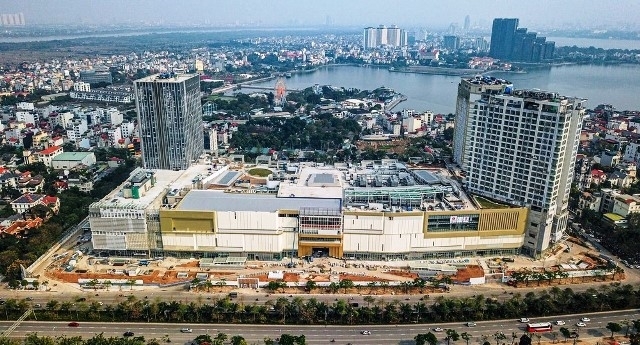
Retail is one of Vietnam's most dynamic economic sectors, maintaining consistent and impressive growth rates for decades. It is also one of the sectors that has shown the most remarkable recovery despite being severely impacted by the pandemic.
From the beginning of 2022, after a long period of social distancing due to the COVID-19 pandemic, the retail sector quickly recovered with proactive activities and the selection of prime locations for long-term strategies in the Vietnamese market by major global retailers as rental prices began to increase slightly. Overall in 2022, total retail sales of goods and consumer service revenue were estimated at VND 5,679.9 trillion, an increase of 19.8% compared to 2021 and a 15% increase compared to 2019 – the year before the COVID-19 pandemic.
In 2023, total retail sales of goods and consumer service revenue at current prices are estimated at VND 6,231.8 trillion, an increase of 9.6% compared to 2022. In the first quarter of 2024, total retail sales of goods and consumer service revenue at current prices are estimated at VND 1,537.6 trillion, an increase of 8.2% compared to the same period in 2023.
In the Hanoi market, ground floor rental prices in 2023 recorded an increase of approximately 10% compared to the previous quarter, with stable occupancy rates; the market in Ho Chi Minh City also saw growth, with large tenants driving market demand.
Attracting investment from many large businesses.
As one of the fastest-growing economies in Southeast Asia, Vietnam's retail real estate market is opening up a range of new opportunities for investors and businesses in the industry, especially supermarket chains, convenience stores, and fashion brands, from affordable to luxury segments – which are still relatively underrepresented compared to other countries in the region.

“The retail real estate market will become increasingly vibrant, with new supply and development plans from international retailers,” said Mr. Nguyen Van Dinh, Chairman of VARS.
Central Retail (Thailand) announced that it will expand its retail outlets from the current 40 provinces and cities to 55 provinces and cities nationwide. Similarly, Aeon Group (Japan) is planning to launch 16 more projects in Vietnam between now and 2025, including 3-4 projects in Hanoi. Simultaneously, they will introduce new retail models to meet customer needs and create momentum for future growth.
FujiMart Vietnam, a joint venture supermarket chain between BRG Group (Vietnam) and Sumitomo Corporation (Japan), also aims to reach a total of 50 supermarkets by 2028. The influx of fashion brands, from high-end to affordable segments such as Uniqlo, Muji, Dior, and Cartier, has been more intense than ever in recent years.
Analyzing the Vietnamese retail commercial real estate market, Mr. Nguyen Van Dinh believes that this market remains very attractive with ample room and potential for development. Accordingly, he pointed out four specific points, including:
Firstly, the rapid growth of urban population and income has created a huge demand for real estate, especially in the retail sector, as people seek more convenient living and shopping spaces. The growth of major cities like Hanoi and Ho Chi Minh City not only provides opportunities for real estate developers but also a potential market for retail brands to expand their businesses and develop new real estate projects.
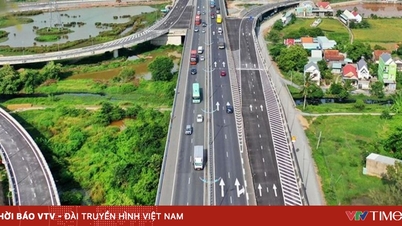
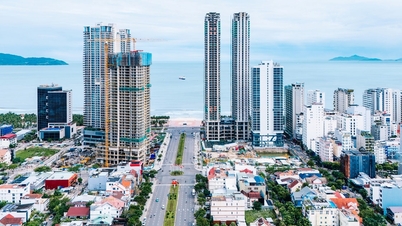
Second, Vietnam is witnessing the development of major cities such as Hanoi, Ho Chi Minh City, Da Nang and satellite areas as investment policies to improve transport infrastructure, including highway and urban railway construction projects, are facilitating more convenient travel and connectivity between urban areas. This development not only creates opportunities for new real estate projects but also opens up the potential for retail businesses to expand their store networks and businesses.
Thirdly, playing a crucial role in the Vietnamese economy, with the goal of becoming a key economic sector, the development of tourism is creating new opportunities for the retail real estate market. Developed tourist areas such as Phu Quoc, Nha Trang, Da Nang, etc., are increasingly attracting the attention of investors and retail businesses with their long-term growth potential.
Fourth, Vietnamese consumers are becoming increasingly savvy and demanding in their shopping experiences. They are not only looking for quality products but also requiring variety and convenience in their purchases. This creates opportunities for retail brands to develop new business models, including multi-service shopping malls, dedicated shopping areas for entertainment and dining, and product experience stores.
It is clear that the retail real estate market in Vietnam is not only a business opportunity but also a crucial part of the sustainable development of the economy. Understanding the trends and opportunities in the market will help businesses capitalize on its potential and achieve future success.
According to the Communist Party of Vietnam Electronic Newspaper
Source























![[Video] The craft of making Dong Ho folk paintings has been inscribed by UNESCO on the List of Crafts in Need of Urgent Safeguarding.](https://vphoto.vietnam.vn/thumb/402x226/vietnam/resource/IMAGE/2025/12/10/1765350246533_tranh-dong-ho-734-jpg.webp)























































Comment (0)