

On the morning of December 11th, the National Assembly passed the Law on Specialized Courts in International Financial Centers with 438 out of 444 participating delegates voting in favor (92.60%).
The law governing specialized courts in international financial centers is a component and a crucial condition for the effective operation of international financial centers and for ensuring investor confidence.
In his explanation to the National Assembly regarding the revisions and amendments to the draft Law, Chief Justice of the Supreme People's Court Nguyen Van Quang emphasized that the Draft Law on Specialized Courts in International Financial Centers is a new, complex draft law, and the first of its kind to be considered and passed by the National Assembly, based on the Party's viewpoints and policies, and Resolution No. 222/2025/QH15 of the National Assembly on the establishment of an International Financial Center in Vietnam.
To date, National Assembly delegates have generally agreed on the necessity of enacting the Law and its contents. At the same time, many heartfelt and responsible suggestions have been made, reflecting a groundbreaking approach to lawmaking to create a legal foundation for national development in the new era. These suggestions include many unique and superior provisions compared to current laws, applying principles and regulations of the common law legal system, and aligning with Vietnamese realities and international investment and business legal norms, practices, and customs.
One notable point is that the law recently passed by the National Assembly has expanded the pool of candidates for appointing judges at specialized courts in international financial centers to include foreigners.
In the report on receiving feedback, explaining, and revising the draft Law submitted to National Assembly deputies, the Supreme People's Court stated that during the discussion process, the majority of opinions supported the provision regarding the source of appointment of foreign judges in order to create an open, groundbreaking mechanism and build confidence among foreign investors.
Some have suggested prioritizing the selection of UK judges to serve as judges in specialized courts. However, others have suggested that the designation of foreign judges should not be mandatory, but rather that foreign nationals should only be appointed as consultants.
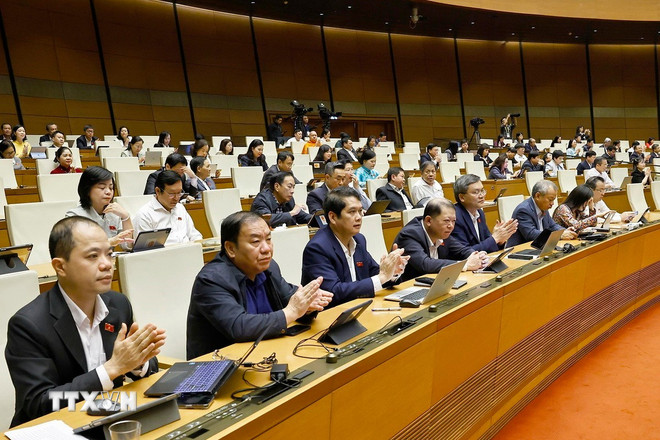
In explaining this matter, the Supreme People's Court affirmed the need to regulate the assignment of foreign judges to perform judicial duties in specialized courts.
The reason is that this creates a superior policy in the organization and operation of specialized courts, increasing their attractiveness and competitiveness, attracting foreign investment, and aligning with the experience of some major international financial center courts around the world such as Dubai, Kazakhstan, Singapore, etc.
Furthermore, the presence of foreign judges with deep expertise, prestige, and experience in adjudicating cases under different legal systems (common law, civil law, etc.) meets the diverse and highly internationalized dispute resolution needs, helping to build confidence among investors.
"International investors will feel more secure when their disputes are adjudicated by judges with a shared legal background," the Supreme People's Court report stated.
Furthermore, this helps address the urgent need for competent judges to handle cases immediately in specialized courts after the financial center becomes operational.
At the same time, it creates an environment and conditions for Vietnamese judges to have the opportunity to learn experience, knowledge, and skills from foreign judges; and to fully perform the task of adjudicating and resolving cases in specialized courts.
Another important reason is that, currently, Vietnam does not have Vietnamese judges with sufficient foreign language proficiency, professional competence, experience, and international prestige to preside over trials under common law when specialized courts become operational.
A judge's term of office is 5 years.
The Law on Specialized Courts in the International Financial Centre will come into effect on January 1, 2026. This law applies to specialized courts, members of the International Financial Centre, investors, agencies, organizations, and individuals involved in resolving cases falling under the jurisdiction of the specialized courts.
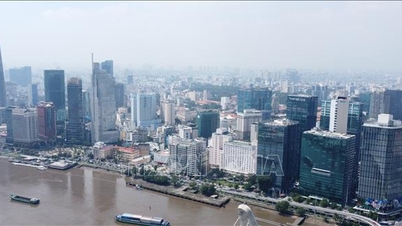
The specialized court at the International Financial Centre is a court within the People's Court system, organized and operating in accordance with the provisions of this Law, with jurisdiction to hear and resolve cases at the International Financial Centre. The Law clearly stipulates the establishment of a specialized court located in Ho Chi Minh City.
The organizational structure of a specialized court includes: a first-instance court; an appellate court; and supporting staff. A specialized court has a chief judge, deputy chief judge, chief of court, deputy chief of court, judges, court clerk, other officials, and employees. The chief judge and deputy chief judge of a specialized court are appointed, dismissed, or removed from office by the Chief Justice of the Supreme People's Court.
The term of office for the chief judge and deputy chief judge is 5 years from the date of appointment. The chief judge and deputy chief judge of a specialized court are selected and appointed from among the judges of that specialized court.
Regarding regulations concerning judges, the Law clearly states that judges of specialized courts may be foreigners or Vietnamese citizens.
Foreign judges must meet several standards and conditions, such as having been or currently being a foreign judge; being a reputable lawyer or expert with good moral character, relevant professional knowledge, and a thorough understanding of investment and business law; and having at least 10 years of experience in adjudicating and resolving cases related to investment and business activities.
Foreign judges must also have English language proficiency to preside over and resolve cases in specialized courts, and must not be over 75 years old and have the health to ensure they can fulfill their assigned duties.
Judges who are Vietnamese citizens must possess a good reputation, high moral character, relevant professional knowledge, and a thorough understanding of investment and business law; they must also have at least 10 years of experience in adjudicating and resolving cases related to investment and business activities. Specifically, the law clearly states the requirement that they "must have English language proficiency to adjudicate and resolve cases in specialized courts."
Judges are appointed by the President of the Republic on the recommendation of the Chief Justice of the Supreme People's Court, and their term of office is 5 years from the date of appointment.
Jurisdiction to resolve cases
According to the law, specialized courts have jurisdiction to resolve the following cases, except those involving public interest or state interests: Cases concerning investment and business between Members of the International Financial Centre or between Members of the International Financial Centre and other organizations or individuals that are not Members of the International Financial Centre.
Requests for recognition and enforcement in Vietnam of judgments and decisions of foreign courts, and awards of foreign arbitration tribunals resolving disputes between members of the International Financial Centre or between members of the International Financial Centre and other organizations or individuals that are not members of the International Financial Centre.
The request relates to arbitration resolving disputes between members of the International Financial Centre or between members of the International Financial Centre and other organizations or individuals that are not members of the International Financial Centre, in accordance with the law on commercial arbitration.
Another case involves investment and business activities at an international financial center where at least one party is a member of the international financial center, as stipulated by the Supreme People's Court.
Source: https://www.vietnamplus.vn/thong-qua-luat-toa-an-chuyen-biet-tai-trung-tam-tai-chinh-quoc-te-post1082446.vnp




![[Photo] Prime Minister Pham Minh Chinh holds a phone call with the CEO of Russia's Rosatom Corporation.](/_next/image?url=https%3A%2F%2Fvphoto.vietnam.vn%2Fthumb%2F1200x675%2Fvietnam%2Fresource%2FIMAGE%2F2025%2F12%2F11%2F1765464552365_dsc-5295-jpg.webp&w=3840&q=75)
![[Photo] Closing Ceremony of the 10th Session of the 15th National Assembly](/_next/image?url=https%3A%2F%2Fvphoto.vietnam.vn%2Fthumb%2F1200x675%2Fvietnam%2Fresource%2FIMAGE%2F2025%2F12%2F11%2F1765448959967_image-1437-jpg.webp&w=3840&q=75)



































![[OFFICIAL] MISA GROUP ANNOUNCES ITS PIONEERING BRAND POSITIONING IN BUILDING AGENTIC AI FOR BUSINESSES, HOUSEHOLDS, AND THE GOVERNMENT](https://vphoto.vietnam.vn/thumb/402x226/vietnam/resource/IMAGE/2025/12/11/1765444754256_agentic-ai_postfb-scaled.png)













































Comment (0)