

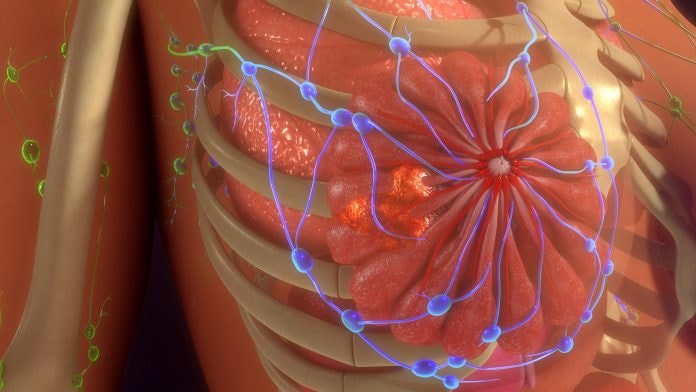
American scientists have for the first time demonstrated that it is possible to detect and eliminate dormant breast cancer cells remaining after treatment with readily available drugs, opening up a new avenue for preventing disease recurrence.
A phase 2 clinical trial conducted by the Abramson Cancer Center and the Perelman School of Medicine (University of Pennsylvania), published in the journal Nature Medicine, showed that the repositioned drugs could eliminate latent tumor cells in 80% of participating patients. After 3 years, the recurrence-free survival rate exceeded 90% in patients using a single drug, and reached 100% in the group using a combination of two drugs.
Breast cancer survival rates are improving, but recurrence is incurable. Approximately 30% of patients will experience this, with malignant forms like triple-negative or HER2+ breast cancer recurring within a few years, while ER+ cancer can return after decades.
"Drowsy" cells, also known as minimal residual disease (MRD), cannot be detected by conventional imaging techniques but can reactivate, leading to metastasis.
Preclinical studies in mice suggest that two drugs previously approved by the FDA for other diseases may clear MRD by targeting autophagy and mTOR signaling—pathologies that help tumor cells maintain a latent state.
In the CLEVER trial, 51 post-treatment breast cancer patients underwent bone marrow screening. Those with MRD were randomly assigned to receive either monotherapy or a combination of two drugs for six cycles. After a median follow-up period of 42 months, only two cases reported recurrence.
The research team is currently conducting two larger trials – ABBY and PALAVY – at multiple cancer centers across the US to confirm and expand the findings.
Source: https://baohaiphong.vn/thu-nghiem-xoa-so-te-bao-ngu-dong-gay-tai-phat-ung-thu-vu-519887.html


































































































Comment (0)