

"Forks in the road" in the main passion fruit growing region
In Vietnam's fruit and vegetable industry, passion fruit is gradually establishing itself as one of the fastest-growing cash crops with significant export potential. With its favorable natural conditions, climate, and soil, the Central Highlands region has become the "passion fruit capital" of the country, accounting for over 88% of the total cultivated area. Gia Lai province stands out as the largest production area, the center of the passion fruit value chain from seedlings, production, processing, and export.
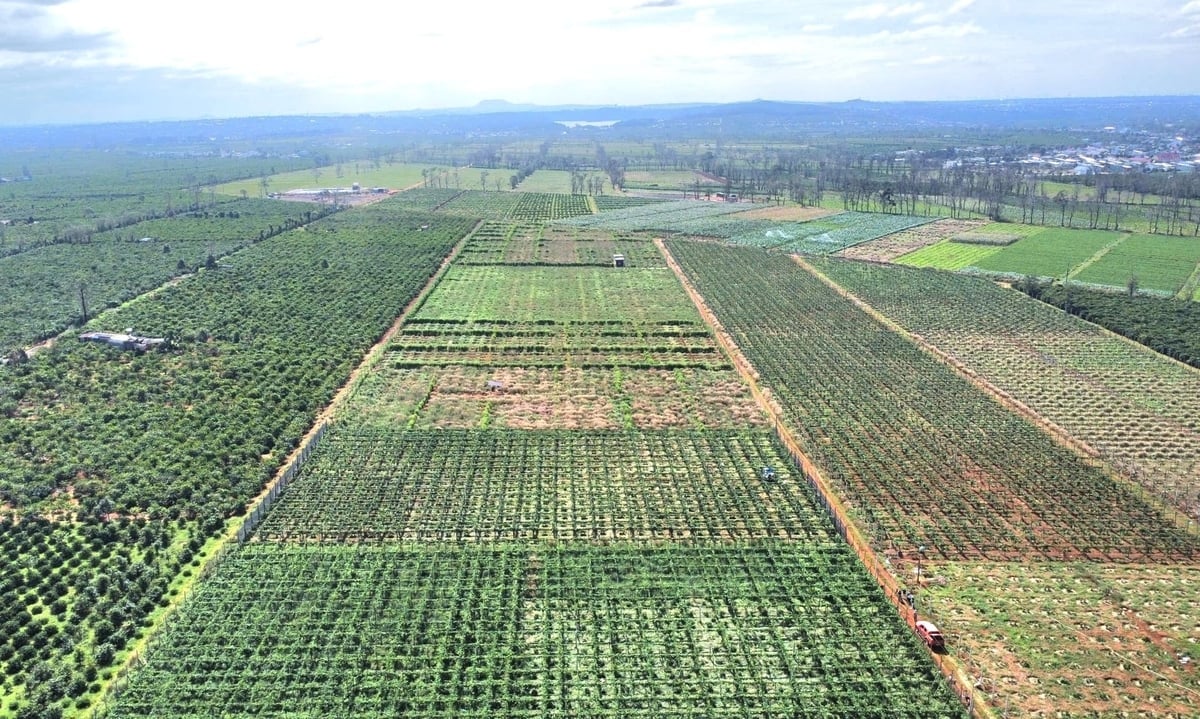
Passion fruit is being grown a lot in the Central Highlands. Photo: Tuan Anh.
As of 2024, the total area of passion fruit cultivation in Vietnam reached over 12,600 hectares, with a production of nearly 180,000 tons, placing Vietnam among the top 10 largest passion fruit suppliers in the world . The Central Highlands region plays a dominant role in the production structure with over 11,100 hectares, mainly distributed in Gia Lai, Dak Lak, Lam Dong, and Quang Ngai provinces.
Compared to many other fruit trees, passion fruit has outstanding advantages such as a short growing season (4-5 months to harvest), year-round fruiting, ease of harvesting and transportation, and suitability for rural labor. In particular, the cool highland climate and large diurnal temperature range help Central Highlands passion fruit have stable quality and a high juice yield, making it very suitable for processing and export.
In the period after 2015, along with the expansion of international markets and the participation of large enterprises, the area of passion fruit in the Central Highlands increased rapidly, gradually forming large-scale raw material areas, aiming at commodity production.
Considered the "locomotive" of the passion fruit industry, Gia Lai province currently has the largest passion fruit growing area in the country. To date, Gia Lai's passion fruit acreage is estimated at approximately 5,650 hectares, an increase of nearly 19 times compared to 2015. The average yield is about 430 quintals/hectare, almost double the national average. The estimated production is over 213,000 tons, accounting for a very large proportion of the total national passion fruit production.
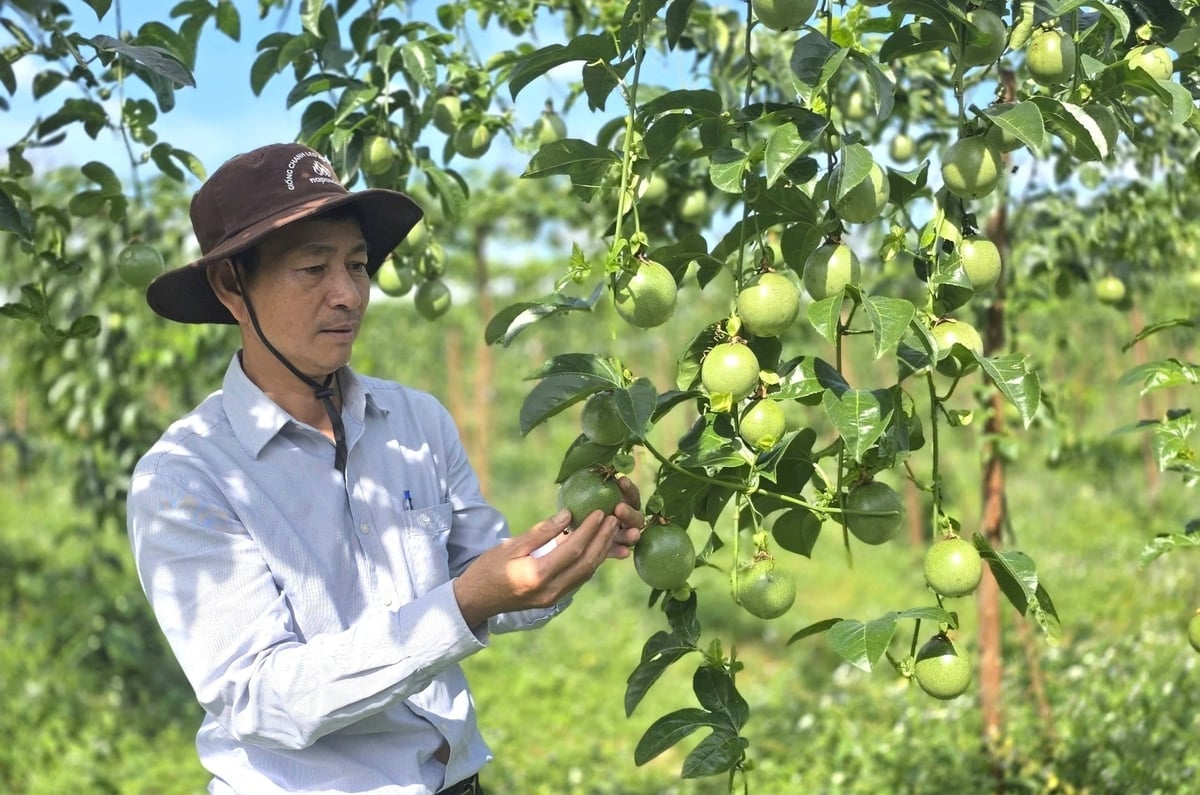
Passion fruit trees have been grown experimentally in Gia Lai since 2012. Photo: Tuan Anh.
Previously, passion fruit was introduced into experimental cultivation in Gia Lai around 2012, initially mainly on a small scale. By 2017, when passion fruit prices continued to increase, the total area in the province had exceeded 2,900 hectares.
After a period of "hot" development leading to supply and demand imbalance and price drops in 2018, Gia Lai province has gradually restructured the passion fruit industry, focusing on attracting investment from businesses, building processing factories and reorganizing production in the direction of chain linkage.
By 2023, passion fruit in Gia Lai once again faced a crisis. At that time, with the appearance of factories, a passion fruit planting craze swept across the region. Along the roads of Gia Lai, it wasn't difficult to find lush green passion fruit orchards, laden with fruit. Everywhere, people talked about passion fruit as a "miracle" crop that provided high income, allowing them to build houses and buy cars after just a few harvests. At one point, passion fruit even surpassed the main crops that had become synonymous with the Central Highlands, such as coffee and pepper.
It is this great attraction that has made Gia Lai province's agricultural sector place high expectations, boldly setting a goal of increasing the passion fruit area in the whole province to more than 25,000 hectares by 2025.
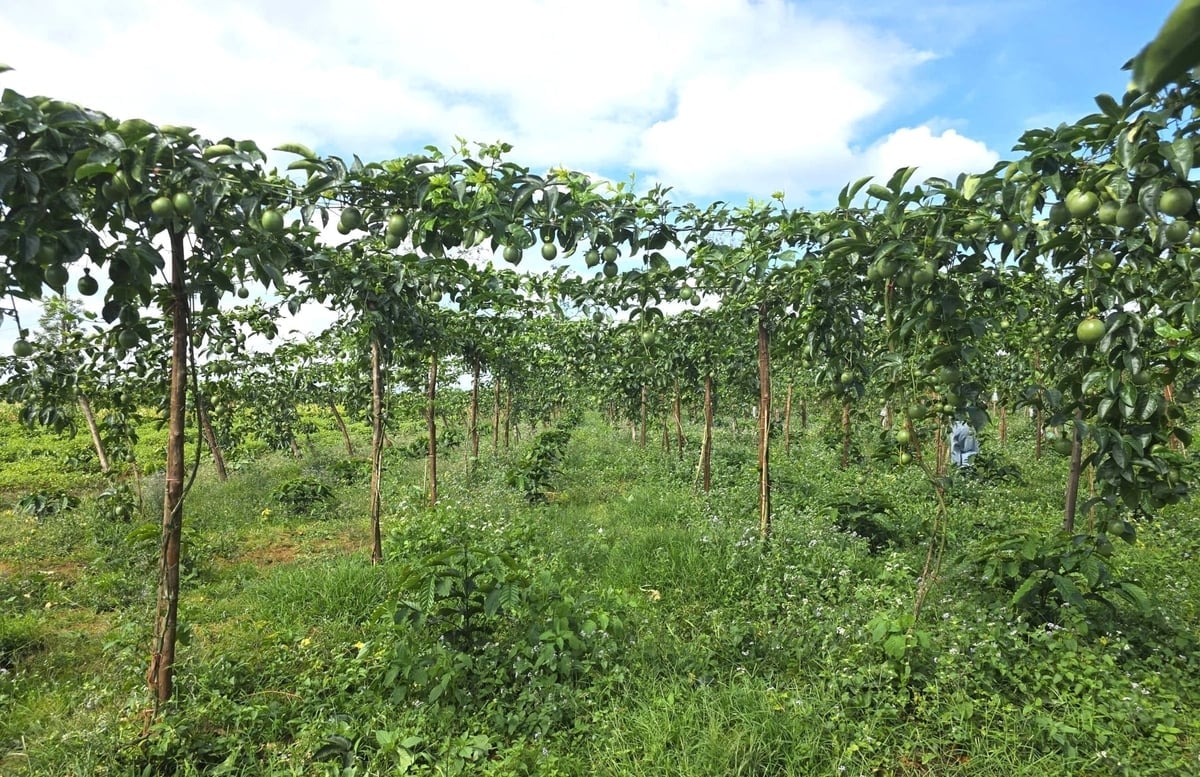
There was a time when passion fruit growing area grew rapidly in Gia Lai. Photo: Tuan Anh.
However, after only a few short months, passion fruit suddenly “plummeted”, the price from 17,000 VND/kg dropped to only 3,000 - 5,000 VND/kg, causing this industry to lose direction. Faced with that shock, many households were forced to cut down their passion fruit gardens and return to growing coffee and pepper.
After nearly two years of turmoil, the passion fruit industry has gradually regained stability. Prices remain high, and more importantly, people are no longer taking the risk of planting passion fruit on a massive scale as before. Instead, passion fruit is being intercropped in coffee and pepper plantations to reduce risks and promote more sustainable production.
There is still plenty of room for growth.
One of the hallmarks of the passion fruit industry in Gia Lai in recent years is the increasing involvement of businesses in the value chain. The area currently has many modern processing plants with a total capacity of over 74,000 tons of products per year. Notable examples include the Quicornac fruit processing plant (DIVAFRUIT SA Company) with a capacity of approximately 15,000 tons/year; the vegetable and fruit processing plant of Dong Giao Export Food Joint Stock Company (Gia Lai branch) with a capacity of 52,000 tons/year; and the passion fruit processing plant of Nafoods Tay Nguyen Joint Stock Company with a capacity of 7,200 tons/year. These plants not only consume the products but also collaborate with local people in technology transfer and the development of export-standard raw material areas.
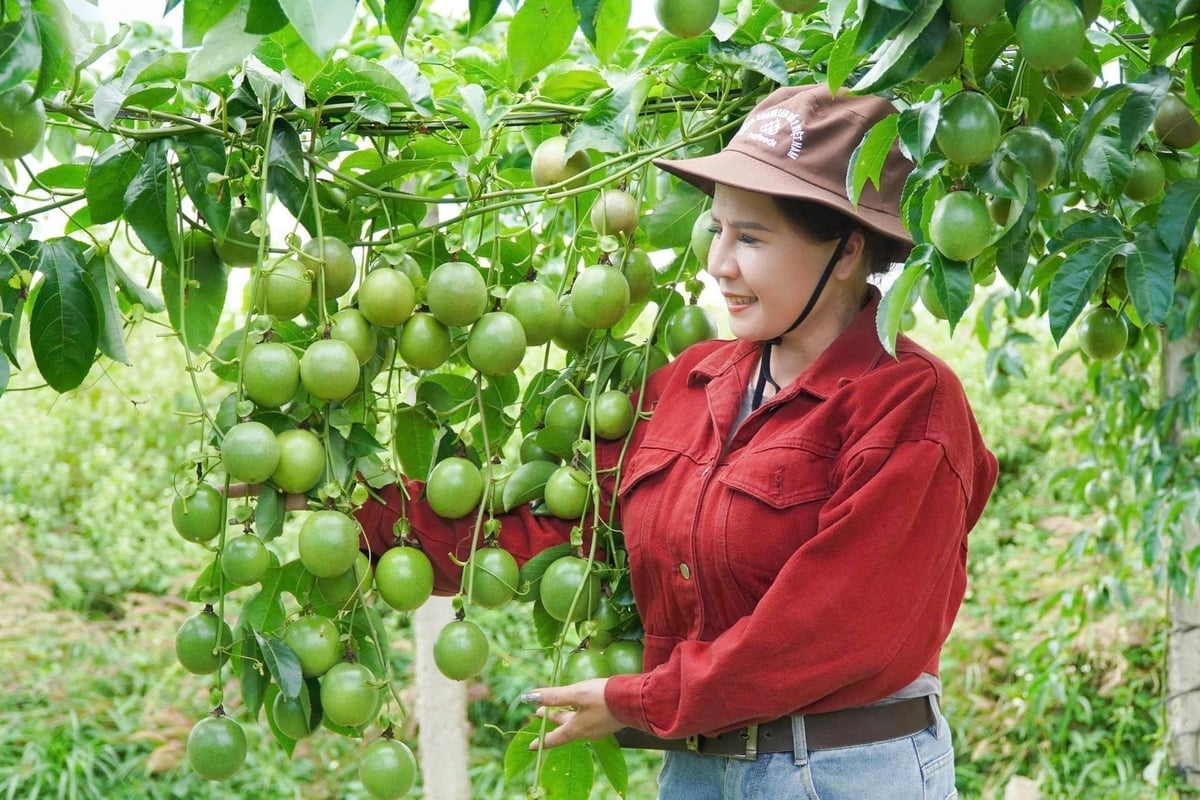
Passion fruit still has a lot of room for development in the Central Highlands. Photo: Tuan Anh.
Through collaborative models, many passion fruit growing areas in Gia Lai have adopted water-saving irrigation, good agricultural practices (GAP), integrated plant health management (IPHM), and are gradually completing the necessary documentation for growing area codes. To date, Gia Lai province has been granted dozens of growing area codes and passion fruit packaging facility codes to serve official export to demanding markets such as the EU, Japan, South Korea, and Australia.
According to the Gia Lai Department of Agriculture and Environment, the price of passion fruit (passion fruit sold locally) has shown signs of increasing again, fluctuating around 19,000 - 20,000 VND/kg. This price increase is creating opportunities for farmers as the market recovers, but also carries the risk of price fluctuations. Meanwhile, the price of export-grade passion fruit (passion fruit exported to Europe) has now risen to approximately 52,000 VND/kg.
This signal indicates that the passion fruit industry needs to be restructured towards a market-centric approach, focusing on improving quality to adjust production and develop products that the market truly demands. To achieve this, businesses, cooperatives, and farmers need to strengthen production linkages, adhere to common processes, apply GAP standards, meet food safety requirements, ensure traceability, and satisfy market demands, aiming for a sustainable passion fruit value chain.
According to the Department of Agriculture and Environment of Gia Lai province, passion fruit in the area is currently consumed in many forms, from fresh fruit, frozen juice, concentrated juice to processed products. In the context of climate change reducing supply in South America – the world's largest passion fruit producing region – Vietnamese passion fruit in general, and Gia Lai in particular, is facing an opportunity to expand its market share.
On December 12, Agriculture and Environment Newspaper in collaboration with the Department of Crop Production and Plant Protection, Gia Lai Department of Agriculture and Environment organized the Forum "Developing sustainable passion fruit industry according to the chain".
The forum aims to comprehensively assess the current state of passion fruit production, processing, consumption, and export in Vietnam, while also discussing difficulties and challenges such as climate change, diseases, fragmented production, and limitations in processing and preservation. Based on this, it will propose solutions for developing standardized raw material areas, applying science and technology, expanding markets, and building a sustainable brand for Vietnamese passion fruit.
We invite interested readers to attend the Forum online at the link: https://zoom.us/j/99827748852?pwd=4a3BqsLZIIJB2iq9aRolaaU4k49yY8.1
Meeting ID: 998 2774 8852 Password: CL1212
Or follow the Forum directly at the Electronic Newspaper: nongnghiepmoitruong.vn
Source: https://nongnghiepmoitruong.vn/thu-phu-chanh-leo-truoc-bai-toan-ben-vung-bai-1-lay-lai-nhip-on-dinh-d788203.html


![[Photo] Explore the US Navy's USS Robert Smalls warship](/_next/image?url=https%3A%2F%2Fvphoto.vietnam.vn%2Fthumb%2F1200x675%2Fvietnam%2Fresource%2FIMAGE%2F2025%2F12%2F10%2F1765341533272_11212121-8303-jpg.webp&w=3840&q=75)
![[Photo] The captivating scenery of the fragrant maple forest in Quang Tri](/_next/image?url=https%3A%2F%2Fvphoto.vietnam.vn%2Fthumb%2F1200x675%2Fvietnam%2Fresource%2FIMAGE%2F2025%2F12%2F10%2F1765353233198_lan09046-jpg.webp&w=3840&q=75)










![Green tea pork: [Part 2] A new specialty brand from Thai Nguyen](https://vphoto.vietnam.vn/thumb/402x226/vietnam/resource/IMAGE/2025/12/10/1765338249553_2114-img_6953-nongnghiep-112106.jpeg)






![[Video] The craft of making Dong Ho folk paintings has been inscribed by UNESCO on the List of Crafts in Need of Urgent Safeguarding.](https://vphoto.vietnam.vn/thumb/402x226/vietnam/resource/IMAGE/2025/12/10/1765350246533_tranh-dong-ho-734-jpg.webp)






















































Comment (0)