

 |
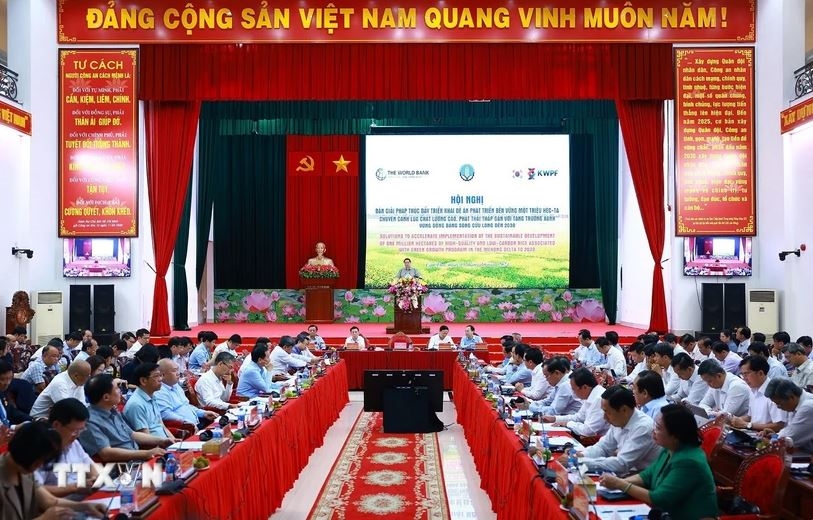
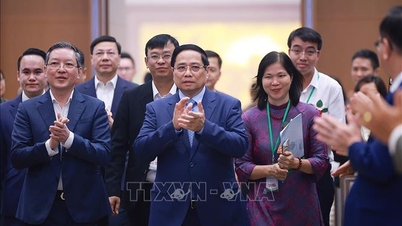
| Conference to launch the project for sustainable development of one million hectares of rice in the Mekong Delta. (Photo: Duong Giang/VNA) |
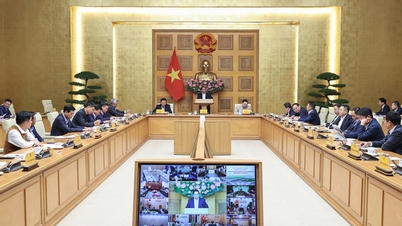
On the afternoon of October 15th, in Can Tho city, presiding over a conference to discuss solutions for promoting the implementation of the Sustainable Development Project for 1 million hectares of high-quality, low-emission rice cultivation linked to green growth in the Mekong Delta by 2030, Prime Minister Pham Minh Chinh requested the development of preferential policies and emphasized that the people must be the main actors in the implementation of the Project.
Positive results, but implementation still faces obstacles.
Reporting at the Conference, a representative from the Ministry of Agriculture and Rural Development stated that on November 27, 2023, the Prime Minister signed Decision No. 1490/QD-TTg approving the Project "Sustainable Development of 1 Million Hectares of High-Quality, Low-Emission Rice Specialization Linked to Green Growth in the Mekong Delta by 2030."
Nearly a year after the Prime Minister approved the Project, ministries, sectors, and localities in the Mekong Delta region have coordinated and focused on developing and issuing legal documents to implement the Project; selecting and establishing areas participating in the Project; reviewing and applying technical packages to ensure sustainable development criteria; providing training to improve capacity, reorganizing production, and strengthening value chain linkages.
In addition, coordinate the development of a pilot program for paying carbon credits based on results for 1 million hectares of high-quality, low-emission rice cultivation linked to green growth in the Mekong Delta; review and develop projects and invest in upgrading infrastructure in specialized rice-growing areas; propose solutions to mobilize resources, technical and financial support from carbon finance funds and other international support funds for the Project.
Ministries, sectors, and localities in the Mekong Delta region have implemented pilot models for specialized cultivation of high-quality, low-emission rice in five provinces and cities: Can Tho, Dong Thap, Kien Giang, Tra Vinh, and Soc Trang. Initial assessments indicate that the rice cultivation models under the Project in these localities have yielded positive results.
Total input costs decreased by 10-15%; rice yield in the pilot model reached 6.13-6.51 tons/ha compared to 5.89 tons/ha in the control model; profit in the pilot rice cultivation model in the project reached 21-25.8 million VND/ha, 1.3-6.2 million VND/ha higher than the control model.
Specifically, the pilot model helped reduce CO2 emissions by 2 tons/ha compared to the control model of removing straw from the fields, and by 12 tons/ha compared to the control model of continuous flooding using the method of burying straw after harvest.
At the conference, leaders from ministries, sectors, and localities affirmed that the production of high-quality, low-emission rice in the Mekong Delta has achieved positive results. However, the implementation of the Project still faces difficulties, primarily because Vietnam is the first country in the world to implement large-scale emission reduction in rice production; secondly, the activities and content are all new and lack precedents. Therefore, farmers, businesses, cooperatives, and production groups are not yet enthusiastic about participating in the Project; the linkages between participating entities are limited; the infrastructure serving high-quality, low-emission rice production in localities is not yet synchronized; and investment, production organization, and product distribution are uncertain.
Delegates proposed mechanisms and policies to mobilize resources including the State, businesses, and preferential loans and international funding to implement the Project; build sustainable raw material areas; build brands; call for the participation of scientists, apply science and technology in implementation and market research to develop effectively, stably, and sustainably 1 million hectares of high-quality, low-emission rice associated with green growth in the Mekong Delta region.
At the conference, the World Bank (WB) representative affirmed the WB's strong commitment to this program; requested the Government to pay attention, establish an inter-ministerial working group to handle related issues, harmonize procedures between the two sides, with a clear, feasible, and effective implementation mechanism, and promptly sign the loan agreement to maximize financial resources from the WB for the Project.
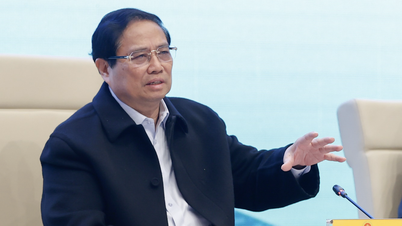
Concluding the conference, commending the ministries, sectors, localities, and people for their active implementation of the Project; and highly appreciating the heartfelt and high-quality opinions of the delegates, Prime Minister Pham Minh Chinh emphasized 5 major directions and 11 key tasks in implementing the Project for sustainable development of 1 million hectares of high-quality, low-emission rice cultivation associated with green growth in the Mekong Delta by 2030.
Develop mechanisms and policies to provide incentives for rice cultivation.
Believing that rice cultivation must be infused with digital technology, science and technology, knowledge, and innovation; and that rice must be cherished as much as oneself to create a revolution in rice cultivation, the Prime Minister requested the mobilization of all resources, diversifying resources including those from the central and local governments, public-private partnerships, loans, bond issuance, and the people's resources for the Project; while also ensuring efficient use of resources, eliminating the "request-and-grant" mechanism, and removing cumbersome administrative procedures; and ensuring that resources reach local areas, production facilities, and directly to farmers.
To effectively implement the Project, the Prime Minister requested leveraging the combined strength of the political system, first and foremost the self-reliance and self-improvement of localities; mobilizing the strength of the people, for the people to make history; accelerating and breaking through to achieve the target of 1 million hectares of high-quality, low-emission rice, thereby achieving 14-15 million tons of paddy rice and 9-10 million tons of milled rice from this Project before 2030 as soon as possible.
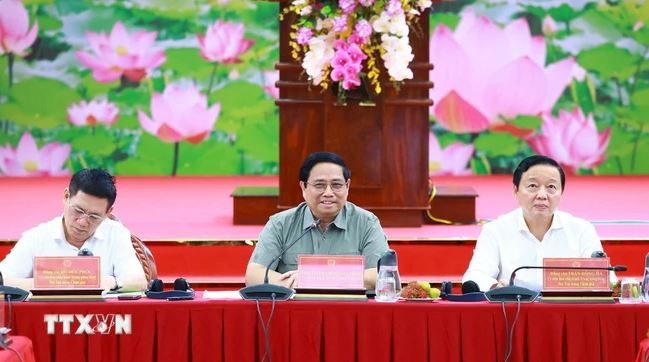 |
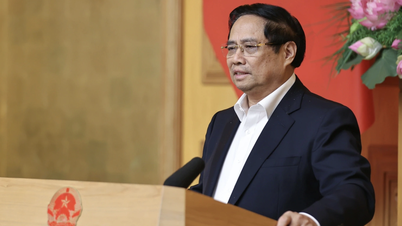
| Prime Minister Pham Minh Chinh presides over the conference to implement the project for sustainable development of one million hectares of rice in the Mekong Delta. (Photo: Duong Giang/VNA) |
The Prime Minister requested the development of a stable, long-term raw material area plan based on the principles of high quality and low emissions; assigning localities to coordinate with the Ministry of Agriculture and Rural Development, the Ministry of Planning and Investment, and the Ministry of Natural Resources and Environment to complete it by the second quarter of 2025.
Requiring the application of science and technology in the development of high-quality, low-emission rice, the Prime Minister emphasized the need to build a brand for high-quality rice, assigning localities, businesses, the Ministry of Science and Technology, and the Ministry of Agriculture and Rural Development to develop brands with regional and global reach; this should be coupled with improved packaging, planting area codes, and geographical indications.
The Ministry of Agriculture and Rural Development, together with the Ministry of Planning and Investment, the Ministry of Justice, and local authorities, will develop preferential mechanisms, policies, and institutions to prioritize the implementation of the Project; and urgently propose to the National Assembly to include it in the general Resolution on socio-economic development, with the spirit of "addressing obstacles wherever they arise."
Directing banks to provide support through credit packages for necessary groups; from now until the end of the year, research should be conducted to propose preferential credit policies for rice, and in 2025, mobilize a credit package of approximately 30,000 billion VND, the Prime Minister emphasized that businesses and people should borrow capital to support supplies, seeds, and production and business activities.
Regarding loans from development partners, the Prime Minister assigned the Ministry of Agriculture and Rural Development the responsibility for borrowing and disbursing funds; emphasizing the need to establish a fund to support 1 million hectares of rice cultivation, comprising state capital, carbon credit sales capital, and socialized capital.
The Prime Minister instructed the Ministry of Industry and Trade and the Ministry of Foreign Affairs to connect domestic and international markets, and to connect businesses to diversify markets, production, and products, so that high-quality rice can reach a wider range of consumers.
The Ministry of Agriculture and Rural Development, together with the Ministry of Natural Resources and Environment, is developing a comprehensive plan with phased investment and resource allocation for localities to combat climate change, mitigate landslides, and address drought; it is proposed that this model be summarized in Ca Mau to complete this comprehensive plan in the first quarter of 2025.
The Ministry of Agriculture and Rural Development, the Ministry of Natural Resources and Environment, and the Ministry of Finance will collaborate to develop and implement a program to ensure low emissions, reduce methane in agriculture, and strengthen carbon credit sales, to be completed before the second quarter of 2025.
The Prime Minister emphasized the need to develop businesses, connecting them with localities, cooperatives, and individual farmers to produce, process, and consume rice; and to develop a variety of rice products. Highlighting the power of the people, and the people's role in making history, the Prime Minister requested the mobilization and gathering of the people's forces to participate in cooperatives and cooperative alliances… so that farmers can become self-reliant and strong, rising through their own hands and minds.
"The rice revolution cannot succeed without the strength of the people. The key is to create material and spiritual benefits for the people; working together, sharing the rewards," the Prime Minister emphasized.
Calling on international organizations and development partners to cooperate with Vietnam in implementing the Project using their experience, science and technology, finance, governance, and institutional improvements, the Prime Minister directed ministries, sectors, and localities to link with each other, with businesses, and with scientists; to coordinate closely and effectively between farmers, the State, and businesses; to coordinate between the private and public sectors; and to establish an inter-ministerial Steering Committee, chaired by Deputy Prime Minister Tran Hong Ha, to implement the Project effectively, in the spirit of "only discussing how to do it, not retreating," and "what has been said must be done, and commitments must be implemented effectively and concretely."
The Prime Minister also emphasized the need to develop infrastructure and strengthen human resource training in the Mekong Delta region to support the development of high-quality, low-emission rice cultivation linked to green growth.
The Prime Minister hopes that with high determination, great effort, decisive action, focused and targeted efforts, and with the spirit of self-reliance, self-improvement, self-awareness, and responsibility of all relevant stakeholders, the Project for the sustainable development of 1 million hectares of high-quality, low-emission rice cultivation associated with green growth in the Mekong Delta will be effectively implemented in the coming time.
Source: https://baothuathienhue.vn/chinh-polit-xa-hoi/thu-tuong-cuoc-cach-mang-ve-lua-gao-khong-the-thieu-suc-manh-cua-nguoi-dan-147033.html


![[Photo] The captivating scenery of the fragrant maple forest in Quang Tri](/_next/image?url=https%3A%2F%2Fvphoto.vietnam.vn%2Fthumb%2F1200x675%2Fvietnam%2Fresource%2FIMAGE%2F2025%2F12%2F10%2F1765353233198_lan09046-jpg.webp&w=3840&q=75)
![[Photo] Explore the US Navy's USS Robert Smalls warship](/_next/image?url=https%3A%2F%2Fvphoto.vietnam.vn%2Fthumb%2F1200x675%2Fvietnam%2Fresource%2FIMAGE%2F2025%2F12%2F10%2F1765341533272_11212121-8303-jpg.webp&w=3840&q=75)

















![[Video] The craft of making Dong Ho folk paintings has been inscribed by UNESCO on the List of Crafts in Need of Urgent Safeguarding.](https://vphoto.vietnam.vn/thumb/402x226/vietnam/resource/IMAGE/2025/12/10/1765350246533_tranh-dong-ho-734-jpg.webp)















































Comment (0)