

Challenges outweigh opportunities.
According to the Ministry of Finance 's report, economic growth in the first six months reached 7.52%, the highest six-month growth rate in the 2011-2025 period. Seventeen out of 34 localities after consolidation achieved growth exceeding 8%. Highlights of this growth include a 10.11% increase in the manufacturing sector, driving overall growth; a 14.4% increase in exports; budget revenue reaching 67.7% of the projected target, a 28.3% increase; and registered FDI capital exceeding US$21.5 billion, a 32.6% increase. The number of businesses registering to enter and re-enter the market reached 152,700, 20% higher than the number withdrawing from the market. The total registered capital added to the economy reached nearly 2.8 trillion VND, an increase of 89.03%... In the first six months, the macroeconomic situation remained basically stable, inflation was controlled, and the major balances of the economy were ensured.
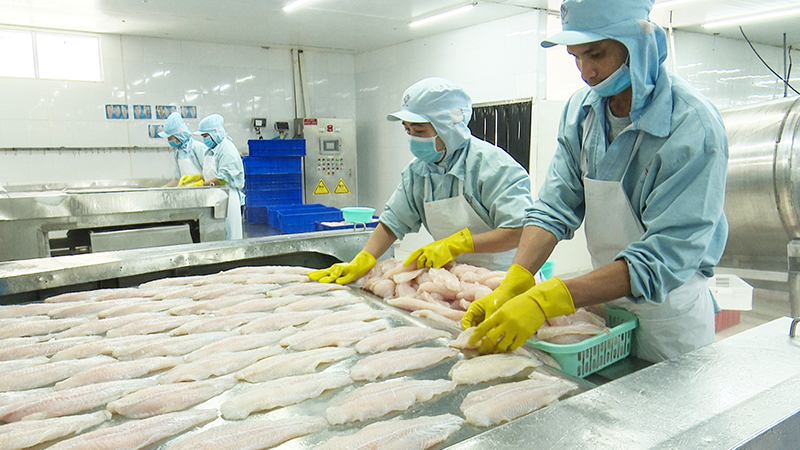
The processing and manufacturing industry is a driving force behind economic growth. (In the photo: Processing pangasius for export at South Vina Co., Ltd., Tra Noc Industrial Park, Can Tho City.)
International organizations forecast Vietnam's economic growth to be among the top in the ASEAN region and a bright spot in global growth. However, traditional growth drivers (exports, consumption, public investment) have been effective but have not met expectations; there is significant pressure to disburse public investment capital in the last months of the year, while domestic market purchasing power is recovering slowly; and exports are adversely affected by US tariff policies.
Forecasts also indicate that in the last six months of the year, difficulties and challenges will outweigh opportunities, with many unpredictable issues. In particular, the US retaliatory tariff policy is expected to directly impact many of our country's key export sectors such as electronics, textiles, wood products, and seafood, putting pressure on GDP growth, macroeconomic stability, employment, and social welfare. According to estimates from the Ministry of Finance, a 1% decrease in exports to the US will affect growth by approximately 0.08%; a 10% increase in domestic fuel prices will affect growth by approximately 0.5%. In addition, competitive pressure in both domestic and export markets, trade protectionist barriers, and non-tariff barriers will also directly impact the production and business activities of enterprises.
According to the Ministry of Industry and Trade , in the first six months of the year, the average monthly export value nationwide reached only $36.6 billion, $1.3 billion lower than the average target set at the beginning of the year. Meanwhile, the remaining six months of the year present many difficulties and challenges for the country's exports. Currently, the 20% reciprocal tariff for goods exported from Vietnam and 40% for goods transshipped through Vietnam, as announced by the US President, although lower than in other countries in the region, is still a high tariff. To achieve the national export target of approximately $454-455 billion, a 12% increase compared to 2024, average monthly exports in the remaining months of the year need to reach around $39 billion, requiring a comprehensive and highly coordinated approach.
Determination is needed.
Given the current situation, the Ministry of Finance has put forward two growth scenarios for the last two quarters of the year and for the whole year 2025. According to Scenario 1 (8% growth for the whole year 2025): growth in the third quarter reaches 8.3% year-on-year and in the fourth quarter reaches 8.5%. The GDP for the whole year is projected to exceed US$508 billion, with GDP per capita exceeding US$5,000. The growth drivers under Scenario 1 are total social investment in the last six months of the year at approximately US$108 billion; total retail sales of goods and consumer service revenue (at current prices) increasing by approximately 12% or more; total import and export turnover of goods in 2025 increasing by 16% or more; and average CPI around 4.5-5%.
Under Scenario 2 (annual growth in 2025 reaching 8.3-8.5%): Q3 growth reaches 8.9-9.2% year-on-year and Q4 growth reaches 9.1-9.5%. Annual GDP exceeds US$510 billion, and GDP per capita exceeds US$5,020. Growth drivers under Scenario 2 are approximately US$111 billion in total social investment in the last six months of the year, a 13% or higher increase in total retail sales of goods and consumer service revenue (at current prices), a 17% or higher increase in total import and export turnover in 2025, and an average CPI of approximately 4.5-5%. Traditional growth drivers (exports, consumption, investment) continue to be the main drivers, but there is still significant room and potential for further acceleration.
In the two growth scenarios, the Ministry of Finance proposed that the Government and the Prime Minister choose Scenario 2 to create momentum for growth in 2026 to reach 10% or more. Under this scenario, the Ministry of Finance leadership stated that localities need to achieve higher growth targets in 2025 than those set in Resolution No. 25/NQ-CP, especially the leading localities and growth drivers of the country: Hanoi 8.5% (0.5% higher), Ho Chi Minh City 8.5% (0.4% higher), Quang Ninh 12.5% (1% higher), Thai Nguyen 8% (0.5% higher)... State-owned corporations and enterprises need to achieve growth 0.5% higher than their initial targets.
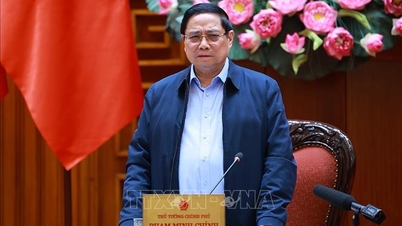
Regarding the Ministry of Finance's proposal for an economic growth scenario of 8.3-8.5% in 2025, Prime Minister Pham Minh Chinh emphasized that this is a very difficult and challenging goal, but not an impossible one. The Prime Minister outlined 16 key tasks and solutions that need to be implemented immediately in the last six months of the year with high determination, great effort, decisive and effective action, and a clear assignment of responsibilities: clear person, clear task, clear time, clear responsibility, clear results, and clear authority. The Prime Minister also requested the State Bank of Vietnam to continue implementing a proactive, flexible, timely, and effective monetary policy, controlling credit to ensure it flows into economic growth drivers. He also called for harmonious coordination with fiscal policy to promote economic growth.
According to the State Bank of Vietnam's leadership, thanks to the synchronized implementation of monetary policies and solutions, lending interest rates continue to trend downwards. Specifically in June 2025, the average lending interest rate for new loans from commercial banks was approximately 6.3% per year, a decrease of 0.6% compared to the end of 2024.
According to State Bank Governor Nguyen Thi Hong, in the coming period, the State Bank will continue to closely monitor developments in the international and domestic economies to proactively, flexibly, and effectively manage monetary policy. At the same time, it will direct credit institutions to continue reducing costs, maintaining stable deposit interest rates, and striving to further reduce lending interest rates to support production and business, contributing to promoting economic growth.
Text and photos: GIA BAO
Source: https://baocantho.com.vn/thuc-hien-dong-bo-cac-giai-phap-de-dat-muc-tieu-tang-truong-kinh-te-nam-2025-a188660.html
























































































Comment (0)