

Today (June 27), the People's Committee of District 1 (Ho Chi Minh City) organized a meeting with businesses to invite their interest and call for investment in the "Ga Gao Market Project".
Nearly 50 years of waiting for change.
At the conference, District 1 Party Secretary Duong Anh Duc shared that although the district is the city center, unfortunately, there are still some areas where people live in cramped conditions, sharing toilets and taking turns sleeping.
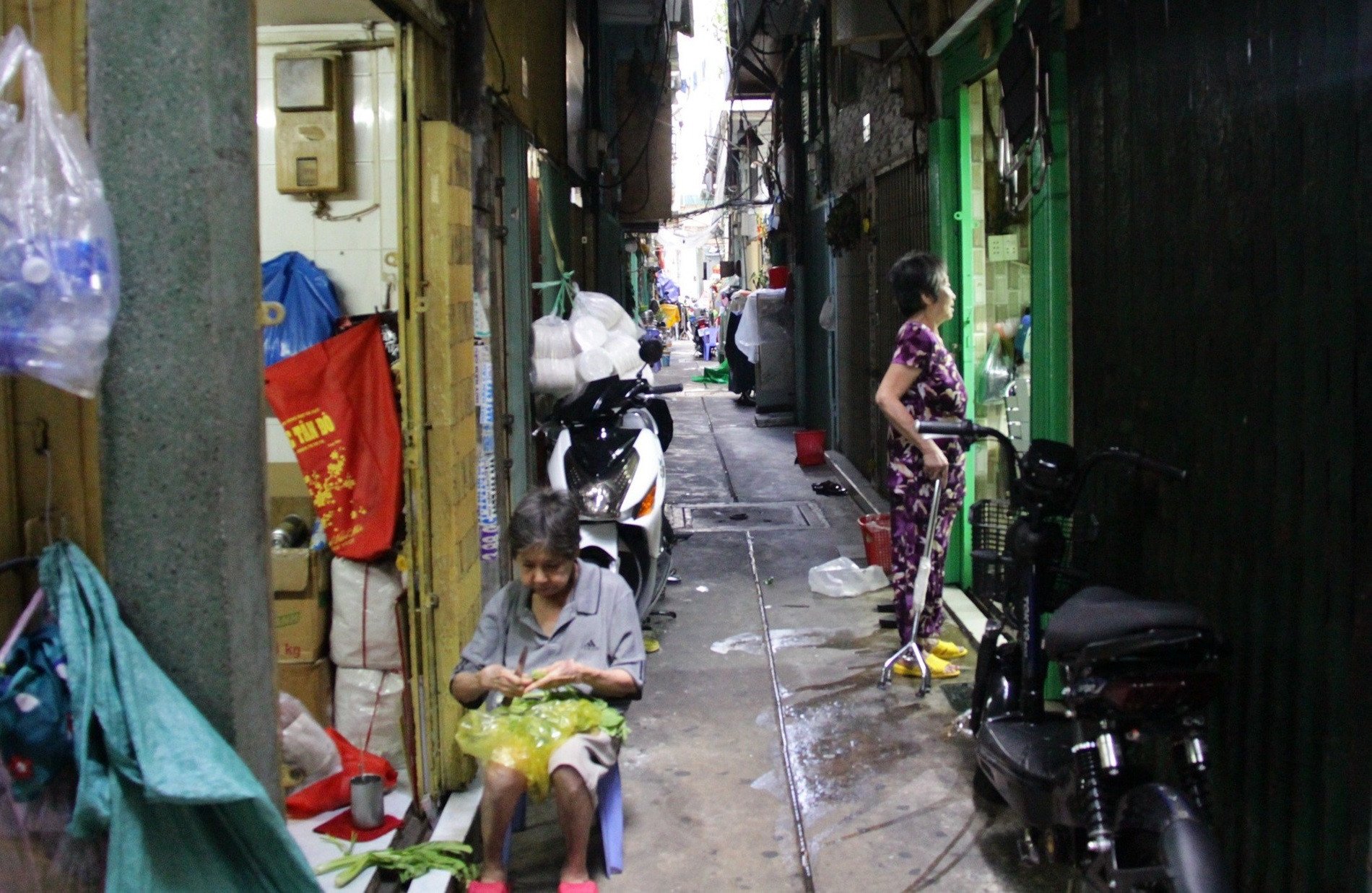
Mr. Duc stated that the district authorities, throughout various periods, have always been deeply concerned with improving these areas, hoping to bring a safe living environment to the residents.
"But 50 years have passed, these areas still exist, investors come and then leave..." Mr. Duc said.
According to Mr. Duong Anh Duc, if an investor is found to partner with the district and the Ga Gao Market project is successful, this will serve as a basis for the district to renovate other areas such as Ma Lang, Ma Lo, etc.
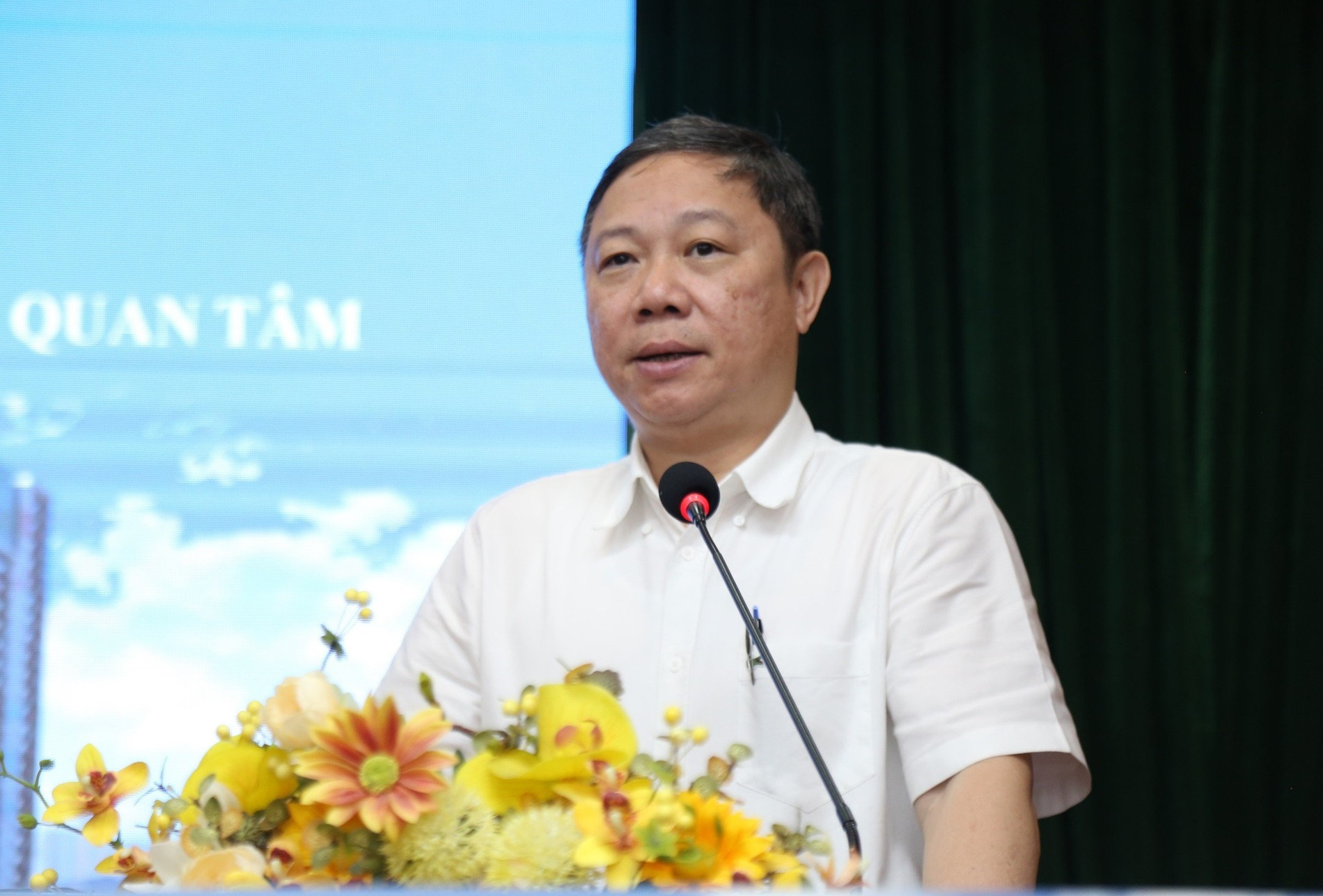
As the first to offer his opinion, architect Khuong Van Muoi suggested that the potential of the Ga Gao market should be viewed within the overall context of the entire area.
"This plot of land is located near 29/3 Park, where underground metro station space and underground commercial areas will be planned… In addition, the land is adjacent to Ben Thanh Market, the central streets of Ham Nghi and Le Loi, and the Saigon River bank… It's hard to find an area with as much potential as this in the city," Mr. Muoi affirmed.
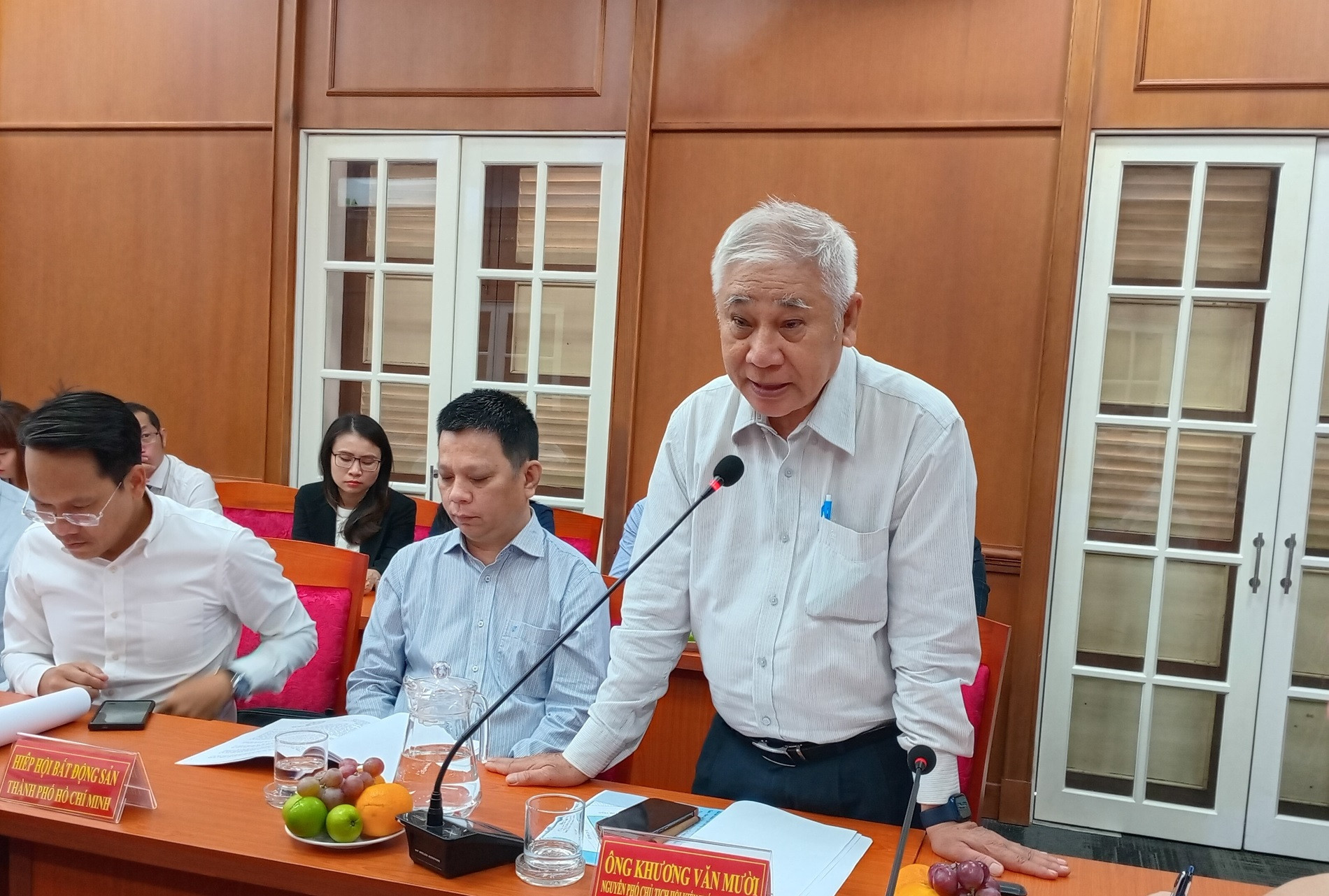
According to Mr. Mười, a project with such great potential will be a driving force for the development of the city center. From any perspective, the project must be implemented to change the appearance of the area and bring a better life to the people.
'A sufficiently strong special mechanism is needed.'
Meanwhile, a representative from Nova Real Estate Investment Group JSC stated that the company has made initial contact regarding this project.
"However, the project still lacks clarity on the investment mechanism and its form. Will it involve on-site or alternative resettlement? How will compensation and land clearance be handled? How will the State participate in the project?..." - the representative commented.
The Gà Gạo market area is quite large, over 6,000 square meters. However, the project's specifications regarding density, height, land use coefficient, etc., only allow for the construction of 600 apartments. Of these, 300 are for resettlement of residents, and the remaining 300 can be sold commercially, which is not in line with the area's potential.
"According to our research, in the current stage, for this project to be successfully implemented, a sufficiently strong special mechanism is needed for investors to proceed," the Nova representative emphasized.
Representatives from Bitexco Group commented that the current land use coefficient of 10 and maximum height of 50m make it very difficult to implement the project.
"According to preliminary calculations, this project needs to have a height of 24-25 floors (i.e., 80m) to comply with a land use coefficient of 10. The project must both meet the on-site resettlement needs of the residents and provide business opportunities for the enterprise in order to be implemented," this person proposed.
Proposal to build social housing
One of the notable proposals at the conference came from the representative of Hoang Quan Group, who suggested that research should be conducted to develop a social housing project.
"The mechanism for social housing is already in place and clear. Poor and near-poor households are prioritized for resettlement, and investors are allowed to sell 20% of the project's apartments commercially to offset costs. Thus, if a social housing project is implemented, it satisfies both the conditions of the investor and the interests of the residents," this person analyzed.
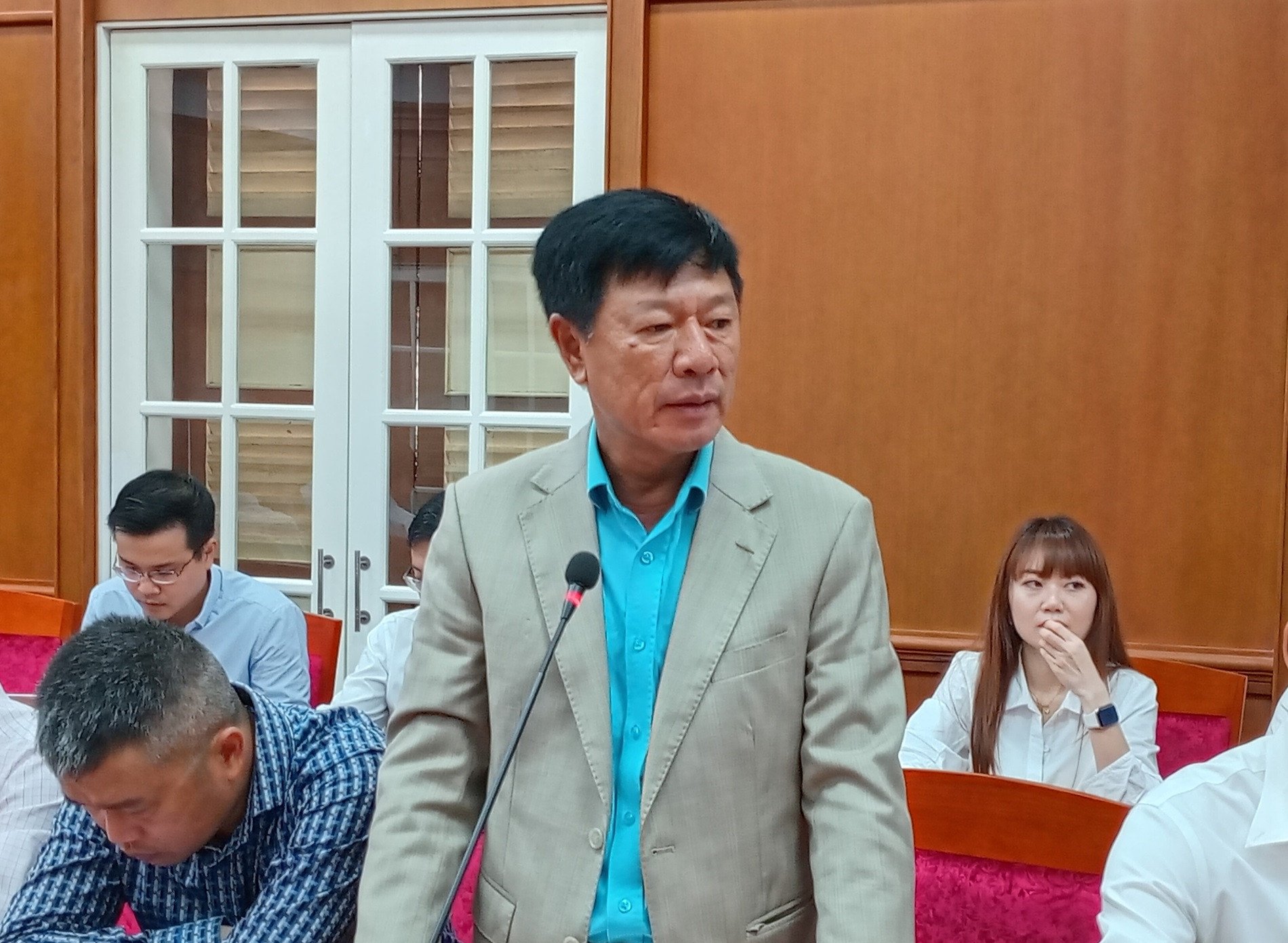
However, this person also noted that if social housing were built on this land, the state would not collect land use fees. Furthermore, the land is located in the city center, and building social housing on it would not be in harmony with the urban landscape. This is a contradiction that needs a suitable solution.
On behalf of the Department of Planning and Investment, a representative expressed agreement with the proposal to study the construction of social housing and stated that the Ho Chi Minh City People's Committee had considered including this project in the list of "green investments".
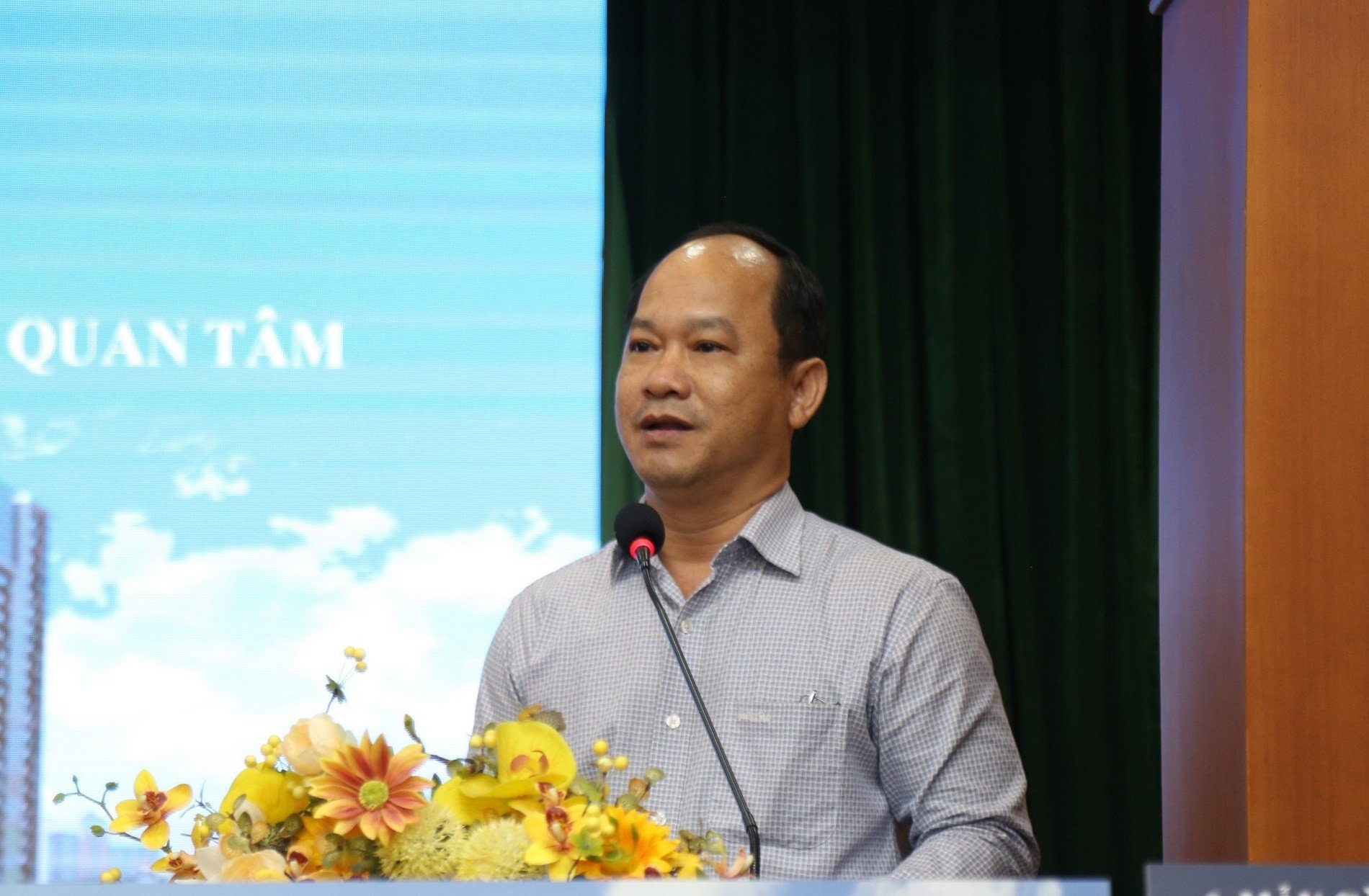
Responding to the opinions and suggestions, the Chairman of the District 1 People's Committee, Mr. Le Duc Thanh, stated that the existence of areas like the Chicken and Rice Market next to magnificent buildings in the locality is something everyone can see.
According to him, in addition to presenting the project, the district also wants to listen to the opinions of experts and investors to adjust the project to suit the interests of all three parties: investors, residents, and the government.
"Based on the feedback received, the district will synthesize and study it to find a suitable solution for the project, and propose to the city level a sufficiently strong mechanism and policy to ensure effective implementation."
"Authorities at all levels always want to renovate these areas to make them more attractive so that people can have a better life, befitting a civilized and compassionate city," Mr. Thanh expressed his opinion.
According to the District 1 People's Committee, the Gà Gạo Market project has a land area of 6,339m2, with a planned area of 5,949m2; a maximum building density of 50%; a land use coefficient of 10; a maximum height of 50m; and a population of 700 people. |
Source: https://vietnamnet.vn/tim-giai-phap-cho-khu-nguoi-dan-phai-chia-ca-de-ngu-giua-tphcm-2295878.html

![[Photo] Prime Minister Pham Minh Chinh holds a phone call with the CEO of Russia's Rosatom Corporation.](/_next/image?url=https%3A%2F%2Fvphoto.vietnam.vn%2Fthumb%2F1200x675%2Fvietnam%2Fresource%2FIMAGE%2F2025%2F12%2F11%2F1765464552365_dsc-5295-jpg.webp&w=3840&q=75)

![[Photo] Closing Ceremony of the 10th Session of the 15th National Assembly](/_next/image?url=https%3A%2F%2Fvphoto.vietnam.vn%2Fthumb%2F1200x675%2Fvietnam%2Fresource%2FIMAGE%2F2025%2F12%2F11%2F1765448959967_image-1437-jpg.webp&w=3840&q=75)










































![[OFFICIAL] MISA GROUP ANNOUNCES ITS PIONEERING BRAND POSITIONING IN BUILDING AGENTIC AI FOR BUSINESSES, HOUSEHOLDS, AND THE GOVERNMENT](https://vphoto.vietnam.vn/thumb/402x226/vietnam/resource/IMAGE/2025/12/11/1765444754256_agentic-ai_postfb-scaled.png)


































Comment (0)