

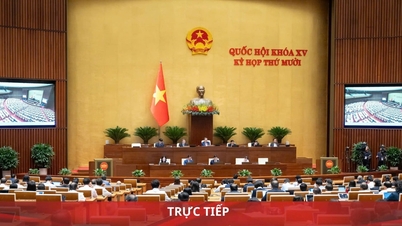
On the morning of December 5, the National Assembly discussed in the hall the investment policy of the National Target Program on new rural areas, sustainable poverty reduction, and socio-economic development in ethnic minority and mountainous areas until 2035.
Need for a "safe legal zone" for officials
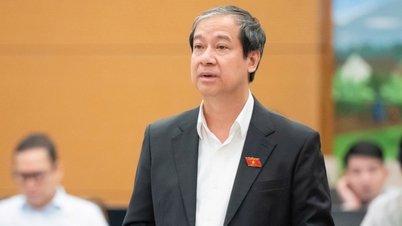
Delegate Ha Sy Dong ( Quang Tri ) said that the consolidation of three target programs has overcome resource dispersion, policy overlap and multiple focal points, but there are also many issues that need to be addressed so that the new phase program is truly focused, key and feasible.
First of all, he said it is necessary to review the entire system of indicators in a practical, measurable direction instead of being slogan-based.
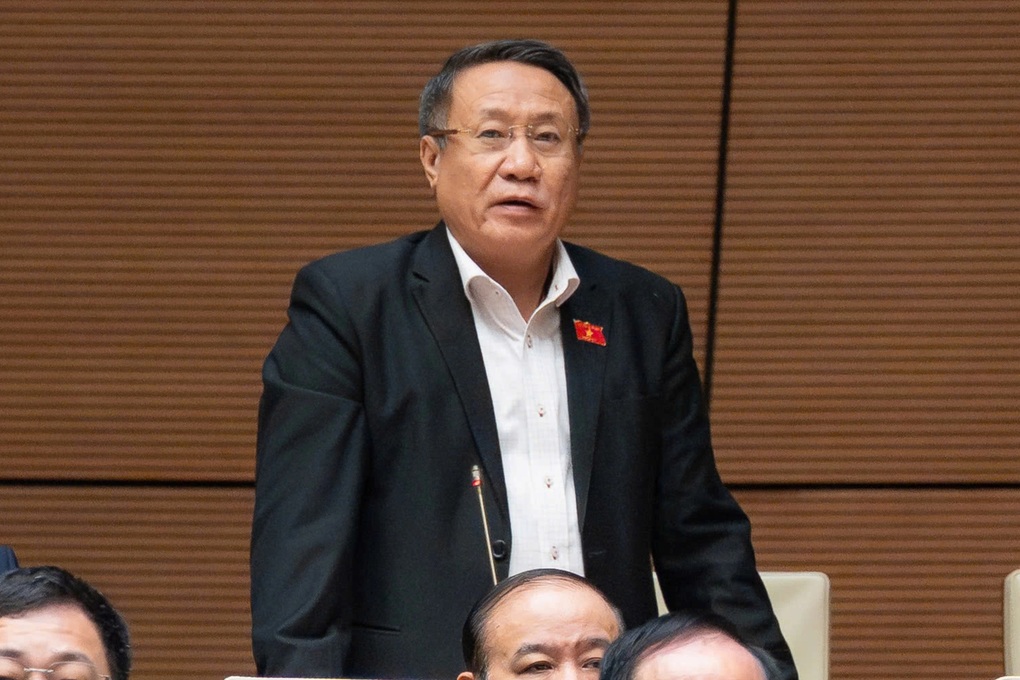
National Assembly Delegate Ha Sy Dong (Photo: Hong Phong).
Regarding capital and resource structure, the delegate of Quang Tri province commented that it is "very worrying" because the minimum capital demand for the 2026-2030 period is over 240,000 billion VND, but currently only 100,000 billion VND has been balanced - only reaching about 41.5% of the minimum demand.
Meanwhile, the requirement to mobilize 33% of local budget capital and 28% from businesses and the community, according to Mr. Dong, is not feasible for poor provinces, where the regular budget still depends on the Central Government.
Delegate Dong suggested redefining the appropriate matching ratio, especially for mountainous provinces, remote and isolated areas - where even 10% matching is a challenge. At the same time, he said that it is necessary to clearly stipulate the allocation principle in the direction that "at least 70% of the central budget capital must be prioritized for ethnic minority and mountainous areas, of which at least 40% for particularly difficult areas, ensuring investment in the right core poor areas, right focus".
He said that this content should be left to the locality to review and decide.
Regarding the management and implementation model, Mr. Dong pointed out difficulties in the 2021-2025 period such as complicated procedures, many levels, slow instructions, unclear decentralization, etc.
To overcome this, delegates from Quang Tri province proposed that the Ministry of Ethnic Minorities and Religions preside over the Program component, act as a unified focal point; strongly decentralize power to localities in selecting project portfolios, especially small projects with simple techniques; simplify investment processes; clearly define the personal responsibilities of leaders and the mechanism for evaluating and handling delays.
“At the same time, there needs to be a legal safety zone for officials to dare to think and act, in line with the directive spirit on protecting dynamic and creative officials,” Mr. Dong said.
Along with that, he proposed to stipulate the highest priority rate for the production development component, because creating jobs and increasing income is the most important; and to strengthen preferential credit policies instead of providing free support.
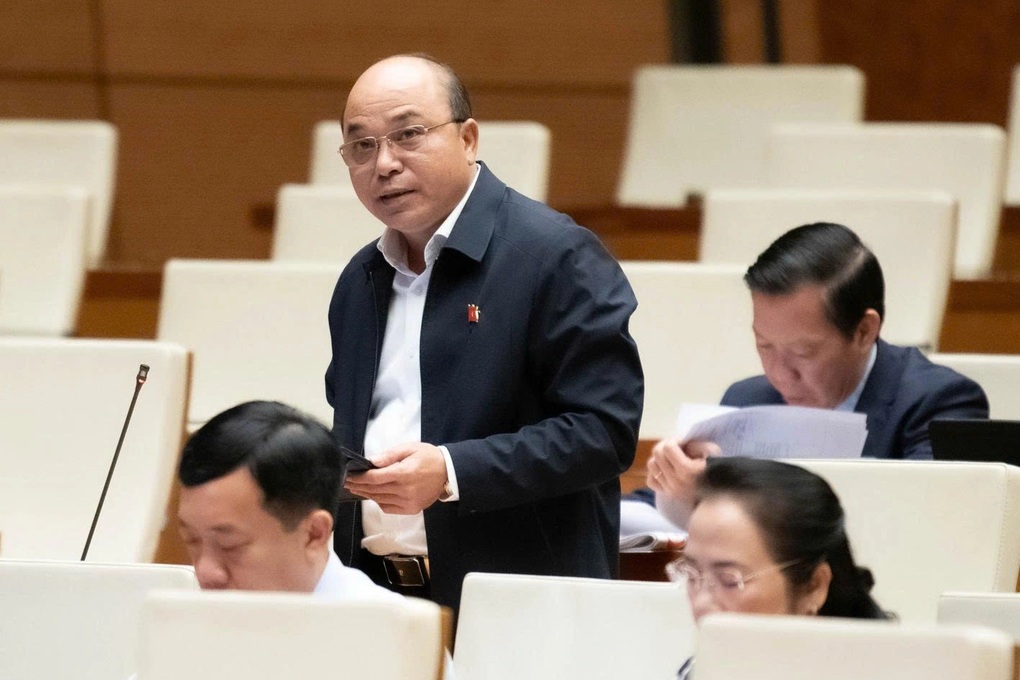
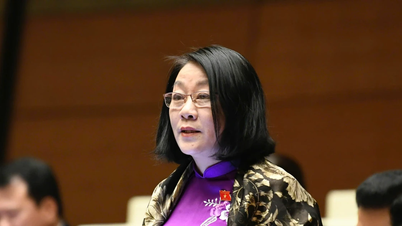
National Assembly Delegate Nguyen Van Yen (Photo: Hong Phong).
Agreeing, delegate Do Van Yen (HCMC) also agreed on the principle of allocating central budget capital to prioritize especially difficult areas and ethnic minority areas.
However, to be consistent with reality, he proposed adding allocation criteria based on "the level of target completion and disbursement efficiency of the previous period".
“Linking capital allocation with implementation efficiency will create strong motivation for localities in management, while reducing the situation of slow capital disbursement or scattered investment, thereby promoting progress and improving program efficiency,” according to delegate Yen.
Many projects are small but the appraisal process is lengthy.
Regarding supervision and publicity, the audit report emphasized the risk of loss and scattered investment if there is a lack of community supervision mechanism for small, scattered projects.
To avoid this risk, delegate Ha Sy Dong proposed to include in the resolution a requirement to publicize the entire project portfolio, capital, progress and results on a digital platform; and assign the Fatherland Front and the community to monitor using digital tools in real time. “This is a prerequisite to ensure the program achieves the highest efficiency and prevent negativity,” he said.

National Assembly delegates in the discussion session on the morning of December 5 (Photo: Hong Phong).
To ensure feasibility and accountability, according to delegate Ha Sy Dong, the National Assembly needs to stipulate that the Government must report mid-term in 2029 on progress, disbursement, and efficiency; and at the same time apply a set of independent KPIs to evaluate and serve as a basis for capital allocation for the 2031-2035 period.
Delegate Do Van Yen noted that this national target program has a wide scope, long implementation time, and is associated with vulnerable groups, so it is necessary to ensure feasibility, synchronization, and effective implementation.
Agreeing with the establishment of a Joint Steering Committee to avoid duplication and ensure centralized coordination, delegate Yen proposed adding a mechanism to "cut administrative procedures for small-scale, simple technical projects".
“Reality shows that many small projects in rural areas and ethnic minority areas are facing difficulties due to complicated and lengthy appraisal processes, slowing down the effectiveness of benefits for people,” Mr. Yen said, emphasizing that a controlled procedural reform mechanism will reduce time and costs, while enhancing accountability.
Source: https://dantri.com.vn/thoi-su/tinh-ngheo-ngong-ngan-sach-trung-uong-yeu-cau-huy-dong-von-khong-kha-thi-20251205102511298.htm


![[Photo] Cat Ba - Green island paradise](/_next/image?url=https%3A%2F%2Fvphoto.vietnam.vn%2Fthumb%2F1200x675%2Fvietnam%2Fresource%2FIMAGE%2F2025%2F12%2F04%2F1764821844074_ndo_br_1-dcbthienduongxanh638-jpg.webp&w=3840&q=75)


















































































Comment (0)