Tonight, Vietnamese people should look up at the sky and watch Venus, Jupiter, Mars, Saturn… 'parade'.
Báo Thanh niên•10/01/2025
Tonight, January 10th, Venus is at its farthest distance from the sun in the sky. Mars, however, won't be this bright in January until February 2027.
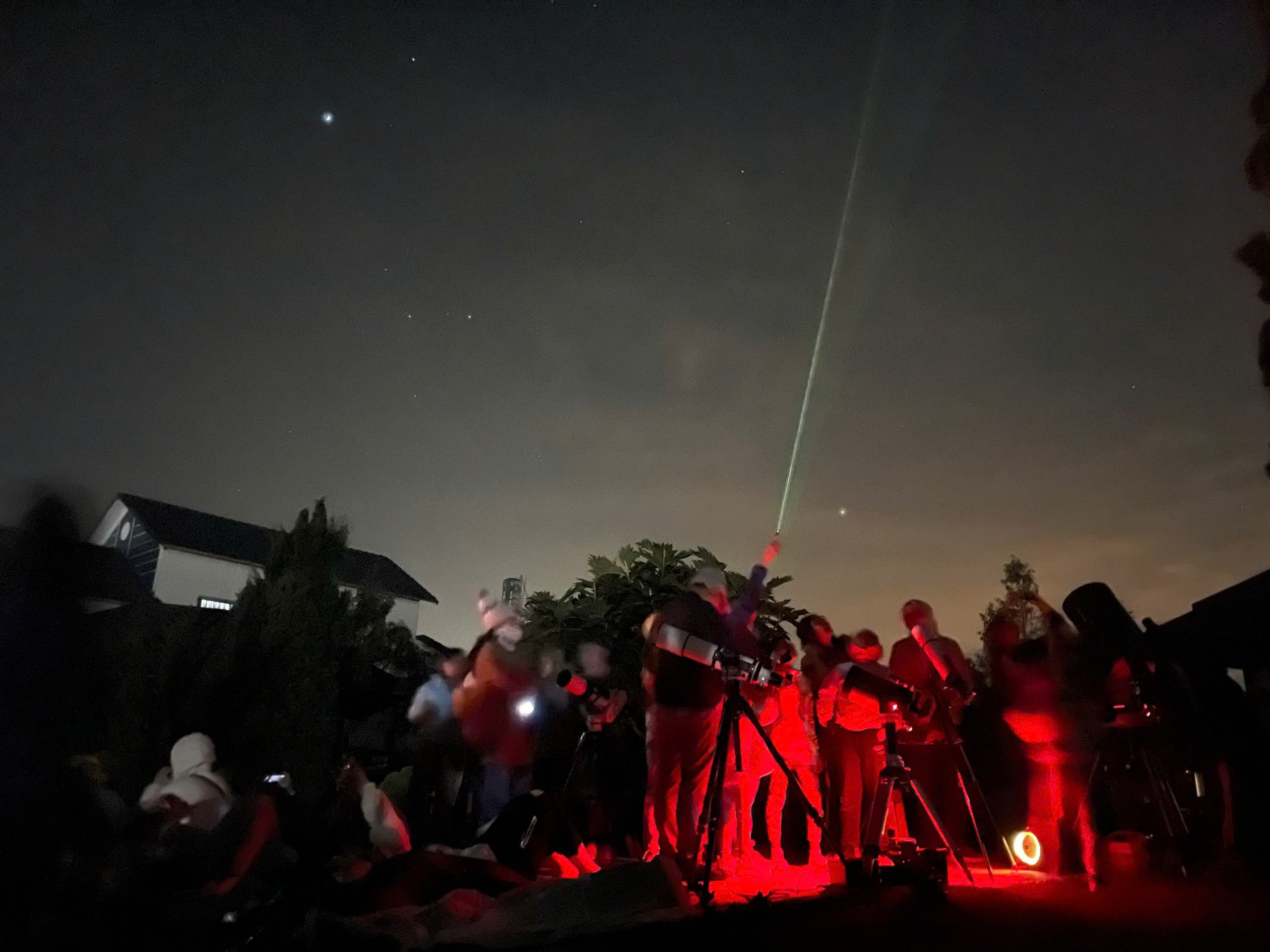
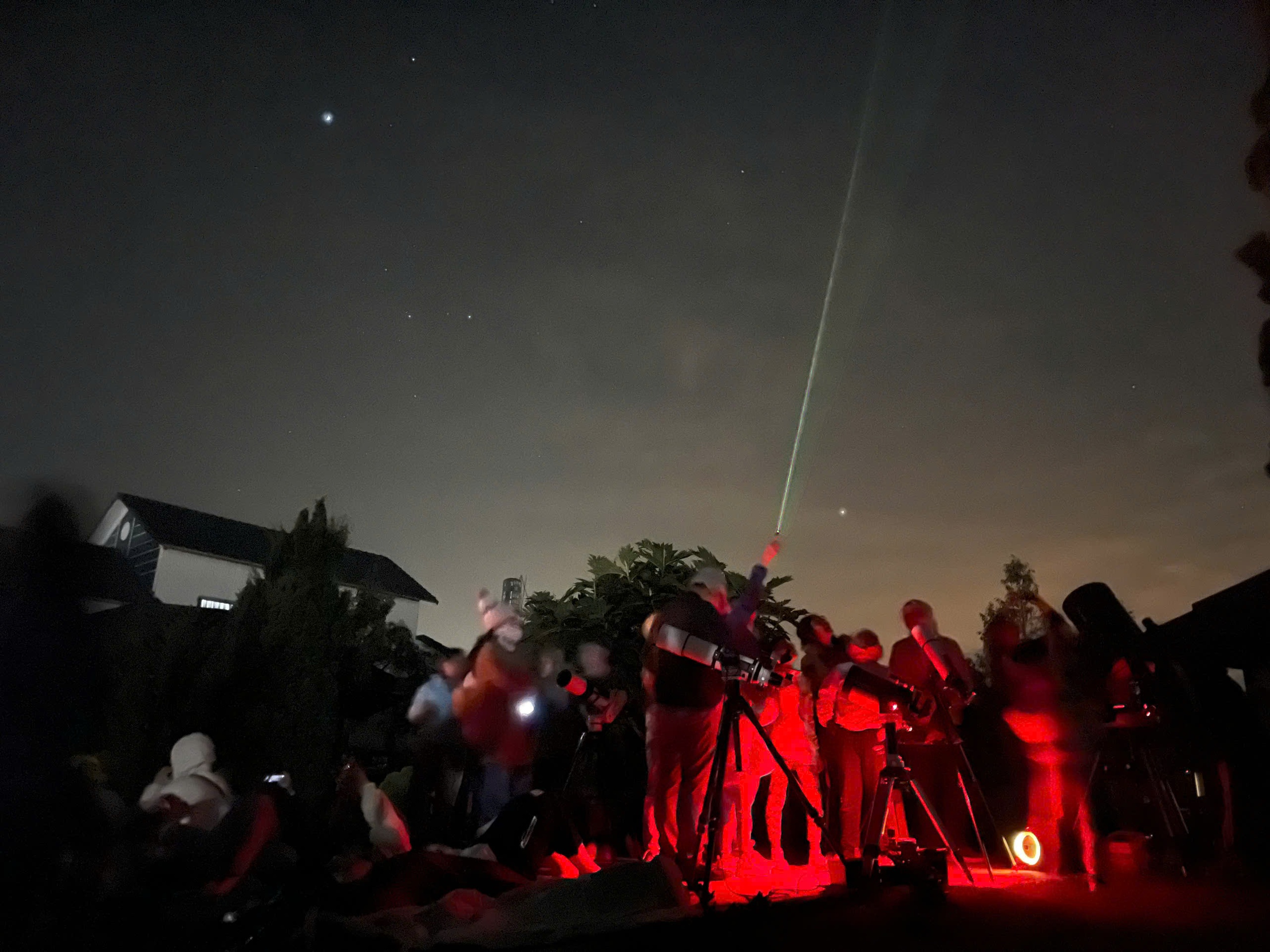
The January sky will present a rare and magnificent spectacle with the convergence of four planets: Venus, Jupiter, Mars, and Saturn. Right now, astronomy enthusiasts can look up to the sky to admire this fascinating phenomenon.
Venus reaches its maximum elongation to the east.
According to Timeanddate.com , Venus, Saturn, Jupiter, and Mars will align in a dazzling display in the night sky, a dream come true for astronomy enthusiasts and skywatchers in general.
Look up at the January night sky to see the magic.
PHOTO: CAO AN BIEN
For almost the entire month of January, as night falls, these four planets will be clearly visible in the sky. Looking southwest, you will see Venus and Saturn shining near the horizon. Above these two stars is the bright Jupiter and the sparkling Mars in the east. This convergence lies on the plane showing the orbits of the planets around the sun. The Hanoi Astronomical Society reports that tonight, January 10th, Venus will be at its farthest point from the sun when observed from Earth. This planet will shine with an apparent magnitude of -4.4 in the region of the Aquarius constellation. Venus will appear at approximately 44° in the southwest direction shortly after sunset and will set after 21 hours, meaning you will have about 3 hours to observe it. Venus is an inner planet relative to Earth, meaning it always appears close to the sun and is obscured by the sun's bright light for most of the time.
The conjunction of the four planets Venus, Jupiter, Mars, and Saturn in the night sky.
You can only find it for a few months around the time the planet reaches its maximum elongation. These appearances repeat approximately every 1.6 years, alternating between morning and evening skies depending on Venus's position relative to the sun (east or west). When in the east, the planet rises and sets shortly after the sun, meaning you might see it in the evening sky after sunset, known as the Evening Star. Conversely, when in the west, Venus rises earlier than the sun and shines brightly in the morning sky. At this time, it is called the Morning Star.
Mars and Venus are the closest planets to Earth.
Experts say that unlike Venus, Mars orbits the sun less closely than Earth. The best time to observe Mars is when it is in direct opposition to the sun in the sky – astronomers call this its "opposition." Mars will reach this position on January 16th. Mars will rise at sunset, reach its highest point in the sky around midnight, and set at sunrise. In the weeks surrounding opposition, Mars is brightest, and its red color is particularly noticeable to the naked eye. Mars will reach its next opposition on February 19, 2027. One reason Venus and Mars can shine so brightly in our sky is because their orbits around the sun are relatively close to Earth's. Their actual distance from Earth changes constantly as each planet moves through its orbit at different speeds.
This event is not just a spectacular sight to behold with the naked eye. If you have a telescope, you can even see Uranus and Neptune.
In early January 2025, Mars will be the closest planet to Earth. On January 15th, Venus will become Earth's closest neighbor. However, even in opposition in 2025, Mars will still be overshadowed by another planet – Jupiter. The reason is that Jupiter is very large. Jupiter's actual diameter is about 21 times larger than Mars'. Even when viewed from Earth, Jupiter's apparent size in the sky will be three times larger than Mars' on January 16th. And what about Saturn? Its actual diameter is only slightly smaller than Jupiter's. However, Saturn is about twice as far from Earth as Jupiter and therefore appears less bright. One of the notable things about Saturn this January is that it's very close to Venus in the sky. In short, January 2025 is a great month to go outside, gaze at the night sky, and enjoy the wonders of the solar system. Let's observe starting tonight.



































![[Photo] Prime Minister Pham Minh Chinh holds a phone call with the CEO of Russia's Rosatom Corporation.](/_next/image?url=https%3A%2F%2Fvphoto.vietnam.vn%2Fthumb%2F1200x675%2Fvietnam%2Fresource%2FIMAGE%2F2025%2F12%2F11%2F1765464552365_dsc-5295-jpg.webp&w=3840&q=75)


















































Comment (0)