

On December 5th, the Ho Chi Minh City Department of Labor, War Invalids and Social Affairs held its monthly meeting for November.
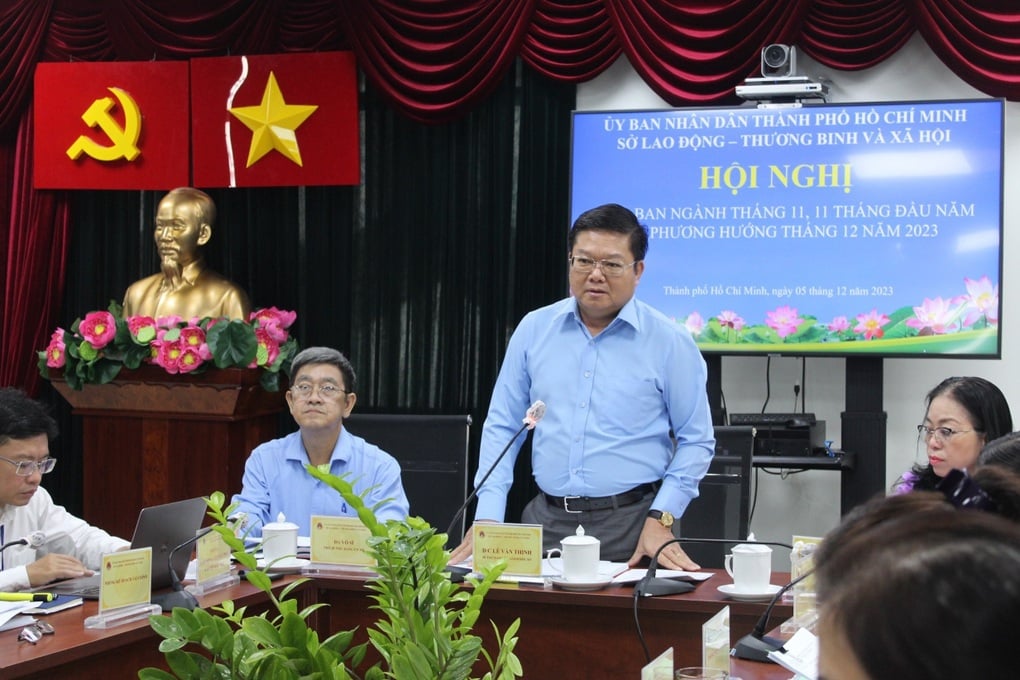
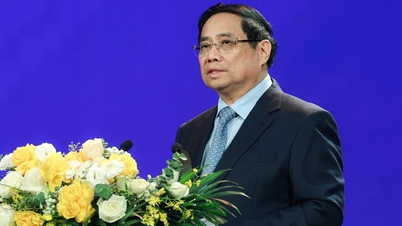
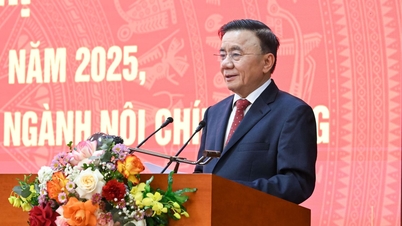
Mr. Le Van Thinh, Director of the Department of Labor, War Invalids and Social Affairs of Ho Chi Minh City, chaired the conference (Photo: Tung Nguyen).
Representing the Ho Chi Minh City Department of Labor, War Invalids and Social Affairs, Ms. Tran Thi Thanh Hang, Chief of the Department's Office, presented a summary of the results of tasks performed in November and the first 11 months of the year, as well as the direction and tasks for December.
Accordingly, as of November 2023, the number of employed workers who had received training was 118,685/117,000, reaching 101.44% of the annual plan. Of these, 6,461 had a university degree or higher; 17,714 had a college degree; 5,085 had a vocational degree; and 89,425 had received basic or ongoing training.
Currently, the total number of trained workers in the city is nearly 4.5 million, reaching 87.27% of the total working-age population, an increase of 0.82% compared to the same period last year.
To date, vocational training enrollment has reached 317,439 people, exceeding the 2023 plan (315,000 people), an increase of 11.61% compared to the same period last year.
Vocational training for rural workers reached 4,761 people, achieving 117.56% of the annual plan (4,050 people), an increase of 25.32% compared to the same period last year.
From the beginning of 2023 to the present, economic sectors have attracted and provided employment for 291,985/300,000 people (achieving 97.33% of the annual plan), including creating 131,865/140,000 new jobs (achieving 94.19% of the annual plan).
Companies involved in sending workers abroad have sent 8,583 people to work in markets such as Japan, South Korea, and Taiwan.
It is estimated that by the end of 2023, the set plan will be completed; specifically, providing employment for 305,000/300,000 people (achieving 101.66% of the annual plan), including 141,000/140,000 new jobs (achieving 100.71% of the annual plan); the urban unemployment rate will be 3.9% (the plan was to limit it to 4%).
However, the Ho Chi Minh City Department of Labor, War Invalids and Social Affairs also acknowledged that the impact of the global economic downturn has affected the production and business activities of domestic enterprises as well as the labor market.
In response to this situation, the Department proactively implemented activities to connect labor supply and demand in order to create new jobs and reduce job losses.
During the last month of the year, the Department of Labor, War Invalids and Social Affairs will closely monitor developments in labor relations to promptly guide businesses in complying with regulations.
In particular, this is a sensitive time before the Lunar New Year. Therefore, the department's leadership requested relevant units to closely monitor the situation regarding salary and bonus payments for the Lunar New Year of the Year of the Dragon 2024 to stabilize labor relations in businesses.
In his concluding remarks at the conference, Mr. Le Van Thinh, Director of the Ho Chi Minh City Department of Labor, War Invalids and Social Affairs, highly appreciated the results of the units' work over the past 11 months. To date, the Department has completed 68 out of 69 programs, plans, and targets assigned by the Ho Chi Minh City People's Committee; the tasks assigned to the sector by the Ministry of Labor, War Invalids and Social Affairs for the year have also been completed.
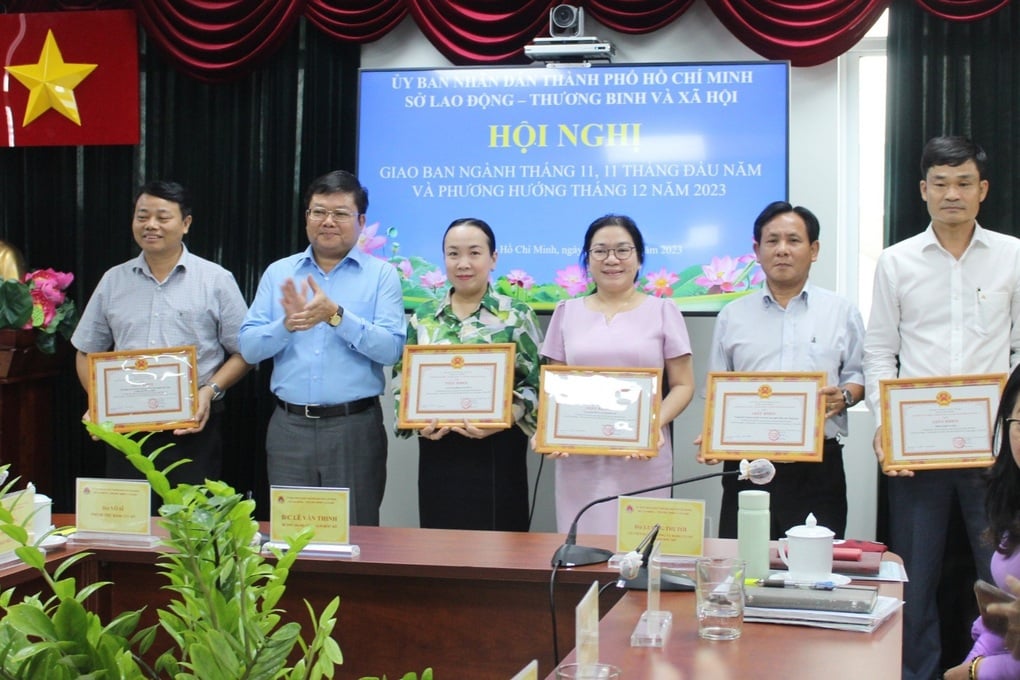
Mr. Le Van Thinh presents awards to units that achieved good results in November (Photo: Tung Nguyen).
In the field of labor and employment, Mr. Le Van Thinh suggested that relevant departments strengthen coordination and management of the labor situation of businesses in the city.
The Director of the Ho Chi Minh City Department of Labor, War Invalids and Social Affairs stated that a specialized agency that only surveys and monitors the labor situation in a few thousand large enterprises is insufficient to represent the overall picture of labor and employment in a city with over 250,000 enterprises, not to mention hundreds of thousands of individual business units and households…
Mr. Thinh instructed the units to find solutions to expand their labor management capabilities on a larger scale, understanding the labor issues of businesses in order to fully grasp the current labor supply and demand situation. From there, the labor sector can determine its future priorities, organize job fairs, and provide vocational training that suits the market…
In particular, Mr. Le Van Thinh emphasized that administrative reform and digital transformation have been actively participated in by the entire labor sector of the city, initially achieving many results and improving evaluation scores. However, he still pointed out that a segment of civil servants and officials still lack a positive attitude when interacting with citizens and businesses.
The Director of the Ho Chi Minh City Department of Labor, War Invalids and Social Affairs requested that units and departments that interact with the public install surveillance cameras, issue clear and transparent monitoring and handling procedures to ensure compliance, and improve attitudes when interacting with and handling matters for the public.
"In the public service department, a guide could be assigned to direct citizens to whoever they want to see and where to go... This person would also monitor the attitude of the staff receiving citizens. If the supervisor fails to detect any issues and citizens complain, or if surveillance cameras detect them, then the responsibility lies with the supervisor," Mr. Thinh suggested.
Source link



















































































Comment (0)