

Mr. Lam Quang Binh has planted 7,000 betel nut trees, over 2,000 dwarf banana trees, 300 orange trees, 200 pomelo trees, nearly 80 durian trees, 30 mangosteen trees, 100 guava trees..., raised 100 pigs, 10 cows, various types of chickens and ducks, and dug a fish pond with an area of about 2 acres, earning approximately 500 million VND per year.
Driven by dynamism and a desire to prosper in his homeland, Mr. Lam Quang Binh (born in 1984, Hamlet 5, Tien Hiep Commune, Tien Phuoc District, Quang Nam Province) boldly invested in production and business with a diversified economic model, becoming a role model for successful entrepreneurship in the locality.
We were taken by officials from the Agricultural Technical Center of Tien Phuoc District, Quang Nam Province, to visit the integrated farm model of Mr. Lam Quang Binh's family. Mr. Binh is known for his diligence, eagerness to learn, and willingness to take risks. He has successfully developed a farm model combining gardens, forests, and livestock farming, yielding high economic efficiency.
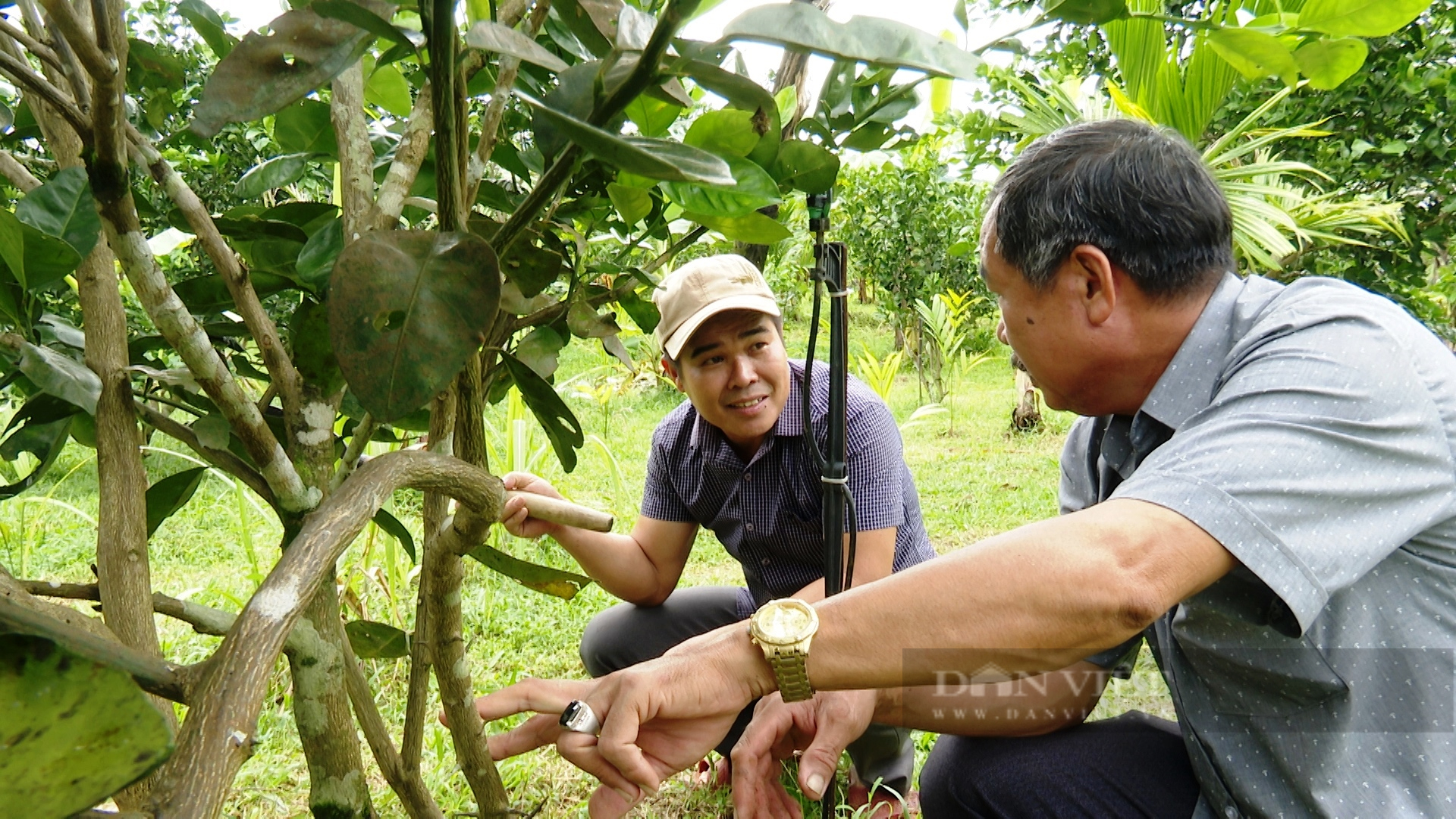
Mr. Lam Quang Binh (wearing a hat) is tending to his fruit orchard and discussing fruit tree development with agricultural officials. Photo: NH
Mr. Lam Quang Binh shared that after graduating from high school, most of his peers went to the city to study at university or work as factory workers, leaving only a few to stay and continue farming, including himself. Taking advantage of living near the hilly Na Thao area, Mr. Binh and his wife chose to develop their family's economy by planting forests combined with growing fruit trees and raising livestock. On an area of approximately 25 hectares of garden and forest land, Mr. Binh planned and designed about 4 hectares as a farm for growing fruit trees and raising livestock and poultry.
Mr. Binh said that in 2020, a storm caused nearly 4 hectares of hybrid acacia trees in two adjacent areas of Go Mua and Na Thao to be broken and felled. Since then, his family decided not to plant acacia trees but to switch to fruit tree cultivation combined with livestock farming. When starting to develop their economy, the biggest difficulties for Mr. Binh were capital and experience. However, with his quick wit, diligence in learning from models in many localities, and participation in training courses organized by the commune and district, he and his wife gained confidence and boldly invested in improving the two areas of Go Mua and Na Thao to plant various fruit trees such as 7,000 betel nut trees, over 2,000 dwarf banana trees, 300 orange trees, 200 pomelo trees, nearly 80 durian trees, 30 mangosteen trees, and 100 guava trees...
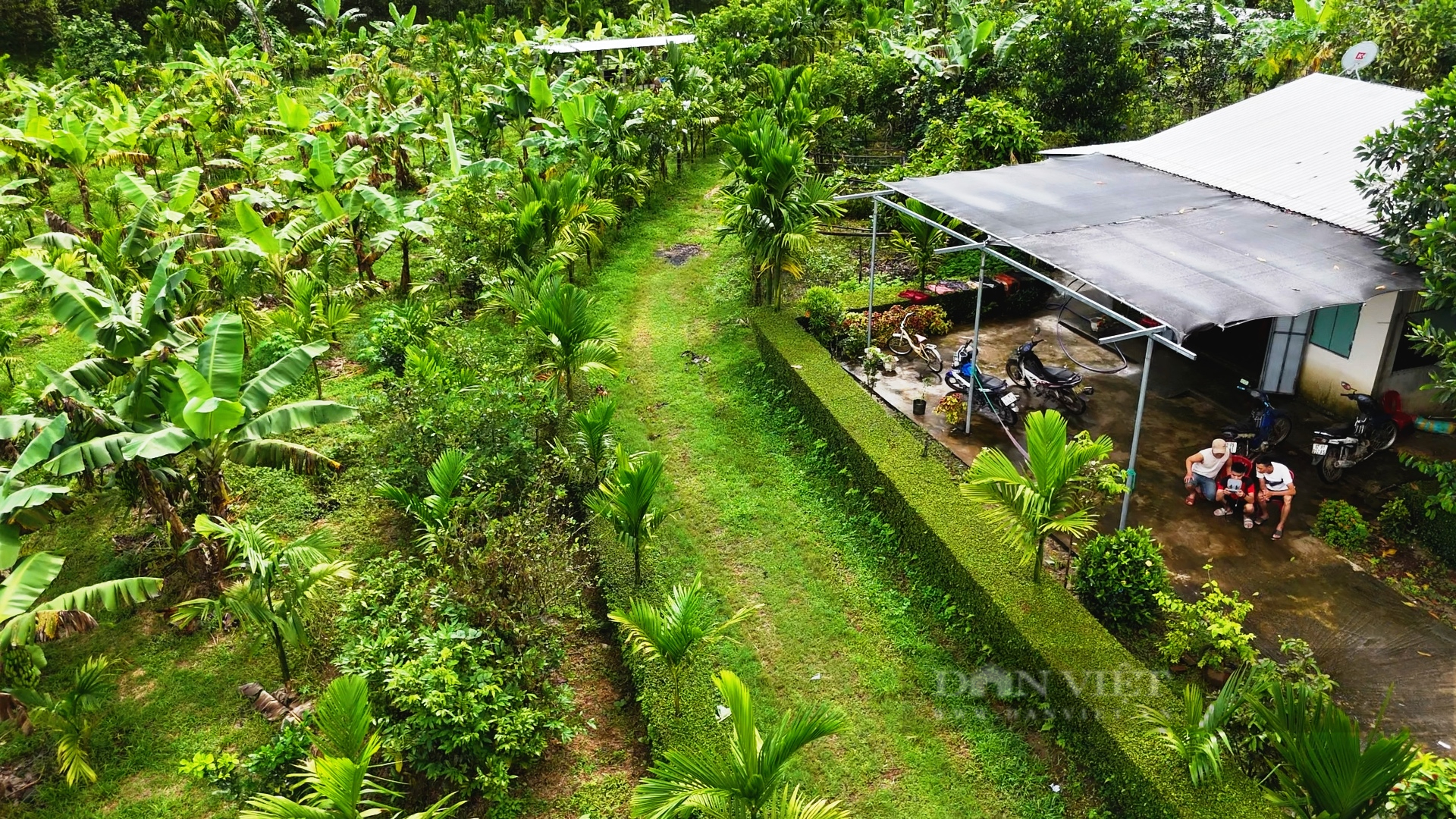
The lush green garden of Mr. Lam Quang Binh, seen from above. Photo: TH
At the same time, Mr. Binh extended a water pipeline from the Na Thao stream for about 2km, built a reservoir, and installed a semi-automatic irrigation system for his crops and livestock. Thanks to careful care, the crops are thriving. Because of the large banana plantation, to ensure a stable market, Binh contracted with QNA FARM Cooperative (Tien Ngoc commune, Tien Phuoc district) and Dat Quang Green Agriculture Cooperative, headquartered in Tien Hiep commune, Tien Phuoc district, to regularly purchase dwarf bananas and other varieties directly from his farm at prices ranging from 5,000 to 6,000 VND per kilogram.
In addition, Mr. and Mrs. Binh have invested in raising about 100 pigs, 10 cows, chickens, ducks, and other livestock, and dug a fish pond covering about 2 acres. Thanks to mastering livestock farming techniques and saving on feed costs through the integrated VAC (Garden-Pond-Livestock) economic model, their family earns a profit of over 300 million VND per year. Furthermore, Mr. and Mrs. Binh have also taken advantage of the hilly forest land to plant over 20 hectares of acacia trees, bringing in approximately 500 million VND annually.
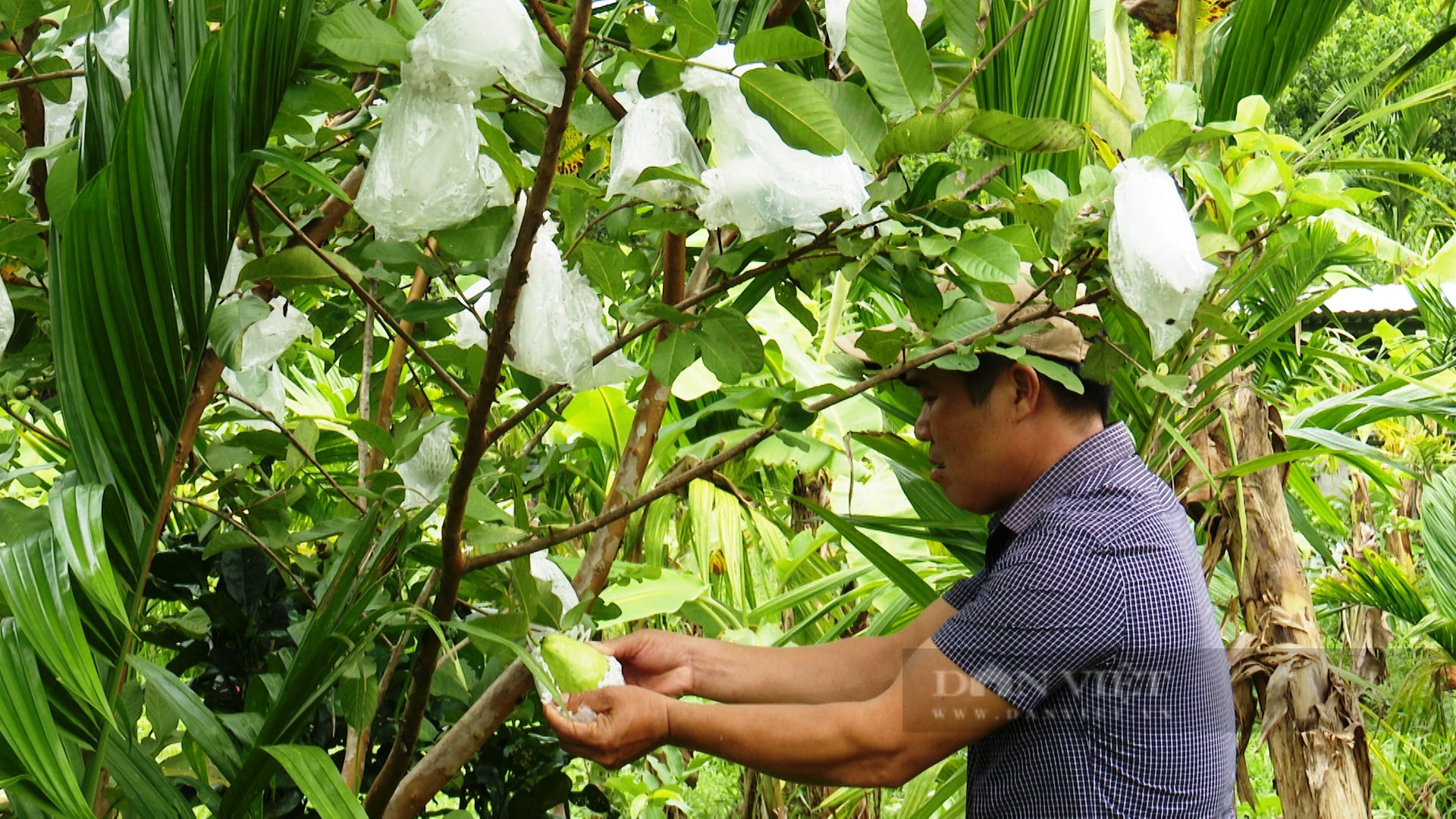
Mr. Lam Quang Binh stands beside his guava orchard, laden with fruit during the harvest season, yielding high productivity and income. Photo: TH
"Coming from a farming family, I've always thought about how to develop the economy and get rich from my homeland. So after graduating from high school, instead of following my friends to the city to work as a factory worker, I decided to stay in my hometown and invest in developing the economy through gardening and forestry."
"In particular, in recent years the district has had many policies to support the development of garden and farm economies, so my wife and I boldly converted a portion of our acacia plantation land to fruit tree cultivation combined with livestock farming. Now, seeing the plants growing lush and green, and the animals growing steadily day by day, I think our decision was the right one," Mr. Binh shared.
During the investment and development process of his family farm, Mr. Binh received guidance from officials of Tien Hiep commune and the Tien Phuoc District Agricultural Technical Center on preparing documents and procedures, as well as instruction on proper planting techniques and irrigation systems. The model received nearly 370 million VND in government support from the district's Project 03 and Resolution 35 of the Provincial People's Council.
Mr. Lam Quang Binh is introducing his integrated farming model (garden, pond, and livestock) to the local people. This model generates high economic returns and stable income. Photo: TH
Mr. Vo Duy Nhan, an official from the Agricultural Technical Center of Tien Phuoc district, Quang Nam province, said that in recent times, the Center has regularly coordinated with agricultural officials in communes and towns to organize training courses, provide advice, guidance, and transfer scientific and technical knowledge to farmers for cultivation and livestock farming. Farmers have also been able to leverage the potential advantages of their land, soil, and terrain, boldly shifting the structure of crops and livestock, contributing to increased income and legitimate wealth creation.
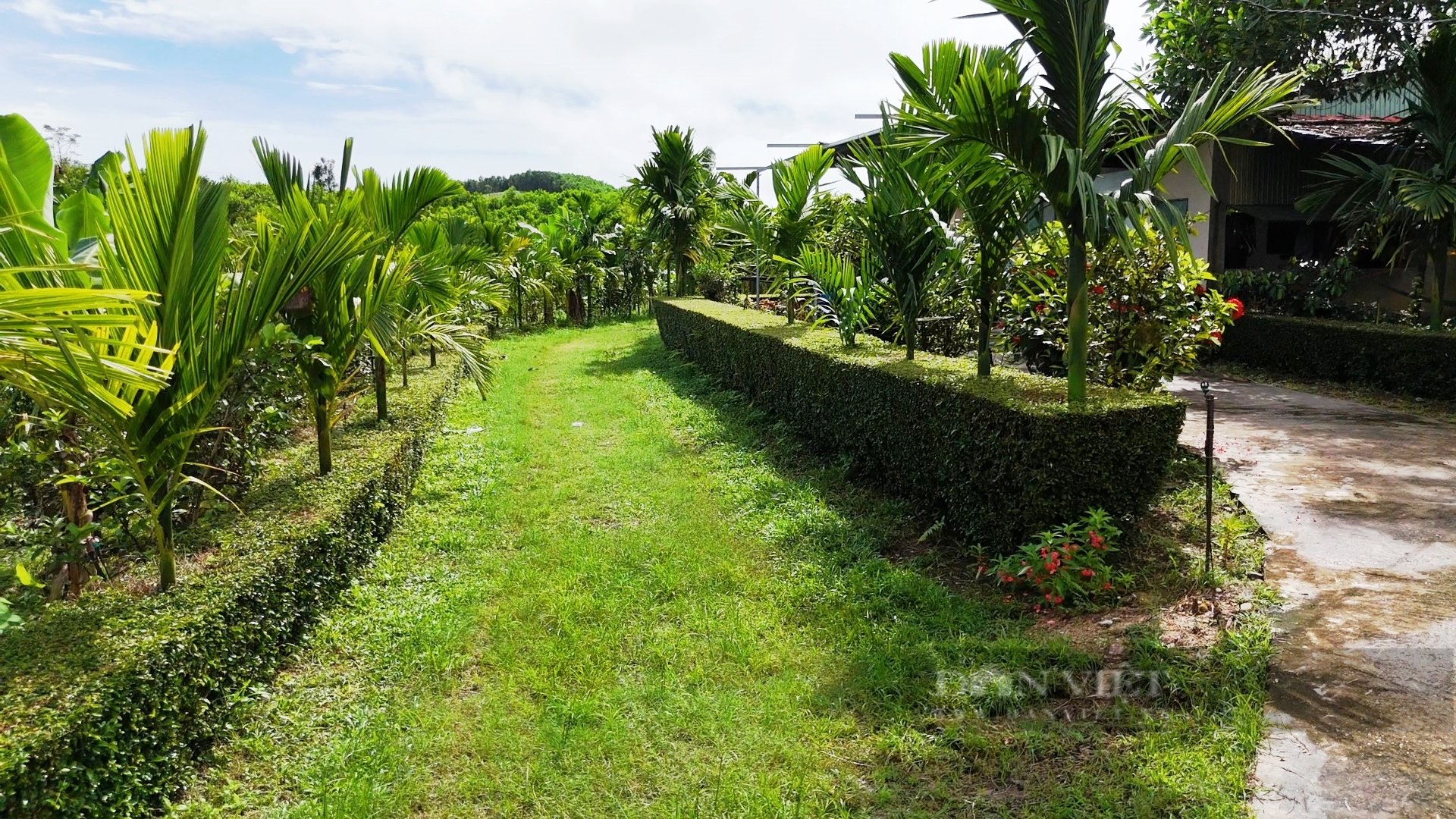
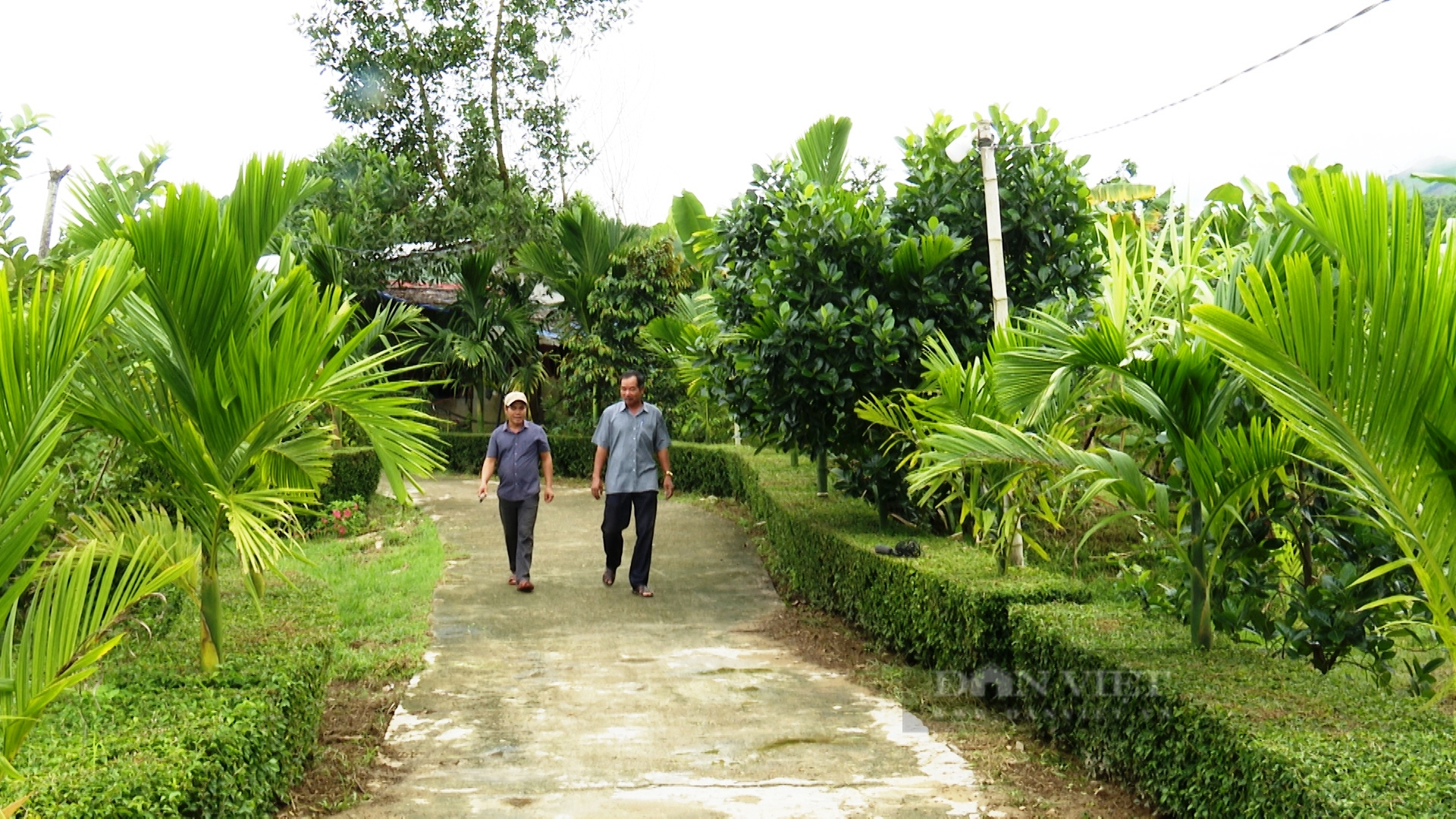
Mr. Lam Quang Binh's lush green betel palm garden, combined with a green fence, creates an eye-catching space in Tien Phuoc. Photo: NH
"The integrated farm combining gardens and forests owned by Mr. Lam Quang Binh is one of the economic models with a relatively large investment scale in the district, and it is initially proving effective."
The farm also received guidance on planting and caring for fruit trees from agricultural officials of Tien Hiep commune and officials from the District Agricultural Technical Center. "It can be said that Mr. and Mrs. Binh have risen to become legitimately wealthy, a model for many farmers to learn from and achieve prosperity right in their homeland," Mr. Nhan said.
Tien Hiep commune has 790 households engaged in gardening, with a total area of 617 hectares. Of this, Tien Phuoc pepper accounts for 4.5 hectares, various types of pomelo 121 hectares, longan 4 hectares, mangosteen 12.5 hectares, durian 4.2 hectares, banana 25 hectares, betel nut 39 hectares, cinnamon 7.6 hectares, jackfruit 6 hectares… During the period 2021-2024, 50 households in the commune implemented Project 03 of the District People's Council and Resolution 35 of the Quang Nam Provincial People's Council on the development of garden and farm economies, covering an area of over 30 hectares. The total state support after investment exceeded 1.6 billion VND.
Source: https://danviet.vn/trai-lang-8x-quang-nam-thu-hon-nua-ty-nam-nho-trong-cay-nuoi-con-o-mot-khu-vuon-dep-nhu-phim-2024111908124314.htm




















![[Photo] Prime Minister Pham Minh Chinh holds a phone call with the CEO of Russia's Rosatom Corporation.](/_next/image?url=https%3A%2F%2Fvphoto.vietnam.vn%2Fthumb%2F1200x675%2Fvietnam%2Fresource%2FIMAGE%2F2025%2F12%2F11%2F1765464552365_dsc-5295-jpg.webp&w=3840&q=75)














































Comment (0)