

Sowing the "seeds" of journalism
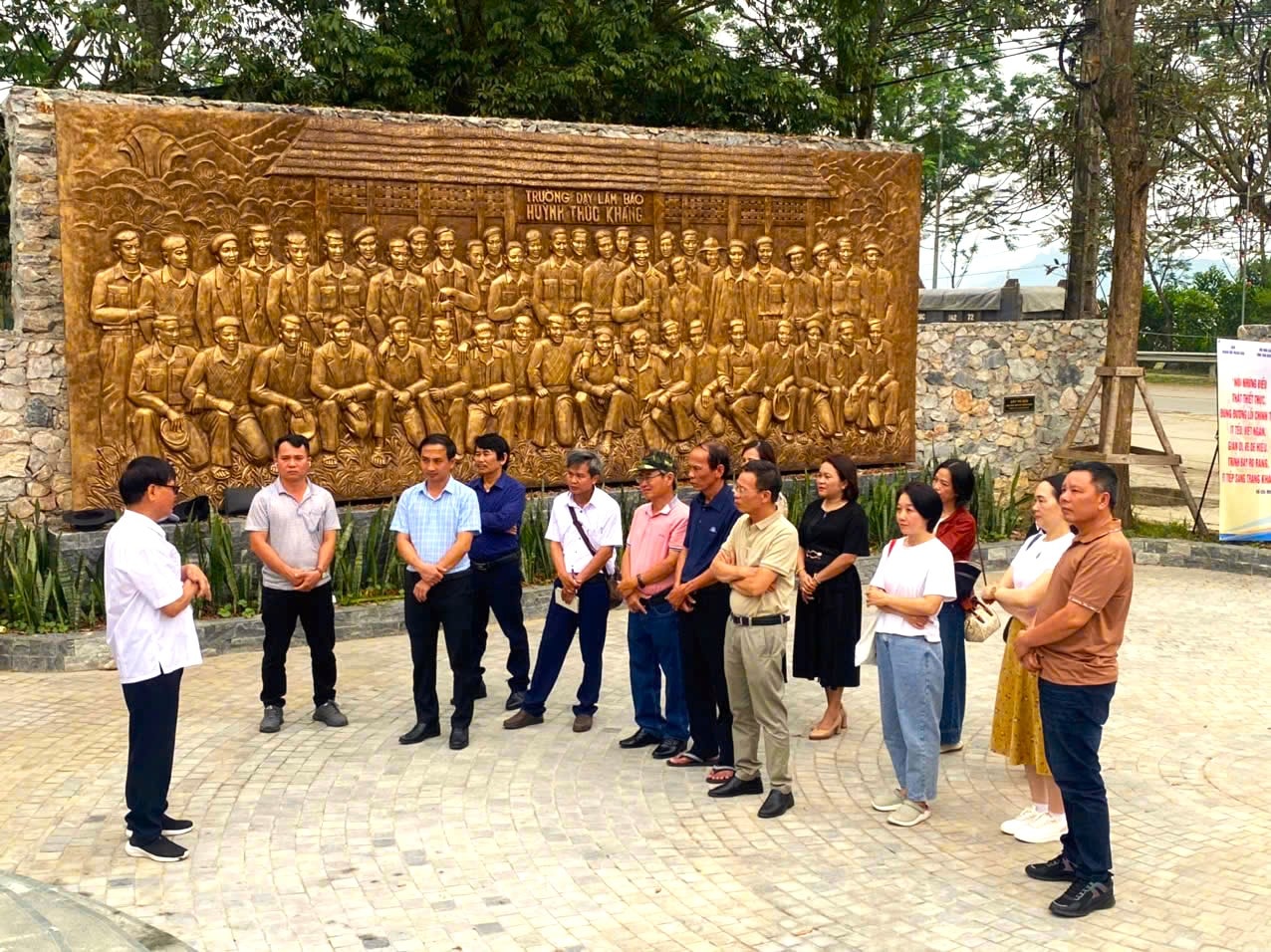
In late April 2025, a delegation from the Quang Nam Provincial Journalists Association visited the Huynh Thuc Khang School of Journalism (located in Tan Thai commune, Dai Tu district, Thai Nguyen province).
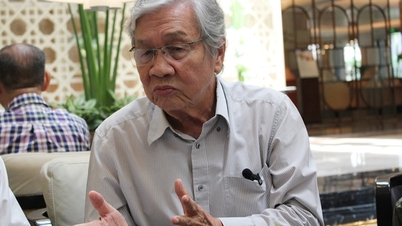
The distance from Thai Nguyen city to this national historical site is about 20km, but it felt very close because we were captivated by the introduction from Mr. Phan Huu Minh - former Editor-in-Chief of Thai Nguyen Newspaper, former Director of Thai Nguyen Radio and Television Station, later working at the Vietnam Journalists Association , now retired.
Mr. Minh spoke about the history of this historical site with a sense of pride, as if he had just completed a mission he had been passionate about.
During the long years of resistance against French colonialism, the mountains and forests of Viet Bac sheltered our soldiers, army, and people, and Thai Nguyen was considered a safe zone for the revolution.
Following the demand to "write journalism as if fighting," President Ho Chi Minh directed the Viet Minh General Headquarters and the resistance press corps to open the first journalism training course in the country, named the Huynh Thuc Khang School of Journalism - after the former Acting President of the country.
Mr. Huynh was a man who was unmoved by wealth, undeterred by poverty, and unfazed by power. Throughout his life, he sought neither fame nor fortune, nor wealth. His only pursuit was the freedom of the people and the independence of the nation.
President Ho Chi Minh wrote about the patriotic scholar Huynh Thuc Khang upon his death.
And so, in Bo Ra hamlet (Tan Thai commune), a simple school was built with a thatched roof, and chairs and desks made of makeshift wooden planks.
According to documents from the Vietnam Press Museum, on April 4, 1949, the class commenced with 42 students, who were propaganda and information officers simultaneously wielding pens and weapons in combat. Notably, the school only held one course, which concluded on July 6, 1949.
The lecturers included comrades Hoang Quoc Viet - Secretary of the Viet Minh General Headquarters, Editor-in-Chief of the newspaper Cuu Quoc; General Vo Nguyen Giap - Commander-in-Chief of the Vietnam People's Army, former editor of the newspapers Tieng Dan and Le Travail; Nguyen Van Tao - Minister of Labor, former editor of the newspaper Humanilé of the French Communist Party and the newspaper La Lulle in Saigon in 1934-1935; Vu Dinh Hoe - Minister of Justice, former editor of the newspaper Thanh Nghi and editor of the newspaper Doc Lap.
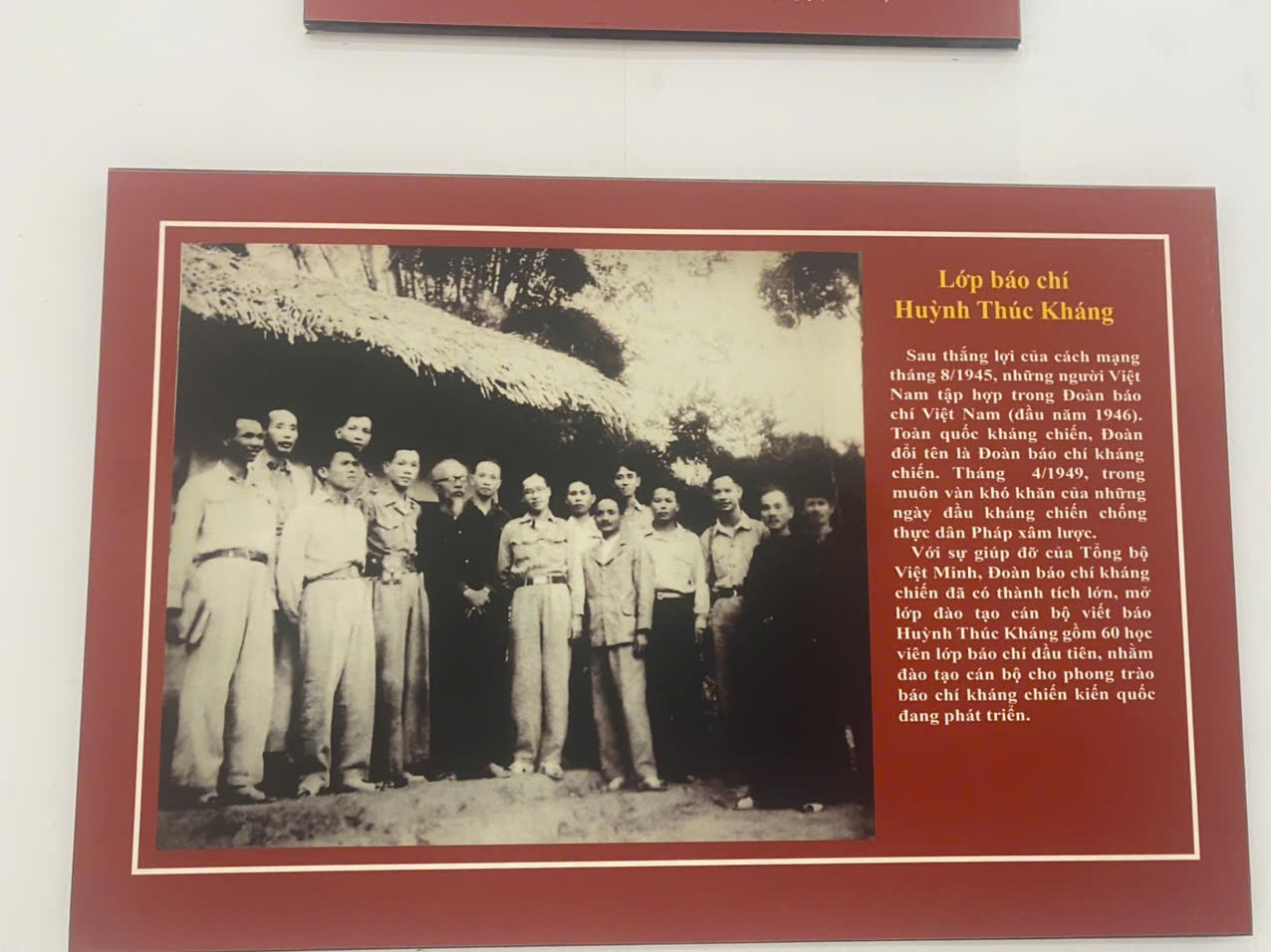
In addition, many other famous writers, poets, and journalists participated in teaching. After completing the short course (over 3 months), the students "put aside their pens and went to war."
Thus, the Huynh Thuc Khang School of Journalism was the first institution in the history of Vietnamese journalism to train personnel for the resistance war.
In 1975, Thai Nguyen province implemented the construction of the Nui Coc reservoir dam, causing many households to relocate. The name Bo Ra hamlet remains, but it cannot be ruled out that some of the original locations where the Huynh Thuc Khang Journalism School was built are now submerged under the reservoir.
Mr. Phan Huu Minh recounted that when he was working in the Thai Nguyen Safe Zone, the State had almost completed the restoration of historical sites related to culture, film, and history, but the Huynh Thuc Khang School of Journalism from 1949 remained quiet, untouched by anyone because the collected documents and images were quite fragmented.
“Some former students of the school, whom I was fortunate enough to bring here when I was a reporter for the local party newspaper, remember that the school was located in Bo Ra – Dai Tu commune. Through various pieces of information I gathered, especially from the book “The Road to Bo Ra” by Andrew Hardy, published by the French Institute of Far Eastern Studies in 2008, the names Bo Ra and Goc Mit were mentioned. Finally, the national historical monument – Huynh Thuc Khang Journalism School – was erected in Dai Tu commune,” Mr. Minh said.
A great personality in journalism.
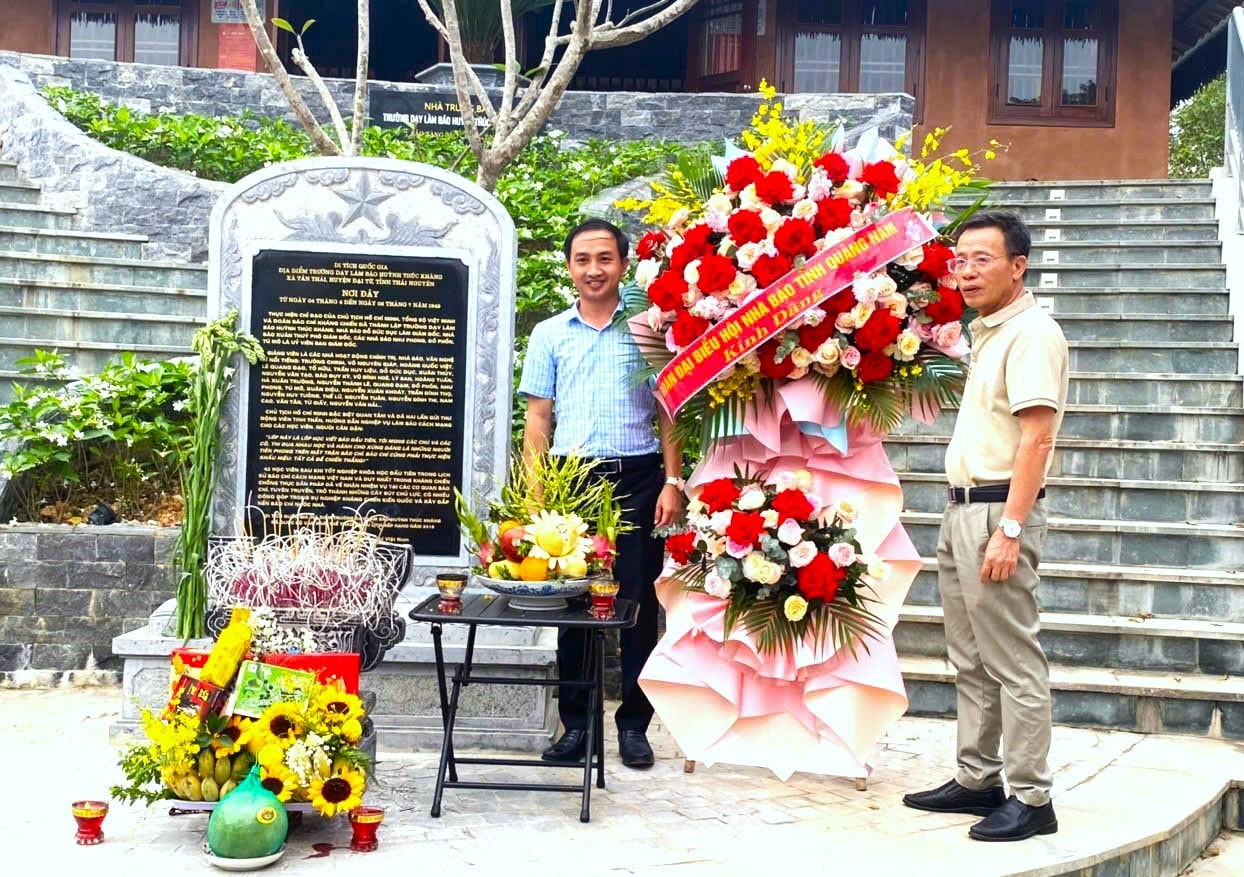
The Huynh Thuc Khang School of Journalism is located within the planned Nui Coc Lake National Tourist Area, covering an area of nearly 900m2 with the following features: a memorial monument, a traditional stilt house, an exhibition room, an area recreating a journalism practice class, and a bas-relief depicting 48 portraits of the school's management, lecturers, and students from the first graduating class.
The exhibition room features a reconstructed 24x42cm printing press weighing over 600kg, a typewriter, a pen, zinc plates, and issues of newspapers such as Nhan Dan, Cuu Quoc, and Su That…
Speaking at the opening ceremony of the class on April 4, 1949, Comrade Hoang Quoc Viet - Secretary of the General Headquarters of the Viet Minh - said: "The class is named after Mr. Huynh Thuc Khang to remember and emulate this patriotic veteran and also a renowned and long-time journalist, setting an example for the students with his diligent learning, progressive organizational skills, and unwavering, indomitable spirit - fundamental qualities for a journalist."
Historical records state that on August 10, 1927, Huynh Thuc Khang launched the newspaper Tieng Dan (La Voix du Peuple), initiating an open struggle through freedom of speech.
In 2017, the Vietnam Journalists Association, in collaboration with Thai Nguyen province and the Vietnam Press Museum, implemented a project to restore the Huynh Thuc Khang School of Journalism. On March 28, 2019, the Ministry of Culture, Sports and Tourism decided to classify the Huynh Thuc Khang School of Journalism as a national historical site. In early 2024, the Vietnam Journalists Association, in cooperation with the People's Committee of Thai Nguyen province, commenced the project to renovate and restore the national historical site. On August 9, 2024 – coinciding with the 75th anniversary of the school's founding – the project was inaugurated and handed over to the local authorities.
In 1927-1928, while serving as President of the Central Annam People's Assembly, through the newspaper Tiếng Dân (Voice of the People), with his insightful articles, Mr. Huynh called for the promulgation of a constitution, a reduction in land and poll taxes, and the opening of more schools…
In 1943, the newspaper Tiếng Dân ceased operations, but for 16 years, under the leadership of Mr. Huỳnh Thúc Kháng as editor-in-chief, Tiếng Dân consistently upheld its journalistic "manifesto": serving the people and the nation.
These days in June, journalists are even more proud as the country celebrates the 100th anniversary of Vietnam's Revolutionary Press Day (June 21, 1925 - June 21, 2025).
In his hometown of Quang Nam, this is also the 19th time the Provincial People's Committee has organized the Huynh Thuc Khang Journalism Award ceremony, further reminding present and future generations of journalists to continuously improve their professional skills and, above all, to always maintain "a pure heart, an honest mind, and a sharp pen" to serve the Fatherland and the people.
Meanwhile, in Thai Nguyen province, 2025 marks the second year that the locality has organized a journalism award similar to that of Quang Nam, further affirming the great character of journalist Huynh Thuc Khang.
Source: https://baoquangnam.vn/truong-bao-chi-dau-tien-cua-viet-nam-3156962.html
![[Photo] First session of the 14th Congress of the Vietnam Trade Union](https://vphoto.vietnam.vn/thumb/1200x675/vietnam/resource/IMAGE/2026/06/03/1780465947883_ndo_br_img-3852-jpg.webp)

![[Photo] Secretary of the National Assembly Party Committee, Chairman of the National Assembly presides over the meeting of the Standing Committee and Executive Committee of the National Assembly Party Committee.](https://vphoto.vietnam.vn/thumb/1200x675/vietnam/resource/IMAGE/2026/06/03/1780480353201_ndo_br_bnd-2585-jpg.webp)
![[Photo] General Secretary and President To Lam presides over a meeting with the Central Organizing Committee.](https://vphoto.vietnam.vn/thumb/1200x675/vietnam/resource/IMAGE/2026/06/03/1780482764658_a1-bnd-4741-3342-jpg.webp)


































![[Video] Sunset at Lap An Lagoon – Where the sun sets over the fishing nets](https://vphoto.vietnam.vn/thumb/1200x675/vietnam/resource/IMAGE/2026/05/31/1780192137701_beach-landscape-sea-water-nature-grass-745871-pxhere-com.jpeg)


























Comment (0)