

A delegation of media outlets specializing in agriculture and environmental issues recently held a working session with the Department of Agriculture and Environment of Thai Nguyen province. The delegation included Mr. Le Xuan Dung, Deputy Editor-in-Chief of the Agriculture and Environment Newspaper; Mr. To Duc Huy, Chief of the Office of the Agriculture and Environment Newspaper; and Mr. Nguyen Viet Hung, Deputy Head of the Office in charge of the Northern Midlands and Mountainous Region Office (Agriculture and Environment Newspaper).
Representing Thai Nguyen province were Mr. Trieu Duc Van, Deputy Director of the Department of Agriculture and Environment; Mr. Hoang Thanh Binh, Deputy Head of the Crop Production and Plant Protection Sub-Department; and Mr. Trieu Van Cuong, Deputy Head of the Cooperative Economy and Rural Development Sub-Department.
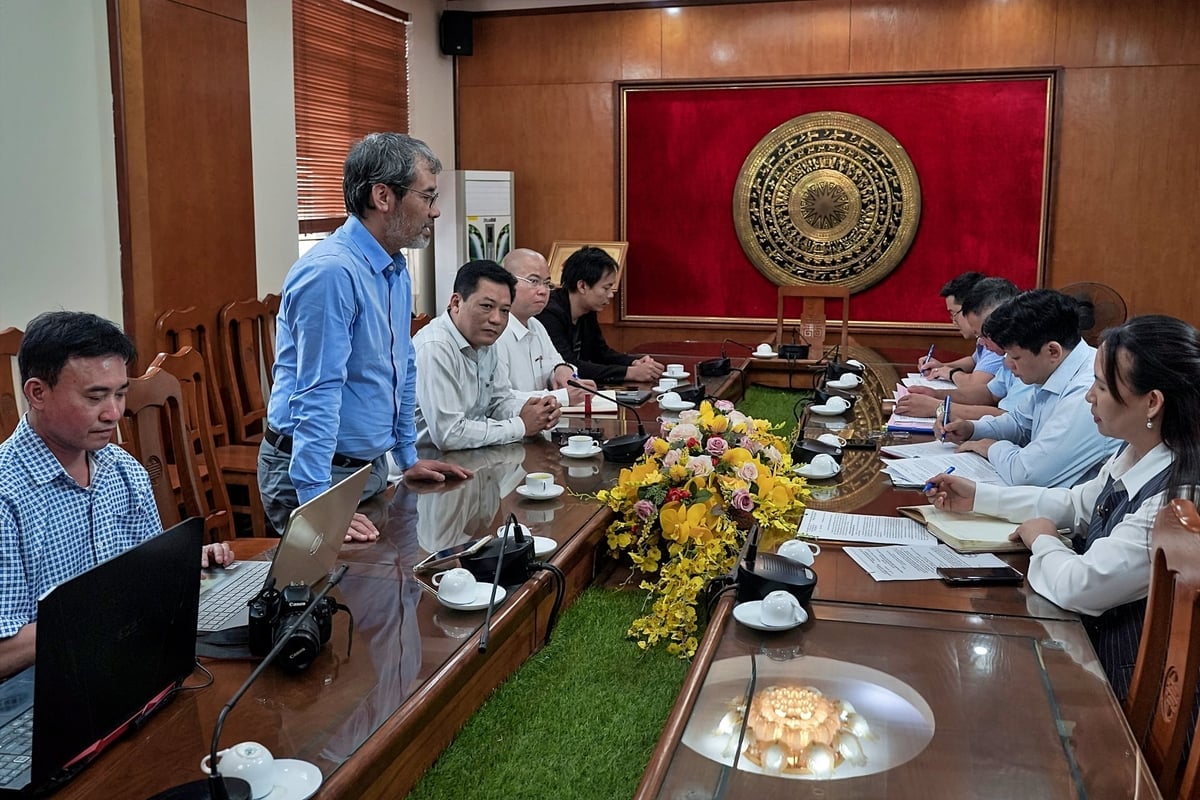
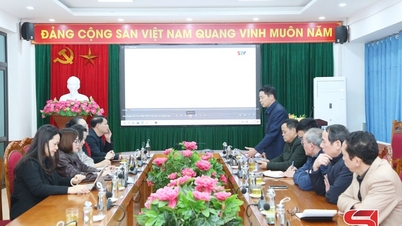
The delegation worked with the Thai Nguyen Department of Agriculture and Environment on the afternoon of December 10th. Photo: Bao Thang.
Shortage of specialized personnel at the commune level.
A report from the Thai Nguyen Department of Agriculture and Environment shows that, after the implementation of a two-tiered local government system, many technical aspects at the grassroots level faced greater pressure, while the institutional framework and human resources had not yet adjusted accordingly.
In the land sector, the province is processing a large volume of historical maps and data, many of which are old survey maps that differ from the current situation, requiring surveying, correction, and re-establishment of the land database. This increases the workload, while the process of preparing revised land use planning documents for the 2021-2030 period and the 2025 land use plan at the district level, which was already slow, is now facing further difficulties with the transition to a two-tiered government model.
The entire province has 614,467 hectares requiring initial land use right certificates, of which 549,990 hectares have been issued, reaching 89.51%; 64,476 hectares remain unissued. Simultaneously, the Department must implement a campaign to "enrich and clean" the land database, synchronize data from the land management system to the national information system, review each group of plots to ensure they are "correct - complete - clean - viable," and identify plots requiring additional documentation from communes and wards.
The workload is heavy, but the commune level lacks specialized land management personnel, leading to a "paradox of decentralization": tasks are assigned, but there aren't enough people to handle them.
According to Deputy Director Trieu Duc Van, many highland communes with approximately 5,000 inhabitants have a relatively small workload but still require the full staffing of specialized positions as per regulations, while human resources are limited. Some officials taking leave disrupts the statistical work, inspection, and supervision at the grassroots level, especially when dealing with epidemics or urgently implementing new tasks. In the land sector, applications for land use rights certificates require complete survey maps, but many communes cannot hire qualified surveying consultants due to the limited number of such units, thus affecting the processing time.
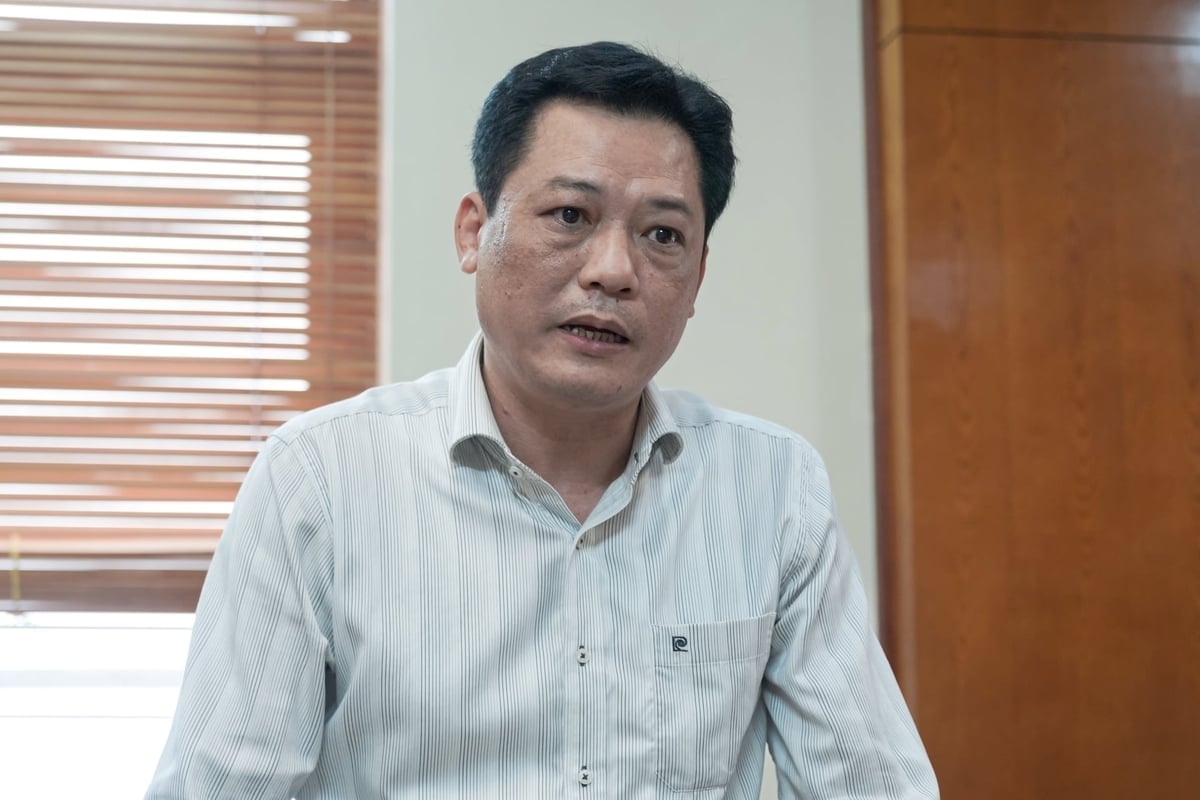
Deputy Editor-in-Chief of Agriculture and Environment Newspaper, Le Xuan Dung. Photo: Bao Thang.
According to the Department's leadership, each specialized agency is currently operating under a different model. The land registration office has not yet clearly defined its organizational structure, and the regional agricultural extension station lacks specific guidance on its position and function within the new model. One option being discussed and considered locally is the establishment of a general service center to consolidate several fields, including tasks related to construction waste management, but there is currently no legal framework for its implementation.
In the forestry sector, the division of responsibilities between forest rangers and specialized forest protection forces in special-use forests and nature reserves remains unclear. According to local feedback, the implementation of current regulations has resulted in forest rangers no longer being directly stationed in nature reserves, while specialized forest protection forces lack comprehensive guidance on their functions and authority, easily leading to gaps in responsibility.
Simultaneously, Thai Nguyen aims to strongly develop its forest economy. The forest cover rate is estimated at 61.6%, exceeding the plan; the area of FSC-certified forests is expected to reach approximately 37,532 hectares by the end of 2025, equivalent to 175% of the 2021-2025 plan. The province is orienting towards developing carbon sequestration and storage services, implementing forest carbon credit solutions in the northern region, and collaborating with a South Korean partner to install a gas monitoring system to assess the feasibility of a greenhouse gas emission reduction project at the Da Mai landfill.
There have been proposals to allow special-use forest management boards to implement a financial autonomy mechanism, in which forest protection funding is determined by a fixed rate per unit area, but this is still at the negotiation stage. However, Thai Nguyen believes that this mechanism cannot be applied yet as the units do not have a stable source of revenue. If implemented without guaranteed financial resources, maintaining the forest protection force will be difficult.
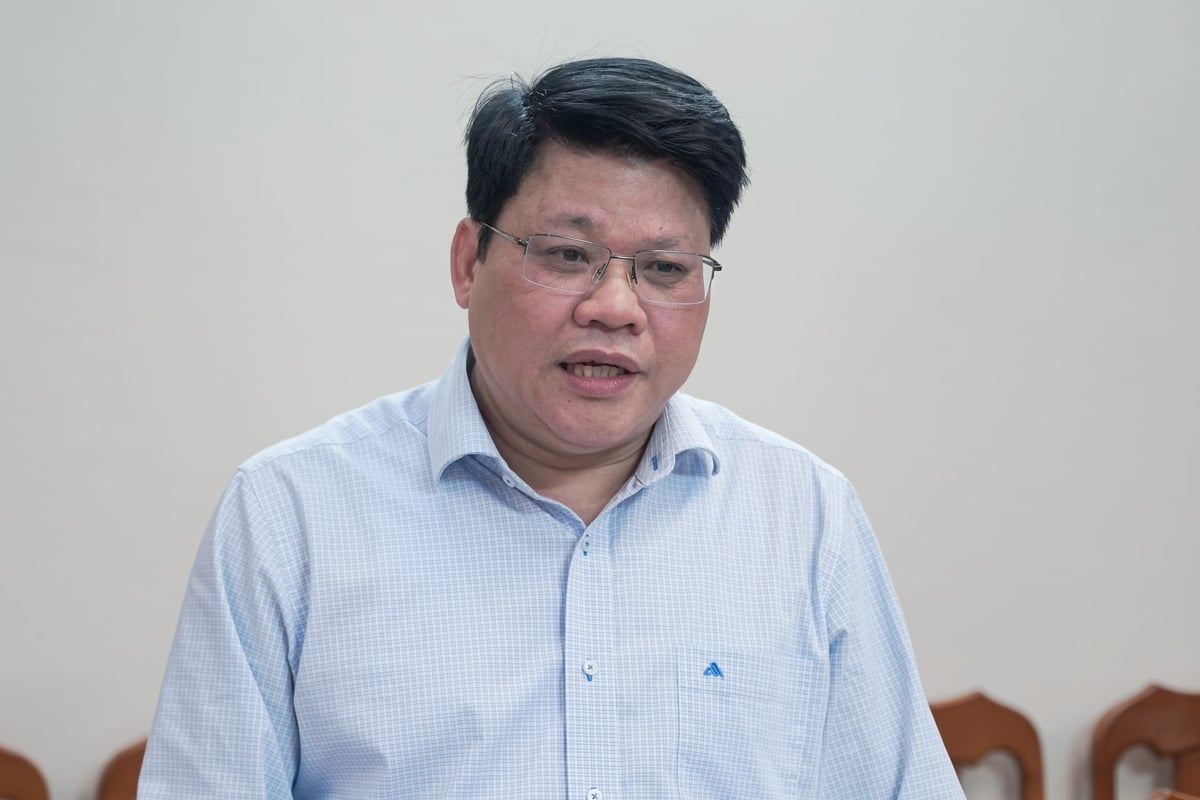
Deputy Director of the Thai Nguyen Department of Agriculture and Environment, Trieu Duc Van. Photo: Bao Thang.
Standardize the organizational model as soon as possible.
The collective economic sector is also situated within the context of a two-tiered government structure. According to the report, the province has nearly 1,000 agricultural cooperatives along with 7 cooperative unions with 50 member cooperatives. The cooperative model is an "extension" of policies in rural areas, but for these units to access poverty reduction policies, credit, and technical support, the commune level must play a crucial role as the "conductor" in terms of procedures, statistics, and coordination.
The "One Commune, One Product" (OCOP) program is another measure of implementation capacity at the grassroots level. After the merger, Thai Nguyen has 561 OCOP products ranging from 3 to 5 stars, including 10 products achieving 5 stars (the third highest in the country). However, to upgrade quality, standardize traceability, and ensure food safety, guidance, inspection, and supervision at the commune and ward levels are crucial. With the increasing volume of applications but the corresponding number of dedicated staff, the risk of overload is evident.
Poverty reduction efforts clearly demonstrate the pressure of the new model on the commune level. After the merger, the province has 23,061 poor households (5.45%) and 15,482 near-poor households (3.67%), of which more than 19,000 poor households are ethnic minorities. The projected poverty reduction rate for 2025 is approximately 0.8%. To ensure accurate data updates according to the multidimensional poverty standard, the province organized training for more than 600 officials from 92 communes and wards. The processes of review, verification, data entry, and reconciliation are all carried out at the grassroots level, while commune officials simultaneously have to implement many targeted programs, leading to significant human resource pressure.
Thanking the delegation for their attention and support, the leaders of the Department and its branches emphasized the need for clearer guidance and regulations from the central government for the two-tiered local government model, especially in areas requiring on-site specialized personnel such as veterinary medicine, forest protection, land management, and environmental protection.
Without "standardizing" the system and processes, the risk of accountability gaps at the grassroots level will reduce the effectiveness of agricultural development, poverty reduction, rural development, and green economic development programs that the province is pursuing.
Source: https://nongnghiepmoitruong.vn/thai-nguyen-de-nghi-thong-nhat-mo-hinh-co-quan-chuyen-mon-cap-xa-d788829.html


![[Photo] Closing Ceremony of the 10th Session of the 15th National Assembly](/_next/image?url=https%3A%2F%2Fvphoto.vietnam.vn%2Fthumb%2F1200x675%2Fvietnam%2Fresource%2FIMAGE%2F2025%2F12%2F11%2F1765448959967_image-1437-jpg.webp&w=3840&q=75)











































![[OFFICIAL] MISA GROUP ANNOUNCES ITS PIONEERING BRAND POSITIONING IN BUILDING AGENTIC AI FOR BUSINESSES, HOUSEHOLDS, AND THE GOVERNMENT](https://vphoto.vietnam.vn/thumb/402x226/vietnam/resource/IMAGE/2025/12/11/1765444754256_agentic-ai_postfb-scaled.png)








































Comment (0)