

Expanding the right to additional employment and practice in the non-public sector.
On the afternoon of December 10th, the National Assembly voted to approve the amended Law on Public Employees. The new law will take effect from July 1st, 2026.
One of the most notable aspects of the Law is the significant expansion of the rights to additional work, private practice, capital contribution, and participation in business management for more than one million public employees working in public service units.
This is seen as an important adjustment aimed at removing legal barriers while ensuring the principles of transparency and avoiding conflicts of interest in the public sector.

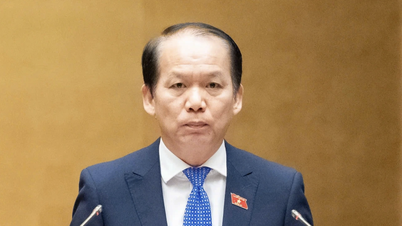
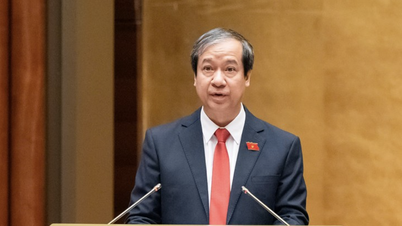
The National Assembly voted to pass the amended Law on Public Officials on the afternoon of December 10 (Photo: National Assembly Media).
According to the new regulations, civil servants are allowed to sign labor contracts or service contracts with other agencies, organizations, or units, provided that specialized laws do not prohibit it and the additional work does not create a conflict of interest.
Contracts signed outside of public service units must not contradict the agreements in the current employment contract and must not violate regulations on professional ethics.
If the employment contract does not explicitly state this right, the employee must obtain written consent from the head of the unit. The head of a public service unit wishing to sign overtime contracts must have written approval from their immediate superior agency.
The law also allows civil servants to practice their profession as individuals, provided that the laws governing their sector or field do not prohibit it. When practicing their profession, civil servants must comply with regulations on preventing and combating conflicts of interest, must not exploit information or working conditions within the unit for personal gain, and must not violate professional ethics.
The National Assembly voted to pass the amended Law on Public Officials on the afternoon of December 10 (Photo: National Assembly Media).
According to the new regulations, civil servants are allowed to sign labor contracts or service contracts with other agencies, organizations, or units, provided that specialized laws do not prohibit it and the additional work does not create a conflict of interest.
Contracts signed outside of public service units must not contradict the agreements in the current employment contract and must not violate regulations on professional ethics.
If the employment contract does not explicitly state this right, the employee must obtain written consent from the head of the unit. The head of a public service unit wishing to sign overtime contracts must have written approval from their immediate superior agency.
The law also allows civil servants to practice their profession as individuals, provided that the laws governing their sector or field do not prohibit it. When practicing their profession, civil servants must comply with regulations on preventing and combating conflicts of interest, must not exploit information or working conditions within the unit for personal gain, and must not violate professional ethics.
For civil servants working in science and technology institutions and public higher education institutions, the new law allows for the full application of the aforementioned rights, while also expanding them to include specialized laws such as the Law on Science and Technology, the Law on Technology Transfer, the Law on Higher Education, and the Law on Enterprises.
This allows scientists and lecturers to participate more actively in research, technology transfer, establishing science and technology enterprises, providing professional advice, or assuming positions on the boards of directors and executive boards of non-governmental organizations in accordance with the law.
Despite expanding their powers, the law still imposes strict requirements regarding accountability. Officials must ensure that public assets are not misused, that the progress and quality of assigned tasks are not affected, and that they do not violate codes of conduct and professional ethics. Violations will be subject to legal action, ranging from disciplinary measures to contract termination, depending on the severity.
With these changes, the Civil Servant Law creates a new approach: expanding rights but tightening responsibilities, giving civil servants more space for professional development, increasing legitimate income, and making deeper contributions to scientific, economic, and social activities.
Dantri.com.vn
Source: https://dantri.com.vn/noi-vu/tu-172026-vien-chuc-duoc-gop-von-lap-doanh-nghiep-hanh-nghe-ca-nhan-20251210145452274.htm


































![[Video] The craft of making Dong Ho folk paintings has been inscribed by UNESCO on the List of Crafts in Need of Urgent Safeguarding.](https://vphoto.vietnam.vn/thumb/402x226/vietnam/resource/IMAGE/2025/12/10/1765350246533_tranh-dong-ho-734-jpg.webp)


































































Comment (0)