

 |
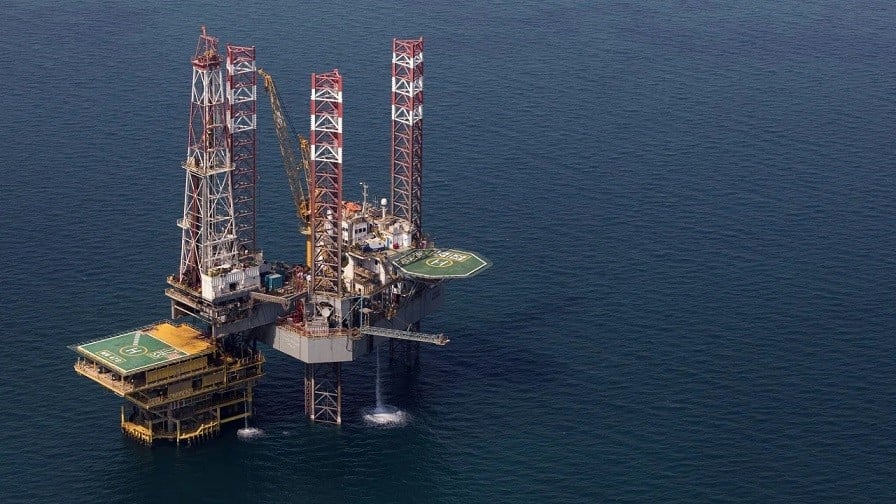
| Saudi Arabia could face the prospect of losing market share in key markets such as China to the United Arab Emirates (UAE). (Source: Getty) |
The Wall Street Journal (US) published an article on June 5th commenting on the consequences of Saudi Arabia's voluntary decision to cut crude oil production.
Prices did not rise as expected.
After warning speculators that the Organization of Petroleum Exporting Countries (OPEC) and its partners (known as OPEC+) might continue production cuts, Saudi Arabia's Energy Minister, Prince Abdulaziz bin Salman, announced on June 4th that the country would voluntarily cut production by an additional 1 million barrels per day in July, after OPEC+ countries refused to join Riyadh's efforts.
OPEC+ currently accounts for nearly 50% of the world's crude oil production, so production cuts are expected to push oil prices higher, at a time when concerns about a weakening global economy are rising, potentially reducing demand for crude oil. Riyadh has also signaled that it "will do everything possible to create stability in the market." At this stage, the cuts are limited to one month, but they could be extended.
Immediately after the market opened on Monday, June 5th, oil prices rose sharply, but the gains were not sustained. By early afternoon trading on the same day, North Sea Brent crude reached $77.32 per barrel, up 1.6% from the close of trading on June 2nd.
Oil prices are currently still 17% lower than in October 2022, when OPEC+ first shook the market with its decision to cut production, a decision that some members, including Saudi Arabia and Russia, later extended until April 2023.
Saudi Arabian officials involved in the process acknowledge that the increase in oil prices on June 5th was not as high as expected by Minister Abdulaziz bin Salman, who defended the decision to cut production and sought to curb short selling at the tense OPEC+ meeting last weekend.
In recent months, Abdulaziz has relentlessly targeted Wall Street speculators whose bets could weaken oil prices. Last month, he issued a warning to speculators, a message many analysts interpreted as a sign that OPEC+ might cut production at its June 4 meeting.
A cut of 1 million barrels per day would bring Saudi Arabia's crude oil production down to 9 million barrels per day, the lowest level since June 2021 and rarely seen in the last 10 years. This move shows Riyadh's willingness to "sacrifice" market share to push oil prices higher.
Will Saudi Arabia pay a heavy price?
According to informed officials, this could come at a high price for Saudi Arabia, as the current rise in oil prices has not yet offset the revenue shortfall due to reduced production.
Saudi Arabia could also face the prospect of losing market share in key markets such as China to the United Arab Emirates (UAE), which continues to pump large quantities of cheaper crude oil onto the market despite pledges not to do so. Delegations attending the June 4 meeting said that the UAE and Russia opposed further production cuts, stating they were satisfied with current market prices.
In a surprising move, Saudi Aramco, the leading oil company, raised the price of its July crude oil exports on June 5th. Analysts and traders had previously expected the giant to lower its official selling price to compete with other options such as Russian crude oil in the market at a time when the outlook for demand was not particularly bright.
Efforts to keep oil prices higher highlight the pressure facing Minister Abdulaziz. Crown Prince Mohammed bin Salman is pursuing ambitions to reshape Saudi Arabia's oil-dependent economy. Abdulaziz will have to maintain oil prices at a level that makes those restructuring efforts economically viable.
According to Commonwealth Bank (Australia), Saudi Arabia is likely to extend production cuts if North Sea Brent crude remains stuck in the $70-$75 per barrel range, and may even cut production more sharply if prices fall below $70 per barrel. Goldman Sachs estimates that if production cuts are maintained, oil prices could rise by approximately $1 per barrel.
Saudi Arabia's production cuts will significantly increase expectations of a market deficit. The International Energy Agency (IEA) had previously forecast a supply-demand gap of 1.9 million barrels per day in the third quarter of this year. According to consulting firm Rystad Energy, that deficit could now reach 3 million barrels per day following Saudi Arabia's decision.
Analysts believe that this supply-demand imbalance could slow the decline in crude oil prices. However, there is still no consensus on whether oil prices will rise or not.
Richard Bronze, head of geopolitical research at the consulting firm Energy Aspects, commented: “This is a market challenge for OPEC+ and Saudi Arabia to try to adjust to. Many things are beyond their control, such as the macroeconomic outlook.”
Therefore, I am convinced that the decision to cut production will not be as successful or impactful as what OPEC+ achieved in 2021 and early 2022.”
Source






































































Comment (0)