

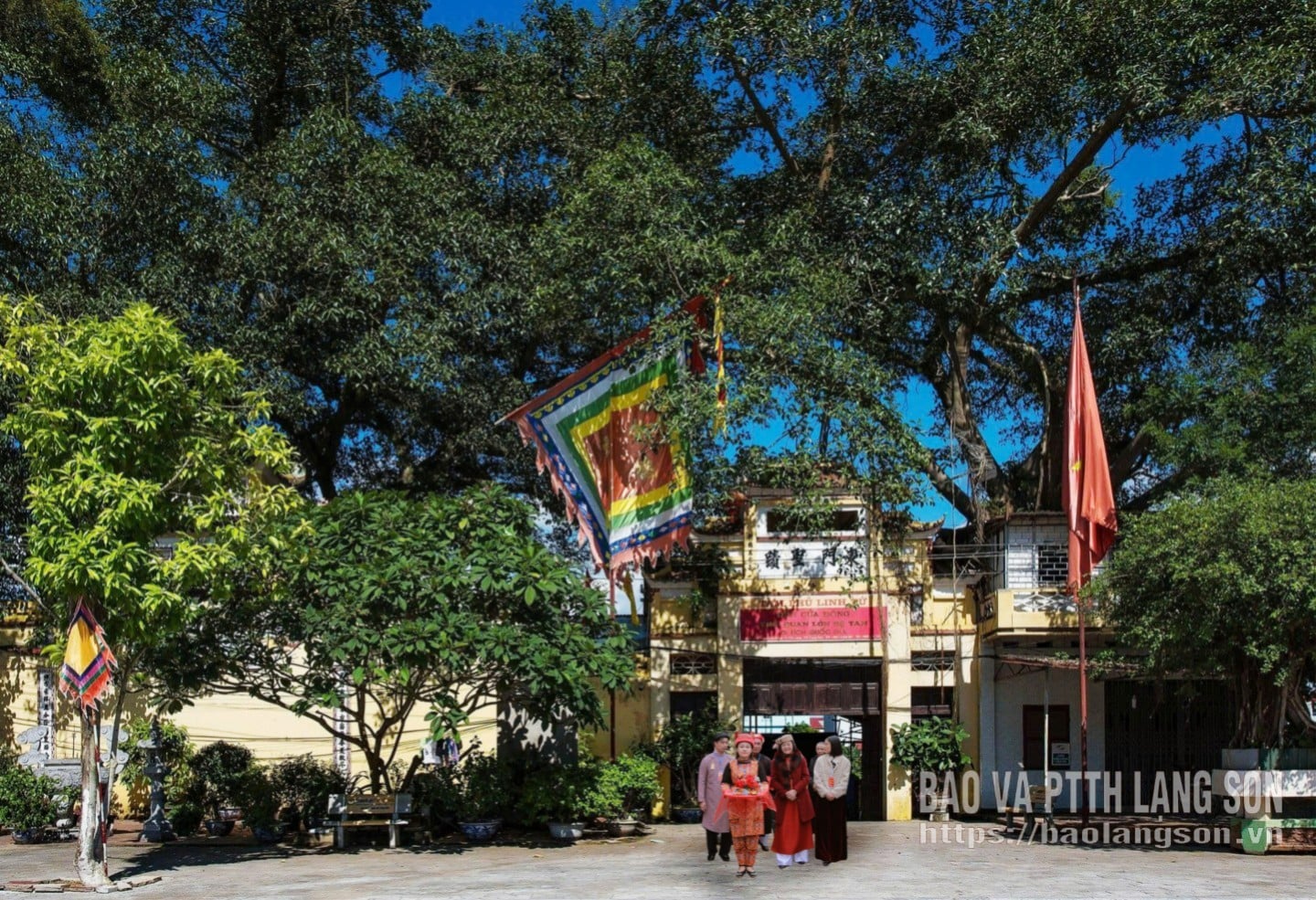
During the feudal period, each province was built a citadel as its capital. The citadel had both military, political , economic and cultural functions. Therefore, early on, the feudal court ordered the construction of a solid citadel in Lang Son called Doan Thanh. At the four gates facing four directions of Doan Thanh were four temples, where the gods who guarded and protected Lang Son Citadel were worshiped.
Cultural highlights of Lang Son
Lang Son Citadel (Doan Thanh) is a valuable relic, reflecting the military history, architecture, and construction of the feudal monarchy in Lang Son. According to the book "Lang Son Doan Thanh Do" by author Nguyen Nghiem - Historian of the Le Trung Hung period, "This citadel has existed since ancient times. The citadel was repaired in the 26th year of Hong Duc (1495), but over the years it gradually fell into disrepair. In the summer of Quy Dau year, the mandarin in the citadel, Mr. Mai (Lang Son Governor Mai The Chuan), was assigned to look after the North gate. When he arrived, he started repairing the citadel. From December of Binh Ty year, he urged soldiers to build and it took two harvest seasons to complete (from the 17th year of Canh Hung (1756) to the 19th year of Canh Hung (1758)".
“Researching the Four Towns Citadel is a very necessary task today in order to conduct comprehensive research, to preserve, to restore, and to pass on…” Mr. Hoang Van Pao, Chairman of the Provincial Cultural Heritage Association |
The ancient Lang Son Citadel (Doan Thanh) had four main gates in the four directions East - West - South - North and corresponding to these four gates were four sacred temples guarding and protecting the citadel including: the East Gate Temple (Dong Mon Tu); the West Gate Temple (Tay Mon Tu); the South Gate Temple (Nam Mon Tu) and the North Gate Temple (Bac Mon Tu). These temples were built around the end of the 18th century and the beginning of the 19th century. The temples were all located in Luong Van Tri ward and faced the Ky Cung River.
The common point of these temples is that they worship the gods of the Mother Goddess religion and the Tran Dynasty. Among them, the most typical is Cua Dong Temple, which worships the god Bach De (the god of the Ky Cung River), as recorded in the book Dai Nam Nhat Thong Chi of the National History Institute of the Nguyen Dynasty. In 2013, these temples were ranked as national relics by the Ministry of Culture, Sports and Tourism.
Meritorious Artist Thin Thu Huong, Dong Kinh Ward shared: I have been attached to the Mother Goddess worship and practiced the Hau Dong ritual for nearly 37 years. During that time, one of the temples that I often visited to practice the ritual was Cua Dong Temple. This is a sacred space associated with many layers of Lang culture. Not only does it have unique architectural value, the temple also preserves many traditional rituals, deeply reflecting the spiritual life of the community. Every time I practice a ritual here, I feel the connection between the past and the present, between the merits of my ancestors and the responsibility of preserving it of today's generation. That motivates me to continue to make efforts to teach and share so that the value of the Mother Goddess worship is spread sustainably in life.
Over time with many restorations and embellishments, up to now, the temples still preserve the traditional architectural art style and many valuable relics and antiques such as: steles, parallel sentences, ancient worship statues, etc. Therefore, these relics are not only places to preserve architectural art forms but also places to satisfy the spiritual needs of the people in the region and attract a large number of tourists to Lang Son. According to statistics from the temple management board, on average, each year, the temples welcome thousands of pilgrims and visitors.
Mr. Nguyen Ba San, Vice Chairman of the Cultural Heritage Association of Lang Son province, said: "Xu Lang Tu Tran" are milestones and cultural sediments reflecting the historical and cultural characteristics of the Lang region at one time, the border gate of the country, along with a number of other spiritual sites such as Ky Cung Temple, Thanh Pagoda (Dien Khanh Tu)... In particular, "Xu Lang Tu Tran" also has a common festival that connects the four temples together. If restored and reorganized, it will be a tourism product, a very unique intangible heritage of Lang Son land.
Spreading values in today's life
In 2022, the scientific topic "Research, preservation and promotion of the historical and cultural values of Tu Tran - Doan Thanh Lang Son associated with tourism development" was implemented by a group of dedicated and responsible people who are leaders and officials of Lang Son Cultural Heritage Association. The project leaders are Dr. Hoang Van Pao, Ms. Vy Thi Quynh Ngoc, Ms. Au Thi Nga Son, Mr. Nguyen Ba San and colleagues.
Mr. Hoang Van Pao, Chairman of the Provincial Cultural Heritage Association, said: Researching the Tu Tran citadel is a very necessary task today in order to conduct comprehensive research, to preserve, restore, and pass on...
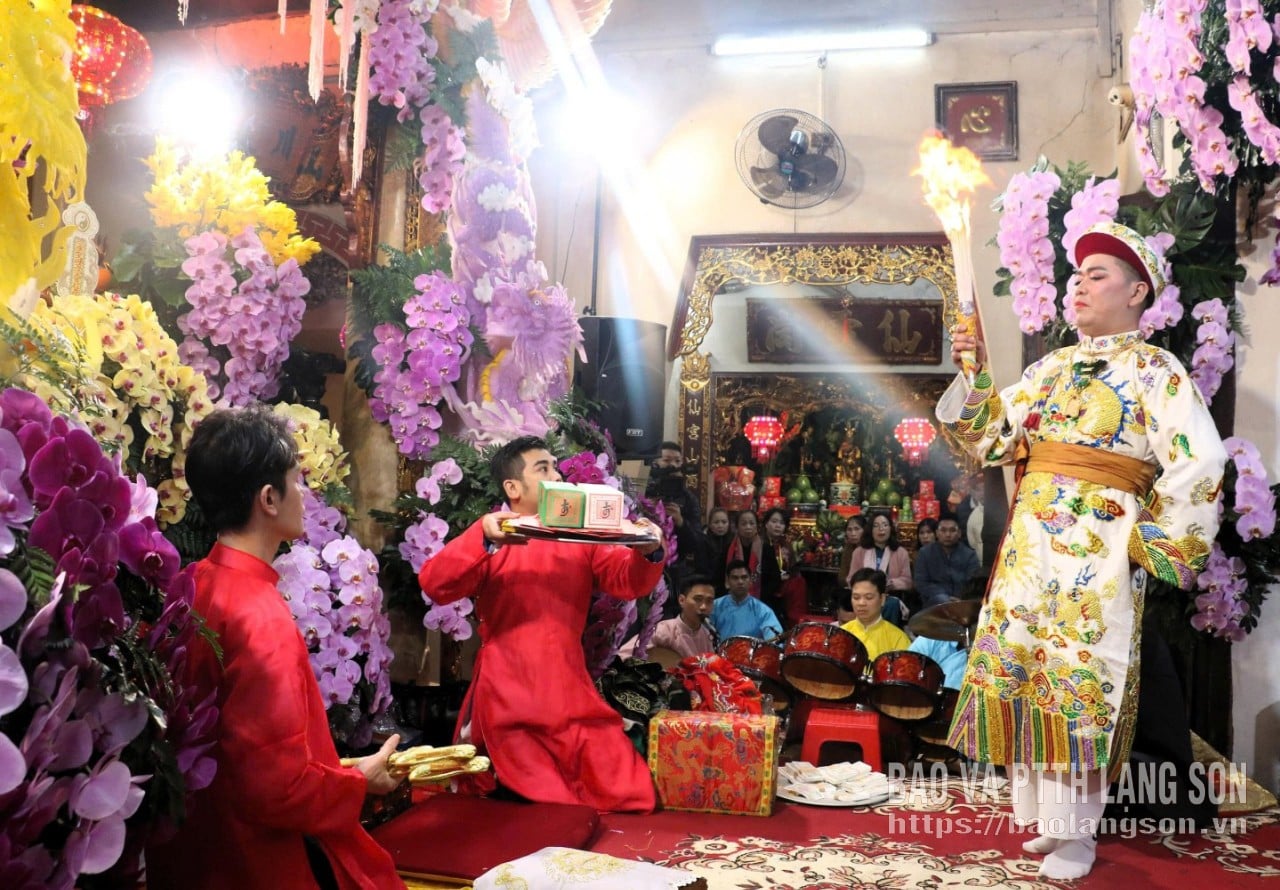
In 2024, the project was completed and recognized by the Provincial People's Committee with 6 topics and a summary report on the project, the script for the Tu Tran - Doan Thanh Lang Son festival, 4 sets of documentary photos about Tu Tran - Doan Thanh Lang Son, and the manuscript of the book "Tu Tran - Doan Thanh Lang Son".
Over time, with efforts, investment and enthusiasm, the completed research project has contributed to clarifying a part of the history of Tu Tran - Doan Thanh Lang Son, helping specialized agencies have enough scientific basis to research and supplement historical and cultural values, especially the festival of the Tu Tran - Doan Thanh Lang Son relic cluster associated with tourism development. This is also a useful document to propagate and educate the young generation today and tomorrow to have a more complete and accurate understanding of Doan Thanh Lang Son, Cua Dong Temple, Cua Tay Temple, Cua Nam Temple, Cua Bac Temple, as well as the merits and traditions of our ancestors.
The research results of the project will contribute to preserving and promoting the value of the Tu Tran - Doan Thanh Lang Son relic cluster; be the basis for restoring four festivals at four temples and a common festival for all four temples to promote and build key, typical tourism products of Lang Son province.
Mr. Vu Le Dung, Head of the Department of Culture and Society of Luong Van Tri Ward, said: The Department has guided the standing committees to manage and restore the relic cluster "Xu Lang Tu Tran". The unit also promotes the image and value of the relic through important research documents of the Provincial Cultural Heritage Association. In particular, the department is currently researching and developing a plan to restore the ancient "Xu Lang Tu Tran" Festival. This restoration not only restores the traditional ritual with the meaning of protection (corresponding to "Doan Thanh Lang" in the topic), but is also a breakthrough solution to turn the relic cluster into a unique spiritual and cultural tourism product, thereby developing the local economy in a sustainable way.
In the strong development of the new era, “The Four Temples of Lang Son” continues to affirm its position as a spiritual support and a priceless cultural asset of the province. Preserving and promoting the value of these four sacred temples is to preserve the soul of the homeland – a sustainable resource for Lang Son to step into the future with the pride and courage of a land rich in cultural and historical traditions.
Source: https://baolangson.vn/khoi-day-suc-song-xu-lang-tu-tran-5066640.html
![[Photo] Cat Ba - Green island paradise](/_next/image?url=https%3A%2F%2Fvphoto.vietnam.vn%2Fthumb%2F1200x675%2Fvietnam%2Fresource%2FIMAGE%2F2025%2F12%2F04%2F1764821844074_ndo_br_1-dcbthienduongxanh638-jpg.webp&w=3840&q=75)
























![[VIMC 40 days of lightning speed] Da Nang Port: Unity - Lightning speed - Breakthrough to the finish line](https://vphoto.vietnam.vn/thumb/402x226/vietnam/resource/IMAGE/2025/12/04/1764833540882_cdn_4-12-25.jpeg)































Comment (0)