


Creating a solid legal framework to enable the private sector to effectively access resources such as capital, technology, and high-quality human resources. Photo: VGP/DA
According to Deputy Minister of Justice Nguyen Thanh Ngoc, Resolution 68-NQ/TW of the Politburo on the development of the private economy clearly indicates the significant role of this type of economy in the current period, as an important driving force of the national economy. Both Resolution 68-NQ/TW and Resolution 66-NQ/TW of the Politburo set out the task of reviewing and improving the institutional framework.
Resolution No. 66-NQ/TW of the Politburo on reforming the work of lawmaking and enforcement to meet the requirements of national development in the new era also clearly states the need to build and perfect laws on the organization and operation of judicial and auxiliary judicial agencies in accordance with the goals and directions of judicial reform. It emphasizes promoting the strong development of legal services, legal support, legal aid, and registration of security measures to make it easier for citizens and businesses to access the law and manage legal risks. It prioritizes the allocation of legal support resources to the private sector.
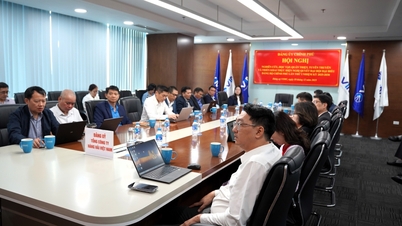
With the Politburo's clear viewpoint and objectives, the Ministry of Justice is currently working with other ministries and agencies to identify institutional bottlenecks and create favorable conditions for the development of the private economy.
According to experts, institutional and law enforcement bottlenecks hinder the development of the private economy. These include legal documents that have not thoroughly addressed the "if you can't manage it, ban it" mentality and the "request-and-grant" mechanism. The process of codifying the Party and State's viewpoints is slow, administrative procedures are cumbersome, some sub-legal documents are not synchronized, and the mechanisms and policies for businesses to access incentives are unclear. Policy implementation is also slow, lacking coordination and collaboration among ministries, sectors, and localities.
From a business perspective, Mr. Nguyen Duy Lam, Chairman of the Association of Corporate Legal Affairs, pointed out two major bottlenecks currently: the shortage of enforcement officers and inadequate institutional frameworks. He argued that, in addition to further simplifying administrative procedures, it is necessary to focus on training, improving capacity, and enhancing public service ethics to limit obstacles hindering businesses. This is a prerequisite for the legal framework to be effectively implemented in practice.
Simultaneously, it was argued that policy communication needs to be strengthened to help businesses understand and correctly apply regulations, avoiding legal risks. Support policies must also be expanded, especially in business model transformation, access to premises, capital, and tax breaks. Synchronized coordination between ministries, localities, and professional associations will create an effective "support ecosystem," replacing fragmented and unstable policies.
With nearly one million businesses in operation, 98% of which are small and medium-sized enterprises (SMEs), Associate Professor Dr. Dinh Dung Sy, a legal expert, emphasized that policies for developing the private economy must focus on the right target groups. What this sector needs most now is not only simplified procedures, low costs, and mechanisms to guarantee business rights, but also a legal framework that encourages innovation, creativity, and the application of technology to enhance competitiveness.
According to Associate Professor Dr. Dinh Dung Sy, an urgent requirement is to review and amend laws that directly affect businesses, such as the Enterprise Law, the Investment Law, the Land Law, the Construction Law, and the tax law system.
Besides removing bottlenecks in access to land, credit, and investment opportunities, these reforms need to integrate policies that support innovation, promote technology startups, and create conditions for businesses to experiment with new business models.
Chairman of the Vietnam Bar Association, Do Ngoc Thinh, believes that legal regulations for small and medium-sized enterprises (SMEs) need to be specific and easily accessible; at the same time, laws with a small, narrow, and concise scope are needed to encourage this type of business to comply.
Clearly, strengthening law enforcement and increasing transparency in the administrative apparatus are key factors in creating a fair and stable business environment for the private sector.
Dieu Anh
Source: https://baochinhphu.vn/uu-tien-nguon-luc-ho-tro-phap-ly-cho-kinh-te-tu-nhan-but-pha-102251023113832437.htm
































![[Video] The craft of making Dong Ho folk paintings has been inscribed by UNESCO on the List of Crafts in Need of Urgent Safeguarding.](https://vphoto.vietnam.vn/thumb/402x226/vietnam/resource/IMAGE/2025/12/10/1765350246533_tranh-dong-ho-734-jpg.webp)































































Comment (0)