

Few tourists
Mr. Tu Quy Thanh, Director of Lien Bang Tourism Company (Ho Chi Minh City), said that he used to organize tours for Chinese tourists visiting Vietnam before the pandemic, but after the pandemic, he hasn't received a single Chinese tourist, even since China allowed its citizens to travel abroad earlier this year.
"I reconnected with Chinese partners I had worked with before the pandemic and discovered that things have changed. Many companies remain closed and have not resumed operations. My partners shared with me that if they restarted, they would have to start from scratch, so they didn't continue. China's lockdown lasted too long, causing owners of tourism companies to change professions, and staff to scatter," he said.

A group of Chinese tourists arrived at Cam Ranh airport on a charter flight after the pandemic.
According to the Vietnam National Tourism Administration, in July, Vietnam welcomed 180,000 Chinese tourists, a 14% increase compared to June. In the first seven months of the year, the total number of visitors from this market reached nearly 738,000. In contrast, in July 2019 (the period before the pandemic, used as a benchmark), approximately 407,000 Chinese tourists visited Vietnam, bringing the total for the first seven months to 2.9 million. Therefore, the recovery rate of Chinese tourists to Vietnam is low (around 30%). Meanwhile, many other international tourist markets for Vietnam have returned to near-normal levels or even better than before the pandemic, such as Thailand, Singapore, the US, Australia, South Korea, the UK, and Germany.
Based on his observations of the billion-person tourism market, Mr. Thanh believes that, in reality, the majority of Chinese tourists visiting Vietnam recently have been those coming for work and business after the pandemic, while pure tourists account for a low percentage. These tourists mainly enter Vietnam via charter flights or groups crossing the border with short itineraries.
"Partners still operating in the tourism sector haven't thought about reviving the outbound market and are only focusing on the domestic Chinese market. Vietnamese tourism businesses are still facing many difficulties after the pandemic, so they can't support partners in market development because if we invite them to conduct surveys, we have to bear the costs, and splitting the costs 50-50 is also unmanageable for them. We ourselves are also facing difficulties. Even the number of Vietnamese tourists traveling to China is not large, and charter flights to Fenghuang Ancient Town... have very few passengers, partly due to high prices. For example, a tour to Chengdu currently costs 18-19 million VND per person, about 6 million VND higher than before the pandemic. At this price, tourists choose more popular destinations. In general, both sides are facing difficulties because, to date, things haven't returned to normal; both airfare and land tour costs are too high," Mr. Thanh analyzed.
Meanwhile, Mr. Nguyen Chau A, Director of Oxalis Adventure Company, commented: "Regarding Vietnam as a destination, I believe that services at the destination such as hotels, restaurants, shopping facilities... specifically catering to Chinese tourists have almost completely closed after the pandemic, and that is one of the reasons why Chinese travel companies have not been able to bring tourists over."
Where did the Chinese tourists go?
Not only Vietnam, but other countries in Southeast Asia are also experiencing a severe shortage of tourists from China. The influence of Chinese tourists on the region is enormous. Tourism revenue accounted for 5.7% of Malaysia's GDP in 2019, with Chinese tourists accounting for 17.8% of that revenue. Similarly, 11.4% of Thailand's GDP is generated by tourism, with a massive 28.1% coming from Chinese spending. The pandemic disrupted this trend, but many governments and businesses believed it was only temporary. That turned out to be wrong. In 2021, Chinese tourist numbers had fallen to 8.5 million globally. And the recovery, so far, has been disappointing. Chinese summer tour bookings this year are at 30% of pre-pandemic levels in Malaysia and 10% in Thailand.
When will Chinese tourists return? Southeast Asia may have to wait a long time, according to Bloomberg.
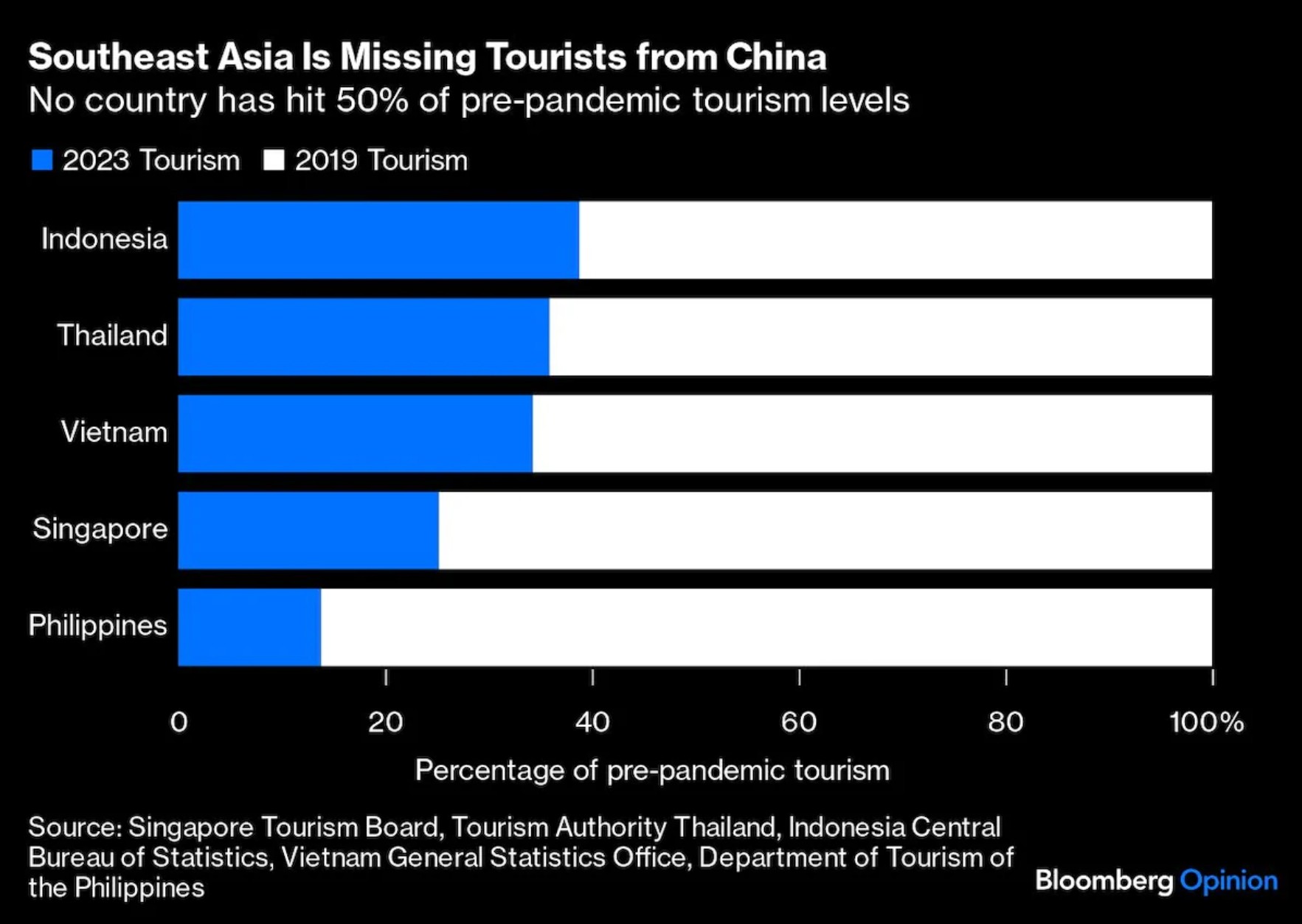
The absence of Chinese tourists has prevented any Southeast Asian country from recovering international visitor numbers to 50% of pre-pandemic levels.
Several factors are making it difficult for Chinese tourists to return to the once-popular region. Flight capacity – particularly between China and Southeast Asia – has not yet returned to 2019 levels, and China's economic slowdown is making its consumers more cautious. Southeast Asia's tourism sector should not expect a return to the boom period of the 2010s when Chinese tourists first arrived.
There are internal issues within China that support this claim. First, younger Chinese travelers are no longer interested in the group travel experiences that have long dominated Chinese holidays, where parents take them abroad. A recent survey of 2,000 Chinese travelers found that 76% are looking for "fewer people" and fewer itineraries. Instead, today's Chinese travelers are seeking "individualized" experiences that allow access to unique cultural attractions. Crowded beaches and chain restaurants are no longer the norm.
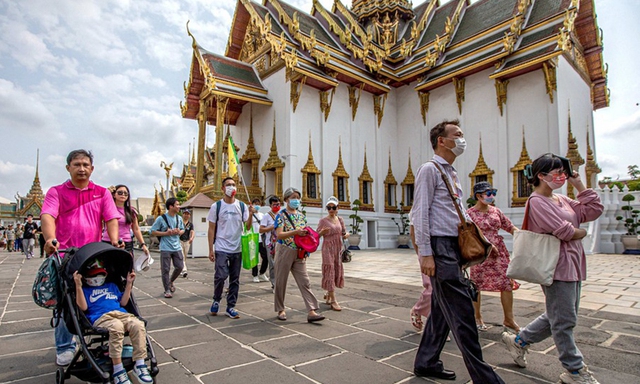
To date, Thailand is the most popular destination for Chinese tourists in Southeast Asia.
Secondly, Chinese consumers are spending more domestically, particularly on luxury goods. In 2019, Chinese consumers accounted for 35% of the global luxury market, but only 11% of their purchases were made in China due to high taxes at home. Luxury boutiques and duty-free shops in places like Bangkok, Phuket, and Kuala Lumpur benefited. But China's development of a domestic duty-free shop policy is causing luxury sales to rapidly increase and could account for nearly 90% of Asia-Pacific's duty-free sales in the next few years.
In the short term, according to Bloomberg's analysis, Southeast Asian countries cannot compensate for the lack of tourists from China. But in the long term, tourism marketing should be expanded and reach should extend to other countries with burgeoning middle classes. India is a good market to start this new strategy. Like China in the 1990s, it has an increasingly affluent, travel-loving population and a growing aviation industry. Earlier this year, the Asian Development Bank argued that India could become the "next China" in terms of outbound tourism.
Tapping into the Indian tourist market will require taking many of the same steps that Thailand, Malaysia, and other countries have long taken with China: easing visa policies, expanding air links, and supporting hotels, restaurants, and attractions in customizing their services for Indian visitors. But one thing is certain: India will not soon make up for the decline in Chinese tourists.
Source link


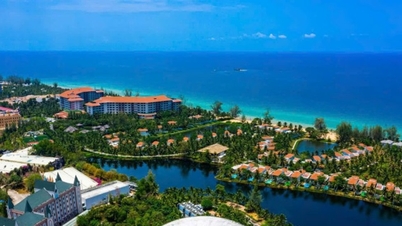





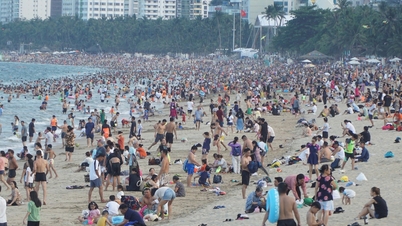


















![[Photo] Prime Minister Pham Minh Chinh holds a phone call with the CEO of Russia's Rosatom Corporation.](/_next/image?url=https%3A%2F%2Fvphoto.vietnam.vn%2Fthumb%2F1200x675%2Fvietnam%2Fresource%2FIMAGE%2F2025%2F12%2F11%2F1765464552365_dsc-5295-jpg.webp&w=3840&q=75)


















































Comment (0)