

 |
Three South Korean tourists are divided into two camps: those who can eat cilantro and those who can't. Photo: @grandmavuongs . |
After nearly half a year living in Hanoi , Kim Ga Young has gradually become accustomed to the local food, even finding it "to her liking to the point of gaining weight." However, she still can't eat cilantro.
"Every time I eat bread, pho, or dishes with vegetables, I tell the staff that I can't eat cilantro," Kim told Tri Thuc - Znews.
In fact, Koreans traveling to Vietnam often have an "allergy" to coriander, also known as cilantro. This is a familiar herb in Vietnamese cuisine , with a slightly spicy, somewhat bitter taste, used to enhance the flavor of sandwiches, salads, and stir-fried dishes.
However, for many people who are not used to it, especially Korean visitors, cilantro has a rather unpleasant smell.
 |
Cilantro is used to enhance the flavor of bread. Photo: @grandmavuongs. |
In July, three South Korean tourists visiting a bánh mì (Vietnamese sandwich) shop in Da Nang attracted attention when they wore T-shirts with the slogans "Don't add basil" and "Add cilantro instead." Images of the group of tourists divided into "two factions" immediately went viral on social media.
"Three Korean customers, each on the cilantro side, visited our sandwich shop. They clearly showed us who was on team cilantro and who was on team no cilantro," the shop's page humorously stated.
Besides shirts printed in Vietnamese, some tourists also wear shirts with Thai, Korean, and English text for convenience when traveling to Southeast Asian countries. According to restaurant owners, this is a convenient way for tourists to travel to many places while still conveying their wishes when ordering food.
According to Naver , the phrase "No cilantro, please" has become a familiar expression among Korean diners at Southeast Asian restaurants, used to avoid dishes with flavors they cannot tolerate.
Although not common in Korean cuisine, cilantro is still an ingredient that many people try to eliminate. Some tourists even learn how to say "no cilantro" in the local language before traveling.
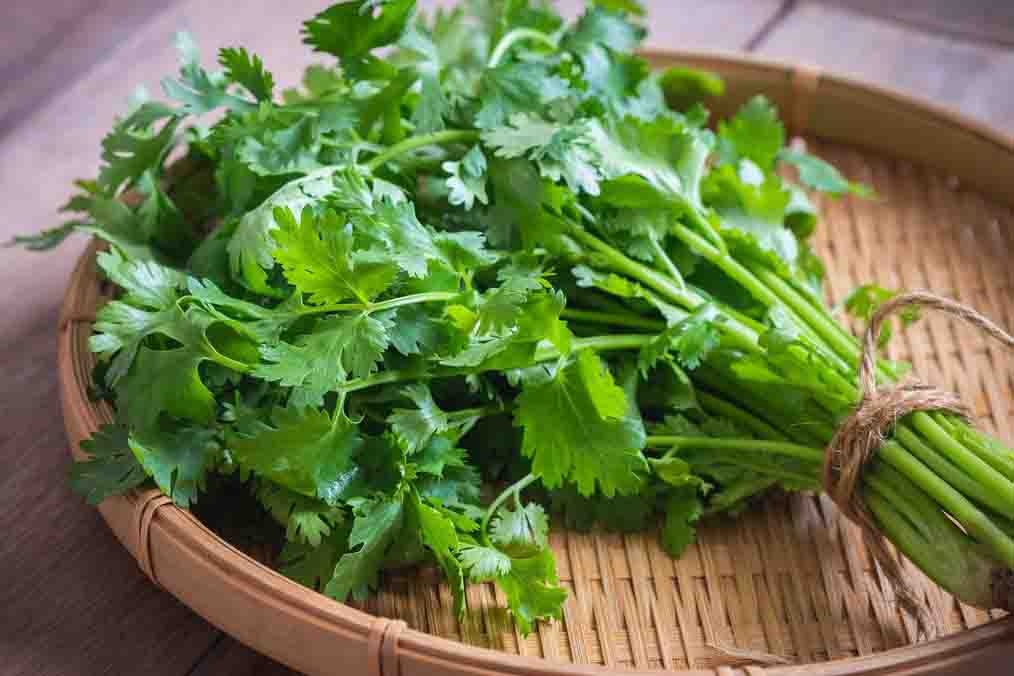 |
Cilantro is a familiar ingredient in Vietnamese cuisine. Photo: @creatrip. |
In June, the Korea Food and Drug Administration cited research from the University of Utah (USA) stating that the reason for liking or disliking cilantro may be related to "sensitivity genes."
Cilantro contains aldehyde compounds, which are also found in soaps and lotions. People who say cilantro smells "soapy" are thought to be sensitive to these compounds.
Research indicates that the OR6A2 gene variant causes carriers to have a stronger-than-normal sensitivity to aldehydes. The prevalence of this variant is low in the Middle East and South Asia, where coriander is very popular, but high in East Asia, where many people dislike this herb.
Despite its controversial taste, cilantro is considered rich in nutrients, containing magnesium, calcium, phosphorus, potassium, and vitamins A, B, C, and K. Some Koreans say, "Its aroma is wonderful," "cilantro enhances the flavor of dishes," or "If you've tried cilantro, you'll love it and won't be able to stop eating it."
Korean authorities advise residents and tourists to choose vegetables with tender stems and leaves, a distinctive aroma, wash them under running water, and wrap them in newspaper before refrigerating.
Source: https://znews.vn/vi-sao-khach-han-quoc-mac-ao-dung-cho-rau-mui-khi-du-lich-viet-nam-post1610165.html























































































Comment (0)