Vietnam and the US collaborate on research and testing of new cancer drugs.
Báo Thanh niên•13/12/2024
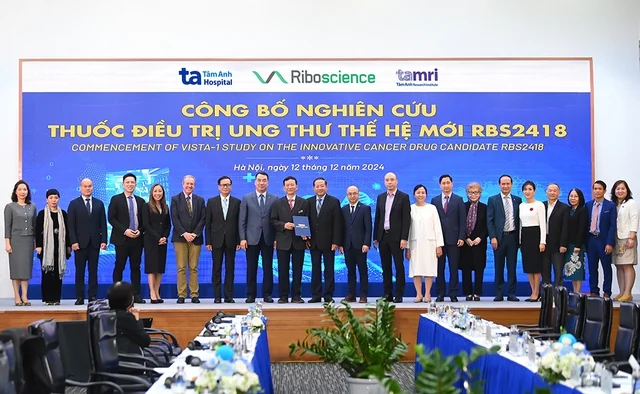
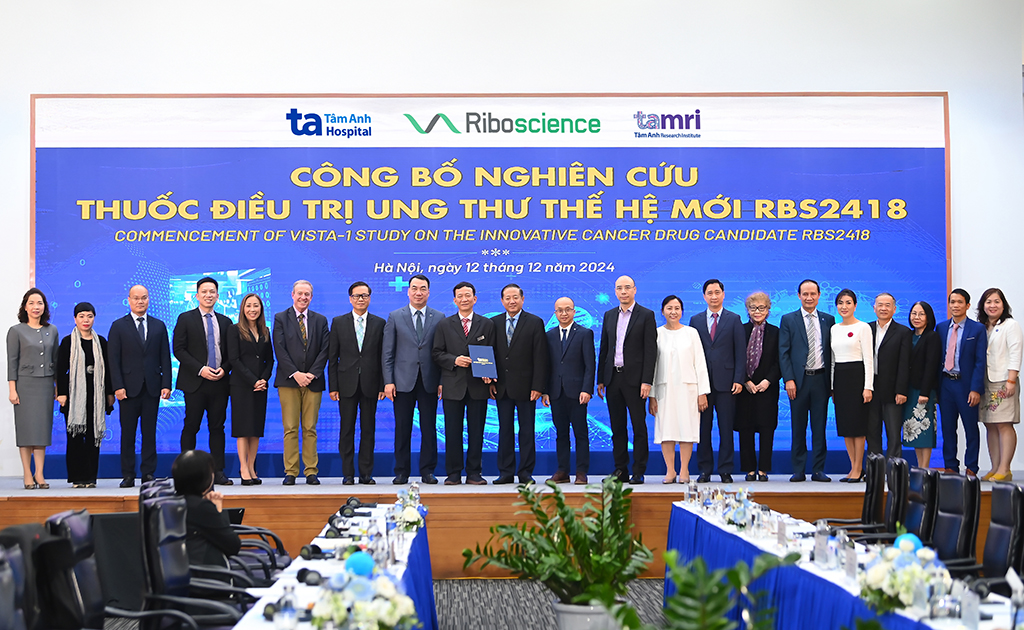
On December 12th, in Hanoi , Tam Anh General Hospital and Tam Anh Research Institute (TAMRI) announced the launch of a phase 2A clinical trial of the American oral immunotherapy drug RBS2418. The study is expected to be successful, offering a new lease of life to patients with late-stage and refractory cancer.
The announcement was attended and witnessed by representatives from the US Department of Health , the Department of State, and the Centers for Disease Control and Prevention (CDC).
Safe first step
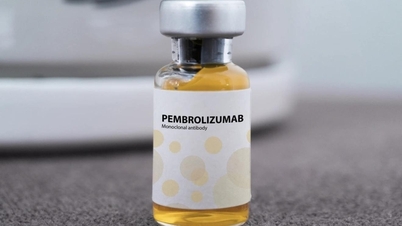
RBS2418 is a potential oral immunotherapy drug for cancer treatment, approved for clinical trials by the U.S. Food and Drug Administration (FDA).
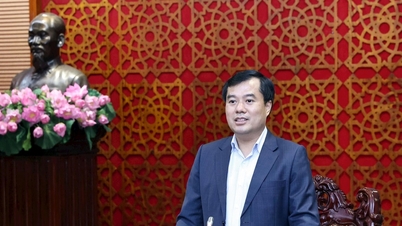
Dr. Nguyen Ngo Quang, Director of the Department of Science, Technology and Training (Ministry of Health ), presents the decision granting permission for phase 2A clinical trials of the oral immunotherapy drug RBS2418 in Vietnam on December 12, 2024. PHOTO: TAM ANH HOSPITAL
In phase 1, studies conducted at more than 10 reputable hospitals and medical centers in the US showed safe results. This promising drug, RBS2418, is now being approved for phase 2 research on its efficacy in patients with end-stage colorectal cancer who are no longer responding to existing treatments. The phase 2 clinical trial was approved by the FDA in September 2024, and subsequently approved by the Vietnamese Ministry of Health in early December 2024. Currently, phase 2A VISTA-1 is expected to enroll 150 patients in the US and Vietnam. In Vietnam, the clinical trial will initially be conducted at Tam Anh Hospital in Hanoi and Tam Anh Hospital in Ho Chi Minh City, with plans to expand to three other major hospitals in the near future. The VISTA-1 study was developed by the American biotechnology company Riboscience, in collaboration with a team of renowned experts from Riboscience and Stanford University School of Medicine. Initially, the research focuses on patients with metastatic, advanced colorectal cancer who have failed or are intolerant to existing therapies, opening up an opportunity for them to access an advanced and potentially effective solution. The oral medication is easy to use, reduces costs, and increases accessibility for more patients, especially for cancer that typically has very high treatment costs.
Tam Anh Hospital meets all the high requirements of clinical trials equivalent to those in the US.
In November 2023, in the US, Tam Anh General Hospital System, Tam Anh Research Institute, and the Stanford Institute for Microbiology and Epidemiology signed a cooperation agreement.
Professor Jeffrey S. Glenn, Director of the Stanford Institute for Microbiology and Epidemiology, speaks at the event. PHOTO: TAM ANH HOSPITAL
To become an official research site for VISTA-1, Tam Anh Hospital made significant preparations and investments in personnel, equipment, and work processes, especially by proactively participating from the very early stages of the initial research in the US. Doctors from Tam Anh Hospital and Tam Anh Research Institute collaborated with experts in the US to develop the research protocol for phase 2, adopting standard research procedures to develop a modern, internationally standardized laboratory system. In particular, the Tam Anh Hospital system invested in a completely new testing center with state-of-the-art equipment to serve as the central laboratory for biomarkers, operating in parallel with the research laboratory in the US. "We worked with Tam Anh Hospital during another collaborative phase with Stanford University. During that process, Tam Anh Hospital learned that Riboscience was conducting clinical trials of this new experimental cancer drug. The leadership at Tam Anh was very interested and enthusiastic about bringing this clinical trial cancer drug to Vietnam. After visiting Tam Anh Hospital, I was very impressed with the facilities and the team of medical staff, who provide very advanced and internationally-standard healthcare. I believe that Tam Anh Hospital will successfully conduct the clinical trial with us," affirmed Professor Jeffrey S. Glenn, Director of the Stanford Institute for Microbiology and Epidemiology.
According to Professor Jeffrey S. Glenn, new drug research consists of four phases: 1, 2A, 2B, 3, and 4. Phase 4 is the stage of monitoring the long-term effectiveness and side effects of the drug after it has been licensed for marketing and applied in practice. In the research and development of a new drug, clinical trials play a crucial role in evaluating the safety and effectiveness of the drug in humans.
This is of great significance to cancer patients and the Vietnamese healthcare system.
Speaking to us, Mr. Hoang Anh Tuan, representative of the Vietnamese Consulate General in San Francisco (USA), affirmed that the selection of Tam Anh as Stanford's center outside the US for research and clinical trials on cancer treatment was not a random choice. Stanford chose Tam Anh because they saw it as a completely worthy choice. According to him, the decisive factors include excellent facilities, a team of skilled experts, financial capacity, leadership and management, and the determination of the entire Tam Anh ecosystem. Crucially, it has the support of the Government, the Ministry of Health, and other relevant ministries and agencies. "This is a world-class research project, and our collaboration opens the first step for Vietnam to become a research center, a development center, and a treatment center for serious diseases in the world. I think then international research organizations will have to line up, and this will create a foundation for us to become a scientific center not only in artificial intelligence and medicine but also in other fields," said Mr. Hoang Anh Tuan. Dr. Nguyen Ngo Quang, Director of the Department of Science, Technology and Training (Ministry of Health), added that this is the first and only project currently transferring technology and conducting pilot research. Therefore, if this project is successful, it will demonstrate the remarkable development of technology, including research technologies, participation in research to develop new drugs, and the creation of many products for patient care, especially for cancer patients in Vietnam. "We also hope that through this project, Vietnam will have further opportunities to receive technology transfer in the research and production of new drugs from other major partners in Europe and Japan, to serve patients in Vietnam," Mr. Ngo Quang confidently stated. VISTA-1 holds immense significance for cancer patients as it provides access to researched drugs right here in Vietnam, equivalent to what patients in the United States have access to. This is also an important step forward for the healthcare and scientific innovation sector in Vietnam, as it is now ready to meet the conditions to receive and implement clinical trials at very early stages, such as phase 2A, rather than just phase 3 research as before.
According to Dr. Vu Huu Khiem, Head of the Oncology Department at Tam Anh Hospital in Hanoi, statistics from the Global Cancer Registry (Globocan) show that colorectal cancer is the third most common cancer worldwide, with over 1.9 million new cases in 2022. Globocan estimates that by 2045, the mortality rate from colorectal cancer in Asia alone could increase by nearly 80% compared to the present. In Vietnam, it is the fourth most common cancer, with 16,835 new cases and 8,454 deaths. Statistics show that 15-30% of newly diagnosed patients are already in the metastatic stage; 50-60% of carcinomas in situ eventually progress to metastasis. Late detection, at an advanced stage, makes treatment extremely difficult; the 5-year survival rate for patients with metastatic cancer is only about 10-20%. In Vietnam, however, many patients with metastatic cancer, if treated with targeted therapy or immunotherapy, have a 5-year survival rate of 30-40%. On the other hand, immunotherapy, a significant advance in cancer treatment globally over the past 10 years, is currently only effective for about 5% of patients with metastatic colorectal cancer. Source: https://thanhnien.vn/viet-nam-my-hop-tac-nghien-thu-nghiem-thuoc-ung-thu-moi-185241213000403589.htm







![[Photo] Closing Ceremony of the 10th Session of the 15th National Assembly](/_next/image?url=https%3A%2F%2Fvphoto.vietnam.vn%2Fthumb%2F1200x675%2Fvietnam%2Fresource%2FIMAGE%2F2025%2F12%2F11%2F1765448959967_image-1437-jpg.webp&w=3840&q=75)













































![[OFFICIAL] MISA GROUP ANNOUNCES ITS PIONEERING BRAND POSITIONING IN BUILDING AGENTIC AI FOR BUSINESSES, HOUSEHOLDS, AND THE GOVERNMENT](https://vphoto.vietnam.vn/thumb/402x226/vietnam/resource/IMAGE/2025/12/11/1765444754256_agentic-ai_postfb-scaled.png)











































Comment (0)