

Monkeypox (mpox) has now become a global concern as the WHO has declared mpox a public health emergency for the second time, and the mutation of the virus causing monkeypox remains an unknown.
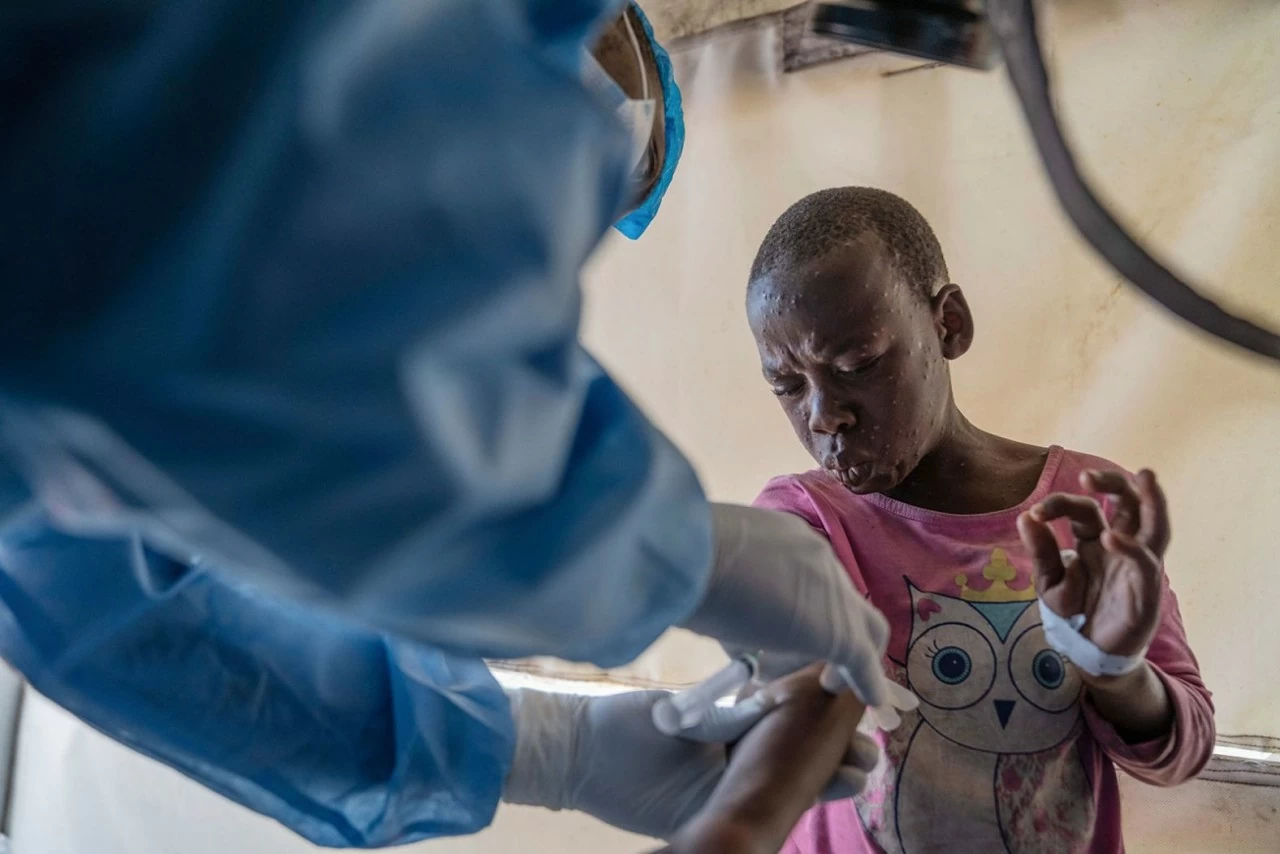 |
| Medical staff care for patients with monkeypox at a treatment center in Monigi, Congo, on August 19. (Source: AP) |
The virus that causes the disease mutates faster than normal.
As of August 27th, Africa had recorded 22,863 suspected cases and 622 deaths related to various strains of mpox across the continent. Meanwhile, according to the World Health Organization (WHO), as of August 25th, Africa had 5,281 confirmed cases of mpox.
In the Democratic Republic of Congo, the country most severely affected by monkeypox, more than 18,000 suspected cases of the endemic clade 1 and clade 1b variants of the monkeypox virus have been recorded, along with 615 deaths. These figures highlight the complex nature of the epidemic and the concerns it poses for global health.
According to researchers, the new variant of the monkeypox virus, known as clade 1b, spreading in the Democratic Republic of Congo and neighboring countries, is mutating faster than expected and often occurs in areas lacking the resources to implement surveillance and prevention measures. Such mutation also means that the virus's evolution, severity, and transmission patterns remain unknown, hindering efforts to contain the outbreak.
Meanwhile, on August 15, Swedish health authorities confirmed the first case of infection with the clade 1b variant; on August 22, Thailand also confirmed what is known as the first case in Asia infected with the clade 1b variant. These are the first confirmed cases of clade 1b infection of the monkeypox virus outside of Africa.
According to Dimie Ogoina, chair of the WHO's monkeypox emergency response committee, without a clear understanding of how the virus mutates, the medical community will struggle to address issues related to transmission, disease severity, and risk factors.
Genetic sequencing of cases infected with the clade 1b variant revealed they carried a mutation called APOBEC3 (an enzyme belonging to the protein family). According to Dr. Miguel Paredes, a researcher studying the mutation of the monkeypox virus at the Fred Hutchison Cancer Research Center (USA), the monkeypox virus typically mutates slowly, but mutations driven by APOBEC can accelerate the virus's evolution.
According to Dr. Paredes, all cases of monkeypox transmitted from person to person showed the aforementioned APOBEC mutation, meaning that the monkeypox virus is mutating a little faster than researchers had predicted.
Don't underestimate monkeypox.
Prior to the 2022 outbreak in 70 countries, monkeypox had been silently spreading for years with little attention. Furthermore, while the 2022 outbreak was primarily concentrated among gay and bisexual men, the current outbreak in Africa is not only transmitted through sexual contact but also through close contact between children, pregnant women, and other vulnerable groups.
According to Malaysian health experts, although both MPO and COVID-19 are caused by viruses, the two diseases are fundamentally different in origin, symptoms, modes of transmission, and treatment methods, and also have distinct clinical manifestations.
Professor Rafdzah Ahmad Zaki, Dr. Lim Say Hiang, and Dr. Lim Yin Cheng (Faculty of Social Medicine and Disease Prevention, University of Malaya, Malaysia) stated that the incubation period of mpox is 3-17 days, and symptoms begin 5-21 days after infection with common symptoms such as fever, headache, sore throat, muscle aches, swollen lymph nodes, and a rash with blisters on the face, hands, feet, body, eyes, mouth, or genitals.
According to the three experts mentioned above, as the world grapples with numerous existing and emerging infectious diseases, it is crucial for people to be able to distinguish and understand their modes of transmission, symptoms, and preventive measures.
Compared to mbox, Covid-19 spreads faster because it is transmitted through the respiratory tract when an infected person coughs, sneezes, talks, or breathes.
MPOX treatment is primarily supportive, focusing on reducing symptoms and preventing complications. In contrast, COVID-19 treatment varies depending on the severity of the illness. Mild cases may require rest, hydration, and over-the-counter medications to alleviate symptoms.
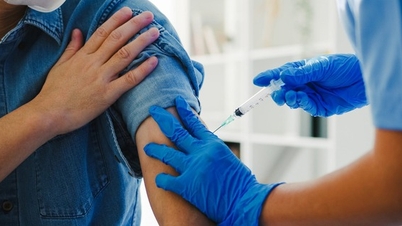
Vaccines remain an effective method of prevention.
To combat MPOX, the WHO launched a global strategic preparedness and response plan. The WHO called for international cooperation to increase access to MPOX vaccines, especially for low- and middle-income countries.
According to the plan, vaccination campaigns will target individuals at high risk of contracting the disease, such as those in close contact with infected individuals, as well as healthcare workers, in order to break the chain of transmission.
On August 28, the Africa Centres for Disease Control and Prevention (CDC Africa) announced that it had secured nearly 1 million doses of the monkeypox vaccine (mpox) for the continent, and urged pharmaceutical companies to share their manufacturing technology to combat the disease.
Earlier this month, the WHO declared a global public health emergency (PHEIC) due to monkeypox, with Africa currently at the forefront of the outbreak. According to the WHO, the Democratic Republic of Congo accounts for up to 90% of the cases recorded this year. In response, several countries have pledged to send vaccines to the hardest-hit African nations, with Spain committing 500,000 doses. The Danish pharmaceutical company Bavarian Nordic will also contribute 215,000 doses.
On August 29, the American biopharmaceutical company Emergent BioSolutions announced that the US Food and Drug Administration (FDA) had approved the widespread use of its ACAM2000 vaccine against monkeypox for people at high risk of contracting the disease. Previously, Emergent announced it would donate 50,000 doses of its smallpox vaccine to the Democratic Republic of Congo and other affected countries including Burundi, Kenya, Rwanda, and Uganda to help prevent the current monkeypox outbreak.
Source: https://baoquocte.vn/virus-gay-benh-dau-mua-khi-dang-bien-doi-nhu-the-nao-284692.html



![[Photo] Closing Ceremony of the 10th Session of the 15th National Assembly](/_next/image?url=https%3A%2F%2Fvphoto.vietnam.vn%2Fthumb%2F1200x675%2Fvietnam%2Fresource%2FIMAGE%2F2025%2F12%2F11%2F1765448959967_image-1437-jpg.webp&w=3840&q=75)




































![[OFFICIAL] MISA GROUP ANNOUNCES ITS PIONEERING BRAND POSITIONING IN BUILDING AGENTIC AI FOR BUSINESSES, HOUSEHOLDS, AND THE GOVERNMENT](https://vphoto.vietnam.vn/thumb/402x226/vietnam/resource/IMAGE/2025/12/11/1765444754256_agentic-ai_postfb-scaled.png)



































Comment (0)