

Green livelihoods on the Se San River
Besides contributing to improving economic life, cage fish farming on the Se San River has also created a new face for the riverine region in western Gia Lai. Along the gentle river flowing through the border commune of Ia O (Gia Lai province), long rows of fish cages, shimmering in the sunlight, are opening up a sustainable livelihood for the local people.
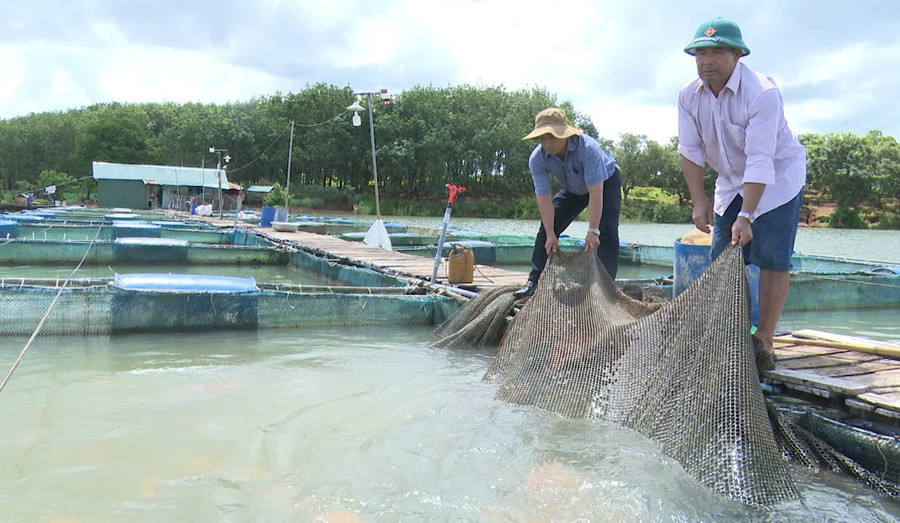
Taking advantage of the clean, nutrient-rich water source, local people focus on raising specialty fish species such as red tilapia, catfish, and snakehead fish, meeting market demand while providing a stable income year-round. Mr. Dam Van Sang is one of the pioneers in raising specialty fish in Ia O commune. He currently owns 20 cages of red tilapia and catfish.
“Raising fish in cages is more efficient than farming, and the care is minimal. After 8 months, we can harvest, with each cage yielding from 800 kg to 1 ton of fish. If the selling price is 55,000 VND/kg or higher, we will definitely make a profit,” Mr. Sang calculated.
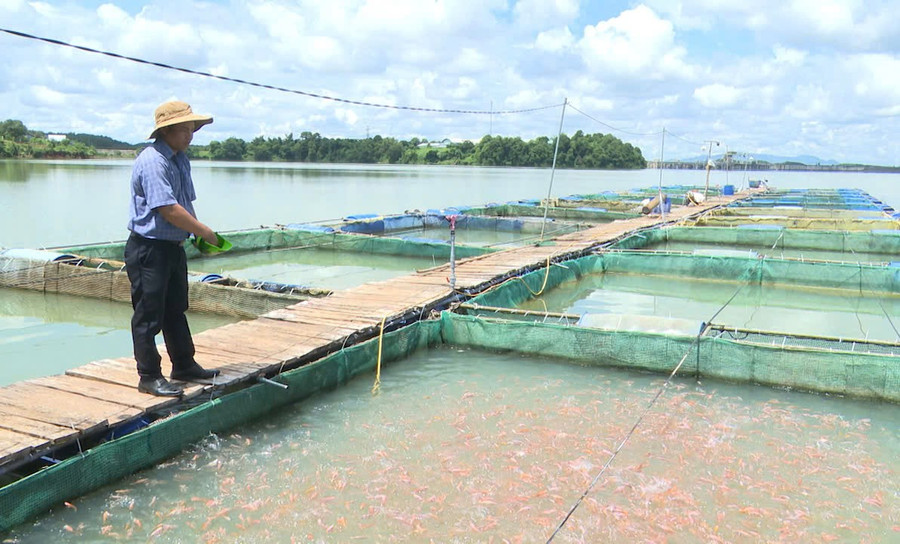
Not content with just raising common fish species, many households have boldly shifted to raising high-value specialty fish, targeting the high-end market segment.
Ms. Nguyen Thi Oanh's family (originally from Ca Mau province, established in Ia O commune since 2016) has achieved success with their snakehead fish farming model. Ms. Oanh stated: “Snakehead fish are easy to raise, rarely get sick, and have a stable selling price of around 100,000 VND/kg. Thanks to diligently learning the techniques, the fish are thriving, the mortality rate is low, and the model is initially yielding a promising income.”
According to Mr. Phan Dinh Tham, Chairman of the People's Committee of Ia O commune, the entire commune currently has over 100 cages for raising freshwater fish, concentrated along the Se San River. The products are purchased directly by traders, creating a stable source of income for the people.
“Based on the initial results, the commune is encouraging the expansion of aquaculture scale; at the same time, combining it with the exploitation of ecotourism potential along the Se San River. This model could become a distinctive development direction for the western riverine region of Gia Lai in the future,” Mr. Tham hoped.
Notably, thanks to clean water and a stable flow, fish raised in this area are less susceptible to disease, have delicious meat quality, and meet food safety and hygiene standards. Some households even have partnerships to sell their products to restaurants and supermarkets in the province. Therefore, the cage fish farming model not only provides stable employment for the people but also gradually builds the image of clean seafood products from Western Gia Lai in the market.
From the An Khê-Kanak lake to a sustainable fisheries village.
Not only on the Se San River, cage fish farming is also thriving in the An Khe-Kanak hydroelectric reservoir (Cuu An commune, Gia Lai province). With a water surface area of over 3.4 km², clear water, and stable flow year-round, this area is becoming a key aquaculture region in western Gia Lai.
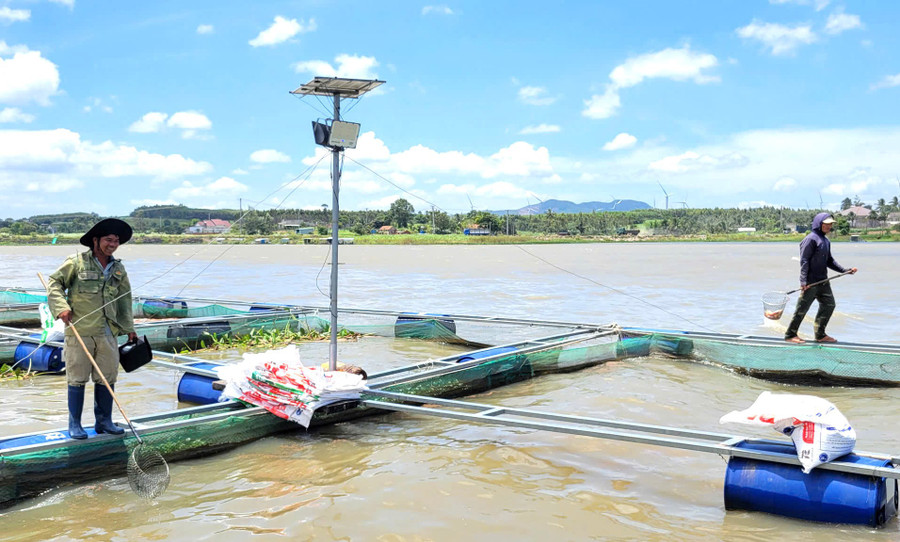
Currently, the fish farming village in Cuu An commune has 17 rafts with 245 cages, producing an average of about 800 tons of fish per year, mainly red tilapia - a species that adapts well, grows quickly, is less prone to disease, and is favored by the market.
Mr. Nguyen Dinh Quyen, one of the pioneering fish farmers here, said: "The water in the lake is very clean, the fish grow quickly, and we hardly need to use any disease prevention medication. If the price remains around 50,000 VND/kg as it is now, everyone will make a profit, with each fish farm earning an average of several hundred million VND per year."
According to Mr. Quyen, thanks to local support in terms of technology and water environment control, people are increasingly confident in expanding their production scale. Product output is relatively stable as traders come directly to the rafts to purchase the products, helping farmers save on transportation costs and sell large quantities at once.
Mr. Nguyen Van Long (another fish farmer) shared: “Each time we sell, traders buy tons of fish to take to Pleiku and neighboring provinces for consumption. Thanks to this, people feel secure and committed to the profession in the long term. Many families have even invested in cage systems made of composite materials to increase durability and reduce environmental pollution.”
According to Mr. Duong Phu Tho, Deputy Head of the Economic Department of Cuu An commune, the cage fish farming model in the An Khe-Kanak reservoir has brought a stable annual income to the people, effectively utilizing the water surface and abundant natural food sources.
“In the coming time, the commune will continue to support people in expanding the scale and experimenting with high-value fish species such as crispy carp and monosex tilapia, while building the brand “Cuu An caged fish”. The goal is to form a sustainable and environmentally friendly aquaculture village,” Mr. Tho said.
Besides its economic value, cage fish farming also utilizes agricultural by-products as feed, helping to reduce production costs and limit water pollution.
Many households have begun applying automated aeration and feeding technologies, saving labor and increasing productivity. This is a suitable direction in the context of climate change severely impacting traditional agriculture in Western Gia Lai.
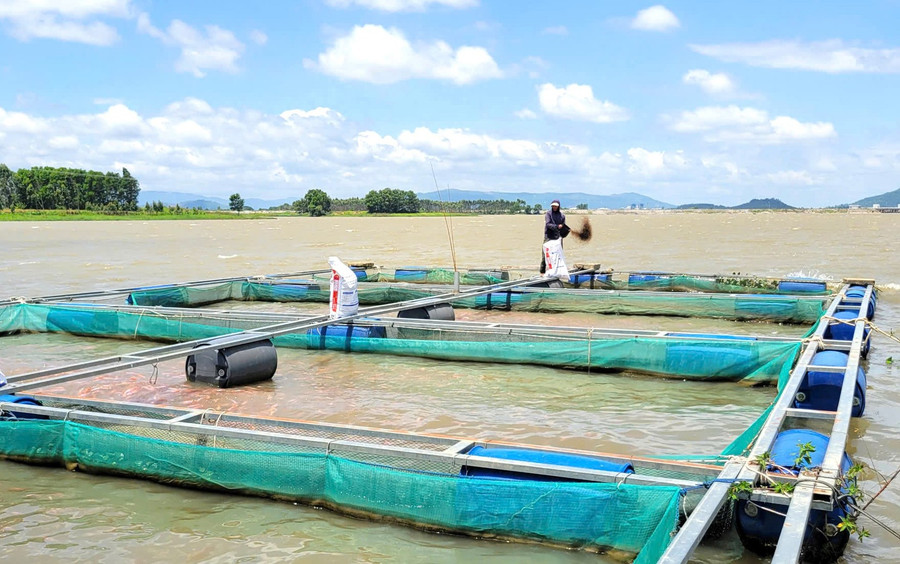
From the Se San River to the An Khe-Kanak reservoir, cage fish farming is shaping a new direction for agriculture in Western Gia Lai. The combination of natural water resources, the people's determination to improve their lives, and supportive guidance from the government is creating a green production value chain, linking livelihoods and environmental protection.
With synchronized support in terms of capital, technology, and consumption linkages, the cage fish farming model not only ensures income for the people but also opens up prospects for building the brand "clean fish of Tay Gia Lai" - a characteristic product of the riverine region on the plateau.
This is not only an economic direction, but also a vivid testament to Gia Lai's efforts in the journey of "greening" agriculture, ensuring sustainable livelihoods, and preserving the natural beauty of the Central Highlands' riverine region.
Source: https://baogialai.com.vn/xanh-hoa-sinh-ke-vung-song-nuoc-post568582.html
![[Photo] Prime Minister Pham Minh Chinh attends the Conference summarizing and implementing tasks of the judicial sector.](/_next/image?url=https%3A%2F%2Fvphoto.vietnam.vn%2Fthumb%2F1200x675%2Fvietnam%2Fresource%2FIMAGE%2F2025%2F12%2F13%2F1765616082148_dsc-5565-jpg.webp&w=3840&q=75)





































































Comment (0)