

Territorial issues - central bottleneck
The latest visit of special envoy Stephen Witkoff, accompanied by Jared Kushner (December 2), continues to attract special attention from international media.
The appearance of a close confidant of President Donald Trump immediately generated mixed interpretations: European press made pessimistic comments that Washington was preparing to “cede Ukraine to Russia”, while Russian media recorded expectations that a diplomatic turning point might be forming.
Ukraine's political landscape is overshadowed by corruption scandals and unfavorable developments on the battlefield have added to the speculation.
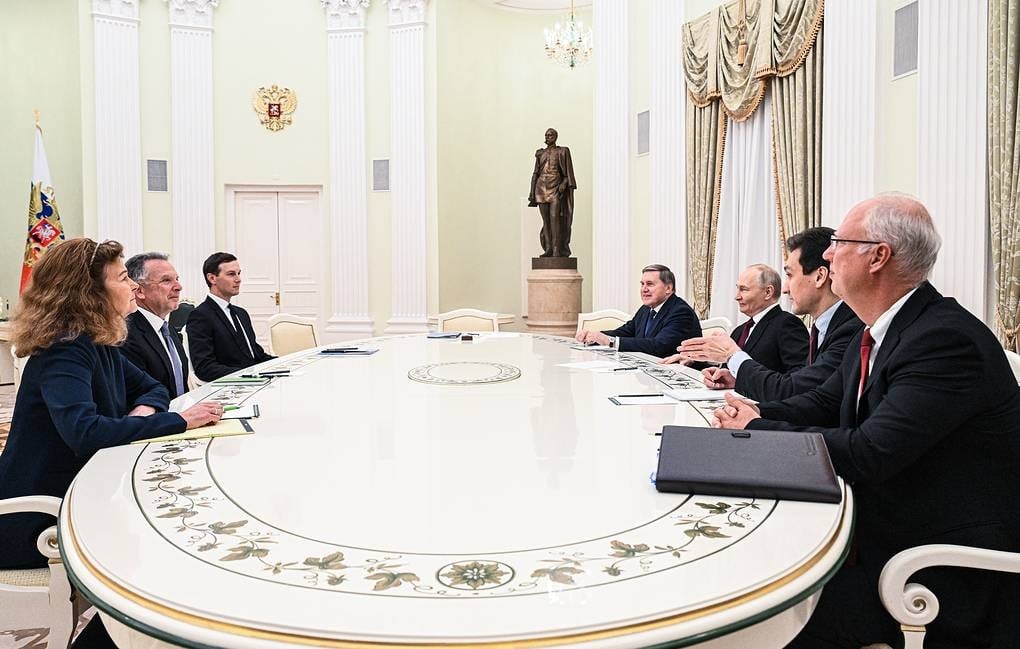
The reality of the negotiations, however, is much more complex. Much of the media hype stems from a lack of reliable information, especially as Washington adopted a higher level of secrecy after the premature public disclosure of the “28-Point Plan.” This secrecy reflects the rigorous nature of real diplomacy, where success requires time, caution, and a minimum of leaks that could undermine progress.
While the details of the Kremlin talks have not been disclosed, the structure of the agenda has been somewhat defined in advance of the visit. Three main groups of issues stand out as major obstacles to a peace agreement: (i) the territorial issue, (ii) Ukraine’s political future, and (iii) post-war security, including Kiev’s international status. These were the points of contention that caused the stalemate in Istanbul in 2022 and continue to be complex in the new context.
The territorial issue remains the most difficult to resolve in the current negotiations. From Moscow’s side, the “liberation of Donbass” has become a domestic political goal, reinforced by the 2022 referendum and the decision to annex Donetsk, Luhansk, Zaporizhzhia and Kherson. Russia’s interpretation considers the administrative boundaries of these provinces as constitutional borders. This has led to the existence of a “disputed contact strip” stretching hundreds of kilometers.
By contrast, Kiev’s public stance remains that the 1992 borders should be restored. While military realities have forced Ukraine to see Russia control much of its territory, its leaders are unlikely to accept any voluntary territorial concessions. The domestic political situation leaves little room for maneuver: with a government weakened by corruption and battlefield pressures, President Zelenskyy has little room to compromise without facing serious political risks.
According to media leaks, the US side is testing a compromise formula: recognizing Russian control over the entire Donbass in exchange for Moscow dropping its claims to the Ukrainian-held Zaporizhia and Kherson regions, which were part of the “Witkoff Plan.” Russia has not ruled out the possibility of discussions based on this proposal, but maintains its official position of demanding full control over all four provinces.
The biggest obstacle lies on Kiev’s side, as any change to the territorial integrity stance could be a life-or-death “red line” for the current government. This explains why the territorial issue continues to be the biggest obstacle even in Moscow, as Russian presidential aide Yuri Ushakov has acknowledged.
Ukraine's political future: a key variable
The second, equally sensitive issue is Ukraine’s post-war political structure. For Moscow, this is directly linked to the goal of “de-fascism” and is linked to the argument that President Zelenskyi’s government lacks the legal and political capacity to ensure the implementation of any agreements.
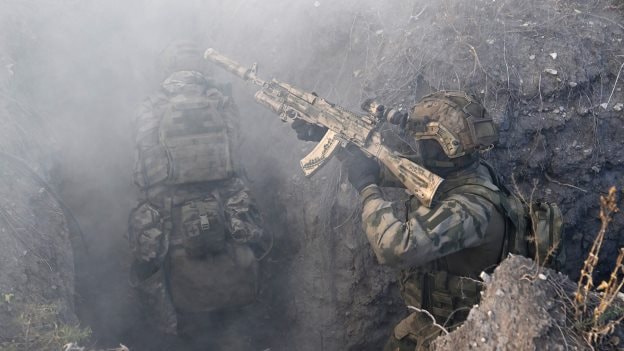
On the Washington side, there is also growing weariness with Kiev, especially given Ukraine’s governance difficulties and internal disputes. However, the US also recognizes that removing the current government from the negotiating process will increase chaos. Therefore, Washington’s strategy may be to force the Zelenskyy government to accept certain terms, then hand over the responsibility for implementation to a new government through elections.
In this scenario, national elections become a tool for political restructuring: they can both create a more legitimate government and serve as a basis for adjusting controversial policies with Moscow, such as the Russian language issue or disputes related to the Ukrainian Orthodox Church. However, the prospect of holding elections in a war-torn environment remains a big question mark, and the possibility of an orderly transfer of power cannot be guaranteed.
Post-war security: a narrow but feasible space for consensus
The third issue concerns the future security architecture for Ukraine. Discussions on the limits of Ukraine’s military potential, defense doctrine, and its position in alliances, especially NATO, were discussed in Istanbul and continue to be prominent.
“No NATO membership” is perhaps the element that could create space for dialogue between the three parties: Moscow, Washington and European capitals. Although NATO has affirmed in its 2024 statement that “the door remains open,” the political realities in Europe make it unlikely that Ukraine will join the alliance in the near future.
The focus of the discussion now shifts to shaping an appropriate commitment mechanism: not so soft as to lose its deterrent effect, but not so hard as to become a political burden for the US or invite Russian rejection. In this context, the issue of frozen Russian assets, while important, is likely to be a supplementary, not central, role.
The five-hour meeting at the Kremlin clearly failed to produce any breakthrough, which was entirely expected. The most notable positive point was that both Russia and the US agreed to maintain dialogue. There were no negative statements, blame or condemnation from either side, a sign that the process is still being taken seriously.
The next steps depend largely on the round of consultations between the US and Ukraine. Washington will have to find a way to narrow its differences with Kiev, a difficult task when one side believes it has the military advantage and the other is under heavy internal political pressure. Therefore, the Trump administration is likely to hold off to observe developments on the battlefield or adjust its proposals.
While prospects for peace remain remote, maintaining dialogue amid escalating crises is an important signal. A hasty peace solution, without preparation and acceptance from the parties involved, could set the stage for a new round of conflict. In the current situation, the diplomatic process remains the only option for long-term stability.
Source: https://congluan.vn/xung-dot-nga-ukraine-khi-doi-thoai-van-la-loi-thoat-duy-nhat-10321448.html

![[Photo] National Assembly Chairman Tran Thanh Man attends the VinFuture 2025 Award Ceremony](/_next/image?url=https%3A%2F%2Fvphoto.vietnam.vn%2Fthumb%2F1200x675%2Fvietnam%2Fresource%2FIMAGE%2F2025%2F12%2F05%2F1764951162416_2628509768338816493-6995-jpg.webp&w=3840&q=75)
![[Photo] 60th Anniversary of the Founding of the Vietnam Association of Photographic Artists](/_next/image?url=https%3A%2F%2Fvphoto.vietnam.vn%2Fthumb%2F1200x675%2Fvietnam%2Fresource%2FIMAGE%2F2025%2F12%2F05%2F1764935864512_a1-bnd-0841-9740-jpg.webp&w=3840&q=75)








![[VIDEO] Save the Children helps children in Bac Ninh return to life soon after natural disasters](https://vphoto.vietnam.vn/thumb/402x226/vietnam/resource/IMAGE/2025/12/06/1765004276755_cu-u-tro-bn-2-cover20251206131142.jpeg)


























































Comment (0)