

“If you live long enough in Russia, maybe everything will work out,” said the famous Russian poet and writer Kornei Chukovsky. Because time does indeed move slowly in this country – even in culinary habits. It takes decades to change the way Russians eat, the way dishes are served, and even the food itself.
By the second half of the 18th century, eating habits had changed significantly from medieval to modern meals. There were many reasons for this, including the end of subsistence farming , the emergence of new products, and the integration of Western culture, which also affected families and meals.
Wealthier people often started each dinner party at the side table – a buffet with light appetizers and vodka in the living room. It was a special table with appetizers such as smoked sturgeon and salmon, black caviar, fried liver and boiled eggs.
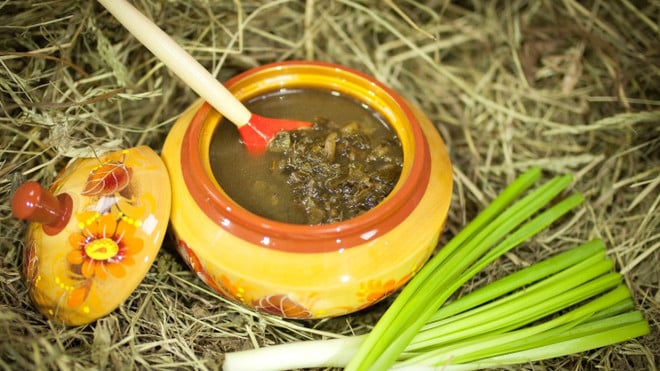
Shchi is a dish made from pickled cabbage. (Source: Moscow Times)
Guests are then taken to the dining room where hot dishes are served. This is usually shchi, veal soup, or a soup called rassolnik made with pickles, barley and often chicken.
Next are two or three cold dishes: ham, goose with cabbage, grilled marinated meat with onions, wild boar's head with horseradish, perch in aspic jelly, boiled sturgeon, or a vinegar sauce of poultry, cabbage, cucumbers, olives, capers and eggs.
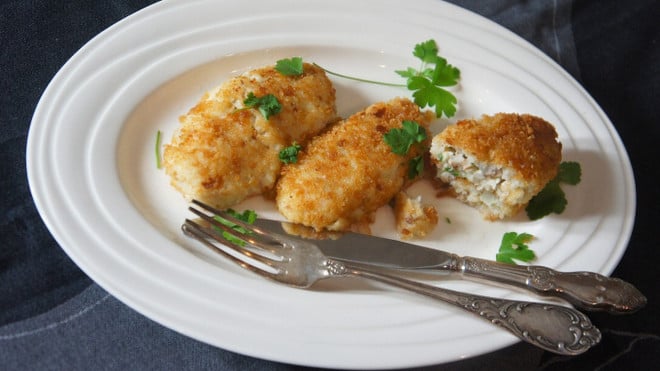
(Source: Moscow Times)
After the cold dishes, the next course is meat with sauce: duck with red grapes, veal liver with chopped lungs, tête de veau with prunes and raisins, roasted lamb with garlic in sweet red sauce.
The fourth course includes roasts: roast turkey, duck, goose, suckling pig, veal, partridge, hazelnut hen, partridge, sturgeon with whitefish or lamb chops stuffed with buckwheat.
Hot food is always served with coulibia, sausages, cheese pastries or pirozhki.
But over time, eating habits changed. A generation of mid-19th-century culinary artisans set new standards of excellence and pioneered new models of service. This was the “Enlightenment” dinner.
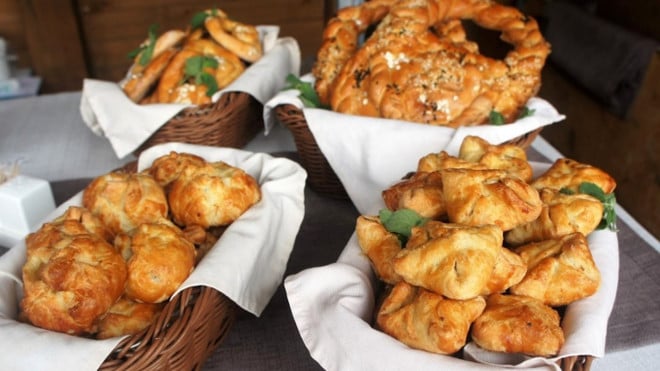
Pirozhki pies. (Source: Moscow Times)
The correspondent of the magazine “Moskvityanin” in 1856 described the dinner as follows:
Four o'clock struck, and we entered the dining room. The guests sat quietly at the table. The first course was a masterpiece of cooking - a wonderful soup of pureed striped perch with burbot roe...
But here's the second course: truffle turkey, a truffle dinde that is praised by gourmets all over the world . It tastes amazing! It could wake the dead.
After this famous dish, we were served Sturgeon Richelieu-style, the sweet red sauce perfectly complemented by the spicy capers and olives. The chicken with mushrooms, scallops and asparagus were a worthy showcase of the sauce chefs’ talents.
Before the chicken was served, the first bottle of champagne was opened. Glasses were filled to the brim when the royal dish of the party, roast pheasant, was served.
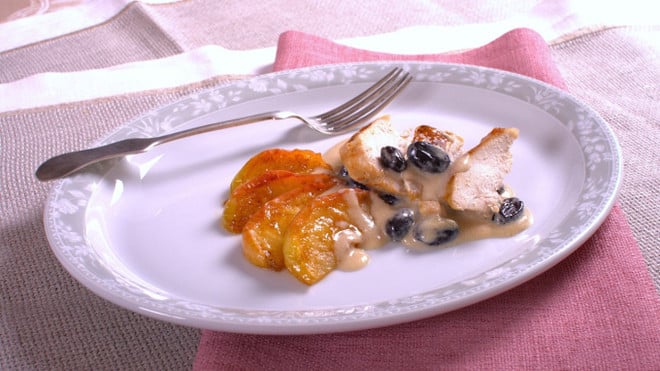
Pheasant with apples.(Source: Moscow Times)
The dinner was excellent, and I was enjoying a leg of pheasant and thinking about what kind of dessert would be suitable to finish the meal with. But the dishes were changed and the waiter brought a piece of ham... I looked at Ivan Ivanovich in confusion. He looked at me, smiling slyly.
“No, I can't imagine eating ham after roast pheasant!... Whoever wants it can have it, but I won't touch it, even straight from Westphalia. You'd be crazy to do such a thing at the end of dinner.”
But imagine my surprise: when this ham arrived, I realized it wasn't ham at all. It wasn't bacon. It was a cake - a very good cake.
The chef took three pink sponge cakes, cut them into ham hocks, and covered them with orange blossom blancmange cream, which resembled a layer of fat on top of a ham hock. And instead of skin, the blancmange cream was coated with sugar and chocolate.
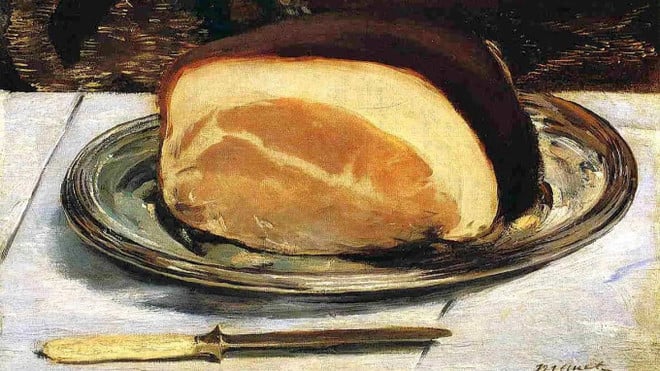
Ham depicted in an 1880 painting by Édouard Manet. (Source: Moscow Times)
Another half century passed. It was the late 19th century. Cuisine had been democratized and the demand for good food was growing.
Previously, this need was confined to the wealthy nobility, but later it became the aspiration of the vast majority of Russians: the bourgeoisie, merchants and the military. This event coincided with the abolition of serfdom, when many housewives no longer considered cooking in the kitchen to be a shameful thing.
So what is the daily menu of a middle-class family living in the city?
This may come as a surprise, but it's actually quite easy to find. 19th-century Russian cookbooks often provided menus for almost every day of the year. For example, here's an excerpt from Elena Molokhovets's cookbook, listing elegant ("first-class") dinners for December:
Beef soup with calves' brains in crackers. Boiled pork knuckles, perch in mayonnaise sauce, mushrooms in sour cream sauce. English pudding with chestnut puree. Roast pheasant with salad. Cake. Cheese. Coffee.
This is a “first-class dinner.” Of course, this is a menu for a wealthy family, but not necessarily aristocratic. A successful engineer or a high-ranking officer of the Russian Navy could receive guests and serve a meal like this.
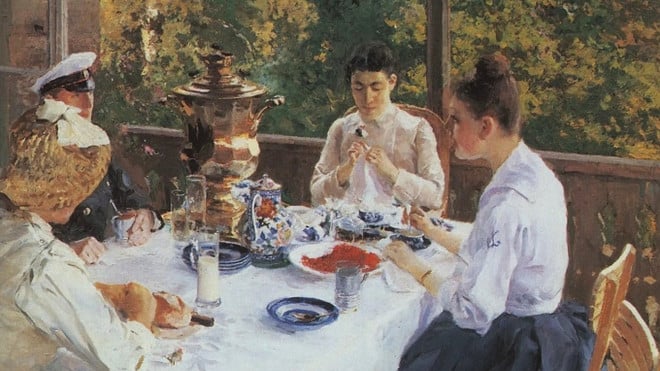
Painting "At the Tea Table", 1888, Konstantin Korovin. (Source: Moscow Times)
An ordinary weekday dinner in a bourgeois family might look like a dinner in Molokhovets's "fourth-class dinners."
Dinner in December might be: "Mushroom pies. Vegetable and cabbage soup. Fried chicken stuffed with walnuts. Ice cream." Another menu is: "Borsch with sausage. Beef rolls with dried mushrooms. Ukrainian dumplings with cottage cheese."
And this menu is not much different from the menu of modern Russians, because the cuisine of this country is not simply developing, but also preserving old features./.
(Vietnam+)
Source: https://www.vietnamplus.vn/kham-pha-bua-an-toi-sang-trong-va-cau-ky-cua-nguoi-nga-qua-nhieu-nam-post1077239.vnp


![[Photo] Cat Ba - Green island paradise](/_next/image?url=https%3A%2F%2Fvphoto.vietnam.vn%2Fthumb%2F1200x675%2Fvietnam%2Fresource%2FIMAGE%2F2025%2F12%2F04%2F1764821844074_ndo_br_1-dcbthienduongxanh638-jpg.webp&w=3840&q=75)













































































Comment (0)