

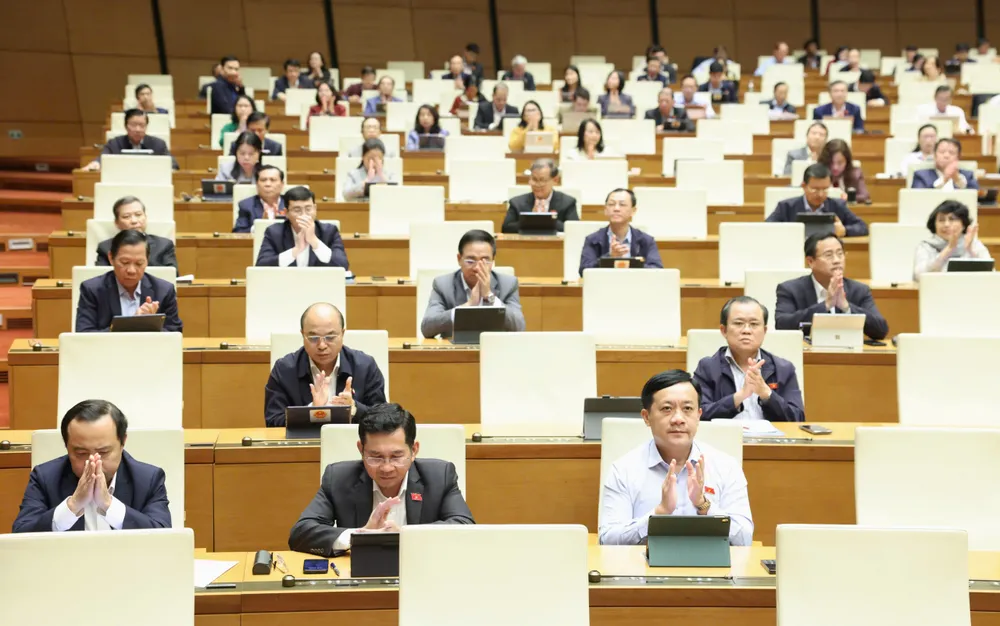
The Law has removed practical obstacles, innovated the civil judgment enforcement system, and promoted socialization and digital transformation in civil judgment enforcement work.
According to the draft law, relevant agencies, organizations and individuals, within the scope of their responsibilities, must strictly comply with judgments and decisions and be responsible before the law for the execution of judgments.
A person who is required to execute a judgment but does not voluntarily execute it shall be subject to enforcement. A person who obstructs the organization of execution of a judgment, a person who is managing, possessing, or using the property subject to execution, or a person who is in charge of a minor, if failing to comply with the request of the civil judgment enforcement agency, may be subject to enforcement in accordance with the provisions of this Law.
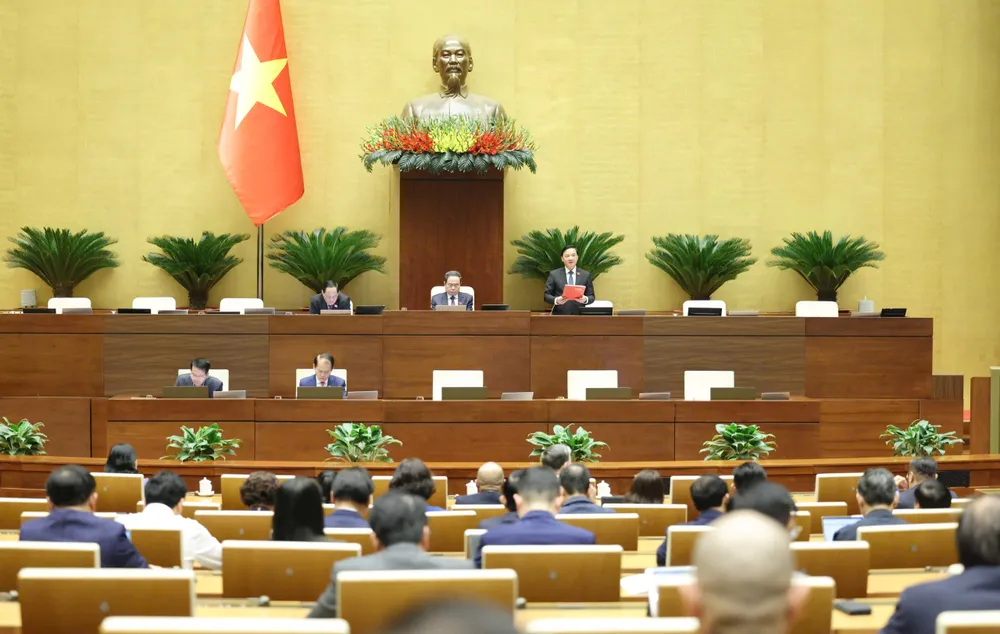
The enforcement system includes the management agency under the Ministry of Justice , 34 provincial agencies and 355 regional enforcement offices under the provincial level. In particular, taking into account the opinions of delegates, the draft law has added the title of "Chief Enforcement Officer" to the Head of the Regional Enforcement Office to ensure unity and increase the effectiveness of management and inter-sectoral coordination at the local level.
The Civil Judgment Enforcement Office is a professional organization of the Enforcement Officer to carry out the organization of judgment enforcement and other tasks as prescribed by law.
Regarding the Civil Judgment Enforcement Office, the Enforcement Officer and the authority to enforce judgments, many opinions proposed expanding the authority of the Civil Judgment Enforcement Office and the Enforcement Officer to apply measures to enforce judgments to improve the effectiveness of socialization of civil judgment enforcement.
However, the National Assembly Standing Committee recognized that the policy of promoting the socialization of civil judgment enforcement activities has been proposed in many Party documents, but compulsory judgment enforcement is an activity of state power, directly affecting the basic rights of citizens (property, residence, etc.). Granting this power to the Civil Judgment Enforcement Office, a non-public organization, poses potential risks to security and order if not strictly controlled.
Therefore, the Standing Committee of the National Assembly proposed that the National Assembly allow regulations in the direction of not granting comprehensive enforcement power to the Civil Judgment Enforcement Office. The enforcement officer only has the right to request the competent authority to freeze accounts, assets, and suspend transactions to prevent the dissipation of assets.
The National Assembly Standing Committee also said that the review process has absorbed maximum opinions of delegates to perfect regulations on handling special assets such as digital assets and virtual currencies; the transfer of evidence warehouses to the Ministry of Public Security for management; and the responsibility of the People's Procuracy in supervising the execution of judgments.
Source: https://www.sggp.org.vn/chua-trao-quyen-cuong-che-thi-hanh-an-toan-dien-cho-van-phong-thi-hanh-an-dan-su-post827107.html

![[Photo] Cat Ba - Green island paradise](/_next/image?url=https%3A%2F%2Fvphoto.vietnam.vn%2Fthumb%2F1200x675%2Fvietnam%2Fresource%2FIMAGE%2F2025%2F12%2F04%2F1764821844074_ndo_br_1-dcbthienduongxanh638-jpg.webp&w=3840&q=75)
![[Photo] 60th Anniversary of the Founding of the Vietnam Association of Photographic Artists](/_next/image?url=https%3A%2F%2Fvphoto.vietnam.vn%2Fthumb%2F1200x675%2Fvietnam%2Fresource%2FIMAGE%2F2025%2F12%2F05%2F1764935864512_a1-bnd-0841-9740-jpg.webp&w=3840&q=75)




























































































Comment (0)