

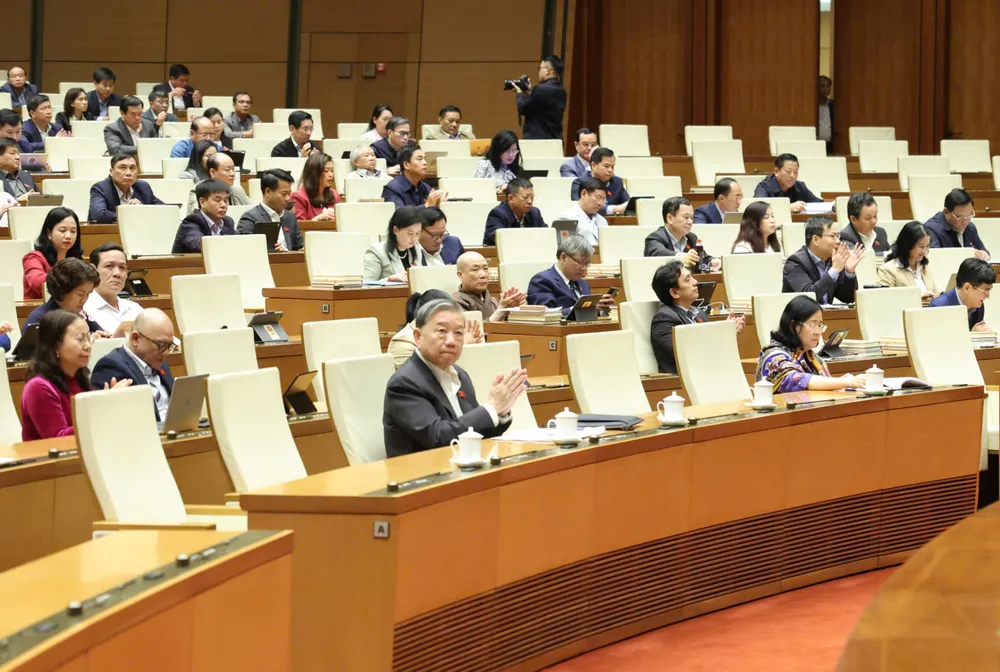
According to the amended Law on Judicial Records, agencies, organizations and individuals are not allowed to request citizens to provide judicial record information or Judicial Record Certificate, except in cases where the law stipulates that Form No. 1 is required. Judicial record information includes criminal records and prohibitions on holding positions, establishing and managing enterprises and cooperatives.
The Law also clearly stipulates the criminal record database and the authority to issue criminal record certificates under the Department of Professional Records of the Ministry of Public Security and provincial-level police. Vietnamese citizens and foreigners residing in Vietnam from the age of 16 have the right to request a criminal record certificate. Prosecution agencies, state agencies, political organizations, and the Vietnam Fatherland Front at all levels have the right to request the provision of criminal record information to serve the management and settlement of administrative procedures. The management and use of criminal record information must comply with regulations on personal data protection for sensitive data.
The criminal record database is a collection of criminal record information of an individual and information on personal identification number or passport number in case there is no personal identification number; surname, middle name and given name; other names; date of birth; gender; place of birth registration; nationality; ethnicity; place of residence; surname, middle name, name of father, mother, wife, husband of that person.
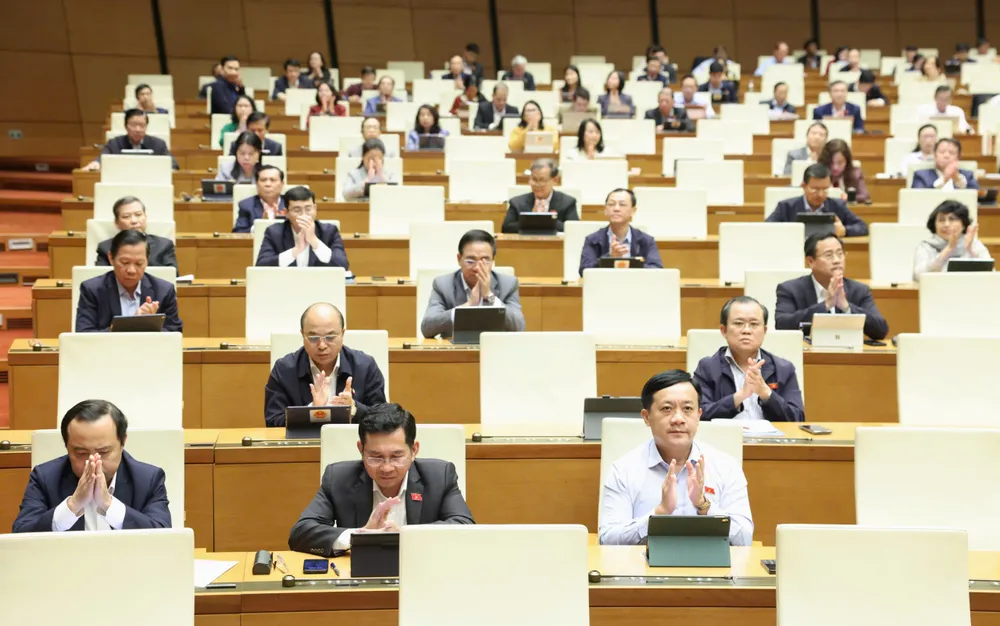
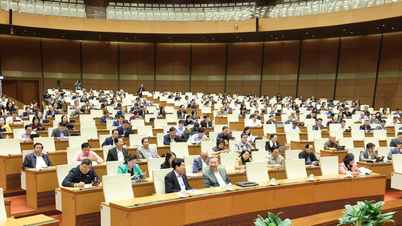
* On the same afternoon, the National Assembly passed the Law on Judicial Expertise (amended). The draft law was completed in the direction that judicial experts will be considered for exclusion, exemption or reduction of responsibility when properly implementing professional procedures and standards, ensuring objectivity and impartiality. Those who make false conclusions or refuse to make expert conclusions without justifiable reasons will be held criminally responsible according to regulations.
The law stipulates prohibited acts, including:
- Refusing to accept or conduct forensic examination without justifiable reasons; intentionally prolonging the time for conducting forensic examination or the time for issuing forensic examination conclusions.
- Refusing to conclude a forensic examination without force majeure or objective obstacles. Disclosing information during the forensic examination process that affects the litigation process.
- Taking advantage of the name of a forensic expert or forensic organization for personal gain. Receiving money, property or other benefits from units, organizations or individuals to distort requests for forensic expertise or to distort the results or conclusions of forensic expertise.
- Intentionally giving false forensic conclusions. Taking advantage of the request for forensic examination to cause difficulties and obstruct the litigation process. Abusing the request for forensic examination in criminal proceedings to replace the investigation and the performance of the prosecution agency's obligation to prove.
- Interfering with or obstructing the performance of forensic expertise. Inciting, threatening, or forcing forensic expertise to draw false forensic conclusions.
Source: https://www.sggp.org.vn/quoc-hoi-thong-qua-2-luat-ve-ly-lich-tu-phap-va-giam-dinh-tu-phap-post827094.html

![[Photo] National Assembly Chairman Tran Thanh Man attends the VinFuture 2025 Award Ceremony](/_next/image?url=https%3A%2F%2Fvphoto.vietnam.vn%2Fthumb%2F1200x675%2Fvietnam%2Fresource%2FIMAGE%2F2025%2F12%2F05%2F1764951162416_2628509768338816493-6995-jpg.webp&w=3840&q=75)

![[Photo] 60th Anniversary of the Founding of the Vietnam Association of Photographic Artists](/_next/image?url=https%3A%2F%2Fvphoto.vietnam.vn%2Fthumb%2F1200x675%2Fvietnam%2Fresource%2FIMAGE%2F2025%2F12%2F05%2F1764935864512_a1-bnd-0841-9740-jpg.webp&w=3840&q=75)



















































































Comment (0)