

The Ministry of Transport has just issued the Plan for Reducing Greenhouse Gas Emissions in the Transport Sector by 2030.
This is a plan to implement measures to reduce greenhouse gas (GHG) emissions in the transport sector, meeting the GHG emission reduction targets under the "Unconditional Contribution" in Vietnam's Nationally Determined Contribution (NDC).
Accordingly, by 2030, the potential for reducing GHG emissions under the "Unconditional Contribution" in transport will result in a 5.9% reduction in GHG emissions compared to the business-as-usual (BAU) scenario, equivalent to a reduction of 45.62 million tons of CO2 equivalent over the entire period.
Specifically, the target is a reduction of 3.4 million tons of CO2 equivalent in 2025; a reduction of 10.61 million tons of CO2 equivalent in 2030; and a reduction of 45.62 million tons of CO2 equivalent in the period up to 2030.
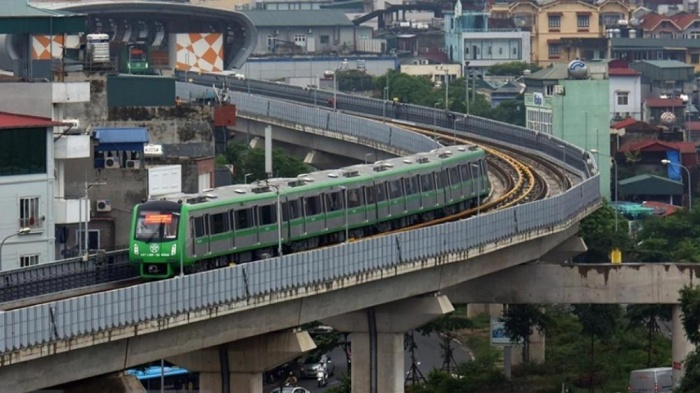
The Ministry of Transport has proposed several measures to mitigate greenhouse gas emissions in the transport sector by 2030, including shifting passenger transport from private vehicles to public transport (Image: illustration).
To achieve this goal, the Ministry of Transport has outlined 10 measures and an implementation roadmap. These include limiting fuel consumption for newly manufactured, assembled, and imported motor vehicles, ensuring that by 2030, 100% of motorcycles meet a fuel consumption standard of 2.3 liters/100km.
100% of newly manufactured, assembled, and imported passenger cars sold meet the fuel consumption standards: passenger cars with a 2000cc engine achieve 6.4 liters/100km.
The adoption rates for new vehicles are projected to be 30% in 2027, 50% in 2028, 75% in 2029, and 100% in 2030.
Measures include shifting passenger transport from private vehicles to public transport, aiming for a public transport coverage rate of 45%-50% in Hanoi, 25% in Ho Chi Minh City, 25%-35% in Da Nang, 20% in Can Tho, 10%-15% in Hai Phong, and at least 5% in Type I urban areas.
Measures include shifting transportation modes from road to environmentally friendly options such as rail, inland waterways, and coastal routes; focusing investment on railway and waterway infrastructure; and developing policies to encourage their growth.
In addition, measures to develop environmentally friendly fuel-powered vehicles include: using CNG buses, aiming to reach a total of 623 CNG buses by 2030, including 423 in Ho Chi Minh City and 200 in Hanoi;
Encourage the use of biofuels, expand blending, and use 100% E5 gasoline for road motor vehicles by 2030; Promote the use of electric motorcycles and electric cars, with electric cars reaching 30% usage by 2030 and electric motorcycles accounting for 22% of the total number of motorcycles in use; Promote the use of electric buses, starting to use electric buses by 2025 and aiming to reach a usage rate of 30% by 2030.
Other solutions include increasing the load factor of trucks, improving it from 56% to 60% by 2030. During the period 2024-2030, develop and improve the logistics and warehousing system serving freight transport to increase the percentage of truck trips with cargo and the rate of cargo loading.
Research and improve mechanisms and policies, and promote the operation of transportation exchanges, thereby optimizing the cargo carrying capacity of trucks...
Source: https://www.baogiaothong.vn/10-giai-phap-giam-phat-thai-trong-giao-thong-192241030131929904.htm



















































































Comment (0)