

| Star anise exports to the Chinese market increased by over 65%. Vietnam's export item ranks second in the world , earning 4.5 million USD in January. |
According to preliminary statistics from the Vietnam Pepper Association (VPA), in February 2024, Vietnam's star anise exports reached 558 tons, earning US$3.4 million. For the first two months of the year, Vietnam earned US$7.9 million from 1,437 tons of star anise, a slight decrease of 2.3% compared to the same period last year.
In terms of markets, India is the largest customer with 731 tons, accounting for 50.9%. The US is the second largest market with a share of 9.3%. Prosi Thang Long and Nedspice are the two largest exporting companies with production volumes of 333 tons and 109 tons respectively.
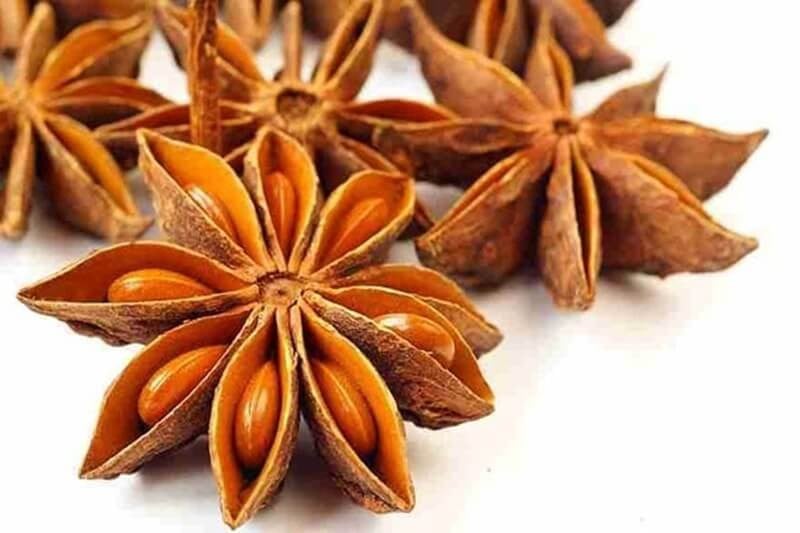 |
| In February 2024, Vietnam's star anise exports reached 558 tons and earned 3.4 million USD in February 2024. |
In 2023, Vietnam exported 16,136 tons of star anise, a sharp increase of 26% in volume and generating $83 million in revenue. The average export price in 2023 reached $6,376 per ton, a decrease of 8% compared to the previous year. India and China were the two largest markets with 7,860 tons and 4,116 tons respectively, accounting for 48.7% and 25.5% of the export market. Notably, star anise is a rare flower globally, originating from the anise tree (or star anise).
China, Vietnam, and India are currently the dominant suppliers of star anise worldwide. Of these, Vietnam and China are the only two countries capable of producing star anise in large quantities due to favorable conditions.
Star anise is a shrub 2-6m tall, with a slender, rhomboid shape, evergreen, with an upright trunk and easily broken branches. Leaves grow in clusters of 3-4 at the end of branches, with petioles; the leaf blades are entire, 8-12cm long and 3-4cm wide, brittle, and release a fragrant aroma when crushed. If properly planted and cared for, star anise will flower after 4 years.
Yields from the 4th to 6th year are 0.5-1 kg/tree, making star anise even rarer and more valuable. From the 20th year onwards, the tree will yield a stable output of up to 40-50 kg/tree. If star anise trees are planted and cared for using the correct techniques, they will yield high and stable productivity, extending the harvesting period up to 80 years.
In Vietnam, star anise is commonly used as a spice, either in powder or whole form. Due to its spicy and aromatic properties, star anise is frequently used in dishes such as pho, curry, stews, and braised dishes, enhancing flavor and aroma, giving the food a rich and distinctive taste. Additionally, star anise stimulates appetite and enhances the taste buds.
According to statistics, Vietnam currently has over 5,100 species of medicinal plants, possessing significant potential and advantages for developing medicinal plants into an economic sector.
Source


![[Photo] Prime Minister Pham Minh Chinh holds a phone call with the CEO of Russia's Rosatom Corporation.](/_next/image?url=https%3A%2F%2Fvphoto.vietnam.vn%2Fthumb%2F1200x675%2Fvietnam%2Fresource%2FIMAGE%2F2025%2F12%2F11%2F1765464552365_dsc-5295-jpg.webp&w=3840&q=75)



































































Comment (0)