

In the flow of national history, Vietnam has produced many talented, intelligent and timeless personalities, leaving a deep mark not only in Dai Viet culture but also in the treasure trove of human heritage.
At the recent 43rd Session, the General Assembly of the United Nations Educational, Scientific and Cultural Organization (UNESCO) passed a Resolution to honor and join in celebrating the 300th anniversary of the birth of cultural celebrity Le Quy Don.
Thus, up to now, UNESCO has passed a resolution to honor and celebrate the birth/death anniversaries of 8 Vietnamese celebrities.
Nguyen Trai - World cultural celebrity, outstanding military strategist, genius politician
Nguyen Trai, whose pen name was Uc Trai, was born in 1380 in Thang Long Citadel. His father was Nguyen Phi Khanh and his mother was Tran Thi Thai, daughter of Grand Chancellor Tran Nguyen Dan. Nguyen Trai was soon famous for his talent, virtue, and great ambition.
In 1400, he passed the Imperial examinations and the following year took up the position of Chief Censor of the Ho Dynasty.
Since 1407, the Ming invaders occupied our country. With the will to save the country and save the people, he went to Lam Son to gather the righteous, presented the Binh Ngo book, devoted his heart and soul to helping Binh Dinh King Le Loi. He became the soul of the resistance against the Ming invaders, liberating the country in the 15th century.
After the victorious resistance, Nguyen Trai wrote "Binh Ngo Dai Cao" - an immortal "Thien co hung van" that is a strong and eloquent declaration of independence and national position.
The country was at peace, with the desire to participate in "Renovating the country, building eternal peace ," Nguyen Trai continued his political, cultural and social activities under the Le Dynasty; he had great contributions in creating the socio-economic foundation, the harmony between "Country and People" - the resource to build a strong Dai Viet country at that time.
Nguyen Trai has gone down in history and become a national hero and world cultural celebrity.
Nguyen Trai was honored by UNESCO in 1980.
President Ho Chi Minh - Vietnamese national liberation hero, outstanding cultural figure
President Ho Chi Minh's entire life was a relentless journey for the goal of independence, freedom for the Fatherland, and happiness for the people.
“Country” and “People” are the reason for living, the fulcrum and also the final destination of all his thoughts and actions: from the time he left to find a way to save the country, leading the successful August Revolution, reading the Declaration of Independence giving birth to the new Vietnamese State, to leading the people in the resistance war against French colonialism and American imperialism to glorious victory.
For the country, he devoted all his intelligence, strength and life to bring the Vietnamese people from the darkness of slavery to independence and freedom; from division to unity and development.
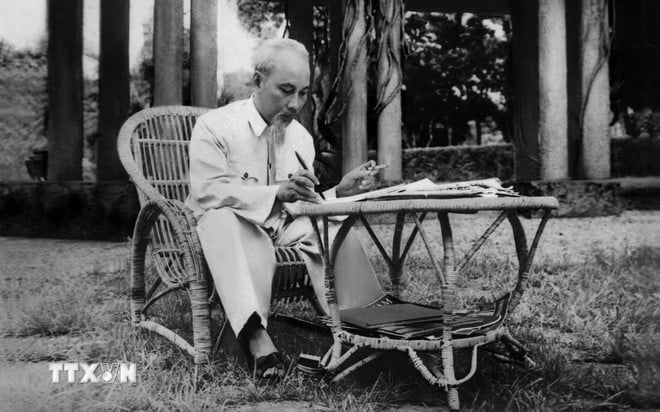
President Ho Chi Minh - Vietnamese national liberation hero, outstanding cultural figure. (Photo: VNA)
In the fields of culture, education and art, President Ho Chi Minh's important and multifaceted contributions crystallize Vietnam's cultural tradition, a tradition that dates back thousands of years, and his ideals represent the aspirations of other peoples in the world as they struggle to affirm their cultural identity and promote mutual understanding.
As Cuban leader Fidel Castro praised: “Comrade Ho Chi Minh belongs to a special class of people for whom death is the seed of life and a source of eternal encouragement.”
The name of President Ho Chi Minh has become familiar, close and respected to millions of people around the world, respectfully recorded in encyclopedias and dictionaries of famous people of the world.
With deep love and respect for Him, many countries in the world have named squares, avenues, kindergartens, schools... after Him; and have erected reliefs and statues of Him in squares and on major streets.
President Ho Chi Minh was honored by UNESCO in 1990.
Nguyen Du - Great national poet
Great poet Nguyen Du (1765-1820), whose given name was To Nhu and pen name was Thanh Hien, was born into a famous family of scholars in Ha Tinh province.
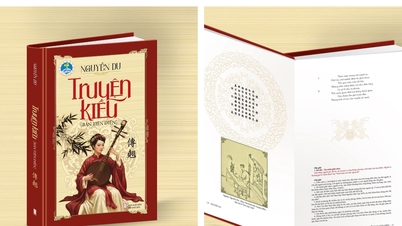
Nguyen Du's literary career spanned his entire life, was very rich and voluminous, including 3 main collections of poems in Chinese: "Thanh Hien Thi Tap," "Bac Hanh Tap Luc," "Nam Trung Tap Ngam" with nearly 250 poems and many works in Nom script, the most outstanding of which is "Truyen Kieu."
Nguyen Du's "The Tale of Kieu" contributed to bringing Vietnamese literature beyond the nation, becoming a part of the quintessence of human culture, marking Vietnamese literature on the international poetry scene.
"The Tale of Kieu" has been translated into more than 20 languages (English, French, German, Chinese, Japanese, Korean, Greek, Mongolian, Arabic, Russian...) with over 60 different translations. In each country, this masterpiece has been warmly welcomed and has its own life.
“The Tale of Kieu” has honored the beauty of the national language, the beauty of poetry, the character and soul of Vietnam, affirmed Nguyen Du's number one position in national literature and gradually dominated the world literary scene as one of the greatest poets.
Nguyen Du was honored by UNESCO in 2015.
Chu Van An - "The teacher of all time"
Chu Van An (1292-1370) real name is Chu An, alias Linh Triet, hometown is Hanoi.
Chu Van An devoted his whole life to teaching, with a humanistic educational philosophy, regardless of rich or poor, learning goes hand in hand with practice, lifelong learning to know, to work and contribute to society.
His thoughts not only influenced generations of Vietnamese people but also contributed to the development of humanistic values in the region. His educational views have progressive values beyond the times, close to the educational purposes of the world today.
Being an upright person, not interested in fame or wealth, when he passed the Thai Hoc Sinh (PhD) exam during the Tran Minh Tong dynasty (1314-1329), he did not become an official but returned to his hometown to open a school - Huynh Cung school. Later, he was invited by King Tran Minh Tong to Thang Long to hold the position of Tu Nghiep (Principal) at Quoc Tu Giam.
The personality of teacher Chu Van An has been passed down in Vietnamese history books from generation to generation. Today, in memory of his morality and career, many places in the country have relics to worship him.
Chu Van An was honored by UNESCO in 2019.
Nguyen Dinh Chieu - patriot, great poet of the nation
Famous person Nguyen Dinh Chieu, also known as Cu Do Chieu, with the name Mach Trach, Hieu Trong Phu Hoi Trai.
In the history of Vietnamese culture, Nguyen Dinh Chieu holds an honorable position as a representative cultural figure of the Vietnamese people. Nguyen Dinh Chieu's cultural philosophy is a philosophy of life.
Nguyen Dinh Chieu's immortal works include Nom poems: "Luc Van Tien," "Duong Tu - Ha Mau," and "Fisherman and Woodcutter Medical Questions and Answers."
Individual poems and orations: "Running from the enemy," "Eulogy for the martyrs of Can Giuoc," "Eulogy for Truong Dinh," "Eulogy for the fallen soldiers of the six provinces" ... Among them, "Luc Van Tien" is a first work containing philosophy, respect for morality, and human integrity. The work "Eulogy for the martyrs of Can Giuoc" made him the pioneer of patriotic literature in the second half of the 19th century.
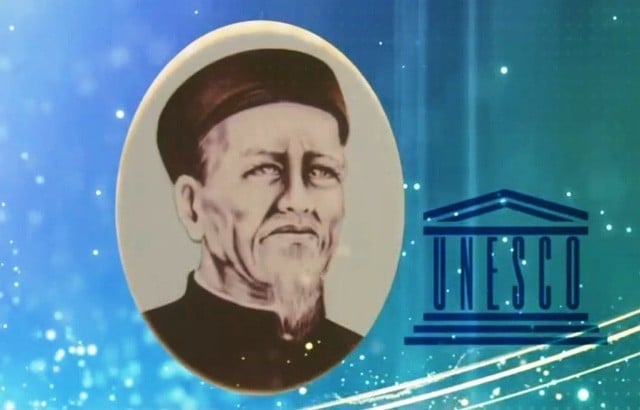
Celebrity Nguyen Dinh Chieu.
Unlike previous authors, Nguyen Dinh Chieu saw the great strength of farmers in fighting against invaders. He was the first person to use literature to carve into history the portraits of farmers-insurgents and generals who fought against the enemy.
He is also the physician Nguyen Dinh Chieu who devoted himself to saving people and helping the world through his medical profession. The work “Fisherman and Woodcutter Medical Questions and Answers” is a rich collection of many medicinal recipes that he painstakingly compiled, learned and researched, leaving behind value for future generations.
Nguyen Dinh Chieu was honored by UNESCO in 2021.
Ho Xuan Huong - "The Queen of Nom Poetry"
"The Queen of Nom poetry" Ho Xuan Huong is a famous and representative female poet of Vietnamese literature from the second half of the 18th century to the second half of the 19th century.
Ho Xuan Huong is a unique phenomenon of Vietnamese literature. She wrote things that other poets of her time did not dare to write. The most resounding voice in Ho Xuan Huong's poetry is the voice of the struggle for women's rights, expressed in poems such as "Banh troi nuoc," "Thieu nu duong ngay," "Deo Ba Doi," "Dong Huong Tich," "Vinh cai quat," "Det wei," "Dang swing."
In addition, her poetry is also a strong voice criticizing the forces (feudalism, Confucianism, genders, "common people") that have created unreasonable constraints on people, created gender inequality between men and women, created habits and customs that hinder progress, clearly shown in "Joint marriage," "Pregnant without a husband," "The fate of a woman."
Poet Ho Xuan Huong is not only highly appreciated domestically, her poems have been translated into 13 different languages in the world, in which Vietnamese through Ho Xuan Huong's poems is a polysemous, multi-meaning, sharp, unique and talented artistic language, full of challenges for contemporary "talents" and "literati" when translating her poems into their own language.
Ho Xuan Huong was honored by UNESCO in 2021.
Le Huu Trac - "The medical saint of Vietnam"
The famous physician Hai Thuong Lan Ong Le Huu Trac (1724-1791) was not only a great physician but also an excellent poet, writer, progressive thinker, and had a profound humanitarian spirit.
As the son of Doctor Thi Lang of the Ministry of Public Works, Hai Thuong Lan Ong Le Huu Trac was able to study with his father in Thang Long citadel early and was famous as an intelligent and well-rounded student.
Le Huu Trac passed the Tam Truong exam, then studied military books and was enlisted in the Trinh Lord's army. He was decisive, straightforward, upright but also very kind, a man of noble spirit, so when he witnessed the chaos and injustice of society, he used the excuse that his brother had died and he had to take care of his mother, he asked to return to his mother's hometown to live in seclusion.
Seeing that Le Huu Trac was a bright person and had a talent for medicine, physician Tran Loc taught him the profession. Realizing that medicine was not only beneficial to him but could also help others, he was determined to study medicine. He took the name Hai Thuong Lan Ong.
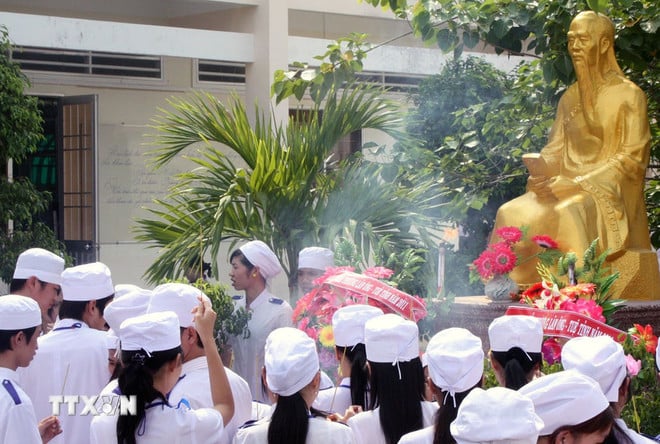
Offering incense to the great physician Hai Thuong Lan Ong at Ca Mau Medical College. (Photo: Le Huy Hai/VNA)
Hai Thuong Lan Ong not only cared about saving people, but he also always thought about writing books to spread Vietnamese medicine that had been established by the ancient physicians, and he himself worked hard to train generations of Vietnamese physicians with ethics and medical skills, capable of protecting the health of the nation.
Hai Thuong Lan Ong's famous medical career is collected in the book "Hai Thuong Y Tong Tam Linh," consisting of 28 volumes and 66 books, covering everything from internal medicine, surgery, gynecology, pediatrics, traumatic medicine, infectious diseases, emergency medicine to medical ethics, disease prevention and hygiene, nutrition methods, and even the preparation of healing dishes...
Not only was Hai Thuong Lan Ong Le Huu Trac a famous physician with great contributions to traditional medicine, he was also a great writer, poet, and thinker of the era. He composed many songs with simple and clear words so that people could understand and remember traditional medicine, such as: songs about drug preparation in “Linh Nam Ban Thao,” songs about hygiene in “Ve Hygiene Essentials,” songs about examining the five internal organs and the pulses in the limbs in “Y Gia Quan Mien”...
Le Huu Trac was honored by UNESCO in 2023.
Le Quy Don - great scholar
The famous Le Quy Don (1726-1784) was named Le Danh Phuong when he was young, with the pen name Doan Hau and the nickname Que Duong. He was the eldest son of Doctor Le Phu Thu, who once held the position of Minister of Justice. His mother was the daughter of a doctor who had held many official positions.
Since childhood, Le Quy Don was famous for being a studious, intelligent prodigy with a superb memory. At the age of 17, Le Quy Don took the Huong exam and passed the first prize. At the age of 27, he passed the Hoi exam, then passed the Dinh Nguyen Bang Nhan exam (because this exam did not select the first prize winner). After passing, he was appointed as an official and held many important positions in the Le-Trinh dynasty.
During his lifetime, scholar Le Quy Don was known as the “wisdom bag of the era.” He was praised by people: “Thien ha vo tri van Bang Don,” meaning that everyone in the world who did not understand something and wanted to ask, would meet Bang Nhan Le Quy Don.
Le Quy Don left to posterity about 40 books covering most of the contemporary knowledge.
Some typical works can be mentioned: Regarding literature, there is the collection "Toan Viet Thi Luc"; and the poetry collection "Que Duong Thi Tap."
Regarding history, there are “Dai Viet Thong Su,” “Phu Bien Tap Luc,” “Kien Van Tap Luc,” and “Bac Su Thong Luc.”
Regarding philosophy, there are “Explanations of the Classic of Documents,” “Illustrated Commentary on the Book of Changes,” “A Brief Commentary on the Spring and Autumn Annals,” and “Examinations of the Military Book.”
Regarding economics and agriculture, there is a very large set of "Van Dai Loai Ngu" ...
Le Quy Don was honored by UNESCO in 2025./.
(Vietnam+)
Source: https://www.vietnamplus.vn/8-famous-people-of-vietnam-duoc-unesco-vinh-danh-tinh-hoa-tri-tue-va-van-hoa-dan-toc-post1075071.vnp
















![[Photo] Worshiping the Tuyet Son statue - a nearly 400-year-old treasure at Keo Pagoda](/_next/image?url=https%3A%2F%2Fvphoto.vietnam.vn%2Fthumb%2F1200x675%2Fvietnam%2Fresource%2FIMAGE%2F2025%2F12%2F02%2F1764679323086_ndo_br_tempimageomw0hi-4884-jpg.webp&w=3840&q=75)
![[Photo] Parade to celebrate the 50th anniversary of Laos' National Day](/_next/image?url=https%3A%2F%2Fvphoto.vietnam.vn%2Fthumb%2F1200x675%2Fvietnam%2Fresource%2FIMAGE%2F2025%2F12%2F02%2F1764691918289_ndo_br_0-jpg.webp&w=3840&q=75)







































Comment (0)