

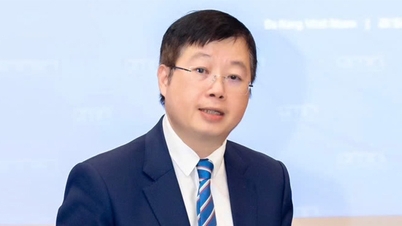
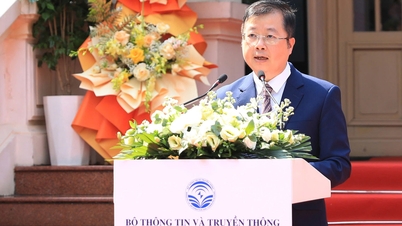
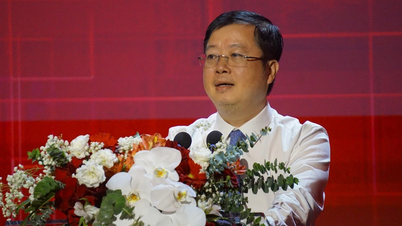
Sharing his thoughts on the results of AMRI 16, Deputy Minister of Information and Communications Nguyen Thanh Lam said that the ministers affirmed and defined the role of the information sector in the new era as moving from "information" to "knowledge".
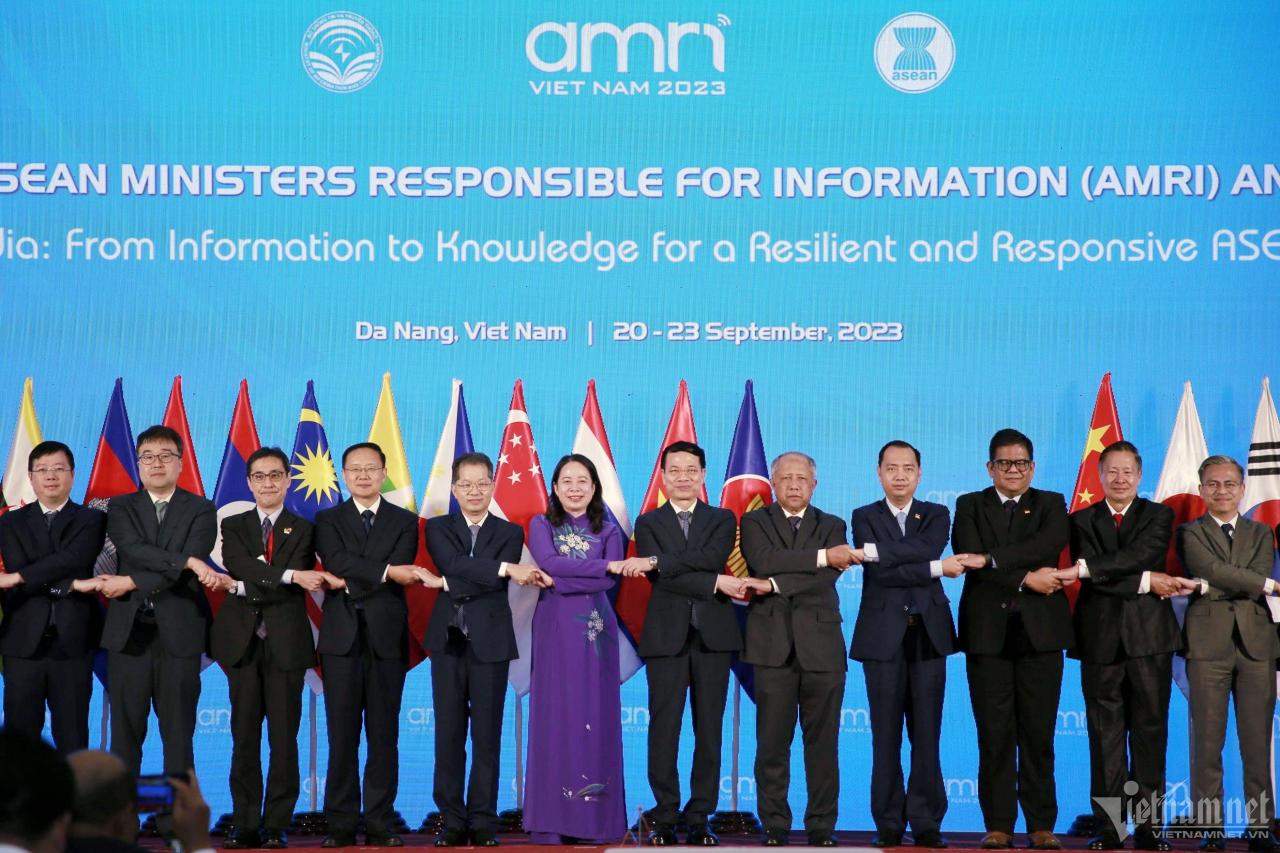
Vice President Vo Thi Anh Xuan; Minister of Information and Communications Nguyen Manh Hung; and ministers and heads of delegations from ASEAN member states pose for a commemorative photo.
Vietnam initiates the development of many new contents.
As the host country of the 16th ASEAN Ministers of Information and Communications Meeting (AMRI 16), the Vietnamese Ministry of Information and Communications initiated the theme of the meeting: “Communication: From Information to Knowledge for a Resilient and Adaptable ASEAN”. This theme was the overarching focus of the official meeting agenda and was also discussed at the side events.
To record the outcomes and content of the conference, the Vietnamese Ministry of Information and Communications initiated the development of Conference Documents, including the ASEAN Ministerial Vision Statement for the Media Sector to 2035 and the Da Nang Declaration on Defining the Role of the Information Sector in the New Era. These documents serve as the foundation for recording and communicating the Ministers' insights and vision for the media sector, as well as shaping future ASEAN information cooperation up to 2035 and beyond. Vietnam's initiative in drafting and developing the 2035 Vision Statement also marks the first time ASEAN information cooperation has issued such a foundational document.
To prepare content for the 16th AMRI Conference in September 2023, more than a year prior, the Vietnamese Ministry of Information and Communications initiated research to develop and integrate proposals to be presented and defended at the official working mechanisms of ASEAN cooperation on information (including the SOMRI working groups and the ASEAN Information Subcommittee). Both proposals, initiated by Vietnam and enthusiastically supported by ASEAN countries, were implemented as side activities of the 16th AMRI Conference: the ASEAN Forum on Responding to and Addressing Fake News (September 19, 2023) and the ASEAN Workshop on Digital Transformation of Journalism and Media: Digital Transformation, Creating Digital Knowledge (September 21, 2023), chaired by the Deputy Minister of Information and Communications of Vietnam, Nguyen Thanh Lam.
The results of the thematic workshops were also submitted to the ministers at the 16th AMRI Conference (September 22-23, 2023). The ASEAN Workshop on Digital Transformation in Journalism, initiated by Vietnam in 2023, will become an annual ASEAN event in subsequent years to share experiences, best practices, and applications of digital transformation in the journalism and media sector. The establishment and deployment of the ASEAN Regional Task Force on Countering Fake News (TFFN), initiated by Vietnam, was also approved by the ministers to move towards "One ASEAN - One Voice" or "The ASEAN Way" in responding to, addressing, and mitigating the harm of fake news, while also linking social and ethical responsibility to cross-border social media platforms.
Notably, for the first time at AMRI 16, ministers agreed on and addressed the risks and opportunities of artificial intelligence (AI) in creating a revolutionary breakthrough for the media industry, so that ASEAN countries could consider and promote the exchange of experiences in applying AI in this sector.
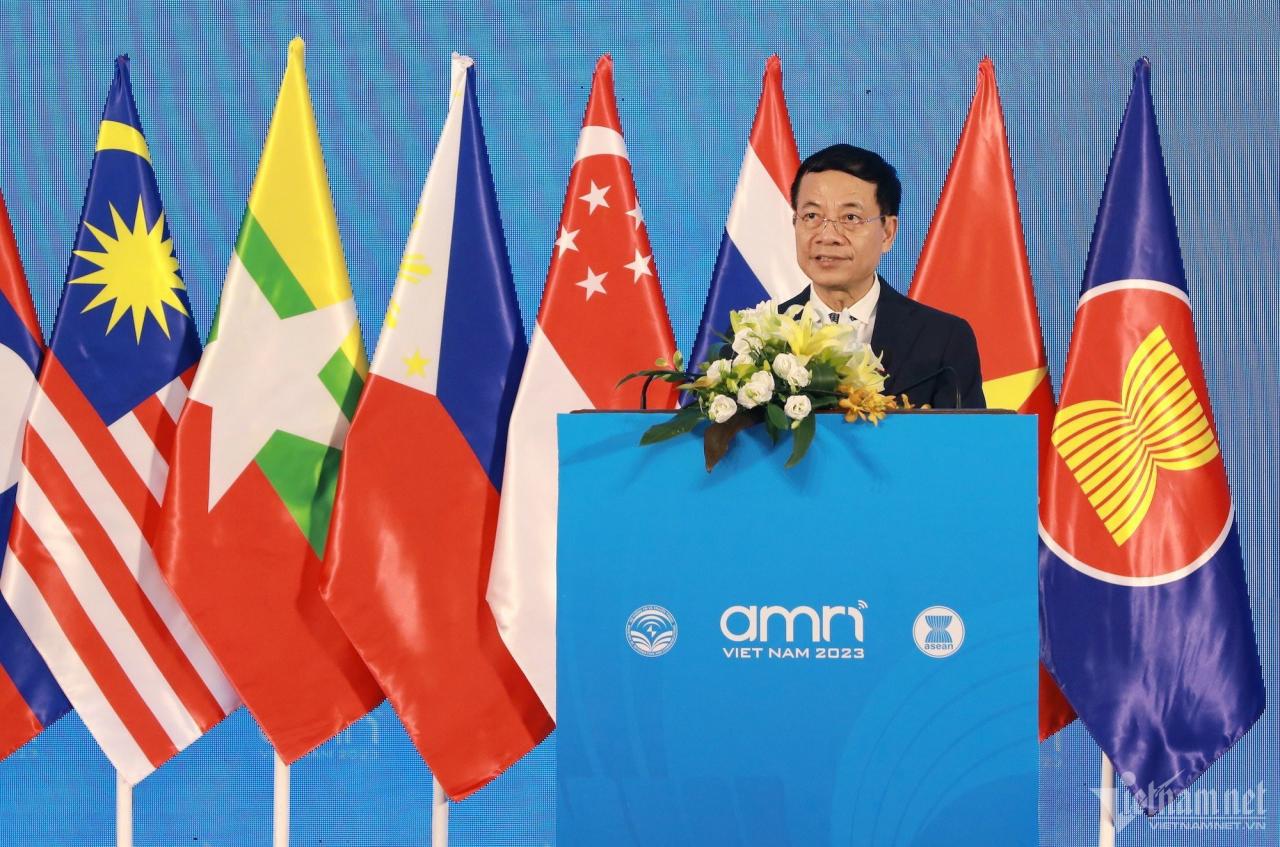
Minister Nguyen Manh Hung shared that ASEAN has become and continues to be a focal point of global growth.
Vision 2035 for the Information, Journalism and Media Sector
The ASEAN Ministers' Vision 2035 for the ASEAN Information, Press and Communications Sector aims to position and build a sector capable of transformation, adaptation and resilience.
This is a Vietnamese initiative, marking the first time the ASEAN information, press, and media sector has a framework document to shape and develop future ASEAN cooperation.
The Vision 2035 Statement further affirms the connecting role and the transmission of ASEAN cooperation values across all areas within the three pillars of the ASEAN Community (political security, economic, and socio-cultural), contributing to the realization of the ASEAN Community Vision 2025 and beyond.
Firstly, it is affirmed that the field of information, journalism, and media is undergoing revolutionary changes. Digital transformation and advanced technologies have opened up many new prospects and created a new paradigm shift in access to information and innovation, bringing unprecedented opportunities that can bring about significant changes to the information and media industry.
Secondly, it must be acknowledged that advanced digital technology also causes information overload, creating a problem of "information oversaturation" or "information obesity" due to the continuous consumption of information, regardless of whether it is true or false, useful knowledge or useless junk; this information overload, along with algorithms tailored to user habits, also distracts and reduces user attention to informative knowledge.
Thirdly, awareness of the rapid digital transformation of media platforms has led to a surge in fake news, digital hate, and extremist viewpoints that can cause confusion, insecurity, suspicion, and distrust, harming ASEAN's solidarity and resilience; at the same time, widespread misinformation can lead to mistrust and incorrect prejudices, which can also damage people's understanding of ASEAN's development.
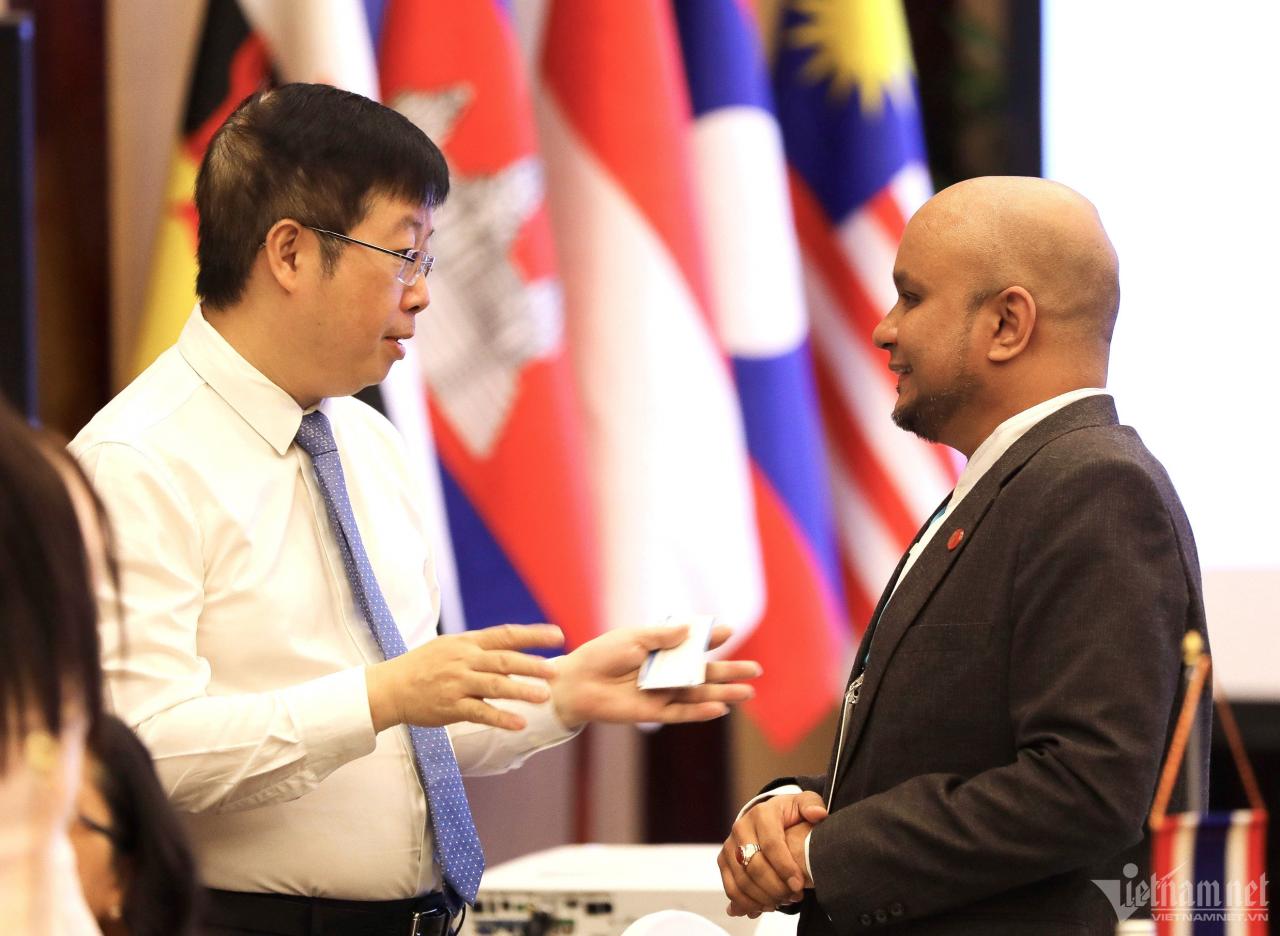
Deputy Minister of Information and Communications Nguyen Thanh Lam held discussions with delegations attending the conference.
In light of the above observations, the ministers outlined six visionary directions for ASEAN's information and communication sector by 2035 to become Adaptable, Resilient, and Progressive, continuing to affirm its role and maintain its prestige as a pioneering sector in supporting and disseminating ASEAN cooperation across all fields to the people, while also positioning itself in a new role of delivering valuable information that brings knowledge to the people.
To realize the above vision, the ministers also issued implementation guidelines for the coming period through AMRI's supporting mechanisms.
Accordingly, the parties will conduct research, collect and build databases as a basis for developing and implementing crisis communication strategies, strategic communication, and public communication, aiming to provide timely and accurate information to the public. In addition, they will leverage the transformative power of media to foster a culture of critical thinking and lifelong learning to enhance the digital readiness and capabilities of ASEAN citizens. Member states will empower the media industry to promote ASEAN-wide knowledge transfer, apply digital technologies to enhance the communication capabilities of media outlets, and conduct research on digital transformation trends to develop timely intervention policies.
AMRI 16 also effectively coordinated and implemented communication efforts across all sectors and fields in which ASEAN cooperates across all three pillars and with dialogue partners. It positioned and promoted the role of the information and communication sector as a key player in supporting ASEAN's response to emerging global challenges.
Member states will facilitate the participation of the media, communities, and citizens in supporting access to information, amplifying reliable sources of information, and strengthening positive skills and discerning attitudes among young people in consuming audiovisual content and creating digital content. The parties will also study and develop a comprehensive digital transformation plan for ASEAN's press and media in the future.
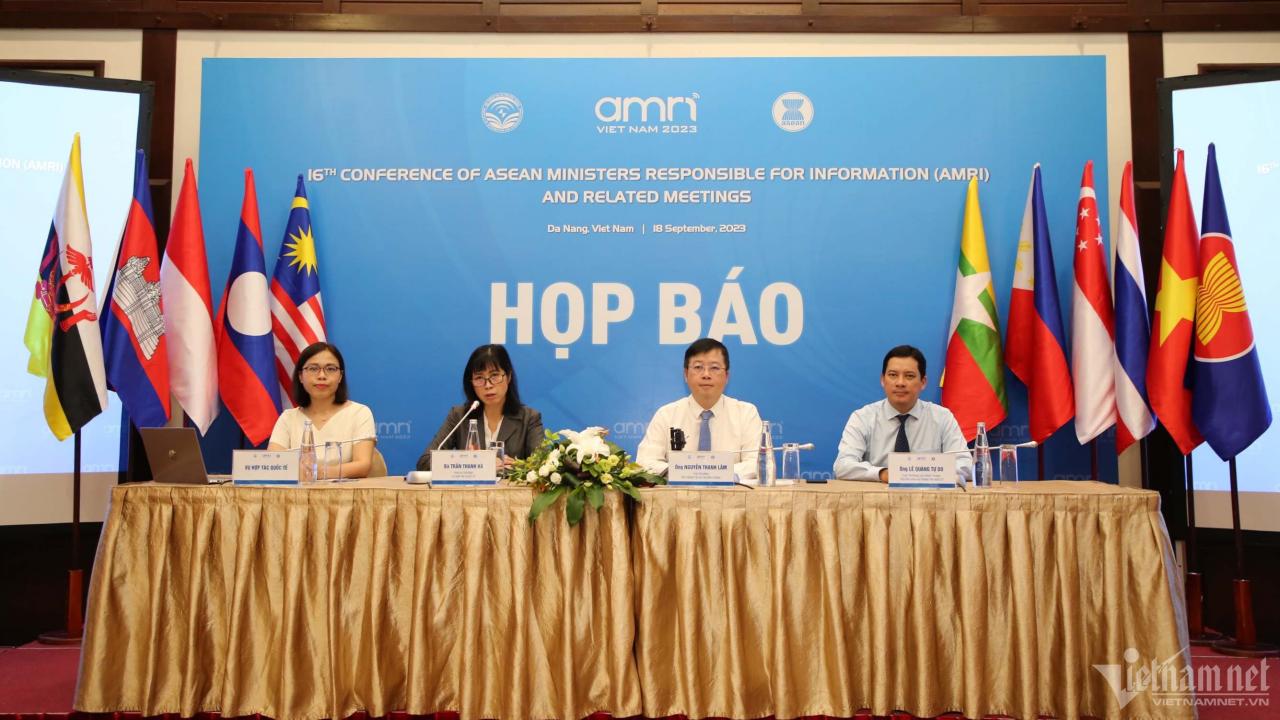
AMRI 16 also effectively coordinated and implemented communication efforts across all sectors and fields in which ASEAN cooperates across all three pillars and with its dialogue partners.
The ministers outlined six visionary directions for ASEAN's information and communications sector by 2035:
1. By 2035, the ASEAN information, press, and media sector will become adaptable, resilient, and progressive in order to create a society that is “information and knowledge equitable,” “open to innovative and progressive ideas,” “socially cohesive,” and facilitates “access to information for all.”
2. ASEAN cooperation on information and communication will be driven by "knowledge," creating added value through digital transformation to improve people's lives by providing seamless, timely, and accurate information; and equipping people with digital skills and digital readiness.
3. Developing an Information and Communication Ecosystem: “Strong”, “Resilient”, and “Dynamic”, promoting the social responsibility of cross-border platforms, respecting and ensuring the integrity of national sovereignty in cyberspace, and fostering ASEAN identity in terms of a sense of belonging to the community.
4. Affirming the role and position of the information and communication sector in interdisciplinary cooperation to respond to global challenges (health, gender equality, human rights, youth empowerment, child protection, etc.).
5. The information and media sector plays a connecting role, fostering public-private partnerships to bring knowledge to ASEAN nations, thereby enhancing integration and promoting lifelong learning.
6. Proactively cooperate with dialogue partners and promote ASEAN's central role.
Vietnamnet.vn


![[Photo] Prime Minister Pham Minh Chinh holds a phone call with the CEO of Russia's Rosatom Corporation.](/_next/image?url=https%3A%2F%2Fvphoto.vietnam.vn%2Fthumb%2F1200x675%2Fvietnam%2Fresource%2FIMAGE%2F2025%2F12%2F11%2F1765464552365_dsc-5295-jpg.webp&w=3840&q=75)































































Comment (0)