

| Rice reserves are three times higher than target; will India soon ease its rice export ban? India: Rice export ban is affecting farmers' income. |
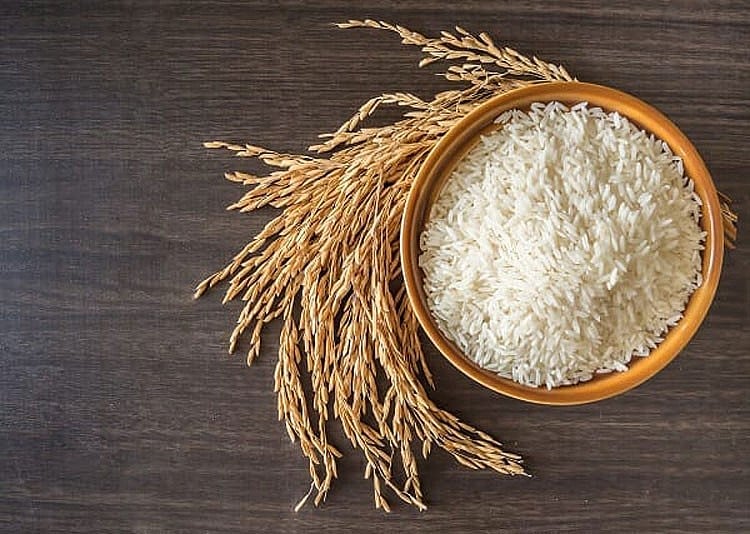
On August 18th, the Directorate General of Foreign Trade of India officially announced that approved shipments of non-basmati white rice would be exempt from the ban, including shipments approved for transit and those that had arrived on Indian shores before the export restrictions were announced. The export period will extend until August 31st.
India imposed export restrictions on non-basmati white rice, including partially milled, fully milled, polished, and glazed varieties, on July 20.
 |
This move comes after stakeholders and customs authorities submitted a proposal to the General Department of Foreign Trade regarding whether exporters should meet all three criteria or just one.
Exceptions require any one of the following conditions: When the unloading of non-basmati rice onto vessels has commenced before the notice. When the bill of lading has been submitted and vessels have arrived at or anchored at Indian ports before the notice date and turnaround has been allocated before the notice. Approval for such vessels will be subject to confirmation by port authorities. When the consignment has been handed over to customs and registered for export with authentic proof of date and time stamping of these goods.
Such exports will be permitted until August 31st. India's Directorate General of Foreign Trade has clarified that if exporters meet one of the above conditions, they will be allowed to export under the exception. The export ban was announced in July to reduce prices for domestic consumers, according to a statement from the Ministry of Consumer Affairs, Food and Public Distribution. Non-basmati white rice accounts for approximately 25% of the country's total rice exports.
Prior to this, immediately after India imposed its rice export ban, the Singapore Food Authority (SFA) was in close contact with the Indian authorities to request an exemption from the ban on non-basmati rice exports. India, the world's largest rice exporter, had banned certain overseas sales of rice, which accounts for about a quarter of its total exports. This move aimed to ensure adequate availability and curb rising prices in the domestic market.
According to the SFA, non-basmati rice from India accounts for approximately 17% of Singapore's rice imports. In 2022, India accounted for about 40% of Singapore's rice imports, with the country importing rice from more than 30 countries.
India accounts for over 40% of global rice exports, so the decision to ban exports risks exacerbating food insecurity in countries heavily reliant on rice imports. Countries affected by the ban include African nations, Turkey, Syria, and Pakistan – all struggling with high food price inflation.
Global demand indicates that India's exports of non-basmati white rice increased by 35% year-on-year in the second quarter, at the time the ban was announced. This increase occurred even after the Indian government banned the shipment of broken rice and imposed a 20% export tax on white rice in September.
According to Singapore's Rice Reserve Scheme, rice importers must maintain a reserve of rice equivalent to twice their monthly import volume. This helps ensure sufficient rice supply in the market. The SFA stated that Singapore's overall rice supply is currently stable and there is enough rice for everyone if people only buy what they need.
DFI Retail Group, which operates large cold storage and supermarket chains in Singapore, said demand for rice from India has stabilized except for a slight increase following news that India banned exports of non-basmati white rice. FairPrice Group, Singapore's largest supermarket operator, saw a slight increase in sales of imported rice from India in the first week of the export ban.
Source link

![[Photo] The captivating scenery of the fragrant maple forest in Quang Tri](/_next/image?url=https%3A%2F%2Fvphoto.vietnam.vn%2Fthumb%2F1200x675%2Fvietnam%2Fresource%2FIMAGE%2F2025%2F12%2F10%2F1765353233198_lan09046-jpg.webp&w=3840&q=75)
![[Photo] Explore the US Navy's USS Robert Smalls warship](/_next/image?url=https%3A%2F%2Fvphoto.vietnam.vn%2Fthumb%2F1200x675%2Fvietnam%2Fresource%2FIMAGE%2F2025%2F12%2F10%2F1765341533272_11212121-8303-jpg.webp&w=3840&q=75)

















![[Video] The craft of making Dong Ho folk paintings has been inscribed by UNESCO on the List of Crafts in Need of Urgent Safeguarding.](https://vphoto.vietnam.vn/thumb/402x226/vietnam/resource/IMAGE/2025/12/10/1765350246533_tranh-dong-ho-734-jpg.webp)


















































Comment (0)