

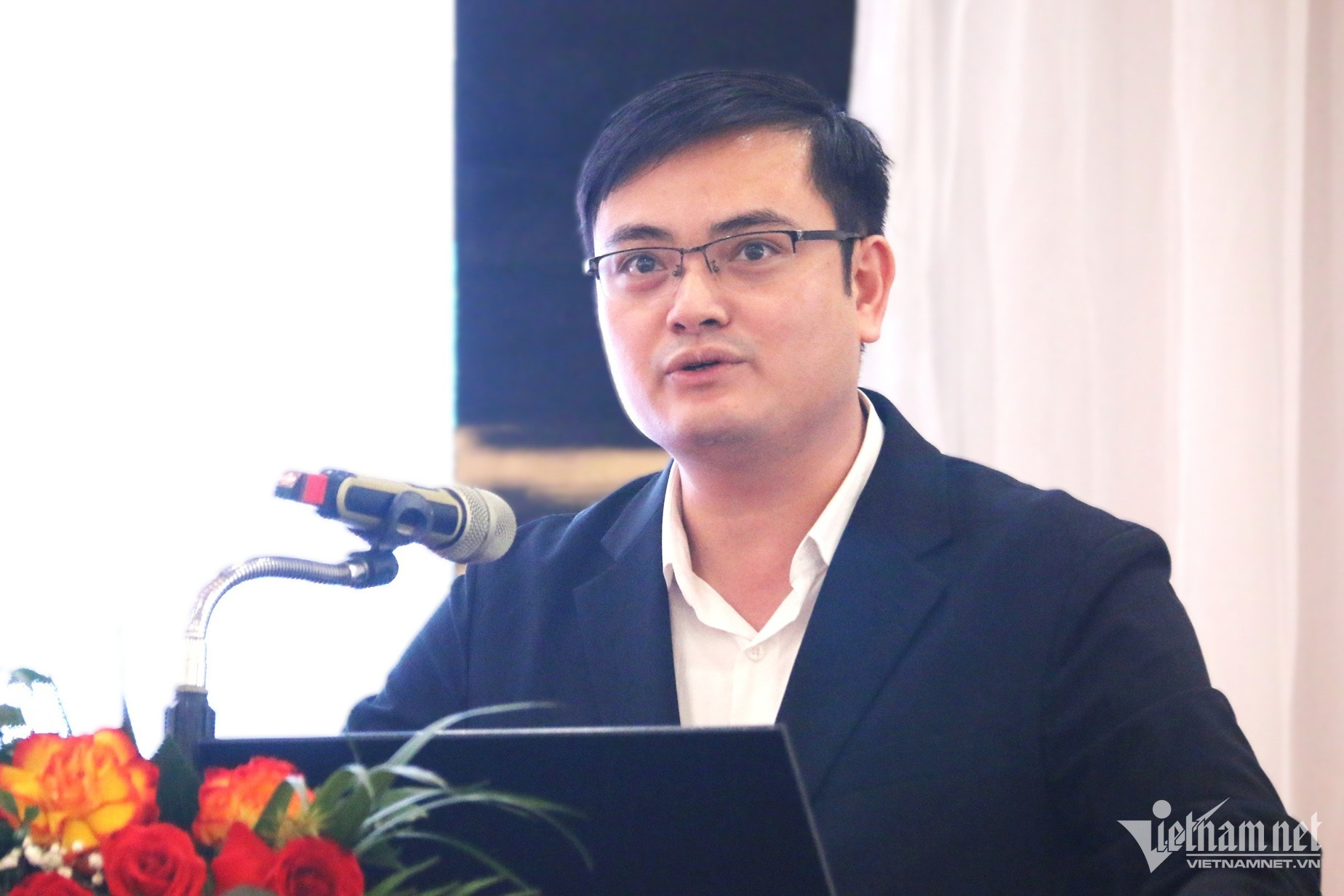
Talking about the current situation of teaching and learning English in high schools, Mr. Do Duc Lan, Deputy Director in charge of the Development Cooperation Center (Vietnam Institute of Educational Sciences), said that the institute's research team had previously conducted surveys in three provinces and cities: Tuyen Quang, Soc Trang and Hanoi, with the participation of 960 teachers and 1,440 students.
Accordingly, in rural areas, there are groups of 30-40% of students who are not confident that they have achieved basic results in learning English. "Their scores on their profiles may still be good, but their confidence in learning English is not high," said Mr. Lan.
Teachers also assessed: the number of students exceeding the standard is very low, only about 3-4%, at the Achieved level (about 50%), the rest are Nearly Achieved and Not Achieved.
Regarding the conditions for English teaching, the majority of teachers (40-50%) said that the school only partially met the requirements. The percentage of teachers who rated the conditions as “fully met” was only 25-27%.
Mr. Lan said another survey of more than 71,000 students nationwide on their level of anxiety when taking English tests showed a remarkable reality. Nearly half (49%) said they felt high anxiety, of which 22% felt “a lot” of pressure and 27% felt “a lot” of pressure. About 30% had moderate anxiety, while only 21% felt comfortable taking the test and only 6% felt almost no pressure.
According to the research team, we still face many challenges in implementing English teaching and learning, especially at preschool level. First is the significant difference between regions and subjects. In some provinces, only 2-6% of children have access to English introduction programs.
Regarding the staff, we still lack teachers with appropriate qualifications and certificates, especially in disadvantaged areas. For foreign teachers, maintaining a stable staff is difficult due to the dependence on visa duration. Meanwhile, public preschools do not have job positions for English teachers, they have to depend on contracts. About 15% of teachers self-assess their skills as weak or relatively weak.
Facilities and equipment are limited, many schools have to use shared classrooms due to lack of specialized rooms. The cost of education is also a challenge, with tuition fees ranging from 50,000 VND to 1,350,000 VND per child per month, causing difficulties for many families in disadvantaged areas.
“Another challenge is that the assessment of listening and speaking skills has not been done regularly and consistently. This is partly due to the lack of facilities and practice environment. In addition, exam pressure is still affecting learning methods, causing students to focus more on reading and writing skills and less on communication skills,” said Mr. Lan.
He also emphasized that students' English proficiency is uneven; some teachers lack IT skills, making it difficult to find and use learning materials; the length of the program and the large class sizes are all issues that need attention in implementing English as a second language in schools.
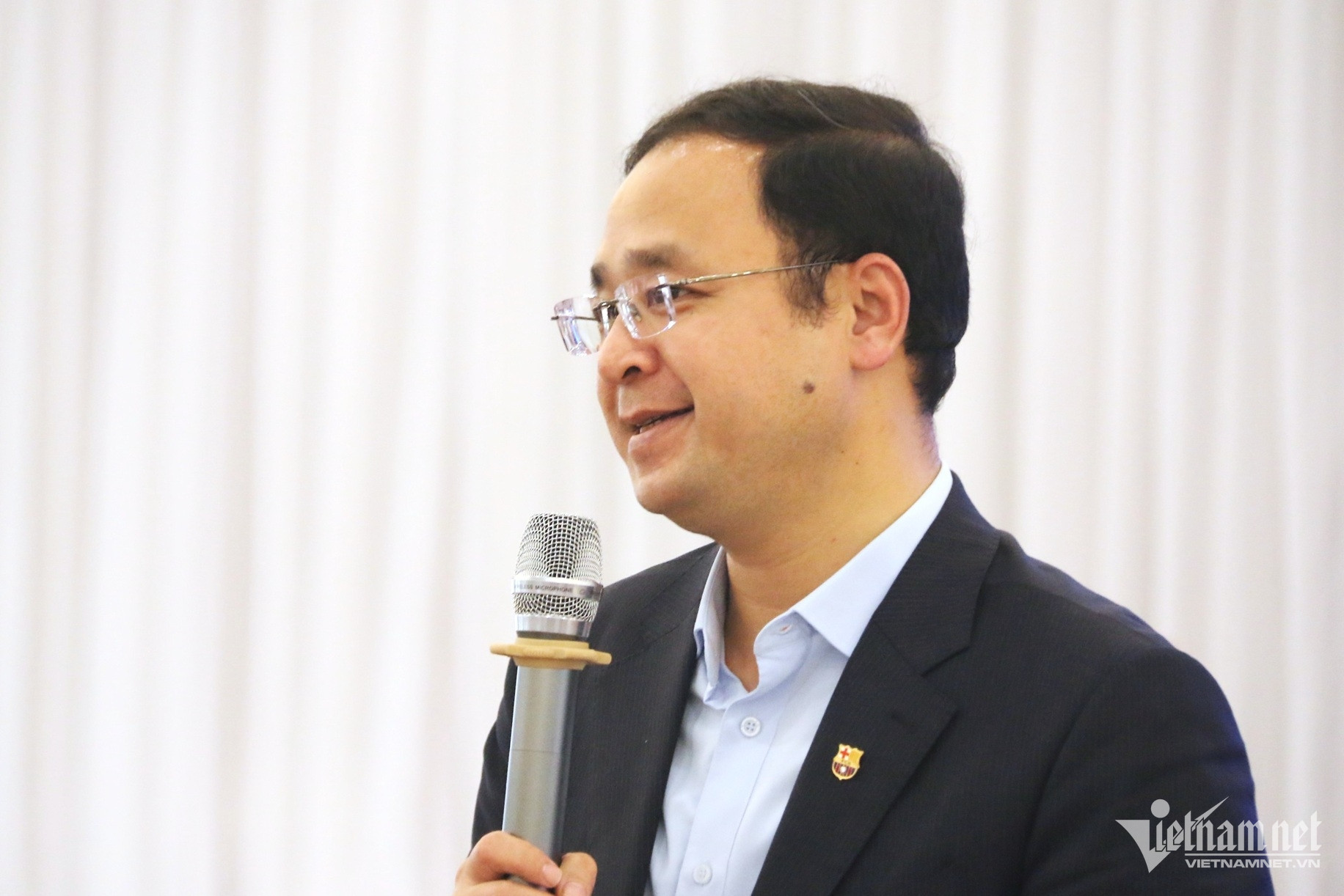
Mr. Nguyen The Son, Deputy Director of the General Education Department (Ministry of Education and Training), said that one of the key tasks of the project is to innovate teaching methods and testing, examination and assessment methods. The Ministry will continue to improve assessment forms in a diverse, flexible and appropriate manner to the context of teaching English or teaching in English, in order to promote learning to take place naturally, practically and in association with the language-using environment.
According to the Ministry of Education and Training's calculations, to successfully implement the project, the education system needs to add about 12,000 English teachers for preschools (each preschool has one English teacher); nearly 10,000 primary school teachers because the compulsory English program will be applied from grade 1 instead of grade 3 as at present. In addition, it is necessary to train and foster professional and technical capacity for at least 200,000 teachers to be able to teach in English by 2030.
Regarding the shortage of teachers, especially in disadvantaged areas, Mr. Son said that the Ministry of Education and Training has issued many guidelines to support localities in ensuring human resources. Solutions include converting teaching hour norms for teachers; organizing inter-school teaching; expanding mechanisms and policies to attract foreign teachers; mobilizing contract teachers, etc.
“The Ministry will calculate solutions suitable to the needs of each locality. The implementation of the project to make English the second language in schools must follow a roadmap, based on actual conditions. Therefore, localities need to carefully consider resources, from facilities to teaching staff, to have a suitable implementation plan,” Mr. Son emphasized.
Source: https://vietnamnet.vn/ap-luc-thi-cu-lam-kho-viec-dua-tieng-anh-thanh-ngon-ngu-thu-hai-trong-truong-2469979.html
![[Photo] 60th Anniversary of the Founding of the Vietnam Association of Photographic Artists](/_next/image?url=https%3A%2F%2Fvphoto.vietnam.vn%2Fthumb%2F1200x675%2Fvietnam%2Fresource%2FIMAGE%2F2025%2F12%2F05%2F1764935864512_a1-bnd-0841-9740-jpg.webp&w=3840&q=75)
![[Photo] National Assembly Chairman Tran Thanh Man attends the VinFuture 2025 Award Ceremony](/_next/image?url=https%3A%2F%2Fvphoto.vietnam.vn%2Fthumb%2F1200x675%2Fvietnam%2Fresource%2FIMAGE%2F2025%2F12%2F05%2F1764951162416_2628509768338816493-6995-jpg.webp&w=3840&q=75)




















































































Comment (0)