

In a solemn atmosphere in the capital Hanoi, the L'Oréal - UNESCO For Women in Science 2025 Award Ceremony marked a special milestone: 16 years of searching for and honoring the "gems" of Vietnamese science.
Speaking at the ceremony, Professor, Academician Chau Van Minh - Chairman of the Jury, expressed his deep admiration for the 60 entries this year. He emphasized that the selection process was a "difficult challenge" because the quality of the research topics was higher than ever, covering everything from life sciences to materials science. This shows the remarkable maturity and unlimited creativity of the Vietnamese female intellectual team.
The three faces named in 2025 are typical representatives of the spirit of dedication, solving the "bottleneck" problems of the era: Climate change, Food security and Sustainable Artificial Intelligence.
Associate Professor, Dr. To Thi Mai Huong: "Architect" for low-emission agriculture
Associate Professor, Dr. To Thi Mai Huong is a dedicated researcher in the field of Agricultural Biotechnology and Plant Physiology.
With a focus on rice genetics and environmental stress response mechanisms, she has made significant contributions to optimizing crop resilience and nutrition through advanced genomic tools.
Associate Professor Huong’s current research focuses on using prime editing technology to modify carbon-allocation genes in rice plants, aiming to reduce methane emissions from rice fields while maintaining high grain yields. This work has great potential to ensure food security and combat climate change through the creation of environmentally friendly, low-emission rice varieties.
Throughout her career, Associate Professor Huong has achieved many achievements, including leading impactful projects funded by NAFOSTED, VINIF and international organizations (UKRI, NRF), as well as publishing in leading journals such as Plant Journal. She is highly regarded for her expertise in international collaboration and pioneering approach in applying gene editing for sustainable agriculture.
The L'Oréal–UNESCO For Women in Science 2025 Award is honored to recognize Associate Professor, Dr. TO THI MAI HUONG, honoring her academic excellence and dedication to science for the community. She was nominated by the Jury for the project "Research on developing rice varieties with low methane emissions and high yield potential through optimizing carbon allocation in plants and reducing root exudates using gene editing technology".

The project introduces a breakthrough approach: applying precise gene editing technology (prime editing) to improve rice. We focus on genes that regulate carbon allocation, interfering with gene expression levels by changing the uORFs region or inserting short transcriptional enhancers (STEs) before the promoter region. From there, the study evaluates the impact of gene editing on yield, root exudates, root microbiota and especially methane emission levels.
The research opens up great potential in developing elite rice varieties, not only ensuring food security for Vietnam and the world but also proactively contributing to the goal of reducing global greenhouse gas emissions. This is concrete evidence that gene editing technology is the key to creating sustainable, environmentally friendly agriculture.
Associate Professor Huong’s work does not take a traditional approach but instead delves into the genetics. She uses precise gene editing technology to intervene in genes that regulate carbon allocation in rice plants. By altering the uORFs region or inserting short transcriptional enhancer sequences, the research aims to optimize carbon flow, thereby reducing the amount of root exudates – a food source for methanogenic bacteria.
Assoc. Prof. Dr. Pham Kim Ngoc: Unlocking the potential to realize non-von-Neumann hardware AI systems
Associate Professor, Dr. Pham Kim Ngoc - Head of the Department of Nano Materials and Thin Films, Faculty of Materials Science and Technology, University of Science, VNU-HCM - is an outstanding researcher in the field of Semiconductor Devices and Nanostructured Materials.
With a focus on developing novel materials for advanced memory devices, she has made important contributions to advancing knowledge of neuromorphic computing and artificial synapses.
Associate Professor Ngoc's current research focuses on exploring In-Memory Computing (IMC) architectures using memristors, which aim to solve the "bottleneck" of traditional computing systems by enabling data processing directly in memory. This work offers great potential in creating high-speed, energy-efficient AI hardware that mimics the human brain, paving the way for sustainable artificial intelligence technologies.
Throughout her career, Associate Professor Ngoc has achieved many remarkable achievements, including chairing many national-level projects (NAFOSTED, VINIF), owning 4 patents and authoring more than 50 international papers. She is widely respected for her scientific innovation in materials engineering and her leadership role in guiding the young generation of materials scientists at VNU-HCM.
The L'Oréal–UNESCO For Women in Science 2025 Award is honored to recognize Associate Professor Dr. Pham Kim Ngoc not only for her academic excellence but also for her dedication to expanding scientific boundaries for the benefit of the community. She was nominated by the Jury for the project "Research and manufacture of components and memory chips for use as artificial synapses in brain-simulated computing systems".
The explosive growth of AI is pushing current computing infrastructure to its limits. Traditional von-Neumann architectures, with their separation of processor and memory, create a “bottleneck” that wastes energy and slows down AI training. There is an urgent need for energy-efficient, faster, brain-simulating AI systems.

This project explores a breakthrough solution: in-memory computing (IMC) architecture. IMC enables computation directly in memory, bypassing the traditional bottleneck. The focus is on the use of memristors – electronic devices with the ability to store analog states, mimic biological synapses and are highly integrated in crossbar arrays. To improve reliability, we focus on self-rectifying memristors (SRMs), building research from materials to components and microcircuits.
This research opens up the potential to realize non-von-Neumann hardware AI systems. They will have superior learning, parallel processing, and energy efficiency, closer to the operation of the brain than ever before. This is the foundation for developing next-generation AI chips, creating an era of more powerful and sustainable AI.
Dr. Linh Le: Unlocking the future for electric vehicles and renewable energy
The third face, representing the young generation of scientists reaching international stature, is Dr. Linh Le - currently a Postdoctoral Researcher at Stanford University, USA. The field she pursues is at the center of the global technology race: Batteries and Energy Storage Systems.

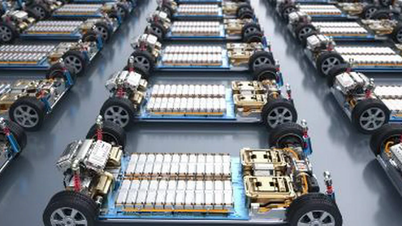
To realize the dream of sustainable transportation, the world needs better batteries than the current Li-ion batteries. Dr. Linh Le has devoted his efforts to researching Lithium-Sulfur (Li-S) batteries - batteries that have the potential to provide higher energy density and lower cost. However, the biggest barrier to this technology is the phenomenon of polysulfide migration and Lithium metal degradation, which shortens battery life.
Dr. Linh’s solution was to design advanced multifunctional liquid electrolytes. By using co-solvents and special additives, she found a way to minimize polysulfide dissolution and stabilize the Lithium Anode. A close combination of rigorous experimentation and theoretical simulations helped her unravel the complex electrochemical mechanisms inside the battery cell. The goal of the research is to achieve an energy density of up to 350 Wh/kg with a long cycle life. Her success will be key to commercializing Li-S batteries, making electric vehicles more affordable, with longer ranges, and thereby reducing dependence on fossil fuels.
The achievements of three female scientists Associate Professor Dr. To Thi Mai Huong, Associate Professor Dr. Pham Kim Ngoc and Dr. Linh Le do not stop at international articles or patents. They are practical solutions for farmers' rice fields, for chips in future computers and for electric cars running on the streets.
They are the pioneers, following in the footsteps of previous successful examples such as Associate Professor, Dr. Ho Thi Thanh Van or Dr. Nguyen Thi Hiep - who have brought Vietnamese science to the international spotlight. When gender barriers are removed, Vietnamese women can absolutely lead pioneering research. The 2025 award ceremony has ended, but at the same time, it has opened a new chapter for the arduous but glorious research journey of female scientists.
Source: https://baophapluat.vn/ba-guong-mat-duoc-trao-hoc-bong-quoc-gia-l-oreal-unesco-vi-su-phat-trien-phu-nu-trong-khoa-hoc-lan-thu-16.html


![[Photo] Cat Ba - Green island paradise](/_next/image?url=https%3A%2F%2Fvphoto.vietnam.vn%2Fthumb%2F1200x675%2Fvietnam%2Fresource%2FIMAGE%2F2025%2F12%2F04%2F1764821844074_ndo_br_1-dcbthienduongxanh638-jpg.webp&w=3840&q=75)








































![[VIMC 40 days of lightning speed] Da Nang Port: Unity - Lightning speed - Breakthrough to the finish line](https://vphoto.vietnam.vn/thumb/402x226/vietnam/resource/IMAGE/2025/12/04/1764833540882_cdn_4-12-25.jpeg)

































Comment (0)