

On the morning of July 12th, the scientific workshop "Strategies for managing cardiovascular and metabolic diseases: From recommendations to clinical practice" was held at Gia An 115 Hospital, providing important information for the treatment of patients.
With four reports focusing on the topics of chronic coronary syndrome, hypertension, and type 2 diabetes, the workshop updated domestic and international recommendations and emphasized the implementation of personalized, patient-centered treatment.
Cardiovascular disease should be detected and controlled before chest pain occurs.
According to Professor, Doctor Dang Van Phuoc, Vice President of the Vietnam Cardiology Association, microcirculation is a contributing factor to half of chest pain and some heart function problems.
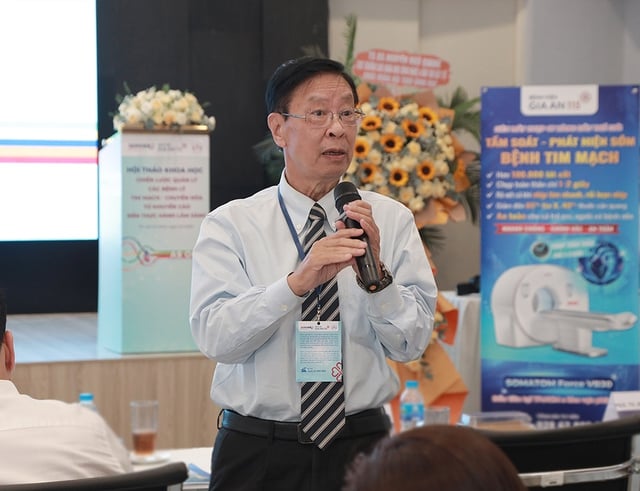
Professor, Doctor, and Physician Dang Van Phuoc delivered a speech at the conference.
PHOTO: BVCC
“Microcirculatory dysfunction can lead to myocardial ischemia. Therefore, even if coronary artery examination results are normal, patients may still experience myocardial ischemia. Chest pain and shortness of breath are two symptoms that always require careful screening. To better manage the condition before chest pain begins, patients may be prescribed echocardiography to detect systolic and diastolic dysfunction. This contributes to reducing the risk of myocardial infarction,” Professor Dang Van Phuoc explained.
Complications from diabetes can develop very quickly.
In the report "A Comprehensive Approach to Type 2 Diabetes Treatment: From Recommendations to Clinical Practice," Associate Professor, Doctor Nguyen Thi Bich Dao, President of the Ho Chi Minh City Diabetes and Endocrinology Association, stated that according to a study published in The Lancet (UK), approximately 828 million adults globally had type 2 diabetes in 2022; a fourfold increase compared to 1990. Meanwhile, treatment coverage remains low, especially in low- and middle-income countries.
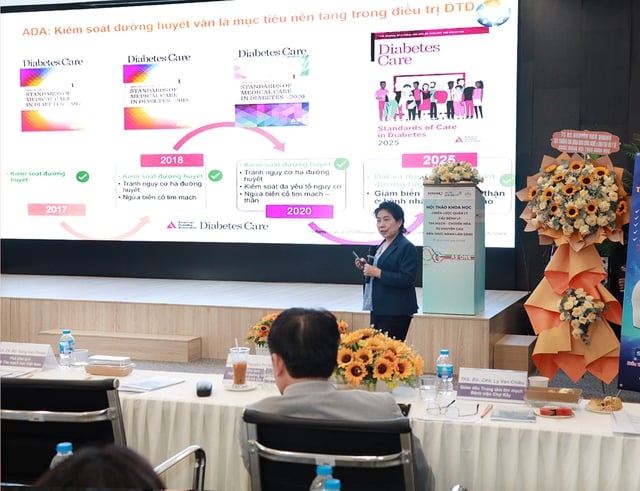
Associate Professor, Doctor Nguyen Thi Bich Dao presented her report at the conference.
PHOTO: BVCC
Therefore, according to Associate Professor Bich Dao, four things need to be done simultaneously to control diabetes: managing blood sugar, blood pressure, blood lipids, and using medications that are beneficial for the kidneys and cardiovascular system.
“When first diagnosed with diabetes, 12.3% of patients have chronic kidney disease complications. The time to detect other complications is between 3 and 5.2 years – much shorter than we previously thought. Therefore, earlier intervention is needed to limit complications. Risk factors that can be addressed include smoking and hypertension – which are associated with chronic kidney and cardiovascular complications of diabetes,” Dr. Bich Dao emphasized.
Mistakes in measuring blood pressure during hypertension treatment.
Dr. Ly Van Chieu, MD, PhD, Director of the Cardiovascular Center at Cho Ray Hospital, shared the 5D strategy (blood pressure measurement, comprehensive assessment, individualized treatment, treatment response, and full adherence) in hypertension management.

Dr. Ly Van Chieu, a specialist with a Master's degree, points out common mistakes when measuring blood pressure in the treatment of hypertension.
PHOTO: BVCC
Accurate blood pressure measurement is crucial in the diagnosis and treatment of hypertension. Patients should take responsibility and be mindful of monitoring their blood pressure at home. Doctors point out the following mistakes when measuring blood pressure at home or in the clinic:
- Talking can increase blood pressure by 4-19 mmHg.
- The first cigarette of the day can raise blood pressure by 20 mmHg.
- Keep your arm straight; using a cuff that is too small can increase blood pressure readings by 5-20 mmHg.
- Leaving your feet flat on the floor or leaning back in a chair can increase your blood pressure by 5 mmHg.
- A full bladder can increase blood pressure by 4-33 mmHg.
- Wrapping bandages over sleeves can increase blood pressure by 3-5 mmHg.
- Drinking coffee within 30 minutes before measuring blood pressure; sitting with crossed legs can increase blood pressure readings by 3-15 mmHg.
"Actively controlling blood pressure not only helps hypertensive patients become healthier, but also helps reduce the risk of stroke by 41% in diabetic patients," said Dr. Van Chieu.
Source: https://thanhnien.vn/bac-si-chi-ra-nhung-sai-lam-pho-bien-khi-do-huyet-ap-185250712172703696.htm


![[Photo] Prime Minister Pham Minh Chinh holds a phone call with the CEO of Russia's Rosatom Corporation.](/_next/image?url=https%3A%2F%2Fvphoto.vietnam.vn%2Fthumb%2F1200x675%2Fvietnam%2Fresource%2FIMAGE%2F2025%2F12%2F11%2F1765464552365_dsc-5295-jpg.webp&w=3840&q=75)




















































































Comment (0)