

Banh man de is a unique specialty that tourists can only easily find at Chau Doc market in An Giang province.
The Mekong Delta is famous for many unique types of cakes that are loved by tourists from all over, such as banh khot, banh chuoi, banh it, banh cong... However, there is a type of cake that has existed for decades but not all tourists know about: banh man de, or banh de Chau Doc.
Mần Dè cake originates from Cambodia and was introduced to Vietnam many years ago. Previously, this cake was quite commonly sold in markets in the Mekong Delta. Nowadays, it is very difficult for diners to find Mần Dè cake in Ho Chi Minh City.
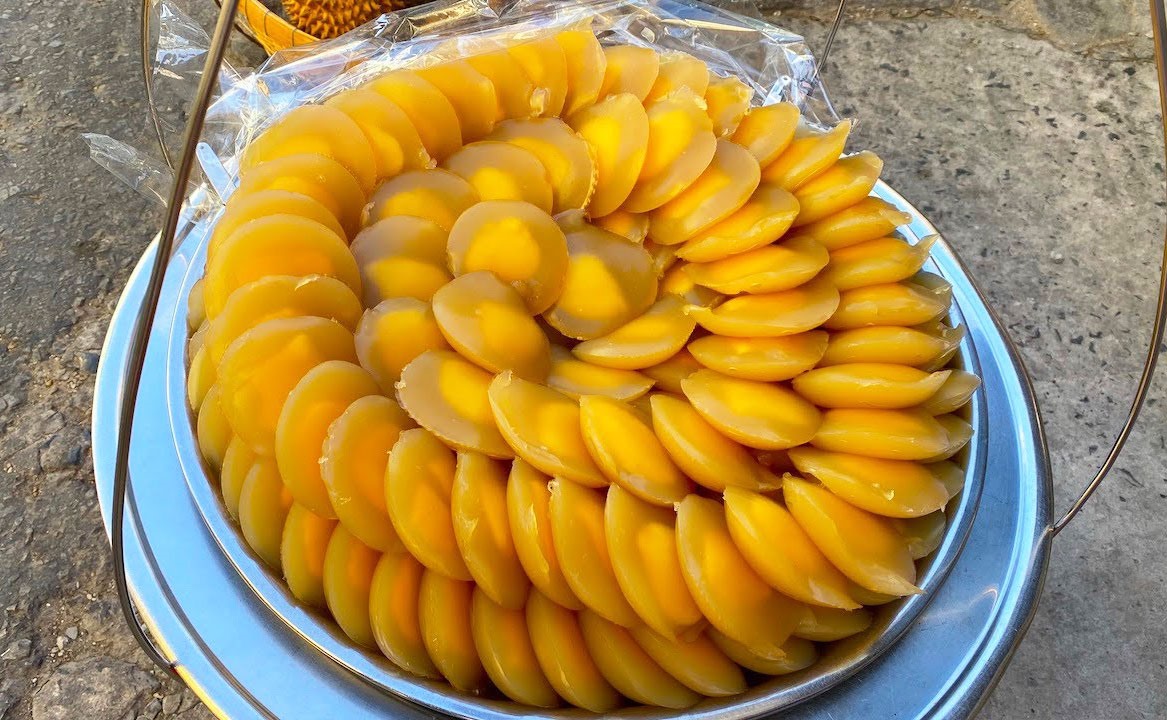
At first glance, the name "bánh mần dè" might lead diners to associate it with the meaning of eating sparingly or making it little by little. In reality, the name simply refers to the cake's ingredients. Unlike many types of cakes from the Mekong Delta region that are usually made from wheat flour, glutinous rice flour, or regular rice flour, bánh mần dè is made from the flour of the dè plant, which only grows in Cambodia. Therefore, bakers must find connections to import the dè plant flour to make the cake.
Nowadays, the dé tree is very rare in Cambodia, so finding the flour for this traditional cake has become more difficult, and it is not as widely sold as before. The cake's crust is made from dé tree flour, wrapping a filling of mashed mung beans.
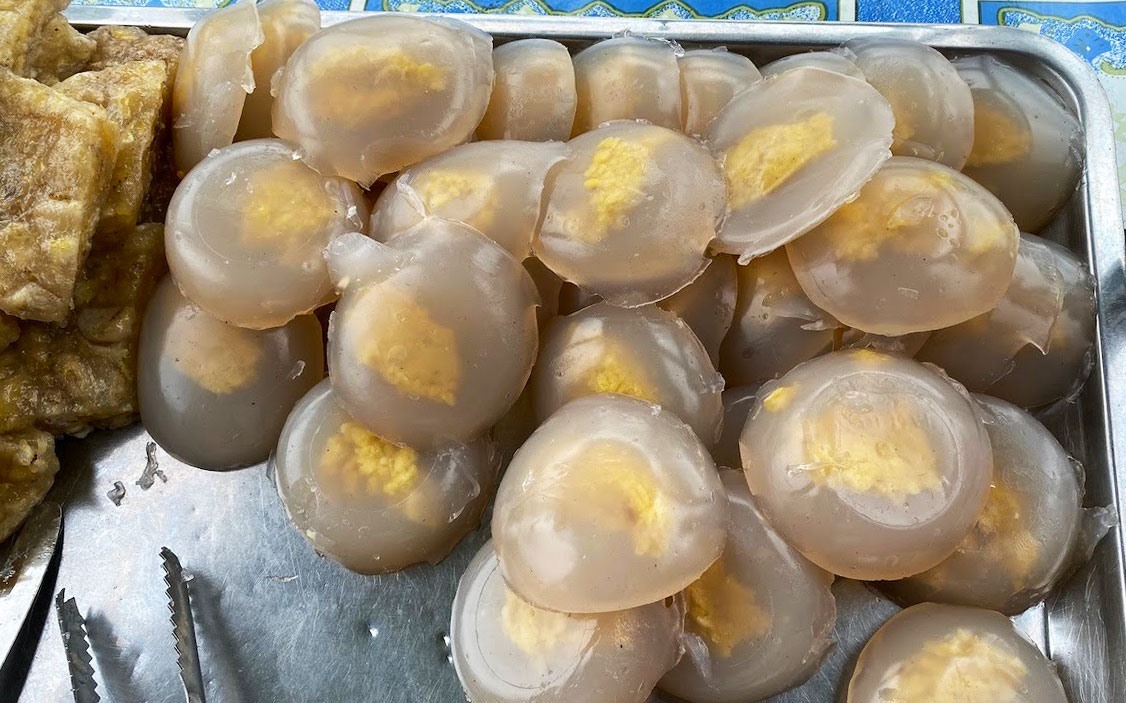
Next, for the pastry shell, the tapioca starch is mixed with water, and a little palm sugar is added to create a sweet taste. After stirring the mixture well, it is placed on the stove over low heat and stirred constantly until it becomes translucent.
Finally, the baker puts a layer of batter into the bowl, adds a slice of mung bean in the middle, and then covers it with another layer of batter. After a few hours, the cake will solidify and can be easily removed from the bowl. Besides the yellow color from palm sugar, some people have also creatively added green from pandan leaves, purple from perilla leaves, etc.
Each finished cake is perfectly shaped, bouncy, and incredibly appealing. When eating, you generously pour coconut milk over the cake and sprinkle with fragrant roasted sesame seeds. The outer layer has a slightly chewy, jelly-like texture, while the mung bean filling is rich, creamy, and refreshingly delicious. This is undoubtedly a wonderful cooling treat for hot days.
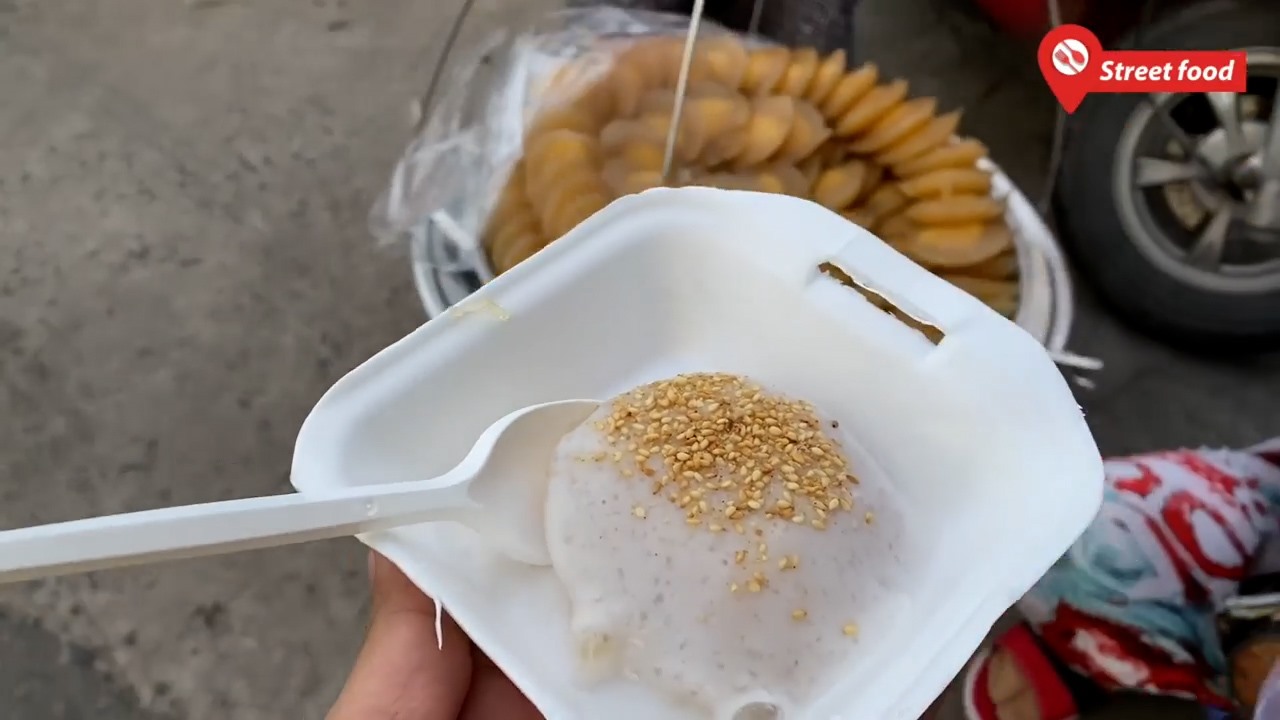
The rich, creamy coconut milk makes the mần dè cake even more appealing. Photo: Street Food Thảo Vy
These cakes are made from hard-to-find ingredients and entirely by hand, yet they are sold for just a few thousand dong each. Currently, there is only one stall left selling these cakes in Chau Doc market, which is why they sell out very quickly. This is considered one of the few places still selling this type of cake in the Mekong Delta.
Additionally, in Ho Chi Minh City, tourists can find banh man de (a type of Vietnamese rice cake) sold from a cart near Long Van Pagoda, Hung Phu Street, District 8. A distinctive feature of this cart is the use of pandan leaves, giving the cake batter a darker green color. This location only sells banh man de on weekends, and in limited quantities.
Laodong.vn


![[Image] Pleasant weather helps students enter the 10th grade entrance exam with confidence.](https://vphoto.vietnam.vn/thumb/1200x675/vietnam/resource/IMAGE/2026/05/29/1780034401612_ngay-1-thi-lop-10-minh-duy-8-5009-jpg.webp)
![[Photo] Ba Lang An Lighthouse - the "eye of the sea" amidst the "rock museum" of Quang Ngai province.](https://vphoto.vietnam.vn/thumb/1200x675/vietnam/resource/IMAGE/2026/05/29/1780038698840_anh-man-hinh-2026-05-29-luc-14-10-42.png)














































































Comment (0)