

The conference was organized to unify understanding and methods for the timely implementation of the 2024 amnesty program in accordance with the President 's Decision and the Guidelines of the Amnesty Advisory Council, ensuring transparency, democracy, strict adherence to regulations, targeting the correct individuals and conditions, and preventing errors and negative practices.

On the morning of August 14, in Hanoi, the Ministry of Public Security held a conference to implement the President's Decision on amnesty in 2024.
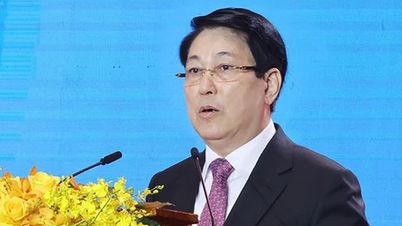
Speaking at the conference, Lieutenant General Le Minh Hung, Director of the Department of Police for Prison Management, Compulsory Education Facilities, and Juvenile Detention Centers, and Deputy Head of the Ministry of Public Security's Amnesty Steering Committee, stated: Continuing to implement the leniency policy of the Party and the State, and the humanitarian tradition of our nation towards convicted criminals, on July 30, 2024, the President signed Decision No. 758/2024/QD-CTN on amnesty in 2024 and Decision No. 759/QD-CTN on the establishment of the 2024 Amnesty Advisory Council. On August 2, 2024, the 2024 Amnesty Advisory Council issued Guidance No. 88/HD-HDTVDX on the implementation of the President's Decision on amnesty in 2024.

On the part of the Ministry of Public Security - the Standing Agency of the Clemency Advisory Council has issued a Decision establishing the Steering Committee on Clemency in 2024 of the Ministry of Public Security, a Plan for implementing clemency work in 2024, a Decision promulgating regulations on the organization, tasks, and working methods of the expert teams assisting members of the Clemency Advisory Council and the inter-agency appraisal team, and a Decision promulgating forms and instructions for using forms in clemency work in 2024.
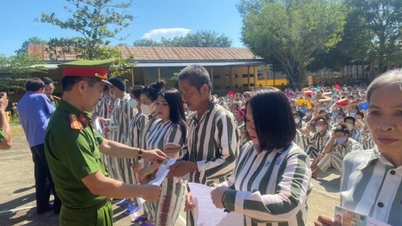
The majority of those granted amnesty have returned to their places of residence, settled down, and engaged in honest work; the rate of recidivism among those granted amnesty is very low.
To date, only 2 people granted amnesty in 2022 have re-offended, representing a rate of 0.08% out of 2,438 people granted amnesty in 2022. The amnesty process has ensured political, legal, professional, and diplomatic requirements, and has been well-received by the people domestically and highly appreciated by international public opinion.
To ensure the successful implementation of the 2024 amnesty program, Lieutenant General Le Minh Hung suggested that the expert teams assisting the members of the Amnesty Advisory Council proactively advise their respective members on detailed plans to guide and organize the implementation of the 2024 amnesty program within their respective sectors.
At the same time, closely coordinate with the Department of Police in charge of prisons, compulsory education facilities, and reform schools in reviewing applications for pardons, ensuring progress, quality, and effectiveness.
In addition, inter-agency appraisal teams need to urgently implement the appraisal of pardon applications in units and localities according to the set timeframe and schedule, ensuring the process is correct, democratic, objective, open, transparent, and rigorous in accordance with the law on pardons, the President's decision, and the guidance of the Pardon Advisory Council.
"We are determined to prevent ineligible individuals from being included in the list of those recommended for amnesty, and to ensure that those who are eligible are not overlooked," Lieutenant General Le Minh Hung emphasized.
The professional units under the Ministry of Construction are developing plans to implement the 2024 amnesty program in accordance with the Ministry of Public Security's amnesty implementation plan. They are proactively allocating personnel, equipment, vehicles, and other necessary resources to ensure the best possible results in implementing the amnesty program…
At the conference, speakers emphasized several points to ensure the President's decision on amnesty in 2024 is implemented effectively and achieves its intended goals. Simultaneously, delegates discussed difficulties and obstacles to reach a consensus on understanding and implementation methods.
From 2009 to 2016, in accordance with the 2007 Amnesty Law, the State of Vietnam carried out 7 amnesty periods (2 in 2009 alone), granting amnesty to 87,111 people (including 85,974 prisoners and 1,123 people whose sentences were postponed or temporarily suspended).
Following the National Assembly's enactment of the 2018 Amnesty Law, which replaced the 2007 Amnesty Law, the Vietnamese government has implemented two amnesty programs (in 2021 and 2022), granting early release to 5,473 people, including 5,460 prisoners, 7 people whose sentences were suspended, and 6 people whose sentences were temporarily suspended.
Source




![[Photo] Urgently help people soon have a place to live and stabilize their lives](/_next/image?url=https%3A%2F%2Fvphoto.vietnam.vn%2Fthumb%2F1200x675%2Fvietnam%2Fresource%2FIMAGE%2F2025%2F12%2F09%2F1765248230297_c-jpg.webp&w=3840&q=75)
























































































Comment (0)