The province focuses on the sustainable protection of natural resources in the area; organizing the review, revision, and completion of the marine space utilization plan map in the provincial planning for the period 2021-2030, with a vision to 2050; and zoning to ensure socio -economic development is linked to the conservation of important ecological areas, such as Ha Long Bay, Bai Tu Long National Park, and the Co To - Tran Island Marine Reserve...
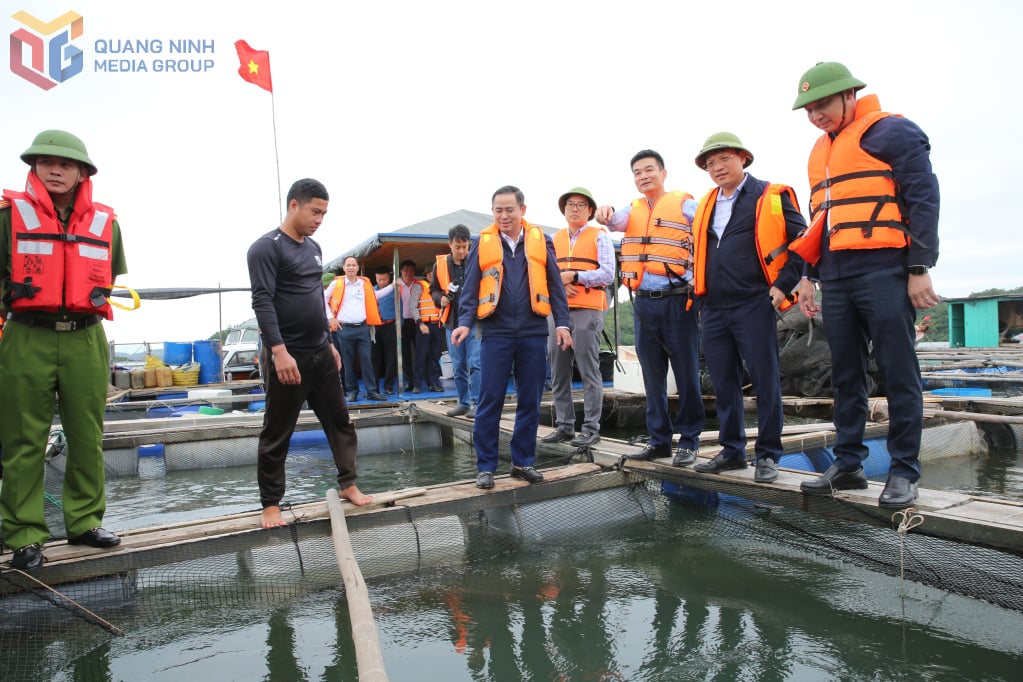
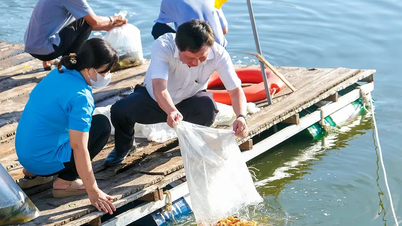
Provincial leaders inspect a fish farming model in the concentrated marine farming area of Dam Ha commune. Photo: Minh Duc.
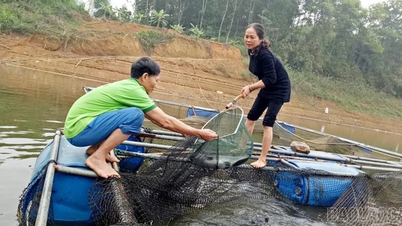
Local authorities are focusing on managing aquaculture areas. The province has completed the planning of 45,146 hectares of water surface for aquaculture development; of which 13,400 hectares are for industrial-scale aquaculture, and 29,717.18 hectares of tidal flats are planned for the cultivation of native species such as clams, sea worms, mussels, and crabs. The allocation of sea areas to businesses, cooperatives, and households is being carried out quickly. In the first nine months of 2025, the province granted aquaculture licenses to 39 out of 40 applications, covering 4,016.76 hectares; allocated 1,603.05 hectares of sea area; and completed the allocation of sea areas to 755 individuals, covering 464.82 hectares.
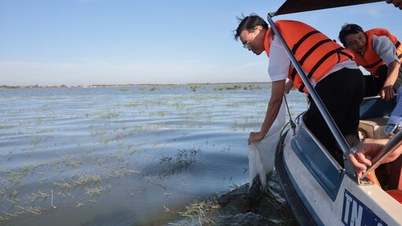
In addition, the province has implemented policies to plan 3 conservation areas covering 38,575 hectares and 13 aquatic resource protection zones covering 3,440 hectares. On average, the province releases 6.6 million aquatic species annually to regenerate aquatic resources. Furthermore, several aquatic resource protection models have been implemented, such as: the co-management model for sea cucumber resources in Minh Chau and Quan Lan in the Van Don special economic zone; and the sea cucumber beds in the Dai Binh area of Dam Ha commune..., contributing to job creation and increased income for approximately 300 households.
Local authorities are actively supporting fishermen in transitioning from fishing to aquaculture and other occupations. By the end of 2024, 766 vessels with approximately 2,240 workers had transitioned to other occupations. This has helped reduce pressure on coastal fishing and created more sustainable livelihoods for the people.
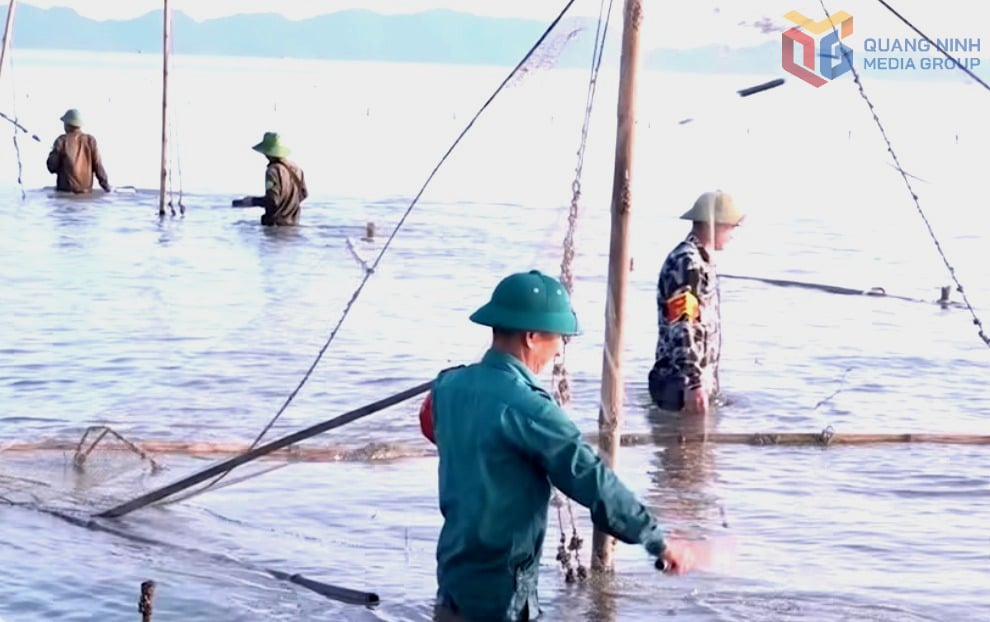
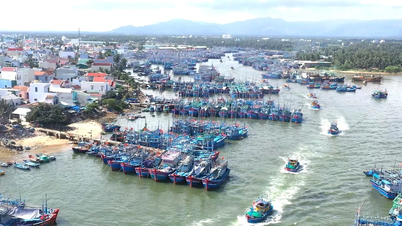
Authorities in Quang Ha commune dismantled illegal stakes and fishing nets in the sea area under the commune's management.
Besides aquaculture, the province encourages fishermen to exploit offshore fisheries, but they must strictly comply with international and Vietnamese laws, as well as provincial regulations. As of October 21, 2025, the province has 4,097 fishing vessels 6 meters or longer registered and updated on the VNfishbase system; the rate of granting fishing licenses reaches 99.9%; the rate of valid registration reaches 96.9%... In the first nine months of 2025, the total fisheries production of the province is expected to reach 142,457.03 tons, an increase of 4.9% compared to the same period in 2024.
Provincial departments, agencies, and local authorities are strengthening inspections and handling violations, tightening the legal framework in the fight against illegal, unreported, and unregulated (IUU) fishing. The province has issued numerous directives, established working groups to review and guide ship owners in completing necessary documents, and prevented vessels from operating until they meet the required conditions. Simultaneously, it is closely coordinating with the police and border guards to investigate and handle cases of disconnected vessel monitoring systems (VMS) and fishing outside designated areas.
Through inspections, from the beginning of 2025 to October 21st, the entire province detected and handled 482 cases of violations, with fines totaling 6.78%. billion VND; investigation and handling of 48/54 fishing vessels that lost VMS connection, prosecution initiated in 1 case involving the sending of vessel tracking devices on fishing vessels.
The province has promoted the use of vessel tracking devices, the electronic wharf declaration system (eCDT), and contacted service providers to resolve technical issues. The province has trained 55 officials from communes, villages, and border guards on eCDT, thereby supporting ship owners in the declaration process. From the beginning of 2025 to October 21st, 1,097 fishing vessels arrived at and departed ports via eCDT. Combining technology with patrols has contributed to improving management efficiency and creating a database to support the fight against IUU (Illegal, Unreported, and Unregulated) fishing; reducing the number of unqualified vessels to only 28 (5 unlicensed vessels and 23 vessels with expired registration).
With a rigorous aquatic resource management system, ranging from marine spatial planning and controlled aquaculture development to conservation areas, seed stock regeneration, and strict management of fishing vessels through both administrative and technological measures, the province has contributed to the protection and sustainable development of aquatic resources.
Thu Nguyet
Source: https://baoquangninh.vn/bao-ve-phat-trien-ben-vung-nguon-loi-thuy-san-3382198.html




![[Image] Pleasant weather helps students enter the 10th grade entrance exam with confidence.](https://vphoto.vietnam.vn/thumb/1200x675/vietnam/resource/IMAGE/2026/05/29/1780034401612_ngay-1-thi-lop-10-minh-duy-8-5009-jpg.webp)

![[Photo] Ba Lang An Lighthouse - the "eye of the sea" amidst the "rock museum" of Quang Ngai province.](https://vphoto.vietnam.vn/thumb/1200x675/vietnam/resource/IMAGE/2026/05/29/1780038698840_anh-man-hinh-2026-05-29-luc-14-10-42.png)
















































































Comment (0)