

91.6% of primary school students and 50.5% of secondary school students used digital report cards.
At the first Conference on “Digital Transformation in Education and Training” organized by the Ministry of Education and Training on December 3-4, the Ministry said that the 2022-2025 period has witnessed many positive results in digital transformation. The national education database has been built at all levels of education; 50,000 educational institutions, more than 27 million student records and nearly 2 million teacher and management records have been digitized. Important platforms such as digital transcripts and digital diplomas are being deployed and moving towards connection with the national data system.
Deputy Minister of Education and Training Nguyen Van Phuc said that localities are expanding the use of digital transcripts associated with online public services. By the end of the 2024-2025 school year, 91.6% of primary school students and 50.5% of secondary school students will have used digital transcripts. Many provinces and cities have integrated digital transcripts into VNeID for enrollment, confirmation of learning results, school transfers and online procedures, contributing to transparency, saving time and costs for people. Many educational procedures have been reduced and provided online.
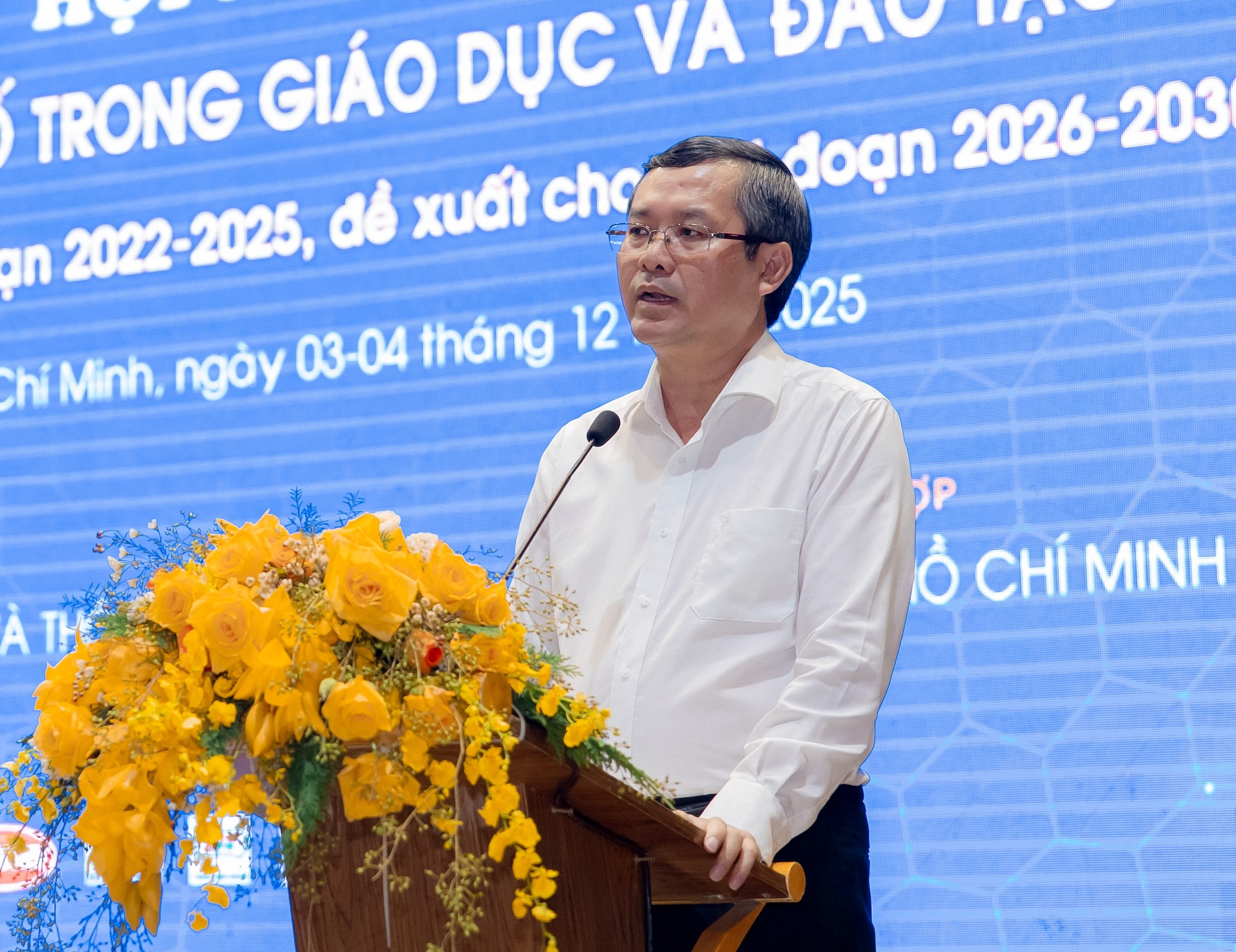
Digital transformation is also changing school management. Management systems such as LMS, SMAS, VnEdu… are widely used with full management subsystems. Non-cash payments are promoted, helping to publicize revenue and expenditure and reduce overcharging. Activities such as building educational plans, automatic timetable arrangement, professional activities and online meetings have become popular.
In teaching, digital technology and AI promote methodological innovation. Virtual classrooms, digital learning materials and AI-based learning data analysis help increase flexibility, personalization and shift the teaching and learning process from transmission to organization of activities. In the 2022-2025 period, general education will complete 10/19 digital transformation goals; higher education will complete 4/13 goals ahead of schedule and basically achieve 6/13 remaining goals.
The Ministry of Education and Training assessed that the digital transformation process still faces many challenges such as lack of data synchronization, uneven digital capacity of teachers, lack of digital learning materials and the ability to personalize learning is not widespread.
3 decisive factors
Mr. Le Truong Tung, Chairman of the Board ofFPT University, believes that digital transformation only truly takes place when there are three fundamental changes: no cash, no paper, and moving towards no human use in many work groups. These changes will force the entire system to operate based on data - the core foundation of digital transformation.
According to Mr. Hoang Cong Khe, Deputy General Director of Thanh Nam Technology Group Joint Stock Company, digital transformation is not simply about bringing devices into the classroom but about innovating pedagogical methods, management mechanisms and teaching-learning models, especially in the context of implementing the 2018 General Education Program towards developing learners' qualities and capacities, requiring interactive digital learning materials, smart management platforms, AI tools to analyze learning data and synchronous infrastructure to realize personalized education.
New requirements include highly interactive digital learning materials, school management platforms, AI-powered personalization, and synchronized digital infrastructure. Survey data shows that 76% of teachers have used AI and 87% of secondary school students are aware of the benefits of AI for learning, reflecting the real need for digital education solutions.

The Department of General Education proposed 5 groups of solutions by 2030: Localities proactively arrange information technology infrastructure resources; Build a general education database linked with population data and ensure information security; Develop smart education and school platforms, complete digital transcripts according to personal identification codes; Connect education data with the labor market; improve digital capacity and artificial intelligence standards for teachers and students and issue general education AI programs.
These solutions are expected to create a foundation for in-depth, synchronous, and effective digital transformation in education, contributing to building a national digital education ecosystem, meeting the requirements of human resource development in the new context.
Source: https://vietnamnet.vn/bo-gd-dt-da-tich-hop-hoc-ba-so-vao-vneid-de-phuc-vu-tuyen-sinh-2469317.html


![[Photo] Cat Ba - Green island paradise](/_next/image?url=https%3A%2F%2Fvphoto.vietnam.vn%2Fthumb%2F1200x675%2Fvietnam%2Fresource%2FIMAGE%2F2025%2F12%2F04%2F1764821844074_ndo_br_1-dcbthienduongxanh638-jpg.webp&w=3840&q=75)


















































![[VIMC 40 days of lightning speed] Hai Phong Port determined to break through, reaching the target of 2 million TEUs by 2025](https://vphoto.vietnam.vn/thumb/402x226/vietnam/resource/IMAGE/2025/12/04/1764816441820_chp_4-12-25.jpeg)










































Comment (0)