

The "Information and Communication Technology Infrastructure Planning for the period 2021-2030, with a vision to 2050," approved by the Prime Minister in January 2024, has identified the development direction for broadband telecommunications networks ensuring high capacity, high speed, and modern technology, with widely integrated Internet of Things infrastructure to ensure harmonious development and effectively serve digital transformation, digital government, digital economy , digital society, and national security and defense.
Recognizing the importance of digital infrastructure and telecommunications infrastructure in building a digital government, developing a digital economy, and a digital society in Vietnam, the Ministry of Information and Communications has consistently directed telecommunications enterprises to accelerate the development of digital infrastructure to serve the national digital transformation. As of the end of May 2024, 81.7% of households used fiber optic broadband internet, and 100% of communes, wards, and towns were connected to fiber optic internet. 4G mobile broadband internet coverage has reached villages and hamlets, meeting national service quality standards.
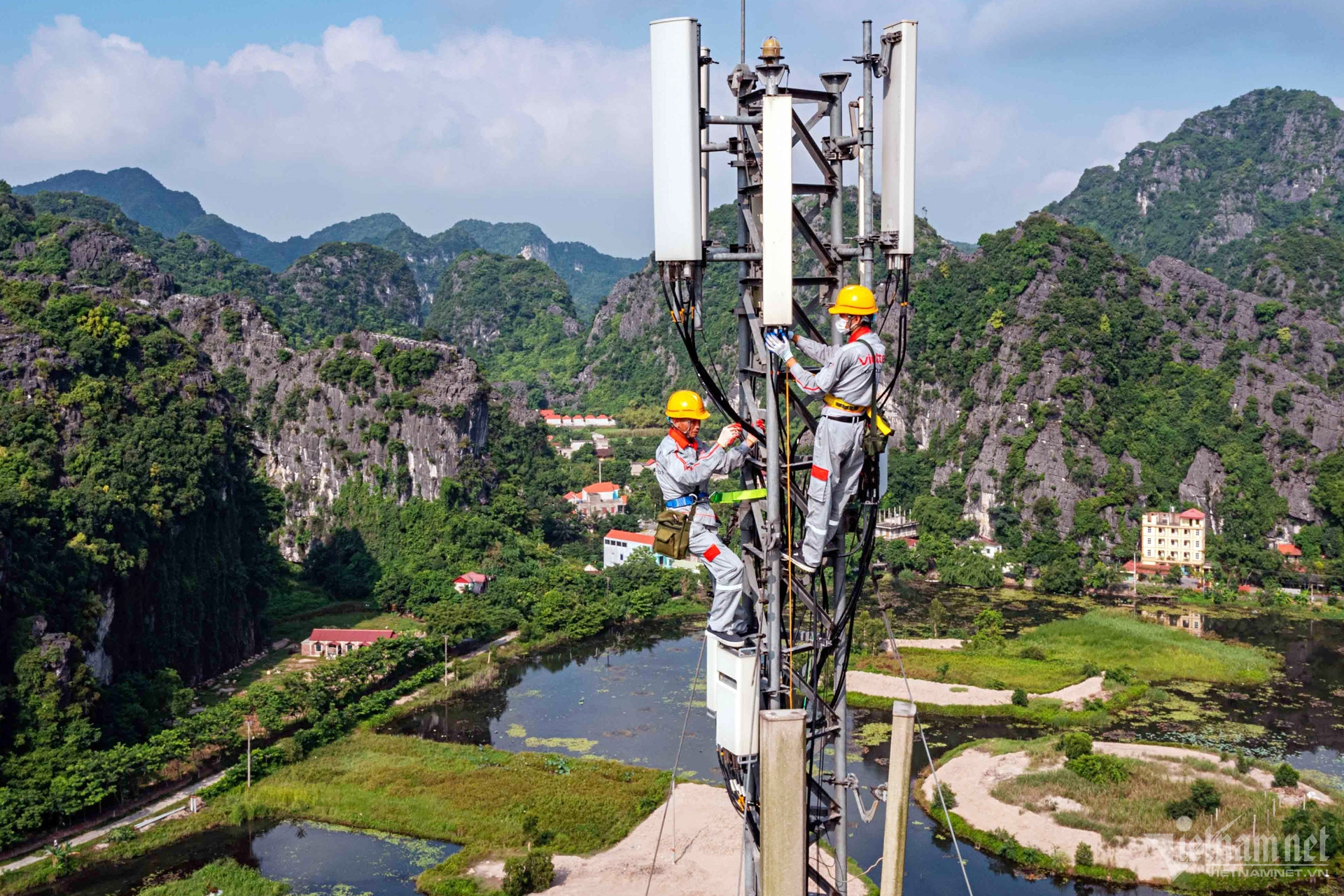
However, according to feedback from some local Departments of Information and Communications, in the context of telecommunications enterprises promoting the development of digital infrastructure and the early commercialization of 5G, the development and management of telecommunications infrastructure, especially passive telecommunications technical infrastructure, is facing a number of difficulties.
Specifically, in some localities, certain individuals and groups are opposing and obstructing the installation of new mobile communication base stations (BTS). According to an analysis by the Telecommunications Department (Ministry of Information and Communications), the main reason is that these individuals and groups have not fully understood the importance of telecommunications infrastructure for socio-economic development.
To guide localities in implementing the new regulations of the 2023 Telecommunications Law, which will take effect from July 1, 2024, and to address difficulties in developing telecommunications infrastructure in localities, the Ministry of Information and Communications has officially requested the People's Committees of provinces and centrally-administered cities to create favorable conditions and support the development of telecommunications infrastructure.
In a recent document sent to the People's Committees of provinces and centrally-administered cities, the Ministry of Information and Communications clearly stated that telecommunications is a technical and service industry belonging to the infrastructure of the national economy, and at the same time is an important driving force for socio-economic development, contributing to improving people's lives and ensuring national defense and security.
The Telecommunications Law of 2023, effective from July 1, 2024, stipulates: “Creating conditions for organizations and individuals from all economic sectors to participate in investment and business in telecommunications to develop universal broadband telecommunications infrastructure, data centers, and cloud computing in a sustainable and modern direction; forming digital infrastructure to meet the requirements of digital economic and social development, contributing to ensuring national defense and security and improving the quality of life of the people.”
The 2023 Telecommunications Law also stipulates that “Ensuring the safety of telecommunications infrastructure, network information security, and information security is the responsibility of all agencies, organizations, and individuals. In case of detecting acts that obstruct lawful construction, acts of sabotage, or infringement of telecommunications infrastructure, agencies, organizations, and individuals are responsible for promptly notifying the People's Committee at the commune level or the nearest police agency ”; “The Ministry of National Defense, the Ministry of Public Security , People's Committees at all levels, and relevant agencies, within their respective duties and powers, are responsible for protecting the safety of telecommunications infrastructure and handling acts that obstruct lawful construction, acts of sabotage, or infringement of telecommunications infrastructure.”
Therefore, the Ministry of Information and Communications requests the People's Committees of provinces and cities to direct the People's Committees at the district and commune levels and relevant agencies to protect telecommunications infrastructure and handle acts that obstruct legitimate construction, acts of sabotage, and violations of telecommunications infrastructure. The handling of violations related to ensuring the safety of telecommunications infrastructure is regulated in Clause 3, Article 42 of Government Decree 15 of 2020.
The People's Committees of provinces and cities are also requested to direct the dissemination of information to the public about the World Health Organization's (WHO) conclusion that there is no evidence to suggest that electromagnetic waves from BTS stations can affect people's health. At the same time, they should support the construction and development of BTS stations in particular, and the development of telecommunications infrastructure in general, to serve the development of the digital economy, digital society, and digital government.
| The Vietnam Telecommunications Infrastructure Development Plan for the period 2024-2025 aims to ensure that by the end of 2025, all more than 27 million households nationwide will have access to fiber optic internet when needed; 100% of village cultural centers will have access to the national power grid and broadband fiber optic internet; and 100% of villages with weak signal coverage and those already connected to the national power grid will have mobile broadband coverage. According to statistics, there are currently more than 5.4 million households without fiber optic internet; 2,052 villages not located in particularly disadvantaged areas, with access to the national power grid, lack broadband fiber optic internet connection to their cultural centers; and 230 villages not located in particularly disadvantaged areas, with access to the national power grid, lack mobile broadband coverage. |

Source: https://vietnamnet.vn/bo-tt-tt-de-nghi-cac-dia-phuong-tao-dieu-kien-phat-trien-ha-tang-vien-thong-2294710.html















![[Video] Hue and Quang Ninh mark strong tourism growth](https://vphoto.vietnam.vn/thumb/402x226/vietnam/resource/IMAGE/2025/12/12/1765555481742_dung00-22-16-02still007-jpg.webp)
































































Comment (0)