

 |
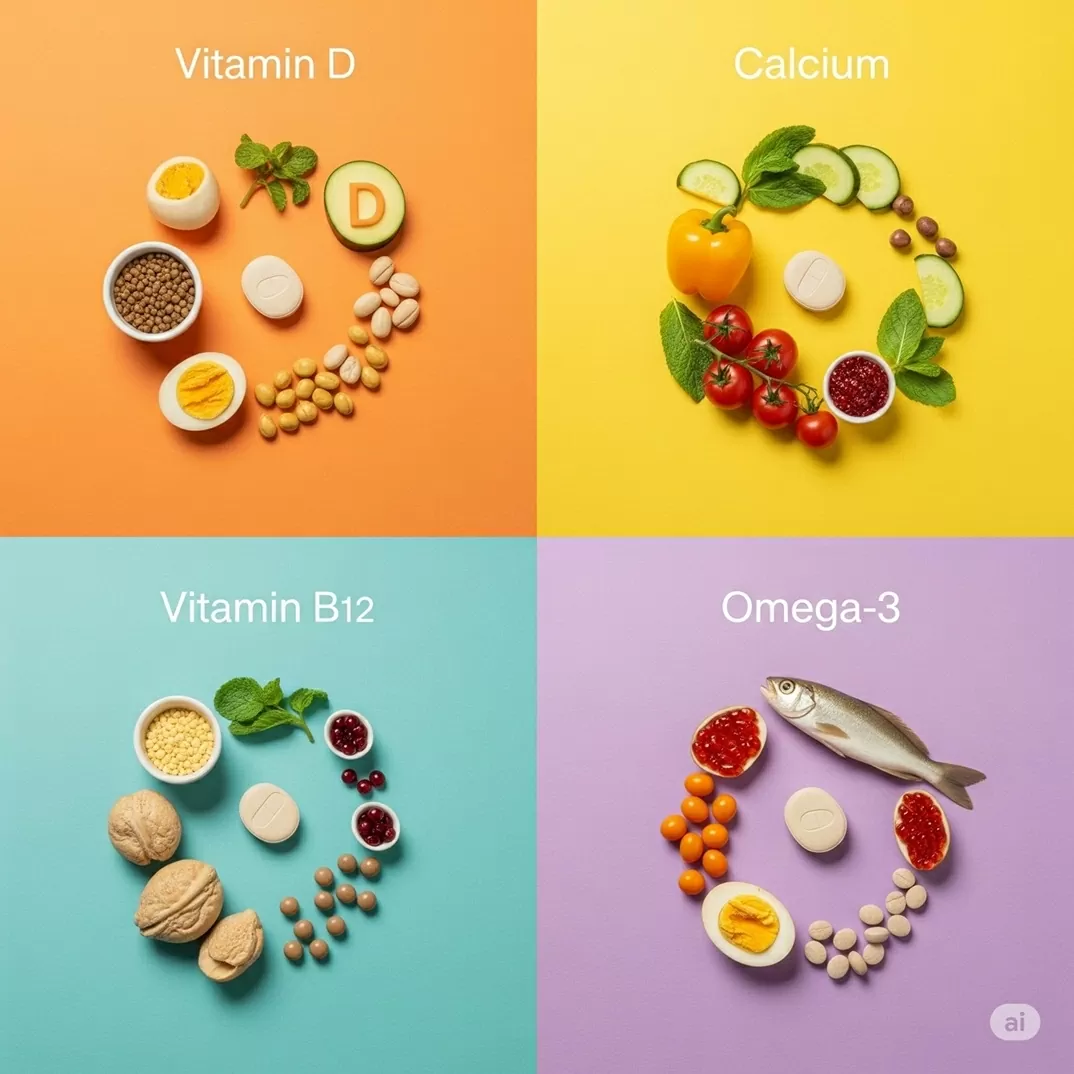
| Dietary supplements can support healthy aging but cannot replace a balanced diet and a healthy lifestyle. (Image created by AI) |
Turning 40 is a significant milestone – a time to set new goals, reflect on your health journey, and proactively take care of your body for the road ahead.
While a balanced diet is always the foundation, supplements can sometimes play a supporting role, helping to fill nutritional deficiencies that occur with age.
The following four dietary supplements are recommended by American nutrition experts to support healthy aging for people aged 40 and older, along with practical advice to improve overall health.
Vitamin D
Vitamin D plays a vital role in bone health, immune function, and muscle support, making it especially important as we age. Unfortunately, vitamin D deficiency is quite common, even among middle-aged women.
Holly Larson, MD, PhD, a registered dietitian in Ohio specializing in women's health, says: "If you're a woman over 40, declining estrogen levels make it harder for your body to absorb vitamin D. I recommend having your blood vitamin D levels checked annually and supplementing to maintain ideal levels."
Current guidelines indicate that consuming approximately 400-800 International Units, or 10-20 micrograms, of vitamin D will meet the needs of 97%-98% of healthy individuals.
Everyone's needs can be different, so it's best to talk to a healthcare professional to determine what's ideal for you.
Calcium
Calcium plays a vital role in maintaining strong bones and teeth; its importance increases with age—especially for women, who are at higher risk of osteoporosis after menopause.
Although milk, leafy green vegetables, and fortified foods are good sources of calcium, dietary intake doesn't always meet daily requirements.
Nutrition expert Drew Hemler says: "In cases where sufficient calcium intake is not possible through food, calcium supplements can help maintain bone strength and reduce the risk of fractures."
Hemler also noted that, for older adults, calcium citrate is preferred over calcium carbonate because of its better absorption even when stomach acid levels are reduced—a common condition in older age—and it can be taken with or without food.
Calcium supplements are especially helpful for people who have difficulty getting enough through their diet, such as those with lactose intolerance or those on restrictive diets.
Vitamin B12
Vitamin B12 plays a crucial role in red blood cell formation, nerve function, and DNA synthesis. According to nutritionist Tammie S. Brown, as we age, our ability to absorb certain nutrients—especially vitamin B12—begins to decline.
This may be due to reduced levels of stomach acid and endogenous factors – both of which are necessary for breaking down and absorbing this vitamin from food.
Nutrition expert Yvette Hill says that impaired vitamin B12 absorption can also be related to certain medications. Many common prescription drugs—including proton pump inhibitors, metformin, and some diuretics—can affect the absorption of essential micronutrients like B12.
Therefore, middle-aged and older adults should regularly discuss their current medications with their doctor and consider supplementing with vitamin B12 if necessary.
Omega-3
Omega-3s are a type of unsaturated fatty acid known for their anti-inflammatory properties, particularly beneficial for the heart and brain. The two main forms of omega-3, EPA and DHA, play a key role and are found abundantly in fatty fish such as salmon, mackerel, and sardines.
As we age, the risk of chronic diseases such as cardiovascular disease and cognitive decline also increases, making omega-3s an important part of a healthy aging plan.
Numerous studies have shown that adequate intake of EPA and DHA is associated with a reduced risk of Alzheimer's disease and cognitive decline. Additionally, omega-3s improve blood circulation by maintaining blood vessel elasticity and enhancing cardiovascular function.
To meet your omega-3 needs, you should eat at least two servings of fatty fish per week. If you don't eat fish regularly, you might consider supplementing with fish oil or omega-3s extracted from algae.
However, please consult your doctor before using it.
Other things to keep in mind at age 40
Taking care of your body isn't just about supplementing with vitamins or minerals. Here are some supplementary strategies to help you maintain lasting health as you enter middle age:
Prioritize diet first.
While supplements may support healthy aging, they cannot replace a balanced diet and a healthy lifestyle.
Expert Tammie S. Brown asserts: "Supplements should be supportive, not a replacement for a balanced diet. They are only truly necessary when a micronutrient deficiency is identified or when the diet is insufficient."
Exercise to increase musculoskeletal strength
Weight-bearing exercises such as weightlifting, planks, and squats help build and maintain muscle mass and bone density—two factors that gradually decline with age.
Limit alcohol consumption.
Alcohol can reduce the body's ability to absorb nutrients and increase inflammation—factors that raise the risk of chronic diseases and micronutrient deficiencies.
Eat plenty of fiber.
Fiber supports the digestive system and improves cardiovascular health. Include whole grains, vegetables, fruits, and legumes in your daily meals.
Regular health check-ups
Don't overlook important tests such as blood pressure measurement, blood lipid checks, bone density measurements, etc., to detect and manage common health problems in middle age early.
Personalize your healthcare plan.
Everyone has different needs, and this isn't just about age. Expert Monique Richard notes: "Choosing which supplements to take should be based on individual goals, current health status, access to resources, genetics, and many other factors – not just age."
Source: https://baoquocte.vn/bon-thuc-pham-bo-sung-va-nhung-dieu-can-luu-y-cho-do-tuoi-40-tro-len-323602.html


![[Photo] Closing Ceremony of the 10th Session of the 15th National Assembly](/_next/image?url=https%3A%2F%2Fvphoto.vietnam.vn%2Fthumb%2F1200x675%2Fvietnam%2Fresource%2FIMAGE%2F2025%2F12%2F11%2F1765448959967_image-1437-jpg.webp&w=3840&q=75)




















































![[OFFICIAL] MISA GROUP ANNOUNCES ITS PIONEERING BRAND POSITIONING IN BUILDING AGENTIC AI FOR BUSINESSES, HOUSEHOLDS, AND THE GOVERNMENT](https://vphoto.vietnam.vn/thumb/402x226/vietnam/resource/IMAGE/2025/12/11/1765444754256_agentic-ai_postfb-scaled.png)

















































Comment (0)