

Frozen tuna and tuna loin/meat dominate the market
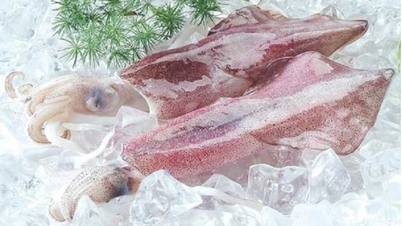
According to the Vietnam Association of Seafood Exporters and Producers (VASEP), in the past 3 years,the Dutch market has recorded a clear increase in tuna imports, reflecting a strong recovery in seafood demand in the country, which is considered an important gateway to Europe. According to statistics from the International Trade Center (ITC), tuna imports from the Netherlands in the first 8 months of 2025 increased by 24% over the same period, showing that import demand is continuing to expand.
Notably, the consumption of MSC-certified sustainable tuna in the Netherlands has also increased sharply, reaching more than 10,900 tonnes in 2023/2024, mainly from skipjack tuna products. This reflects the shifting trend of European consumers: preferring seafood products that are sustainably exploited, have a clear origin and meet strict environmental standards.
In that context, Vietnam, one of the important tuna suppliers in Asia, continues to maintain its presence in the Dutch market, especially in the frozen tuna and tuna loin/meat product groups. Many Vietnamese enterprises have exported stably to this market in recent years, contributing to maintaining Vietnam's image on the tuna supply map for the EU.
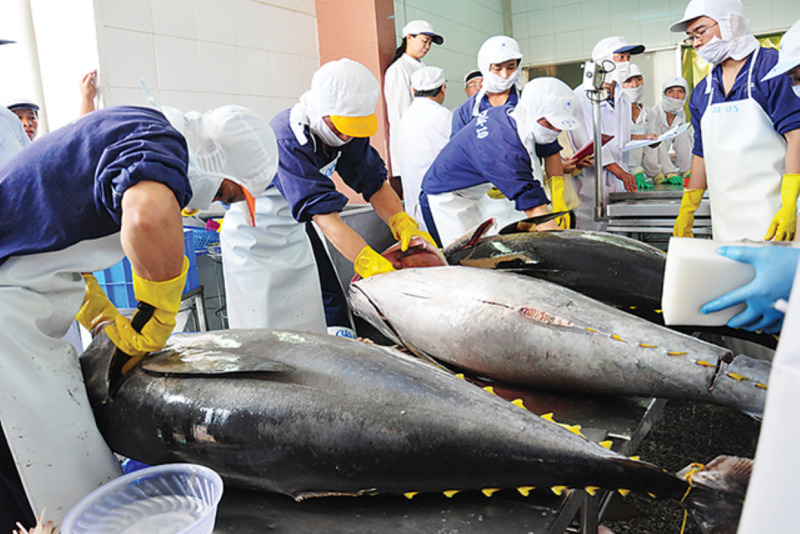
Vietnam's tuna exports to the Netherlands increased sharply.
However, the reality shows that Vietnam's tuna exports to the Netherlands have not achieved the expected growth rate. In recent years, although the EVFTA has created attractive tariff incentives, Vietnam's tuna exports to the Netherlands have decreased in both volume and value, with canned tuna products being most clearly affected.
The reason is rising transportation costs, causing European importers to cut down on goods going through Dutch ports in favor of importing directly from more competitive sources.
In addition, increasingly fierce competition from Ecuador, the Philippines, Mauritius, countries that are dominating, or tariff advantages in the processed and canned tuna segment have somewhat narrowed Vietnam's market share in the Netherlands. Meanwhile, new requirements on sustainability certification, transparent production processes, traceability and European food safety standards are increasingly tightening, creating considerable pressure on domestic enterprises.
"However, the opportunities for Vietnam are not small. Currently, the demand for frozen tuna loins, yellowfin tuna and fillet products is increasing in the Netherlands. This is a segment where Vietnam has long-standing strengths, especially in deep processing capabilities, ensuring stable quality and the ability to meet large orders. If Vietnamese enterprises soon shift their production model towards sustainability, increase the application of certifications such as MSC, improve cold storage technology and optimize logistics costs, their competitive advantage in the Netherlands will be significantly improved," said the Vietnam Association of Seafood Exporters and Producers (VASEP).
Great prospects from the Dutch market
The Vietnam Association of Seafood Exporters and Producers (VASEP) also assessed that the outlook for next year shows that Dutch tuna imports are likely to continue to increase as the market increasingly prefers convenient, quick-to-process and environmentally certified products. Demand from retail chains, restaurants and processed food manufacturers in the Netherlands is increasing and is forecast to expand further in the next 1-2 years.
This means that Vietnam can completely increase its market share if it has the right strategy, especially in the frozen tuna segment, where Vietnamese businesses have a relatively strong position.
If Vietnam maintains its old way of doing things and cannot proactively source raw materials domestically, it will be difficult for it to compete in the race to supply tuna to the EU. However, if it proactively changes technology, increases added value, takes advantage of the EVFTA and promotes sustainability standards, the potential to recover market share in the Netherlands is still very open.
"In the context of the Dutch market being restructured towards promoting transparency, quality and sustainability, Vietnamese enterprises need to grasp this "new wind" early to avoid being left behind. Because, for the tuna industry, a sector that brings in hundreds of millions of USD in export value each year, the Netherlands is not only a consumer market, but also a door for Vietnam to penetrate deeper into the EU market," informed the Vietnam Association of Seafood Exporters and Producers (VASEP).
In 2024, Vietnam's tuna exports will reach nearly 1 billion USD, an increase of 17% compared to 2023. Of which, the United States is the largest importer of Vietnamese tuna (388 million USD); followed by the EU (197 million USD); Israel (65 million USD); Russia (45 million USD); Canada (39 million USD).
Dieu Linh


![[Photo] Cat Ba - Green island paradise](/_next/image?url=https%3A%2F%2Fvphoto.vietnam.vn%2Fthumb%2F1200x675%2Fvietnam%2Fresource%2FIMAGE%2F2025%2F12%2F04%2F1764821844074_ndo_br_1-dcbthienduongxanh638-jpg.webp&w=3840&q=75)
















































![[VIMC 40 days of lightning speed] Da Nang Port: Unity - Lightning speed - Breakthrough to the finish line](https://vphoto.vietnam.vn/thumb/402x226/vietnam/resource/IMAGE/2025/12/04/1764833540882_cdn_4-12-25.jpeg)










































Comment (0)