

Representatives from the consulates stated that their countries are ready to cooperate with Vietnam in developing artificial intelligence (AI) technology, and emphasized the need for responsible AI development.
On September 22nd, the Vietnam Artificial Intelligence Festival 2023 (AI4VN), themed "Power for Life," officially opened in Ho Chi Minh City. The event was directed by the Ministry of Science and Technology , organized by VnExpress newspaper, and collaborated with the Faculty, Institute, and University of Information and Communication Technology Club (FISU).
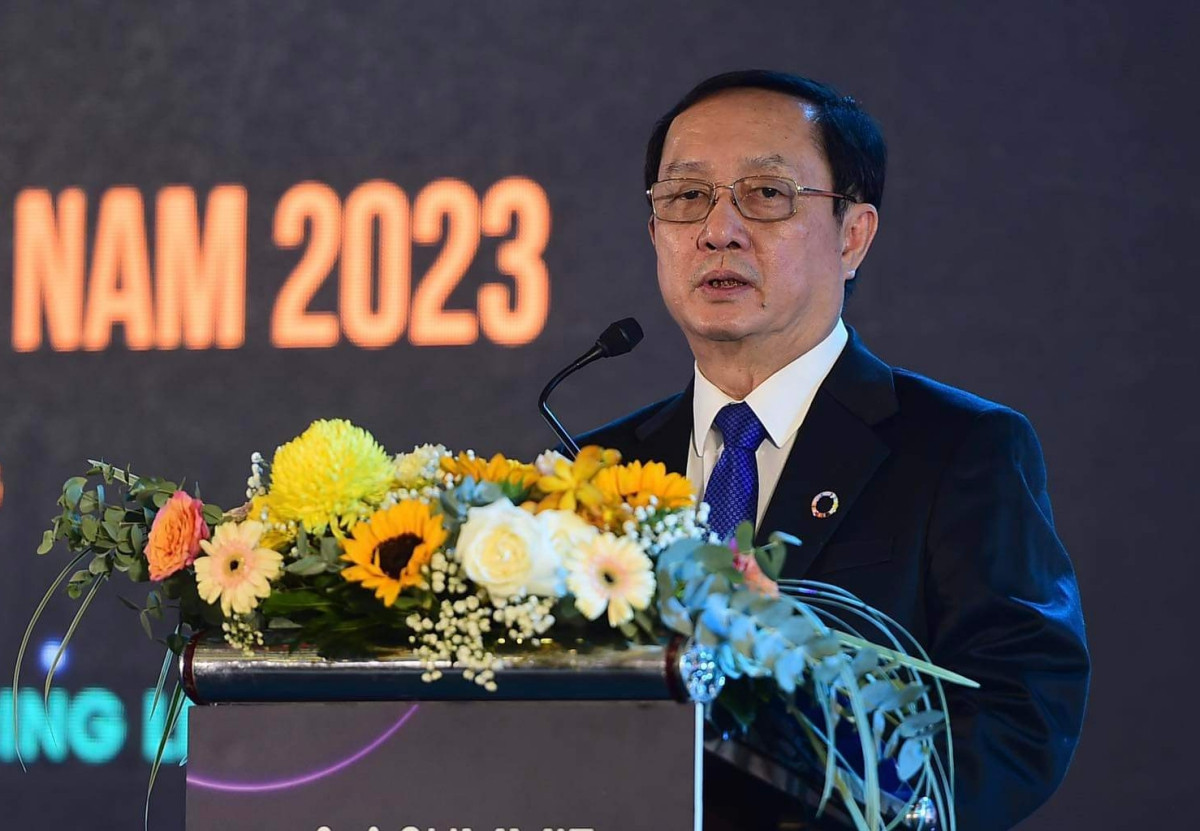
Minister of Science and Technology Huynh Thanh Dat. Photo: Thanh Tung
In his opening remarks, Mr. Huynh Thanh Dat, Minister of Science and Technology, stated that AI has become one of the key technologies of the Fourth Industrial Revolution, receiving increasing attention and investment, and contributing significantly to the economic and social development of nations. Recently, AI has shown remarkable progress, with numerous products and applications based on this technology emerging, attracting significant public interest, especially in artificial intelligence-generated products.
In Vietnam, on January 26, 2021, the Prime Minister issued a Decision on the "National Strategy for Research, Development, and Application of Artificial Intelligence until 2030". The strategy sets the goal of "promoting research, development, and application of artificial intelligence, making artificial intelligence a key technology sector in Vietnam's Industry 4.0 revolution," contributing to economic and social development and gradually making Vietnam a leading country in AI research, development, and application in the region and the world.
According to Minister Huynh Thanh Dat , after more than two years of implementing the Artificial Intelligence Strategy, Vietnam has achieved some very encouraging initial results. These results are reflected in the "Government AI Readiness Index" report, conducted by Oxford Insights in collaboration with the Canadian Centre for International Development Studies. In 2022, Vietnam ranked 55th out of 181 countries worldwide, an increase of 7 places compared to 2021.
Minister Huynh Thanh Dat stated that, in the coming period, Vietnam will continue to prepare a workforce for AI development to contribute to promoting the development of a sustainable AI ecosystem, aiming to achieve the goal of making Vietnam a center for innovation and development of AI solutions and applications in the ASEAN region and the world.
Notably, at the event, representatives from various consulates shared insights on the future development of AI technology, expressing their willingness to cooperate with Vietnam to promote its growth.
Ms. Emily Hamblin, Consul General of the United Kingdom in Ho Chi Minh City, stated that the UK has prioritized the development of five key technology areas, including AI. According to her, AI will continue to experience breakthroughs in the coming years, and this technology will create opportunities for businesses, governments, and the public sector.
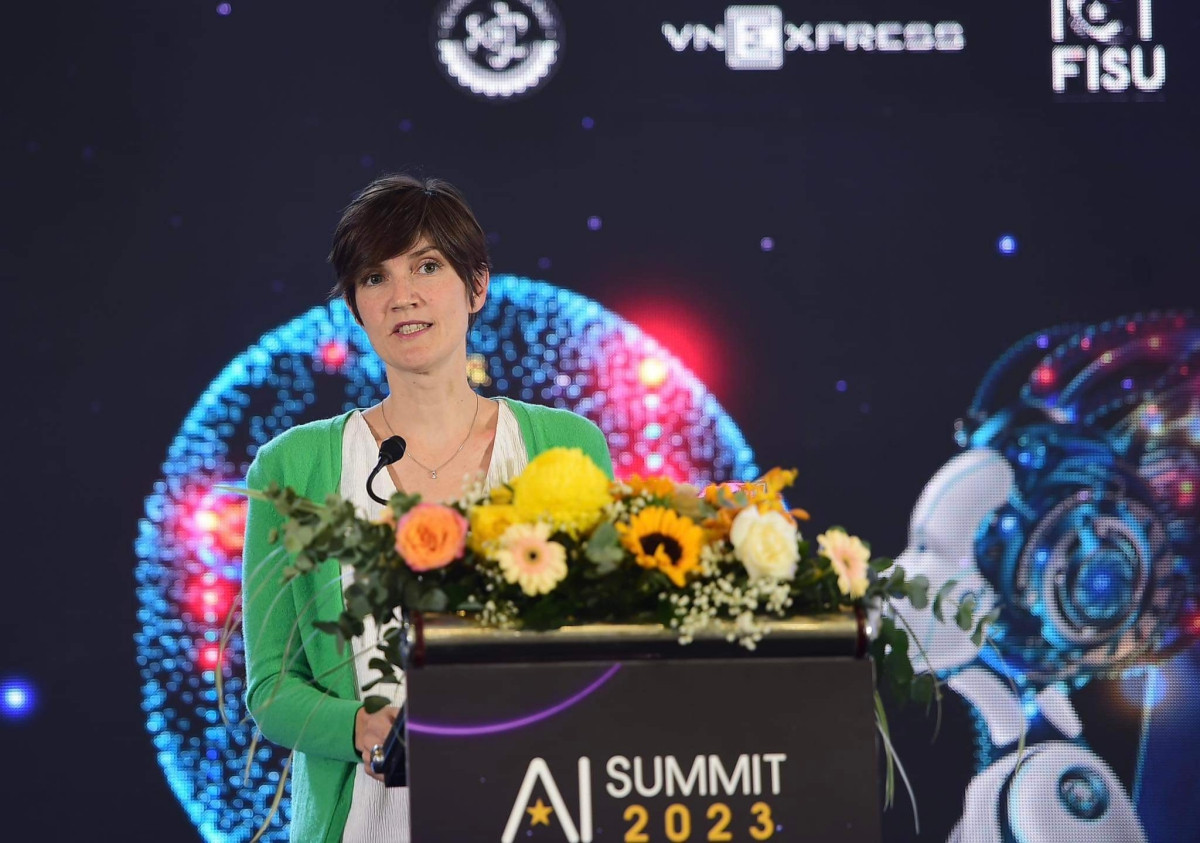
Ms. Emily Hamblin, Consul General of the United Kingdom in Ho Chi Minh City. Photo: Thanh Tung
Assessing the development of AI in Vietnam, Emily Hamblin shared that, after visiting the exhibition booths at the event, it is evident that the Vietnamese technology industry is developing in the field of AI, with the participation of numerous businesses and this technology having a strong impact on all aspects, from government and public administration to commerce, healthcare, and education.
However, she argued that, despite its advantages, AI also brings more complex risks, requiring countries to balance development with ethics and regulation. Ethical barriers will impact user trust, in addition to data and market barriers.
Graham Harlow, Acting Consul General of the United States in Ho Chi Minh City, also stated that recently, Vietnam and the US have had the opportunity to jointly promote AI technology. Microsoft and Trusting Social are collaborating to develop comprehensive AI-based solutions suitable for Vietnam. Nvidia is partnering with FPT, Viettel, and VinGroup to deploy AI in cloud computing, automotive, and healthcare.
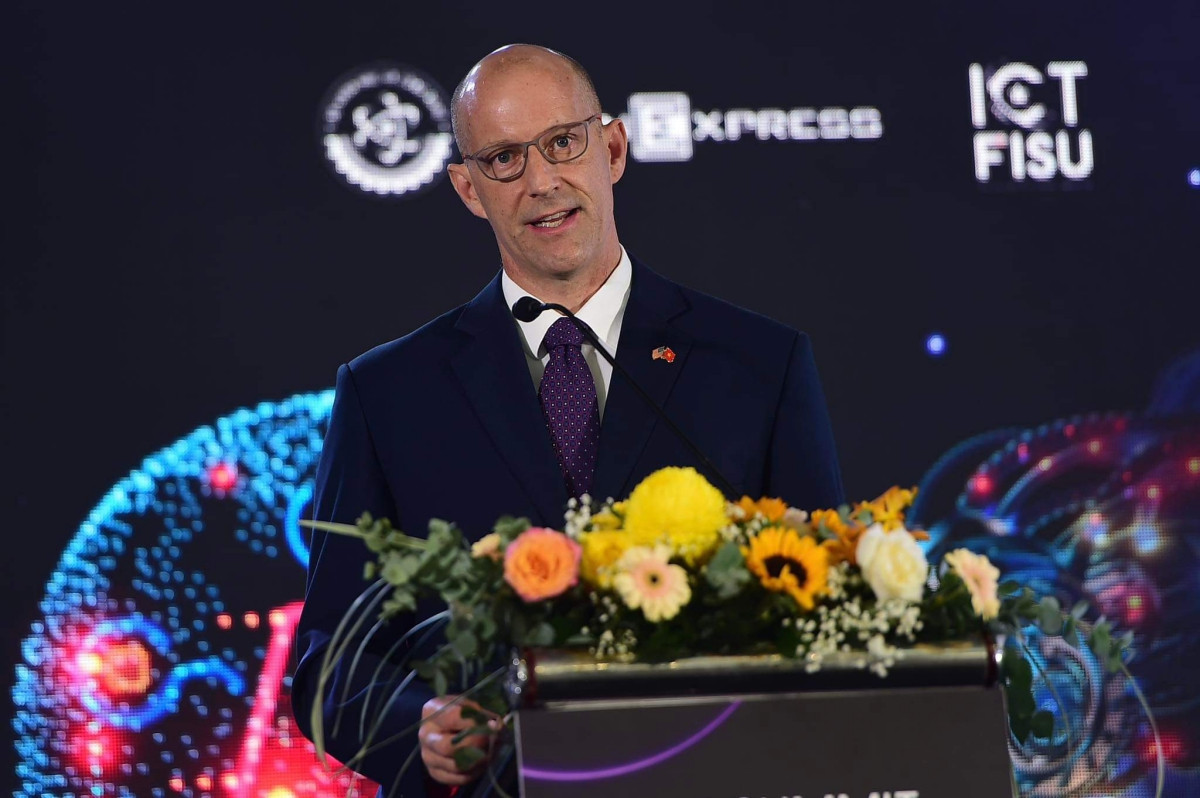
Graham Harlow, Acting Consul General of the United States in Ho Chi Minh City. Photo: Thanh Tung
"The State Department and U.S. businesses will continue to cooperate with countries, including Vietnam, to establish an international framework for the management, development, and use of AI globally," Graham Harlow shared.
According to the Acting Consul General of the US Consulate in Ho Chi Minh City, AI is at the heart of the global technological revolution in the coming years, and many advances in this technology have already been applied in medicine, education, and other fields. However, he believes that standards are needed for the responsible development and use of AI. Furthermore, through collaborative research, AI should be used to improve work efficiency, not to control humans. A set of principles for AI development is needed, with a focus on humans, and countries should promote responsible AI development.
Mr. Yang Ki Sung, Counselor for Science, Information Technology and Communications at the Korean Embassy in Vietnam, also shared that Vietnam is emerging as a competitive country in AI development, and cooperation between Korea and Vietnam to integrate this technology into daily life will create successes in the future.
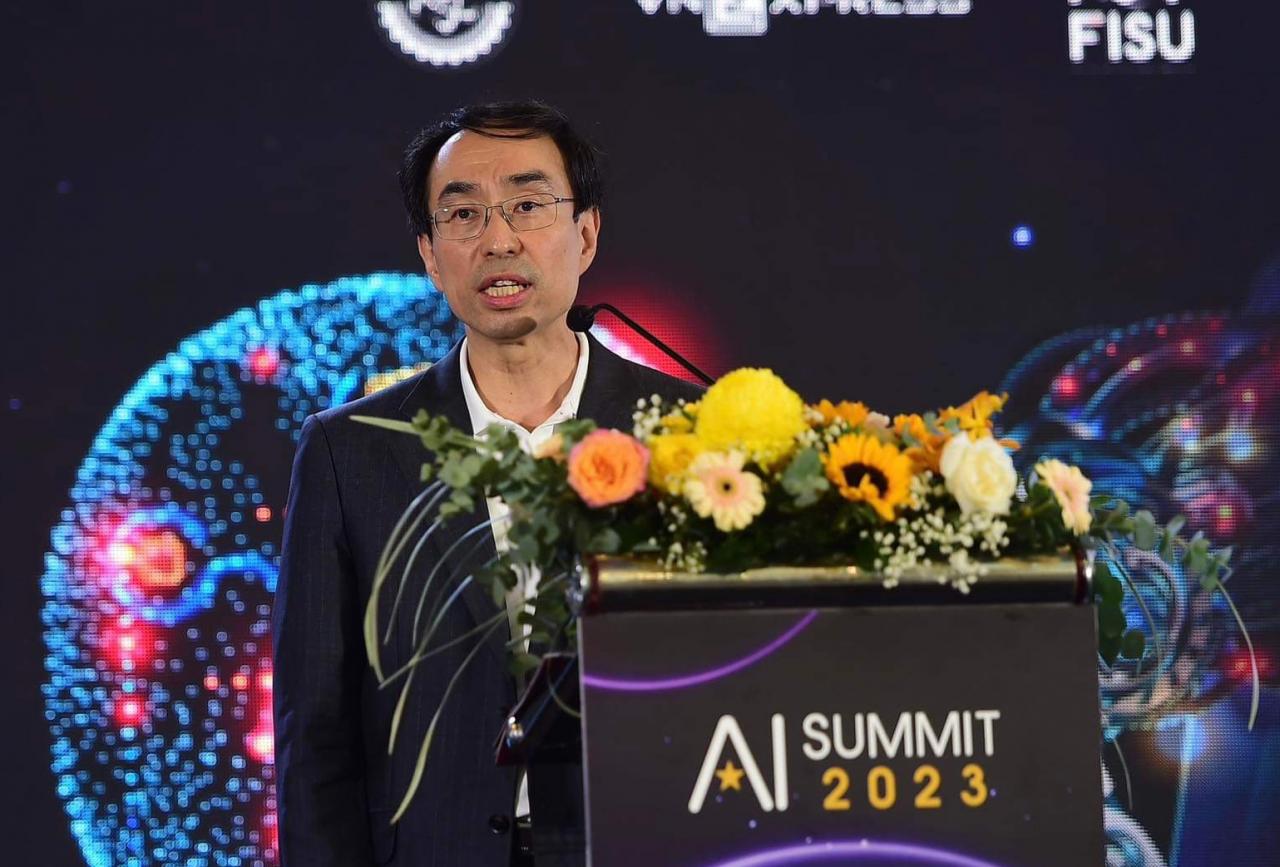
Mr. Yang Ki Sung, Counselor for Science, Information Technology and Communications, Embassy of the Republic of Korea in Vietnam. Photo: Thanh Tung
Representing the Australian science and technology agency, Mr. Kim Wimbush, CSIRO Counsellor and Director of the Aus4Innovation program, affirmed that Australia is always ready to cooperate with Vietnam on AI, especially in the fields of healthcare, environmental management, and smart agriculture development.
However, Kim Wimbush also acknowledged that AI brings challenges and risks, so establishing rules for its use to make it more reliable is crucial.
He added that Australia, with its extensive international involvement and influence in the field of AI, is ready to support Vietnam in developing this technology and connecting Vietnam with networks across Asia.
vietnamnet.vn


![[Photo] Closing Ceremony of the 10th Session of the 15th National Assembly](/_next/image?url=https%3A%2F%2Fvphoto.vietnam.vn%2Fthumb%2F1200x675%2Fvietnam%2Fresource%2FIMAGE%2F2025%2F12%2F11%2F1765448959967_image-1437-jpg.webp&w=3840&q=75)




































![[OFFICIAL] MISA GROUP ANNOUNCES ITS PIONEERING BRAND POSITIONING IN BUILDING AGENTIC AI FOR BUSINESSES, HOUSEHOLDS, AND THE GOVERNMENT](https://vphoto.vietnam.vn/thumb/402x226/vietnam/resource/IMAGE/2025/12/11/1765444754256_agentic-ai_postfb-scaled.png)



































Comment (0)