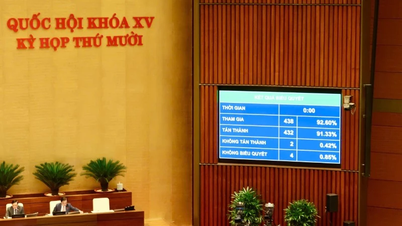
One of the issues that many National Assembly deputies were concerned about and commented on during this morning's discussion of the draft Law on Road Traffic Order and Safety was the provision "prohibiting the act of driving a vehicle on public roads while having alcohol in the blood or breath." On the morning of March 27th, continuing the program of the 5th National Assembly Delegates' Conference, Vice
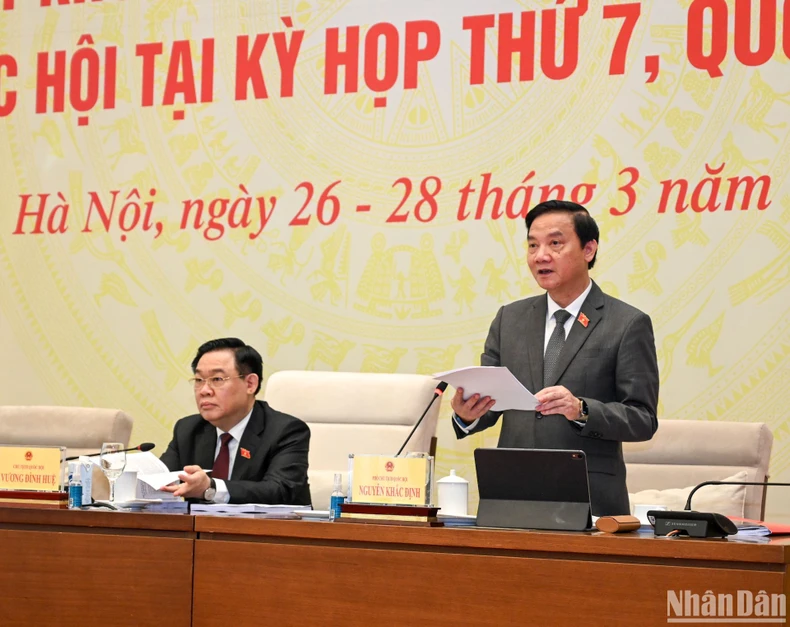
Chairman of the National Assembly Nguyen Khac Dinh chaired the discussion on the draft Law on Road Traffic Order and Safety. One of the issues that many deputies were concerned about and commented on during the discussion was the provision "prohibiting the act of driving a vehicle on public roads while having alcohol in the blood or breath" in Clause 1, Article 9 of the draft Law.
Two options and their advantages and disadvantages: In a report on some major issues of the draft Law submitted to the conference, the Standing Committee of the National Defense and Security Committee stated that, during discussions at the 6th Session, the majority of delegates agreed with prohibiting the act of driving a vehicle on public roads with alcohol in the blood or breath. However, some delegates also proposed setting a minimum limit on the blood and breath alcohol concentration for drivers.
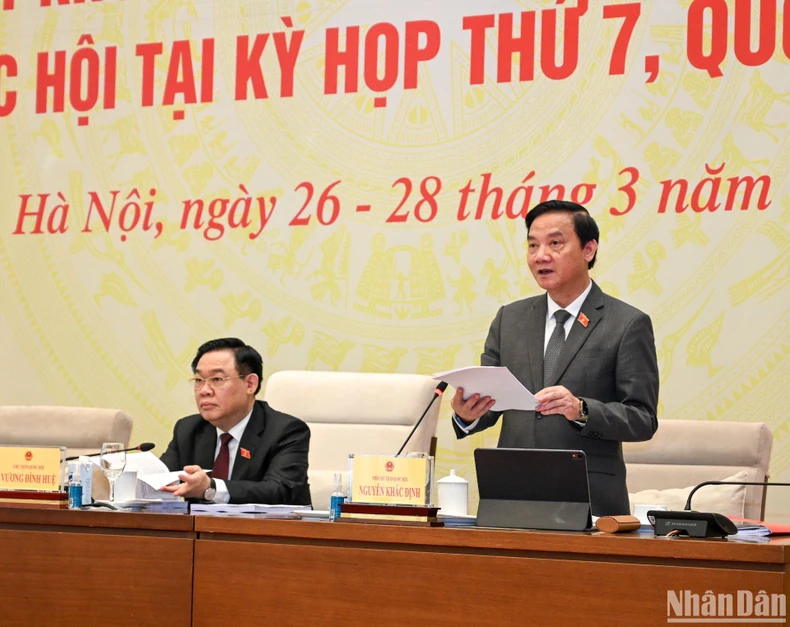 |
Deputy Speaker of the National Assembly Nguyen Khac Dinh chaired the discussion on the draft Law on Road Traffic Order and Safety on the morning of March 27. (Photo: DUY LINH) |
The agency in charge of the review outlined the advantages and disadvantages of both viewpoints. Accordingly, continuing this ban is one of the fundamental solutions contributing to changing the culture and habits of drinking alcohol, especially the belief that one should not drive after drinking. Forming a culture of "don't drink and drive" may be a long process, but it is appropriate given Vietnam's
economic , social, and traffic conditions. Therefore, it is necessary to continue promoting this culture, combining it with other measures to build a healthy living environment and a lifestyle not dependent on the consumption of alcoholic beverages. On the other hand, according to the report, the absolute ban on blood alcohol concentration is more feasible than the regulation allowing a certain level of alcohol concentration. With an absolute ban on blood alcohol concentration, people will not drink alcohol before driving. If regulations set a specific threshold, it will be difficult for citizens to determine how much to drink and how to drink below that threshold, and it will also be difficult for authorities to enforce the rules. Furthermore, having a threshold makes it easy for people to be pressured to drink, and once they have drunk, they are easily stimulated, making it difficult to control themselves and stop. Besides, setting a threshold has many limitations, including wasting the efforts and money of the State and the people, especially after our diligent efforts in propaganda, inspection, and handling of violations, gradually forming a culture of "don't drink and drive." The report clearly states that the Standing Committee of the verification agency agrees with the Government's proposal to absolutely prohibit alcohol concentration in drivers of road vehicles. However, based on the suggestions of some delegates, the Standing Committee has designed two options to report to the National Assembly Standing Committee at its 31st session (March 2024).
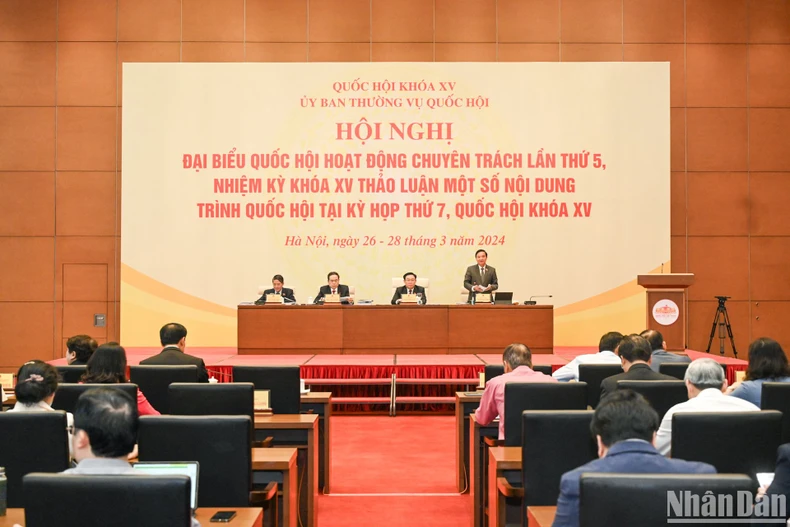 |
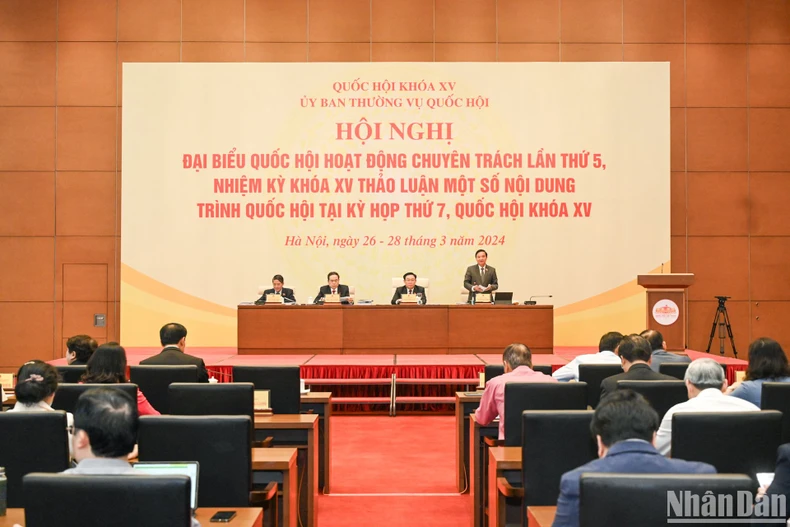
The scene at the discussion session. (Photo: DUY LINH) |
Option 1: Prohibit driving a vehicle on public roads with alcohol in the blood or breath (inheriting the provisions of Clause 6, Article 5 of the Law on Prevention and Control of Harmful Effects of Alcohol and Beer 2019, applicable to all types of road vehicles).
Option 2: Maintain the same regulations as the 2008 Road Traffic Law, prohibiting: “Driving a car, tractor, or specialized vehicle on the road with alcohol in the blood or breath. Driving a motorcycle or moped with a blood alcohol concentration exceeding 50 milligrams/100 milliliters of blood or 0.25 milligrams/1 liter of breath.” At the same time, the relevant regulations in Clause 6, Article 5 of the Law on Prevention and Control of Harmful Effects of Alcohol and Beer 2019 must be amended. At the 31st session, the Standing Committee of the National Assembly gave specific opinions on the two options above and unanimously agreed to propose choosing Option 1.
Further and more comprehensive impact assessment is needed. Speaking at the National Assembly's specialized delegates' conference this morning, delegate Nguyen Dai Thang (
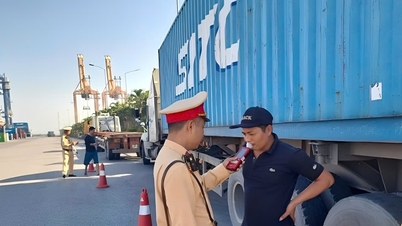
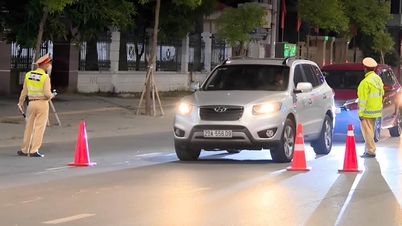
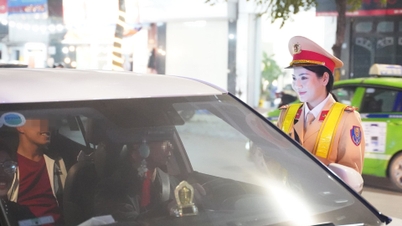
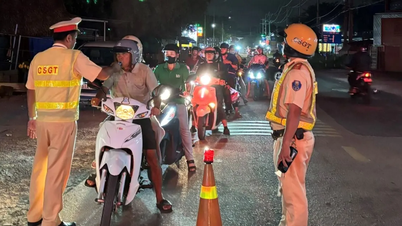
Hung Yen delegation) said that in the group discussion at the 6th session of the National Assembly, delegates suggested considering the need for a blood alcohol concentration threshold. However, after carefully evaluating the advantages and disadvantages, delegates currently agree with the regulation prohibiting the act of driving a vehicle on public roads with alcohol in the blood or breath. According to delegate Thang, in recent times, traffic police have intensified inspections and handling of alcohol-related violations, demonstrating strictness, with no forbidden areas and no exceptions, thereby contributing to reducing traffic accidents.
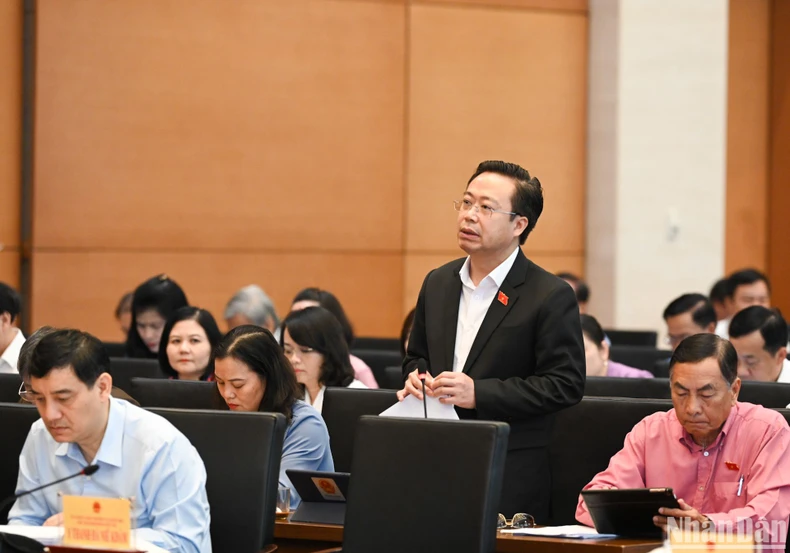 |
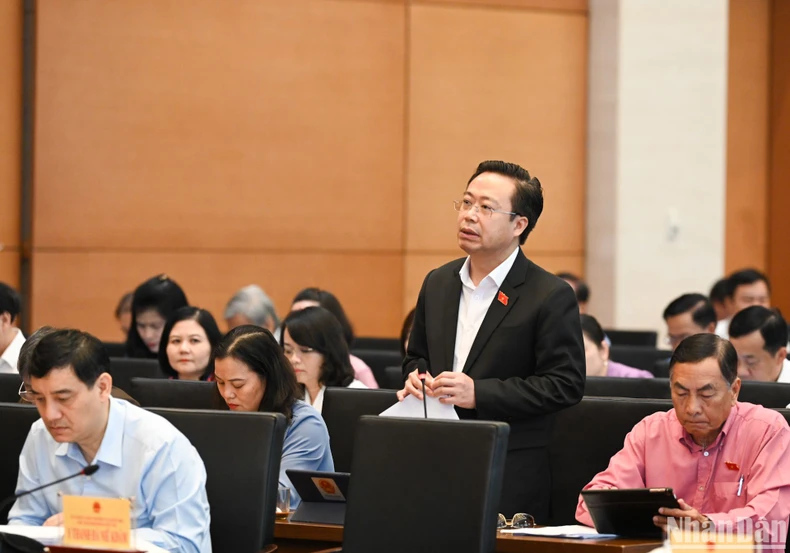
Delegate Nguyen Dai Thang (from Hung Yen province) participates in the discussion. (Photo: DUY LINH) |
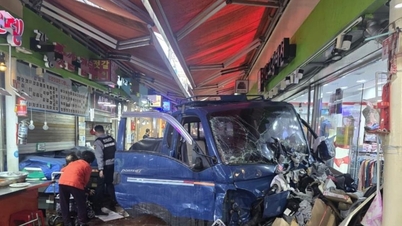
“According to official data, in 2023, traffic accidents related to alcohol consumption decreased by 25%, the number of deaths decreased by 50%, and the number of injuries decreased by 22% compared to the same period. With the principle that human life is paramount, the regulation prohibiting people from using alcohol while driving is necessary,” said the representative from Hung Yen province. Regarding the regulation that only penalizes violations of alcohol concentration limits, Representative Thang questioned: “Once you're sitting down to drink alcohol, how do we determine what constitutes drinking within the permissible limit?” Furthermore, according to the representative, while law enforcement has intensified enforcement against alcohol-related violations, people have gradually formed the habit of “if you drink alcohol, don't drive.” Discussing this issue, delegate Nguyen Minh Tam (
Quang Binh delegation) stated that, according to the explanatory report, the prohibition of driving a vehicle while under the influence of alcohol aims to prevent and reduce potential risks and damages caused by alcohol consumption while driving. Furthermore, there are many concrete statistics demonstrating the reality of traffic accidents related to alcohol. “Therefore, I agree with the regulation prohibiting driving a vehicle while under the influence of alcohol (this regulation inherits from Clause 6, Article 5 of the Law on Prevention and Control of the Harmful Effects of Alcohol in 2019, applicable to all types of road vehicles),” Ms. Tam said.
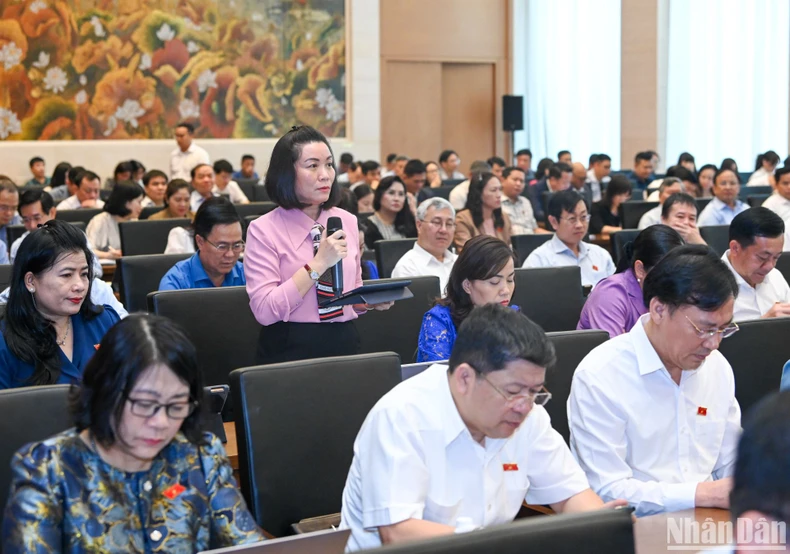 |
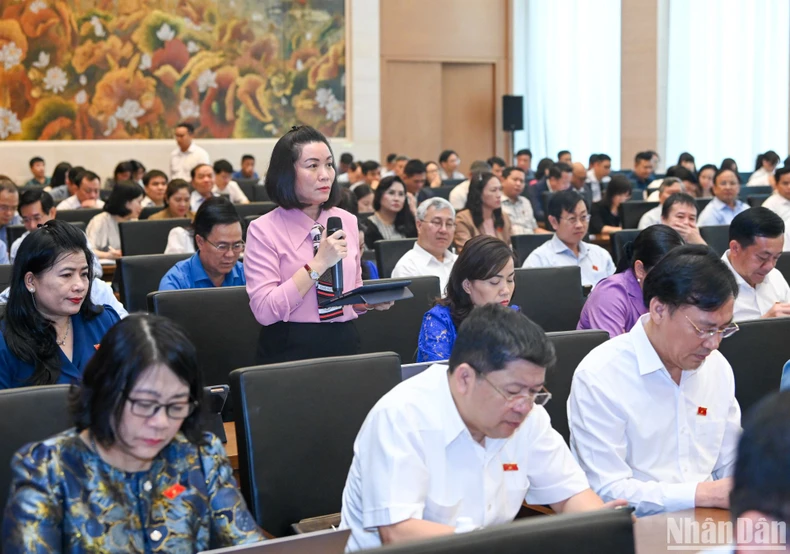
Representative Nguyen Minh Tam (Quang Binh delegation) expressed his agreement with the regulation prohibiting driving under the influence of alcohol. (Photo: DUY LINH) |
However, according to Representative Nguyen Minh Tam, the practice of alcohol consumption in Vietnam is considered a cultural trait and a habit of a segment of the population. Furthermore, the production, import, distribution, supply, and consumption of alcohol have contributed significantly to the state budget revenue; creating jobs and income for a portion of workers in alcohol production and business establishments. “Absolutely prohibiting the use of alcohol while driving will significantly reduce alcohol consumption and have a certain impact on cultural life, budget revenue, and workers' income,” the representative stated. Therefore, to increase persuasiveness, the representative suggested that the government should conduct a deeper and more comprehensive assessment of the impact of this policy. At the same time, research aimed at providing data to demonstrate a "permissible alcohol concentration limit" to control alcohol consumption while driving, as has been done in the past, is not feasible, does not reduce the number of traffic accidents, and makes it difficult to control the traffic accident situation. In contrast to the above delegates, delegate Pham Van Hoa (
Dong Thap delegation) argued that it is necessary to stipulate that violations of alcohol concentration limits should only be subject to penalties. “I think it’s not about stubbornly clinging to my subjective viewpoint. In reality, after parties or events, those with money use taxi services, while those without still drive themselves. This is especially true in rural areas, where many manual laborers travel by motorbike. A 100% zero alcohol level is impractical. In fact, after drinking one can of beer or one or two glasses of wine, one’s mind is still normal, and they can still drive. For example, if someone drank alcohol yesterday afternoon and still had alcohol in their system the next morning, being fined would be very unreasonable,” Representative Hoa shared his opinion.
People
source 






















































































Comment (0)