

According to economic experts, in order to develop the private economy, the State needs to accelerate reforms and improve institutions to create breakthroughs and promote the development of private enterprises.
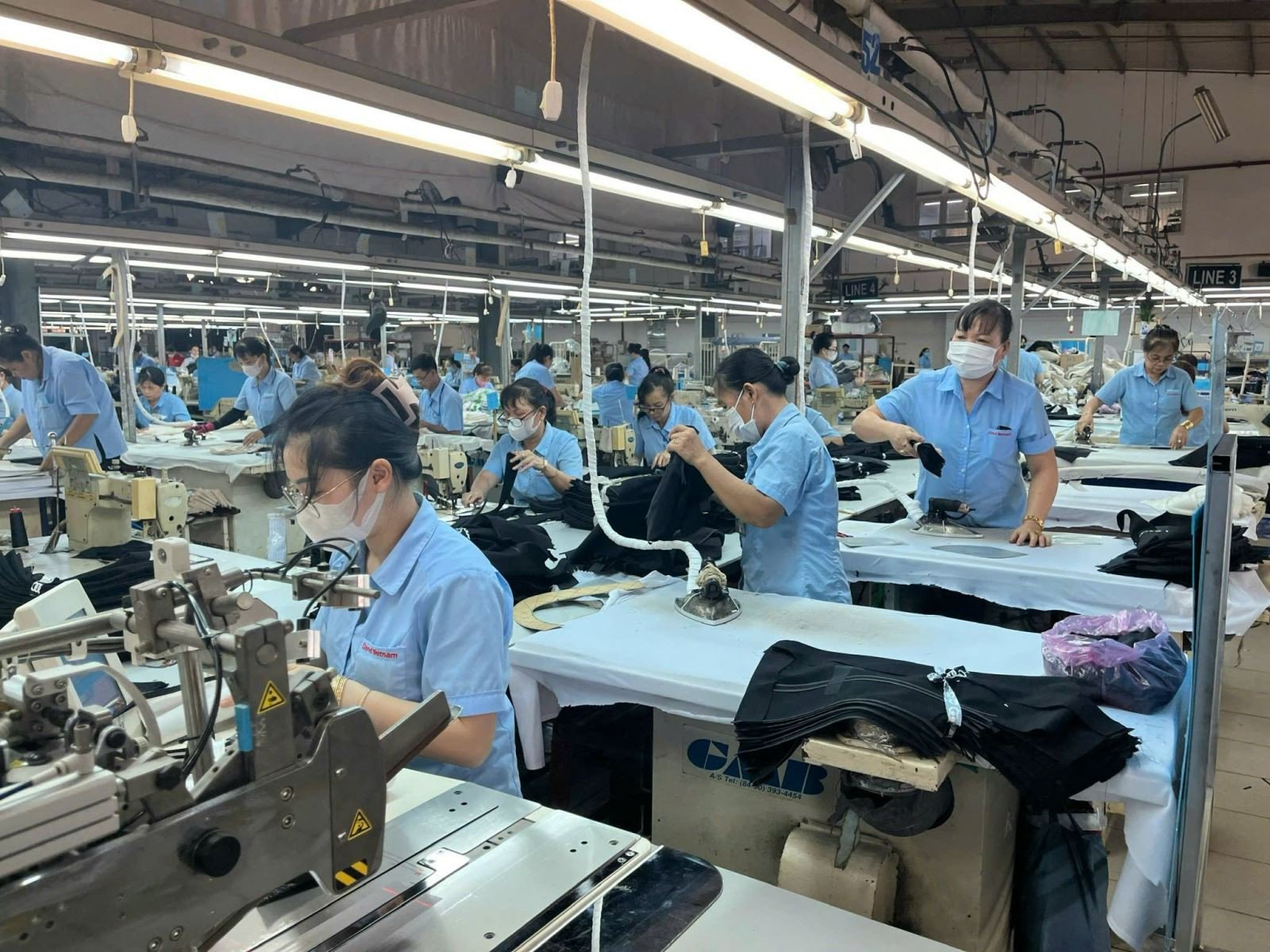
Driving force for development
Mr. Thai Thanh Quy, Deputy Head of the Standing Committee of the Central Policy and Strategy Board, stated that over 40 years of reform, the Party's views and policies on the private economy have been clearly and correctly identified, affirming that the private economy is an important driving force of the national economy and is encouraged to develop in all sectors and fields not prohibited by law.
In fact, the private sector has become the largest and most significant contributor to Vietnam's economy. This sector comprises over 940,000 businesses, accounting for approximately 98% of all businesses, contributing 30% of budget revenue, over 50% of GDP, more than 56% of total investment capital, and providing employment for 85% of the workforce.
Currently in Vietnam, many large private enterprises such as Vingroup, Masan , Sun Group, Vietjet, Thaco, TH... have expanded regionally and globally, becoming brands that bring pride to the Vietnamese people. In addition, over 5 million individual business households spread across the country also make significant contributions to economic growth, job creation, income generation, innovation, poverty reduction, and social stability. However, despite their increasing contributions, the private sector still faces many obstacles that hinder its development and prevent it from achieving breakthroughs in scale and competitiveness.

Meanwhile, Dr. Nguyen Duc Kien, former National Assembly representative and former head of the Prime Minister's Economic Advisory Group, also pointed out two main reasons why the private sector has not developed as expected. "Firstly, the management system of ministries and local governments has not truly reformed according to the socialist-oriented market economy model; the management of ministries is still heavily reliant on a 'request-and-grant' mechanism, directly interfering in the management and mobilization of capital by businesses. In addition, the provincial-level management apparatus, which represents the State in holding important national resources such as land, also manages through a 'request-and-grant' mechanism, instead of managing effectively and contributing to the country's development. For example, the Ministry of Planning and Investment (formerly), the governing body of the General Statistics Office, has never specifically published the private sector's contribution, instead lumping it together with the non-state economic sector. This makes policy planning unclear and ambiguous, reducing the effectiveness of state support policies."
Secondly, the non-state economic sector is mostly comprised of small and micro-enterprises and individual business households, resulting in low production and business efficiency and limited ability to participate in product value chains. Only a few enterprises have risen to national and regional scale. The reasons are that these enterprises all originate from family businesses, have outdated management methods; limited ability to raise capital; and lack the knowledge and human resources to grasp and adopt new technologies," said Dr. Nguyen Duc Kien.
Similarly, Mr. Nguyen Ngoc Hoa, Chairman of HUBA, stated that currently, the shortcomings hindering the capacity of private enterprises include difficulties in input factors, access to land, technology, and administrative procedures. Many businesses complain about administrative procedures that drag on for years, preventing them from investing or expanding production and business.
Classification of support by industry
According to Mr. Nguyen Ngoc Hoa, for the private economy to develop, it is necessary to strengthen the implementation of policies supporting the private economy with more flexible mechanisms. These support policies need to be more specific so that private businesses benefit. The State can introduce KPIs (Key Performance Indicators) for ministries, agencies, and local governments, and measure and evaluate the effectiveness of their implementation.
"Businesses are hoping that relevant authorities will step in to resolve the obstacles and difficulties facing the private sector. Furthermore, private businesses also hope that when implementing support policies, there will be clear classification by group and industry; there should be separate policies for leading, large-scale, and financially strong businesses; and separate policies for small and medium-sized enterprises and household businesses. On the other hand, management agencies need to review policies that have been issued but are ineffective in order to adjust and improve them. In the next 1-2 years, the leading role of public investment will be very important, and businesses hope to be able to access public investment in a transparent, open, and clear manner," said Mr. Nguyen Ngoc Hoa.

According to Dr. Nguyen Duc Kien, in order to build and implement the Resolution on supporting the private economy, it is first necessary to change the organizational methods to create a breakthrough for the private economy. "To achieve a breakthrough, we need to promote effective administrative reforms and improve the transparent investment environment. The most important thing is to change society's perception of the private economy. The State needs to have a more open view and must take responsibility for protecting businesses and entrepreneurs from unjustified public opinion. Conversely, businesses must also abandon informal thinking and implement more modern, open corporate governance, daring to contribute to the overall economic development of the country," Dr. Nguyen Duc Kien suggested.
In order to facilitate the business community and strive to achieve double-digit growth in the near future, several businesses have proposed heartfelt solutions. Mr. Mai Huu Tin, Chairman of the Binh Duong Provincial Business Federation, said that businesses need to focus on three core solutions: actively applying e-government to eliminate the "request-and-grant" system in licensing, applying technology to increase the accuracy of data, and focusing on education. These are the top core solutions to mobilize all resources in society to jointly develop the private economy.
Meanwhile, Mr. Tran Viet Anh, General Director of Nam Thai Son Import-Export Joint Stock Company, believes that regulatory agencies need solutions to support private enterprises, especially small and medium-sized enterprises (SMEs). Specifically, support should be provided to individual business owners, small and micro-enterprises, and SMEs to develop by removing obstacles in investment, capital supply, and administrative reform. The State could organize dialogue sessions for different groups and industries to listen to and understand the difficulties that SMEs are facing. From there, the State can provide specific support to this group through existing legal documents or laws supporting businesses, rather than necessarily issuing a series of new regulations.
Source




![[Image] National Assembly discusses the implementation of the socio-economic development plan.](https://vphoto.vietnam.vn/thumb/1200x675/vietnam/resource/IMAGE/2026/04/20/1776696707422_ndo_br_img-20260420-185419-jpg.webp)
![[Photo] General Secretary and President To Lam meets with National Assembly delegates from ethnic minorities.](https://vphoto.vietnam.vn/thumb/1200x675/vietnam/resource/IMAGE/2026/04/20/1776696701056_a1-bnd-8331-3342-jpg.webp)



























































































Comment (0)