

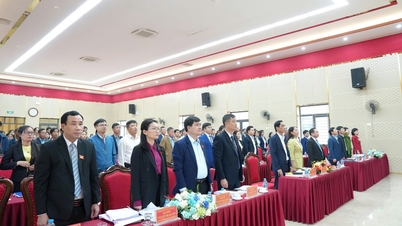
On October 28th, at the National Assembly building, continuing the program of the 8th Session, under the chairmanship of National Assembly Chairman Tran Thanh Man , the National Assembly held a plenary discussion on the Report of the Supervisory Delegation and the draft Resolution of the National Assembly on the results of the thematic supervision of "the implementation of policies and laws on real estate market management and social housing development from 2015 to the end of 2023".
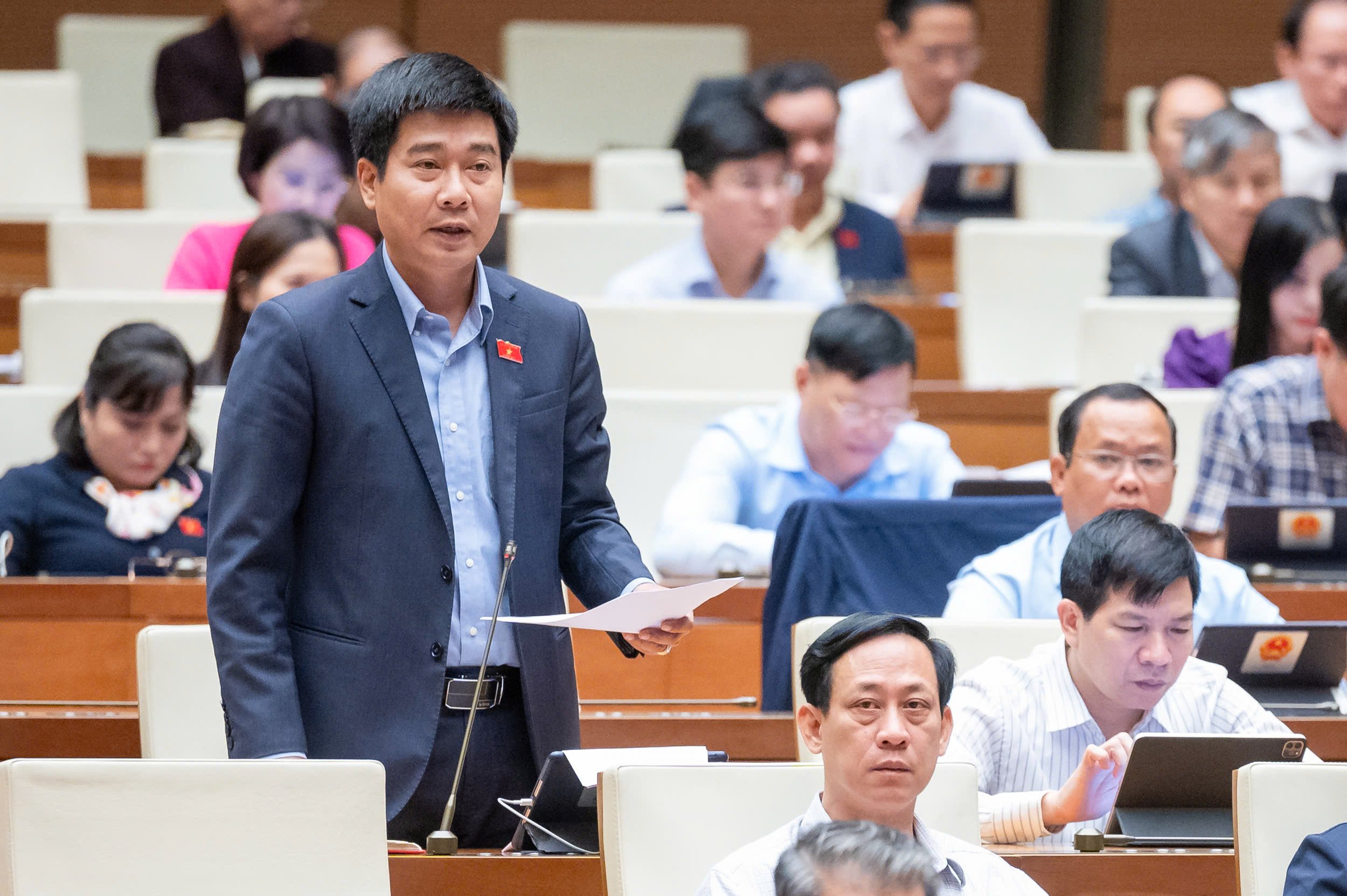
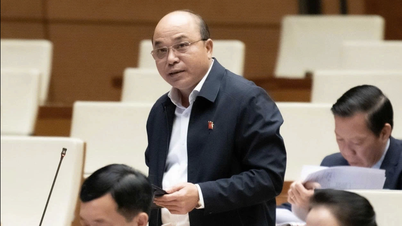
In his comments, National Assembly Deputy Le Thanh Hoan generally appreciated the Supervisory Delegation's Report. The report summarized and presented an overall picture of the real estate and social housing market in the recent past.
To clarify further, delegate Le Thanh Hoan offered the following points: The draft resolution on supervision mandates the Government to establish appropriate mechanisms for resolving and definitively addressing real estate projects facing legal difficulties and obstacles. This should be based on a comprehensive consideration of objective practical factors, specific historical circumstances, and a full assessment of the benefits, costs, and feasibility of the proposed solutions. This will ensure the legitimate rights of citizens and businesses in the real estate market, for the common good, freeing up resources for the real estate market and creating momentum for socio-economic development. It should also clearly define the meaning of "not legitimizing violations" to enhance the effectiveness of lawmaking and enforcement.
Representative Le Thanh Hoan expressed his agreement and felt the need for further clarification on the viewpoint of "not legitimizing violations" in order to definitively resolve the obstacles and outstanding issues related to real estate projects. This is also a difficulty that the Task Force established under Decision No. 153 of January 2022 by the Prime Minister is facing, and for which no effective solution has yet been found.
Globally, the concept of “formalizing the informal” or, worse, “legalizing the illegal” is often a politically difficult argument, as it appears the government is biased or favoring those who disregard the law. Therefore, opposition is often strong, but usually fails to consider the overall benefits of formalization or the costs of doing nothing. For example, property taxes and transfer taxes would be collected if illegal constructions were completed, registered, and put into use. Formalizing informal constructions would bring them back into the economy, thereby providing legal, technical, and financial support for real estate transactions such as leasing, buying, inheriting, using, and mortgaging.
For projects and constructions that violate regulations, there are only two viable options: revoke the project and demolish the illegal structures, or formalize the process. Doing nothing or providing a "limited-time rescue" is not reasonable unless the problems with those projects have only an insignificant impact on the real estate and housing market.
Demolishing illegal constructions often wastes societal resources, incurring significant economic, legal, administrative, court, and social costs, as well as carbon emissions and environmental impacts. These costs rarely outweigh the benefits of demolition. Furthermore, in some cases, relocation is necessary when residents have no other place to live.
Another variation is to legalize violations for a limited time and apply penalties for non-compliance, also known as "time-limited bailouts." This means allowing the state to rescue unofficial constructions for a limited period. In the future, the state would provide a stricter legal framework to ensure construction order. This approach is not encouraged by countries around the world because it affects legal compliance, incurs social costs, and carries a high risk that violations will no longer be tolerated.
According to Vietnamese construction law, in cases of violations such as constructing buildings not in accordance with planning regulations, violating building boundaries or elevation limits, or constructing buildings not in accordance with the issued construction permit, there are regulations on temporary suspension and allowing the violator to apply for a new construction permit or amend the existing permit within a specified period. According to Decree 16 of 2022, Article 81, in cases of construction law violations that meet the conditions for granting a construction permit, amending a construction permit, or amending the construction design while construction is underway, the following procedures apply: The competent authority is responsible for drawing up an administrative violation report and requiring the violating organization or individual to stop construction. Within 90 days for construction investment projects and 30 days for individual houses from the date of issuance of the administrative penalty decision, the organization or individual committing the violation must complete the application dossier to request the competent authority to issue or amend the construction permit. Is this a variation of legalizing violations of construction laws that have already occurred in practice?
For example, according to the 2024 Land Law, point d, clause 2, Article 152 stipulates that the State shall revoke issued land use right certificates in cases where the certificate was issued without proper authority, to the wrong land user, for the wrong land area, without meeting the eligibility requirements, or for the wrong land use purpose... However, clause 4 of this Article provides an exception, and accordingly, the State does not revoke issued land use right certificates, even if the certificate was issued without proper authority, to the wrong land user, for the wrong land area, without meeting the eligibility requirements, or for the wrong land use purpose... in cases where the land use rights or ownership of assets attached to the land have been converted, transferred, inherited, gifted, or contributed as capital in accordance with the law. Thus, to protect bona fide third parties, the Land Law also accepts the legalization of land use rights even if the land originally originated from illegal activities.
Monitoring has revealed the obstacles and difficulties faced by real estate and social housing projects. However, if we do not resolutely review each project, finding solutions to address each issue based on which aspects require amendment or supplementation of legal regulations, and which require handling through court judgments or decisions by competent authorities, then essentially we are "doing nothing," and ultimately, these projects will continue to be neglected, unfinished constructions exposed to the elements, and social resources will remain idle. Therefore, the meaning of "not legitimizing violations" needs to be clarified, and this is a very complex issue, as it is difficult to have a single regulation that is correct for all cases. With the spirit of "not legitimizing wrongdoing" and the need to find mechanisms and policies to address this issue in order to free up resources, while ensuring the strict implementation of the Politburo's Regulation 178 on controlling power and preventing and combating corruption and negative practices in lawmaking, this is a difficult issue that needs to be concretized and promptly addressed by competent authorities. It must be determined that if the violation of the law is serious, and after reviewing and summarizing the implementation of the law, no obstacles are found and it is consistent with reality, then thorough enforcement and rectification of the violation must be carried out, with strong sanctions such as confiscation, seizure, or complete demolition. However, if the law is genuinely unsuitable and requires amendment or supplementation approved by competent authorities, then retroactive application should be considered to exempt liability, but solutions are also needed to harmonize interests, especially the interests of the people, the community, and the State.
Therefore, with a spirit of not fearing difficulties, daring to think, daring to act, and daring to take responsibility, for the benefit of the State, the people, and businesses, and in accordance with the directive of General Secretary To Lam, "Address difficulties wherever they arise, examine each issue to resolve them, and do not allow a situation where regulations are so ineffective that even the State cannot implement them, how can businesses?", we propose that the Government and local authorities at all levels should decisively intervene, review each project, and propose solutions to address each project in order to put an end to this situation.
Quoc Huong
Source: https://baothanhhoa.vn/dbqh-le-thanh-hoan-doan-dbqh-thanh-hoa-can-lam-ro-viec-khong-hop-thuc-hoa-cac-vi-pham-ve-bat-dong-san-nbsp-nbsp-228862.htm
![[Image] Close-up of the newly discovered "sacred road" at My Son Sanctuary](/_next/image?url=https%3A%2F%2Fvphoto.vietnam.vn%2Fthumb%2F1200x675%2Fvietnam%2Fresource%2FIMAGE%2F2025%2F12%2F13%2F1765587881240_ndo_br_ms5-jpg.webp&w=3840&q=75)






































































Comment (0)