

Supplementing the policy on the Nuclear Regulatory Authority.
In Draft No. 5.1 of the Law on Atomic Energy (amended), hereinafter referred to as the Draft, there are still some contents that need clarification.
Regarding the State's policy in the field of atomic energy, the Draft needs to include a policy on a National Nuclear Regulatory Authority. This is a state management agency tasked with protecting people, property, and the environment from the unintended harmful effects of radiation. Therefore, there must be a policy stipulating that the Government must establish a National Nuclear Regulatory Authority, with legally assigned authority and guaranteed sufficient human resources, financial resources, and internal technical support capabilities to fulfill its responsibilities in nuclear regulatory management for all activities in the field of atomic energy, in accordance with the International Atomic Energy Agency's (IAEA) Fundamental Safety Principle 2 and the provisions of the International Convention on Nuclear Safety.
Furthermore, the law should include provisions on the National Nuclear Regulatory Authority and its regulatory functions, in accordance with the IAEA's Model Atomic Energy Act (Model Act). These regulatory functions should include: developing regulatory regulations, licensing, inspection and assessment, handling violations and enforcing compliance, public information dissemination, and coordinating activities with other state regulatory agencies in nuclear regulatory management.
The draft new Law stipulates the state management responsibilities for radiation and nuclear safety in Clause 2, Article 7. To align with IAEA guidelines, Article 7 should include provisions on the National Nuclear Regulatory Authority with the same duties as those stipulated in Clause 2, Article 7. Based on this, the provisions on licensing nuclear power projects in the draft will specify the responsibilities of the National Nuclear Regulatory Authority as guided by the IAEA Model Law.
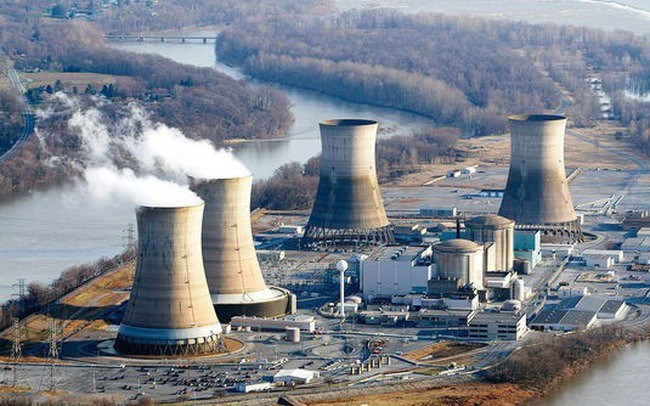
The definition of radiation facilities in Article 17 needs to be revised to avoid omitting all types of radiation facilities. Accordingly, only two types of irradiation should be listed as radiation facilities: facilities using accelerators and facilities using radioactive sources. The definition of radiation facilities should not be based solely on the purpose of irradiation. The draft lists four types of irradiation: radiotherapy, sterilization, mutation, and material modification; however, it omits sterilization irradiation, quarantine irradiation, etc.
Article 29's requirements regarding radiation safety, nuclear safety, and nuclear security are incomplete, lacking requirements for site selection, design, and manufacturing of nuclear equipment and facilities. Therefore, this content needs to be added to the draft.
Specific and transparent regulations on licensing.
Regarding the licensing phases of nuclear power projects, according to IAEA guidelines (see Chapter 6 of the Model Law on Nuclear Facility Safety), the National Nuclear Regulatory Authority is responsible for licensing in six phases of a nuclear power project, including: site approval; design approval; manufacturing control and construction permitting; commissioning; and decommissioning. During the licensing process, if issues arise involving other government agencies such as those related to the environment, construction, fire safety, etc., the National Nuclear Regulatory Authority will coordinate or consult with the relevant agencies before issuing the license. Therefore, the National Nuclear Regulatory Authority is the sole direct managing authority for the nuclear power project, in accordance with international practice.
The licensing provisions in the Draft should, in each stage, be similar to the IAEA's Model Law guidelines. Accordingly, each licensing stage should have three clauses with specific regulations.
Clause 1 : Responsibilities of the Nuclear Regulatory Authority (licensing authority), including assessment, evaluation, and inspection to grant licenses in stages; continuous monitoring; license amendments and revocation. Clause 2: Responsibilities of the investor/operator of the nuclear power plant, including preparing license application documents; safety management; safety verification; and other related issues. Clause 3: Conditions for licensing. Nuclear power projects are projects with very large total investment, so regulations on licensing are extremely clear, specific, and transparent. Any delay in the licensing procedure due to a lack of clarity, specificity, transparency, and openness will increase investment costs for the project due to bank loan interest. In addition, delays in bringing the plant back into operation also cause significant economic damage (each 1000MW unit will generate 24 million kWh of electricity per day).
Therefore, the licensing regulations in the Draft must be extremely clear and specific. The regulations in the Draft do not yet meet the above requirements as guided by the IAEA. The electricity operating license for nuclear power plants should be regulated separately, not included in the operating licensing provisions.
Another noteworthy point is that the Draft needs clear regulations on design approval for two types of operations. Firstly, for nuclear power plants and research reactors that we import: regulations on the assessment and approval of designs exported to Vietnam by foreign partners, which have been assessed and approved by the nuclear regulatory authority of the foreign partner, taking into account Vietnam's specific conditions in accordance with international practice. Reference should be made to the Atomic Energy Laws of several countries that import nuclear power technology from abroad.
Secondly, regarding nuclear power plants and research reactors designed by domestic organizations: The current draft lacks regulations for this type of project. Without provisions for this, it would be necessary to seek special approval from the National Assembly when needed, which is undesirable. The Atomic Energy Law needs to anticipate actual needs to avoid overlooking types of activities that lack regulatory provisions.
Furthermore, the responsibilities of the investor/operator of a nuclear power plant are not fully defined in the licensing stages, which is inconsistent with IAEA guidelines. The investor/operator must prepare the necessary documentation and demonstrate the required capabilities to meet the licensing requirements in stages, providing a basis for the Government to specify the documentation. However, the licensing stages in the Draft only require the investor/operator to prepare a Safety Analysis Report for submission to the National Nuclear Regulatory Authority – which is insufficient.
According to IAEA guidelines, Safety Analysis Reports (SARs) are only required during the construction permit, commissioning permit, and operation permit phases. Site approval and design approval phases require separate documentation and do not include a safety analysis report. Therefore, this content needs to be revised to provide a basis for the Government to regulate the details of the required documentation.
Source: https://daibieunhandan.vn/can-quy-dinh-ve-nha-may-dien-hat-nhan-thiet-ke-trong-nuoc-post411665.html































































Comment (0)