

The Mastercard Economics Institute (MEI) has just released its annual report on the economic outlook for 2026, showing that growth in the Asia- Pacific region will generally remain stable as the global economy adapts to changes in tariffs, a wave of investment in AI, and shifting consumer trends.
Globally, MEI forecasts real GDP growth to slow slightly to 3.1% in 2026, compared with an estimated 3.2% in 2025.

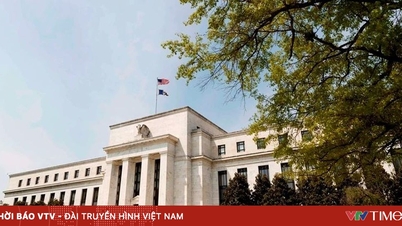
Illustration photo: Source Bloomberg
Despite some conflicting factors, MEI forecasts GDP growth in the Asia- Pacific region to remain stable in 2026. A combination of cooling inflation, supportive monetary policy, and rising real incomes in some markets is improving household living conditions and reinforcing overall regional stability.
David Mann, Chief Economist for Asia Pacific at Mastercard, commented: "Playing a central role in global trade, Asia Pacific has demonstrated remarkable resilience amid tariff uncertainties and supply chain shifts threatening to disrupt international trade. The outlook is largely positive for consumers in the region."
Key economic drivers for 2026
According to the report, global trade will continue to restructure following tariff adjustments in 2025. Mainland China is stepping up the diversification of exports to new markets, as the share of e-commerce sales from China to the US declines from 28% (in 2024) to 24% (as of August 2025).
MEI's analysis indicates that the application of AI, along with targeted fiscal support, will become key drivers of growth in 2026. According to MEI's AI Spending Index, South Korea, Japan, India, and others are showing strong growth in the adoption of AI tools in both the business and consumer sectors.
Tourism continues to be one of the most sustainable economic drivers in the Asia-Pacific region. In the first half of 2025, Singapore's outbound tourism spending was $2.7 billion higher than the same period in 2019; meanwhile, Indonesia and the Philippines led the region with outbound tourism spending increases of 40% and 28%, respectively.
International tourism to Japan and several ASEAN countries has stabilized, while intra-regional tourism continues to expand as consumers prioritize experiences over tangible goods. The strong growth in leisure and experience spending demonstrates the sustainability of the service sector in the Asia-Pacific, and reaffirms its leading role in the region's economic outlook.
Asia-Pacific Outlook 2026: Key Highlights
The report predicts that mainland China is projected to grow by 4.5% in 2026, with consumption strengthening throughout the year. This growth momentum is supported by anticipated interest rate cuts and targeted fiscal measures under the upcoming Five-Year Plan, helping to boost rapidly growing "new consumer" categories such as beauty and healthcare, lifestyle upgrades, and collectible products for fan communities.
Meanwhile, South Asia continues to maintain solid growth momentum. India is projected to grow by 6.6% thanks to strong domestic demand, loose monetary policy, and the development of the digital and services sectors.

India is projected to grow by 6.6% thanks to strong domestic demand.
Japan is expected to grow by 1.0%. Rising real incomes and stable household sentiment are shifting the economy toward a more sustainable growth cycle, with wage growth playing a key role. Strategic investments in AI, semiconductors, and energy security continue, while loose monetary policy and some selective fiscal measures help offset export pressures from US tariffs.
In Australia and New Zealand, easing cost pressures and lower interest rates are expected to boost household spending, with estimated growth of 2.3% and 2.4% respectively. Spending on experiences continues to be a driver of recovery, as consumers prioritize travel, leisure, and accessible forms of entertainment.
Across the region, small and medium-sized enterprises (SMEs) are increasingly adopting digital tools and online channels to optimize operations and expand customer reach, thereby enhancing their resilience and ability to respond to trade fluctuations.
Source: https://vtv.vn/chau-a-thai-binh-duong-giu-vung-da-tang-truong-bat-chap-bien-dong-toan-cau-100251211205055517.htm
















![[Photo] Prime Minister Pham Minh Chinh holds a phone call with the CEO of Russia's Rosatom Corporation.](/_next/image?url=https%3A%2F%2Fvphoto.vietnam.vn%2Fthumb%2F1200x675%2Fvietnam%2Fresource%2FIMAGE%2F2025%2F12%2F11%2F1765464552365_dsc-5295-jpg.webp&w=3840&q=75)












































Comment (0)