

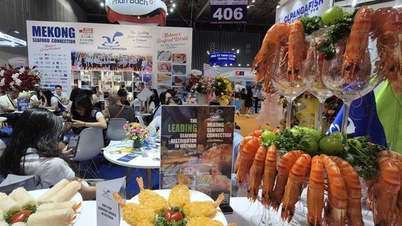
Continuing the momentum of last year, in January this year, Chinese people spent nearly 1,800 billion VND to buy Vietnamese lobsters. Compared to the same period last year, exports of this high-end seafood increased 9 times.
According to information from the Vietnam Association of Seafood Processing and Export (VASEP), in January, seafood exports increased slightly by 3% compared to the same month last year, reaching over 774 million USD.
This is due to a surge in demand from the Chinese market for the Lunar New Year. In particular, fresh seafood such as lobster, crab, clams, and snails are attracting significant interest from Chinese businesses targeting the high-end consumer segment.
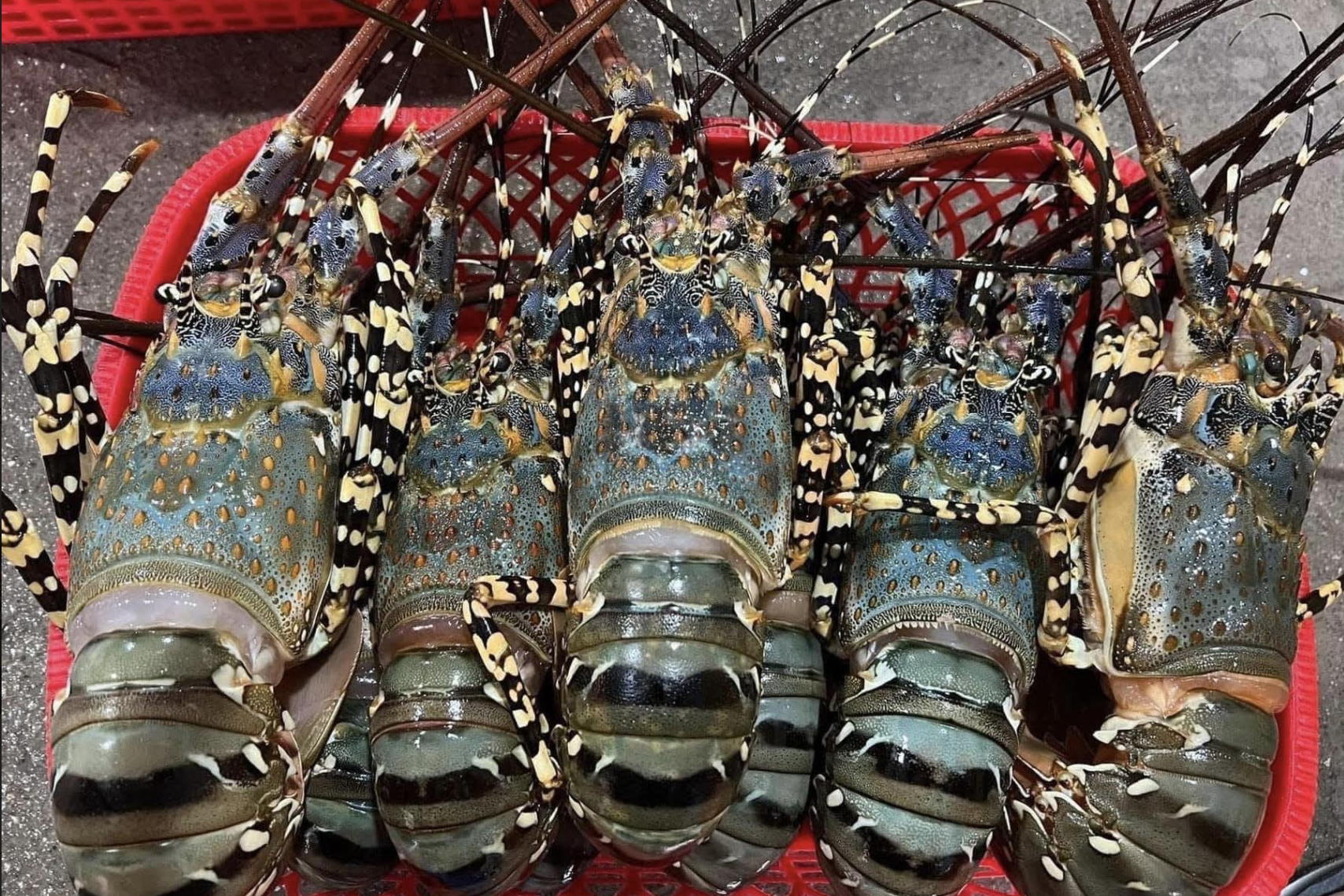
For lobster alone, exports to this market of over a billion people surged to 70 million USD (approximately 1,800 billion VND), accounting for nearly half of the total seafood export value to China and nine times higher than the same period in 2024.
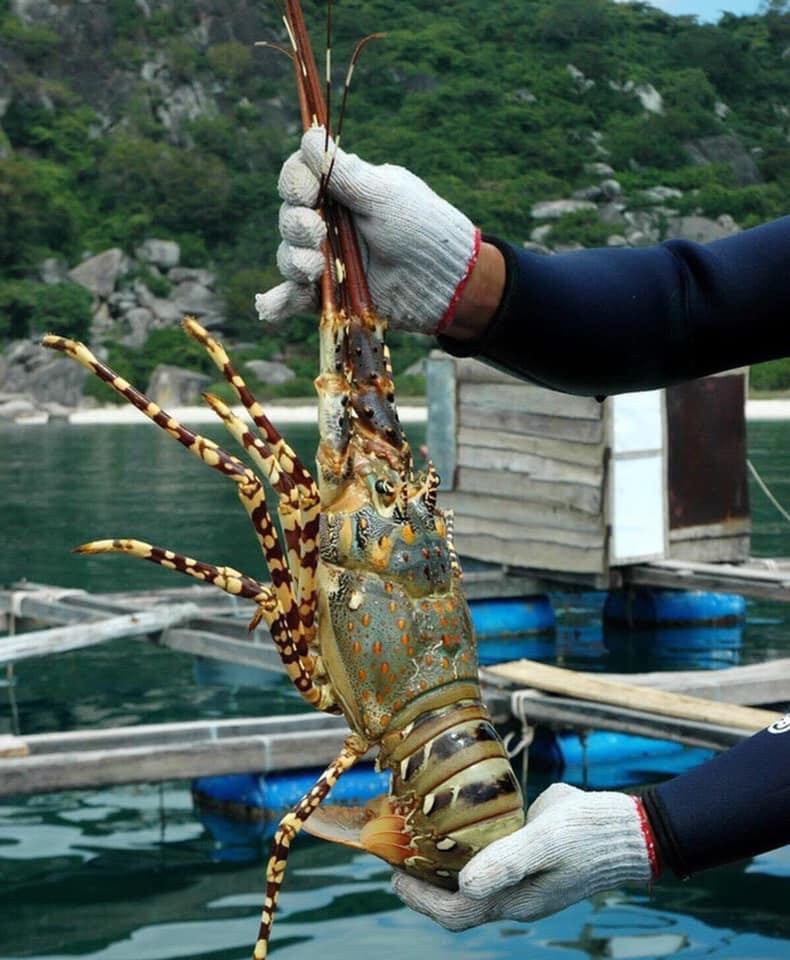
Similarly, crab exports to China in January 2025 also increased 18-fold, reaching $18.5 million.
According to VASEP, China's strong increase in lobster purchases from Vietnam has boosted lobster export revenue by 24%, determining the overall growth of the country's seafood industry.
Previously, in 2024, with export turnover reaching 843 million USD, a 39% increase compared to 2023, China (including Hong Kong) surpassed the US (756 million USD) to become Vietnam's largest shrimp importer.
This growth is due to a sharp increase in lobster exports to China, which accounts for a large share of the total export value of Vietnam's shrimp industry.
VASEP points out that lobster is in the high-end market segment, targeting wealthy customers. Therefore, even when the Chinese economy slows down and people's incomes decrease, it does not significantly affect the consumption of high-end seafood products.
Therefore, this year, businesses should increase lobster exports to this market to maintain the growth momentum of the entire seafood industry.
Source: https://vietnamnet.vn/chi-1-thang-dan-trung-quoc-chi-gan-1-800-ty-mua-tom-hum-viet-nam-2372483.html




















![[Photo] Prime Minister Pham Minh Chinh holds a phone call with the CEO of Russia's Rosatom Corporation.](/_next/image?url=https%3A%2F%2Fvphoto.vietnam.vn%2Fthumb%2F1200x675%2Fvietnam%2Fresource%2FIMAGE%2F2025%2F12%2F11%2F1765464552365_dsc-5295-jpg.webp&w=3840&q=75)











































Comment (0)