

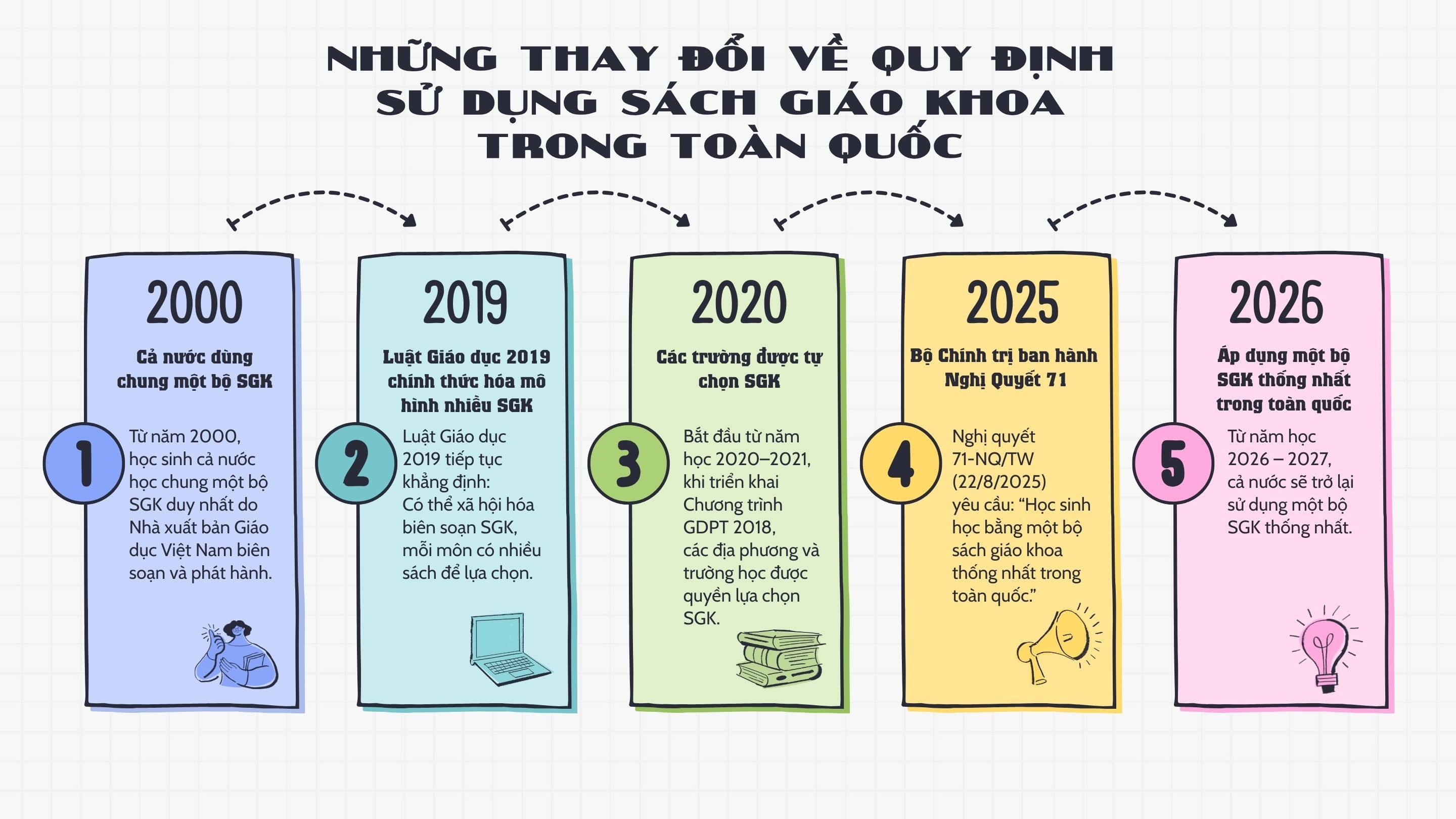
In 2018, the Ministry of Education and Training (MOET) issued the new General Education Program, paving the way for the socialization of textbook compilation. In 2019, the 2019 Education Law formalized the multi-textbook model. Accordingly, from the 2020-2021 school year, first graders will begin studying the new program with many different sets of books to choose from. Next, grades 2, 6 (2021-2022 school year), grades 3, 7, 10 (2022-2023 school year)... will be implemented in turn. In 2024, the MOET issued Circular 27/2023/TT-BGDDT, detailing the textbook selection process at general education institutions. This will be implemented in the 2024-2025 and 2025-2026 school years and will stop in the 2026-2027 school year.
Looking back at 5 years of implementing textbook selection
Having a variety of textbooks to choose from brings many advantages. Schools can choose the right set of books for their teaching conditions and regional characteristics. Many sets of books are beautifully designed, with visual images and diagrams, and practical connections, helping students become more interested. Competition between publishers also promotes the improvement of the quality of content and form of textbooks.
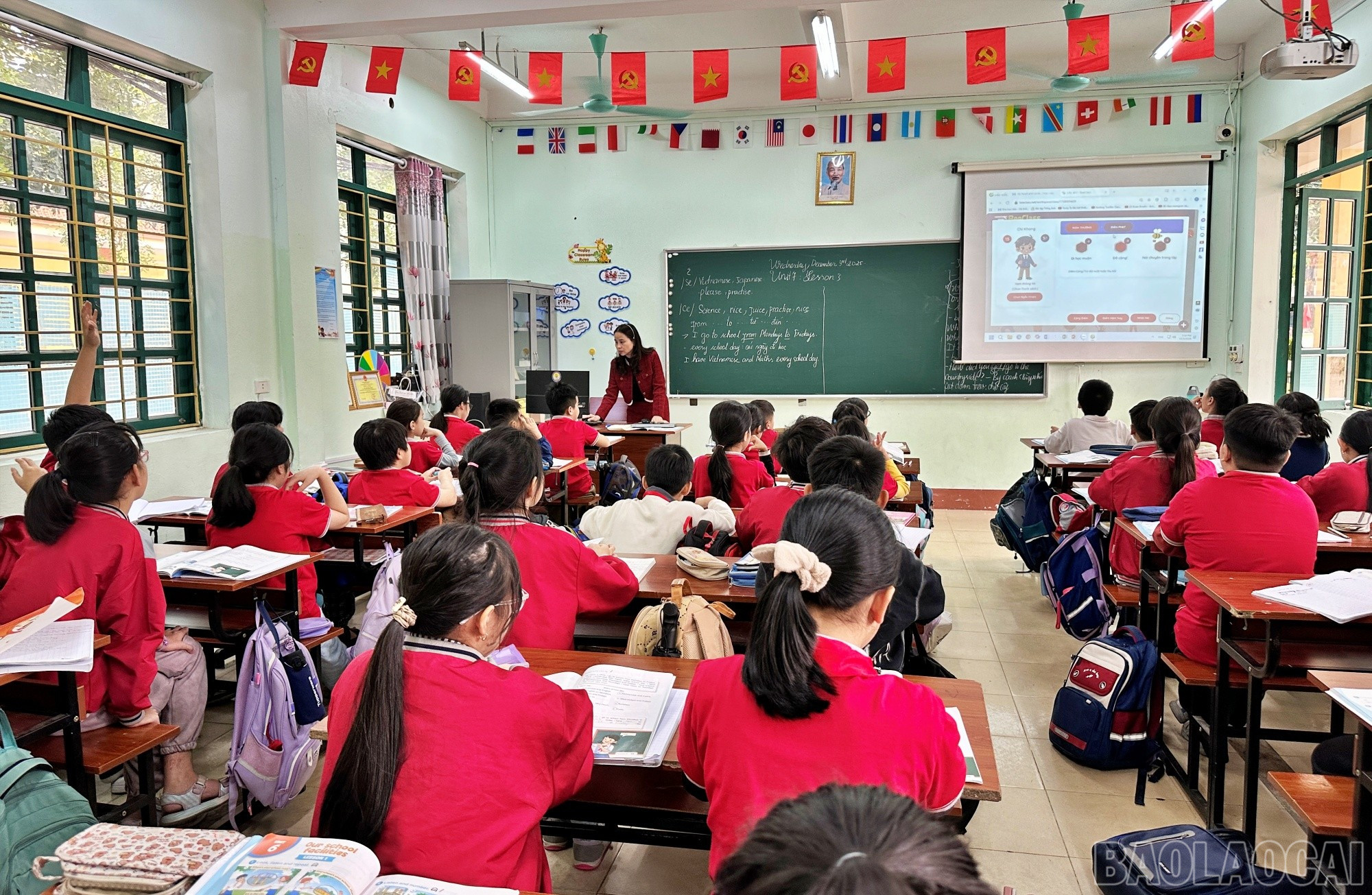
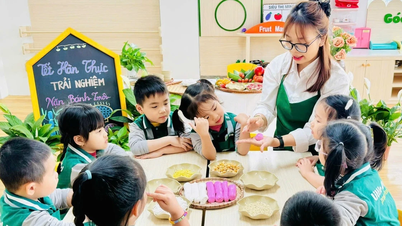
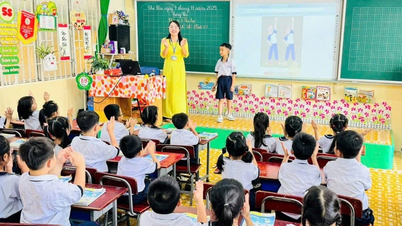
At Bac Cuong Primary School No. 2, Cam Duong Ward, Lao Cai Province, the school uses textbooks selected from three sets of books: Canh Dieu, Connecting Knowledge with Life and Creative Horizons. The selection of books from the above sets of books was carefully researched by the school before proposing to the province for approval.
Teacher Hua Thi Hoa - Bac Cuong Primary School No. 2, said: "Empowering schools to choose textbooks helps schools find content and approaches that are appropriate to the characteristics of students, teachers as well as the local context. Most of the selected books are highly appreciated for their printing quality, scientific layout, easy to understand and vivid presentation.
Sharing the same opinion with Ms. Hoa, teacher Nguyen Thi Thu Huyen - Bac Cuong Secondary and High School said that the books that the school chooses to teach all have advantages, such as: Some textbooks have close, practical content, suitable for students' abilities. Many lessons are related to life situations, easy to organize experiential activities. Some sets clearly show interdisciplinary and systematic nature from lower to upper grades; rich digital learning materials, easy to integrate STEM teaching. Some sets are designed by topic, effectively supporting the innovation of teaching methods, while opening up many creative spaces for teachers. This also creates excitement for learners.
However, according to Ms. Hoa and Ms. Huyen, besides the advantages, having many sets of textbooks also causes many disadvantages, such as: Teachers encounter some difficulties in updating lesson plans, choosing methods of knowledge transfer, especially for teachers who rotate between schools. In addition, each school uses a separate set of textbooks, making professional exchange, sharing experiences, finding teaching support materials as well as testing and evaluation more complicated.
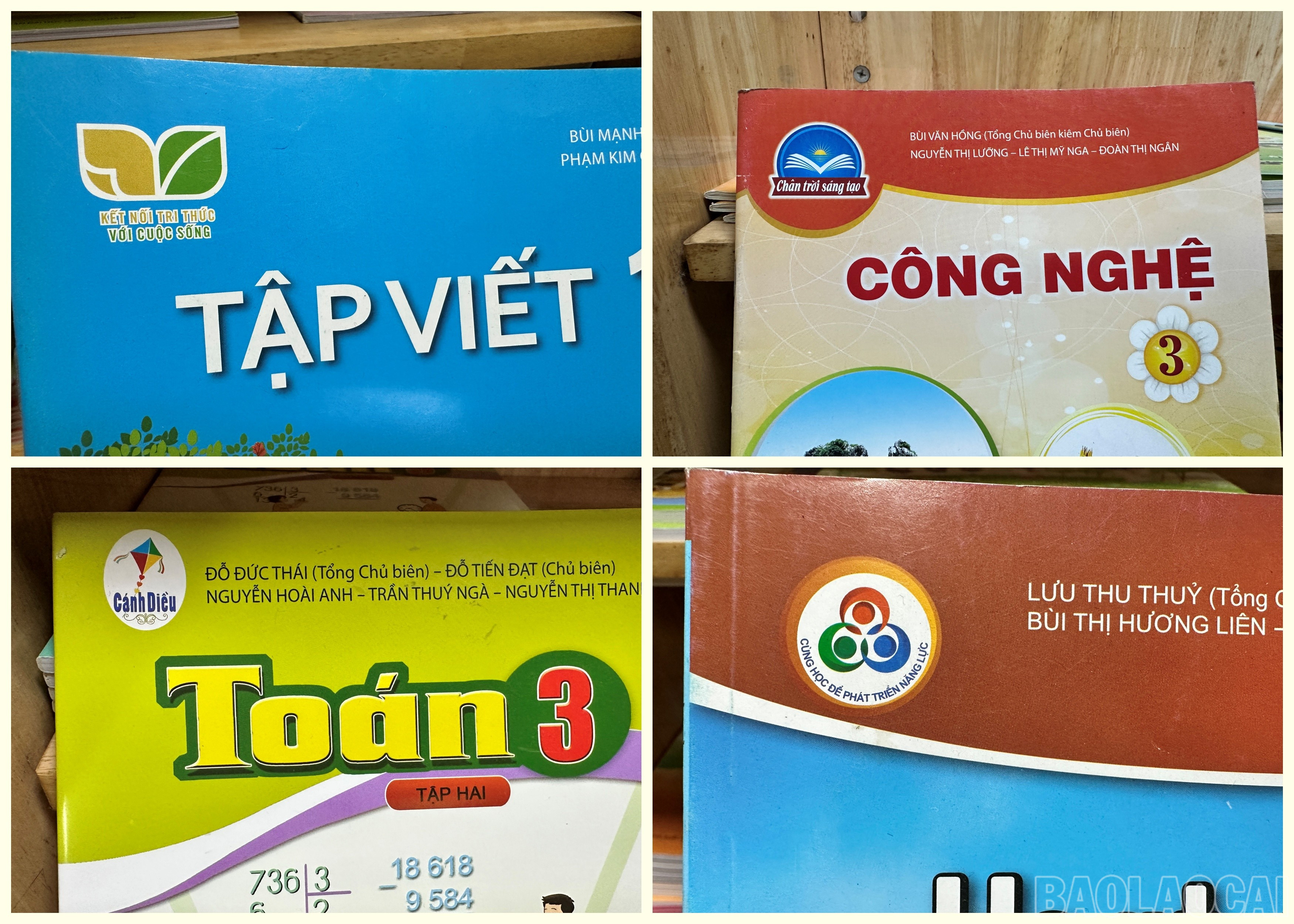
After 5 years of implementing the new general education program, many parents said that each school uses a different set of textbooks, causing many difficulties in buying books for their children. In case of siblings studying at other schools, parents cannot reuse old books, leading to waste. At the same time, when wanting to support books for students in difficult areas, it is also troublesome because they do not know which set of books the school uses.
Ms. Pham Thu Thuy in Group 8A Nam Cuong, Cam Duong Ward, Lao Cai Province said: I have 2 children. The eldest son is in secondary school and the youngest daughter is in primary school. Every year I have to buy completely new textbooks for my children, because they cannot repeat their brother's books. Even though my eldest child used to study at the same school as my younger sister. I find it very wasteful. Whereas in the past, a family could use the same set of books for several siblings.
Sharing the same opinion with Ms. Thuy, Ms. Nguyen Thi Kieu Giang in Cum Thuong 1 village, Coc San commune, Lao Cai province said: Since my children started studying with the new textbooks, I have had difficulty tutoring them at home because it takes a lot of time to research new teaching materials and I have to research again every year. During the recent storms and floods, I wanted to bring textbooks to support them, but I don't know if the books will reach those in need or not? Because each school and each locality uses different textbooks.
Sharing a set of textbooks and aiming for free textbooks by 2030
On August 22, 2025, the Politburo issued Resolution 71-NQ/TW requiring the whole country to use a unified set of textbooks from the 2026-2027 school year, aiming to provide free textbooks by 2030.
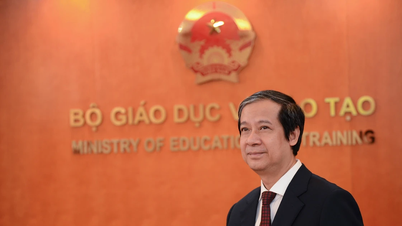
Accordingly, the Ministry of Education and Training is assigned the task of deciding on a unified set of textbooks, possibly through compiling a new set, selecting an existing set or combining the best books. This policy aims to overcome the shortcomings of the multi-set textbook model, creating unity and synchronization in the entire education system. According to the reporter's records, most teachers and parents in Lao Cai expressed their support for this new policy of the Politburo.
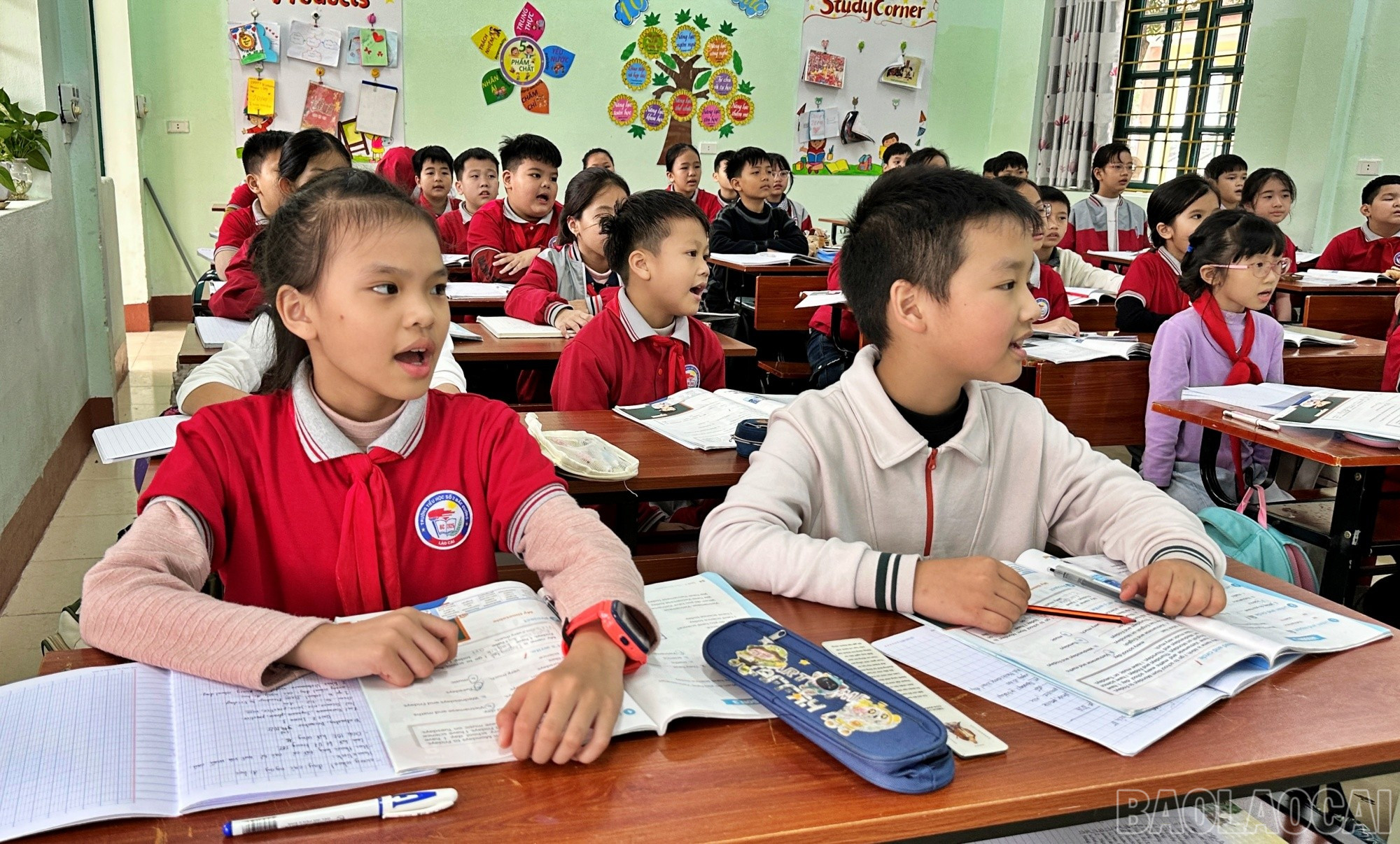
“I really hope that the whole country will use a common set of textbooks, because this will help teachers unify teaching methods, save costs; teachers nationwide will also find it easier to exchange experiences and learn from each other. At the same time, it will create favorable conditions for parents to tutor their children at home" - teacher Nguyen Thi Tuyet Minh - Bac Cuong Primary School No. 2 expressed.
Teacher Nguyen Thi Thu Huyen - Bac Cuong Secondary and High School shared: I think the policy of the whole country using a common set of textbooks is reasonable. This is also convenient for testing and evaluation. Exam questions, review materials, and teacher training will be more synchronized, making the implementation of exams easier and consistent. I also hope to have more reference materials for each region to serve teaching.
As a parent, Ms. Ha Phuong Linh in group 23 Bac Cuong, Cam Duong ward, Lao Cai province, shared her opinion: I strongly support the idea of students nationwide using the same set of textbooks. This will help create consistency in the curriculum. In particular, it will save a lot of costs for families and the whole society in choosing and buying textbooks.
However, Ms. Linh also has some concerns, such as: A single set of books may not fully meet the characteristics of each region; cultural diversity or the specific needs of each group of students. Using a set of books also requires the compilation process to be truly scientific and updated, and at the same time, there needs to be a mechanism to receive feedback to promptly adjust when there are shortcomings. She hopes that the set of books needs to be open so that teachers can flexibly adjust their lessons according to the reality of the classroom and local conditions.

Looking back at the transition from a common set of books, to many different sets of books, and soon back to a unified set of books, it can be seen that the education sector is facing the problem of balancing diversity and uniformity. Having many sets of books has brought richness, creating opportunities for teachers and students to access content appropriate to each region. However, the inadequacies in costs, lack of uniformity and difficulties in book distribution are also big problems.
The journey from now until the start of the 2026-2027 school year poses a major challenge for the education sector: How to issue a unified set of textbooks for students from grades 1 to 12, ensuring progress, maintaining educational quality and minimizing disruptions that may affect students and their families. In the immediate future, widespread support from teachers and parents is a favorable condition to create a foundation for implementing the policy quickly and effectively.
Source: https://baolaocai.vn/chung-mot-bo-sach-giao-khoa-goc-nhin-cua-giao-vien-va-phu-huynh-post888218.html


![[Photo] 60th Anniversary of the Founding of the Vietnam Association of Photographic Artists](/_next/image?url=https%3A%2F%2Fvphoto.vietnam.vn%2Fthumb%2F1200x675%2Fvietnam%2Fresource%2FIMAGE%2F2025%2F12%2F05%2F1764935864512_a1-bnd-0841-9740-jpg.webp&w=3840&q=75)

![[Photo] National Assembly Chairman Tran Thanh Man attends the VinFuture 2025 Award Ceremony](/_next/image?url=https%3A%2F%2Fvphoto.vietnam.vn%2Fthumb%2F1200x675%2Fvietnam%2Fresource%2FIMAGE%2F2025%2F12%2F05%2F1764951162416_2628509768338816493-6995-jpg.webp&w=3840&q=75)

































































Comment (0)