

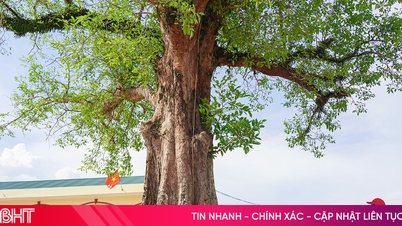
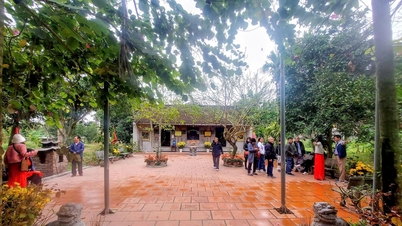
In the middle of the Nguyen Du National Special Relic Site, which covers an area of over 28,000 m² in Tien Dien commune, Ha Tinh province, there are two ancient trees still quietly spreading their shade as witnesses of three centuries of history. Behind that is a long story, originating from the enduring tradition of the Nguyen Tien Dien family - the hometown of the great poet Nguyen Du.
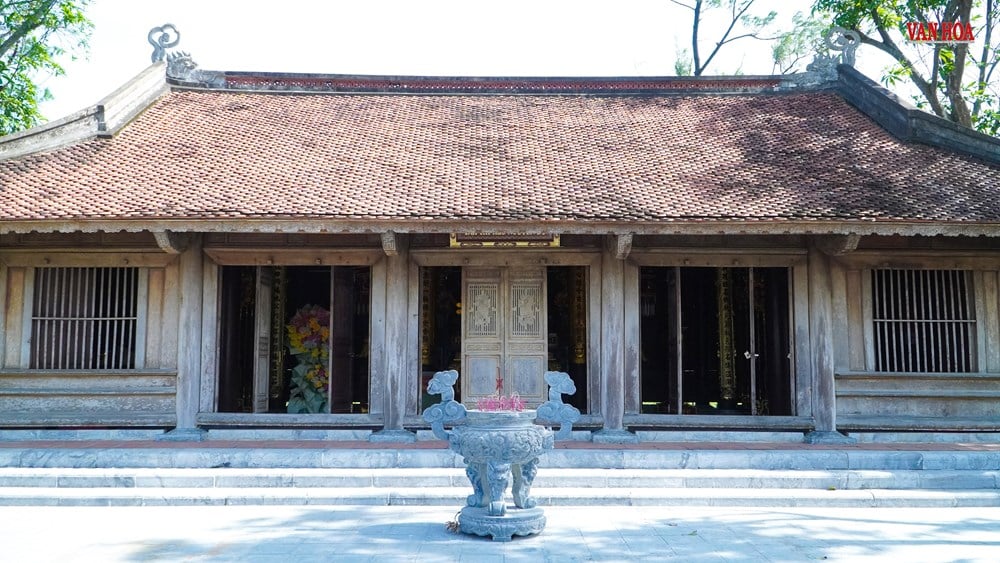
The relic site includes the Nguyen Tien Dien family church, the writer's house, the family's tomb, the museum displaying the life and career of Nguyen Du and the system of traditional wooden houses creating a unified and continuous architectural complex. Located in that space, two ancient trees: the Muom tree and the Nong tree - are considered part of the heritage, enduring over time. Many documents confirm that they were planted in the early 18th century, and are now more than 300 years old.
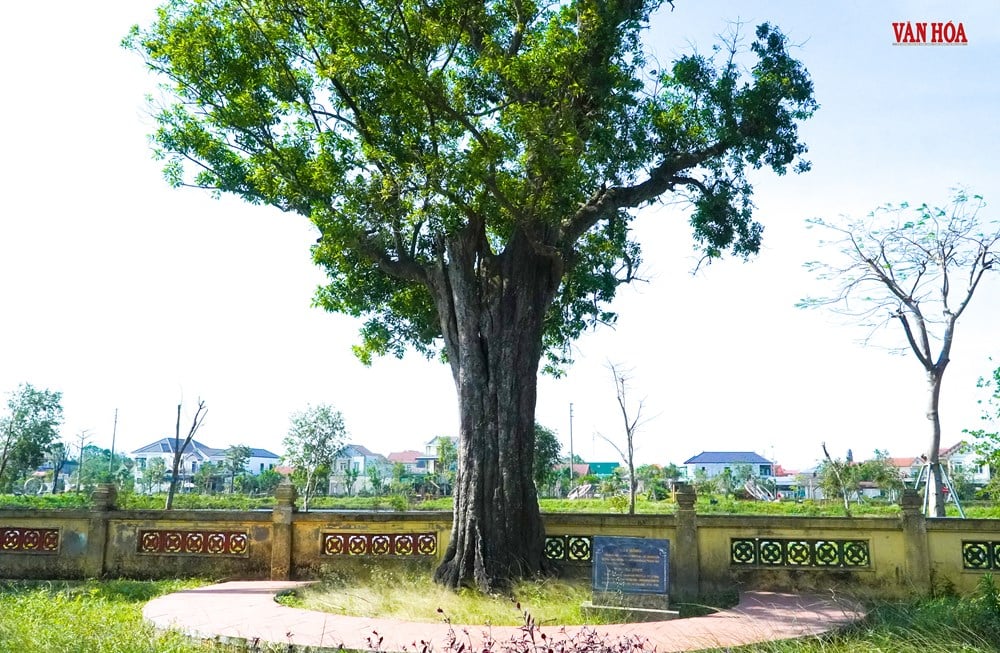
According to records, Mr. Nguyen Quynh (grandfather of the great poet Nguyen Du) had 6 sons. Mr. Nguyen Quynh was famous for his profound wisdom, knowledge of astrology and academic aspirations. He planted three trees in front of his house as a way to entrust his hopes to his three sons. The three trees were: Muom (mango), Nong (Bo Lo) and Roi, each tree symbolized a destiny.
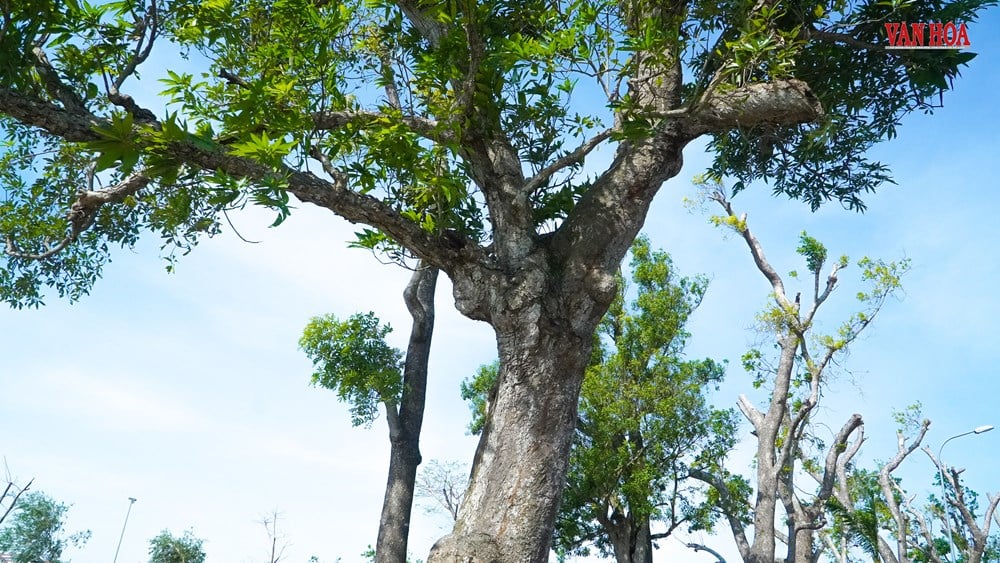
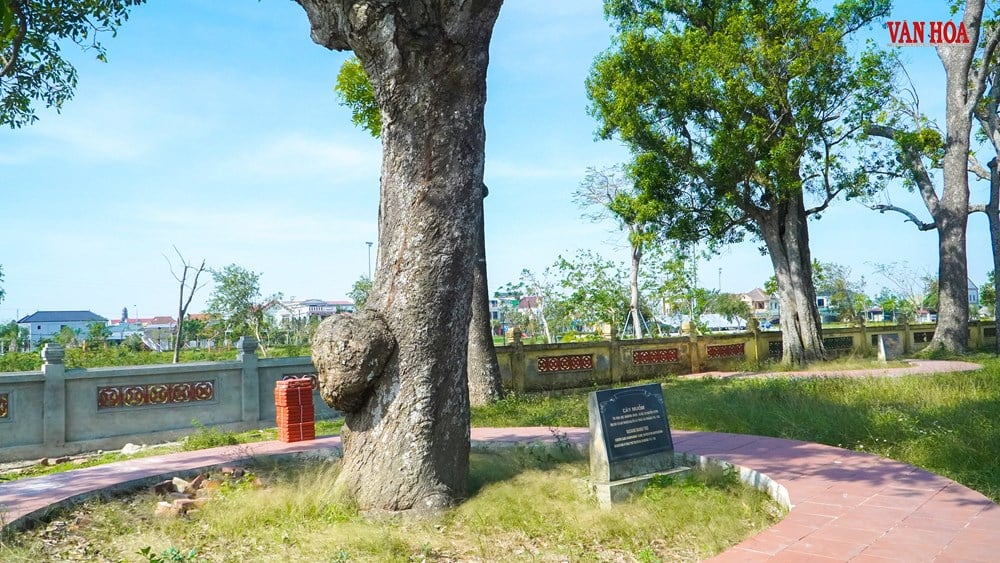
It is special that later, all three children became famous, contributing to the prestige of the Nguyen Tien Dien family and creating the foundation for outstanding cultural and historical contributions of the next generation.
Nguyen Hue was the eldest son, who passed the doctoral exam; Nguyen Nghiem, the second son and father of the great poet Nguyen Du, passed the royal exam at the age of 24, then became a prime minister, and was given the title of Xuan district duke; Nguyen Trong, the third son, passed the bachelor exam and was given the title of Lam Khe marquis.
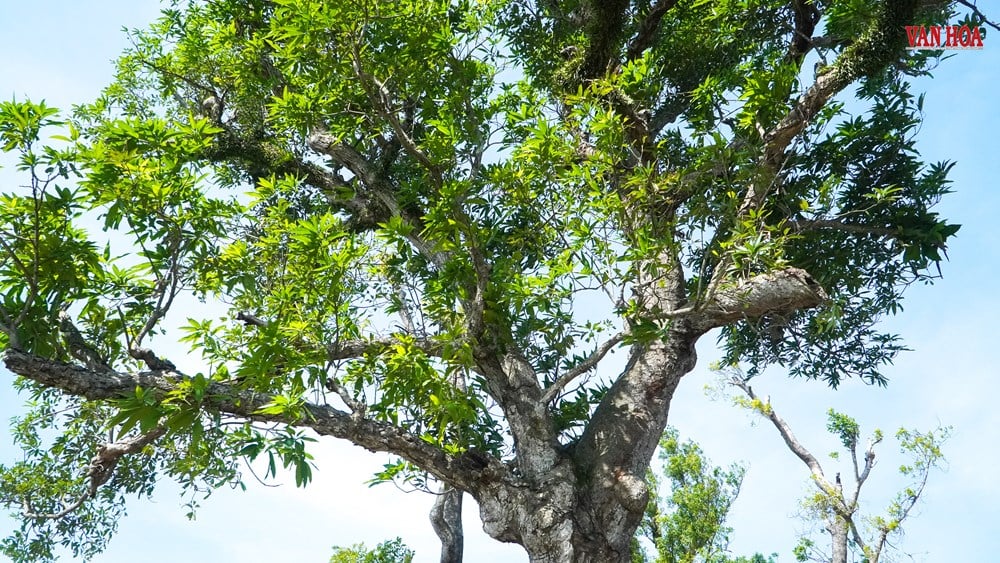
For the people of Tien Dien, these two ancient trees are not only shade, but also a "green memory" of a prosperous time of mandarin exams, when the Nguyen family continuously had many talented people passing exams and holding important positions in the Le - Trinh dynasty.
During a major storm in the 1970s and 1980s, the Rói tree was completely knocked down. The two remaining trees, the Mượm and Nắng trees, remained standing, continuing to grow, flower, and bear fruit every year.
Today, both are specially cared for and considered “living relics” in the Nguyen Du memorial complex. For many visitors, seeing the two trees Nong and Muom is not only an interesting experience but also a moment to touch the sediment of history.
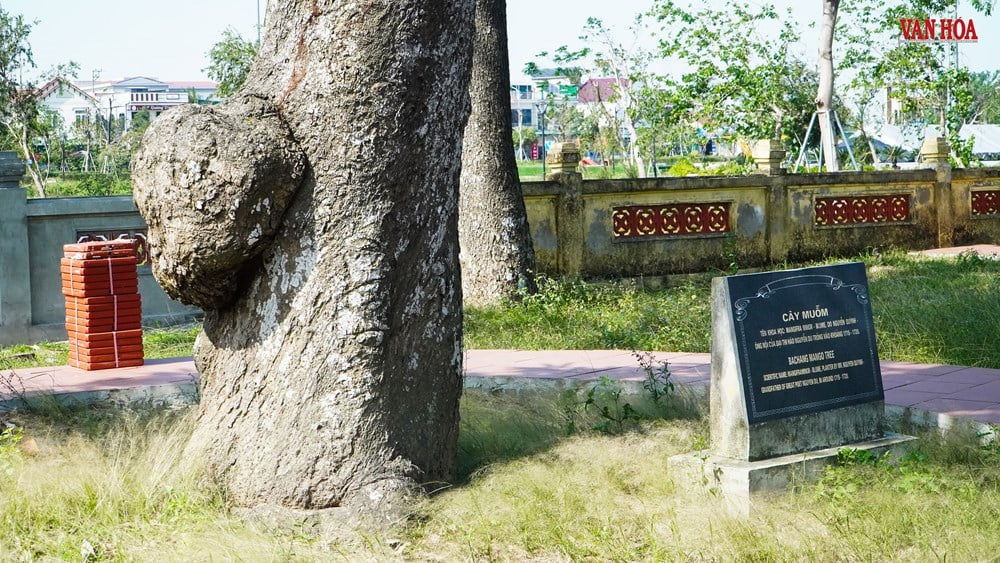
Ms. Tran Thi Vinh - in charge of the Management Board of Nguyen Du Relic Site said that the Management Board regularly monitors the growth status, prevents termites, reinforces the roots and trims the Muom and Nong trees to reduce the risk of falling during the storm season. These measures are not only to preserve the landscape but also to preserve a part of the soul of the relic site.
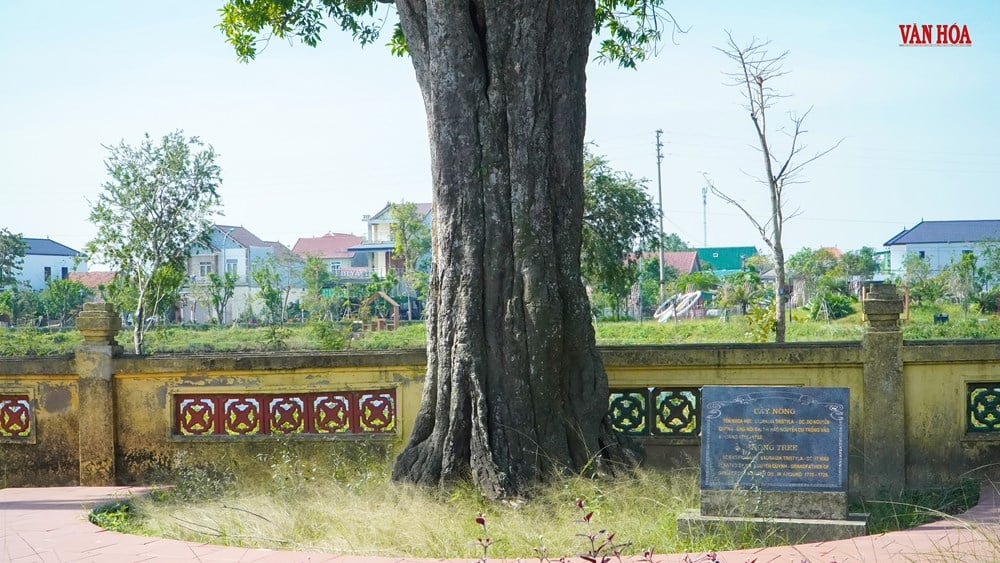
"Every year, thousands of tourists come to burn incense and visit the Nguyen Du relic site and are very moved when the tour guide explains the story of the three trees Muom, Nong and Roi. They symbolize the echo of history, the pride of the mandarin exams and the family that gave birth to Nguyen Du - the person who left the masterpiece Truyen Kieu to Vietnamese culture," said Ms. Vinh.
Source: https://baovanhoa.vn/van-hoa/chuyen-ve-hai-cay-co-thu-300-tuoi-tai-khu-di-tich-nguyen-du-185486.html


![[Photo] Parade to celebrate the 50th anniversary of Laos' National Day](/_next/image?url=https%3A%2F%2Fvphoto.vietnam.vn%2Fthumb%2F1200x675%2Fvietnam%2Fresource%2FIMAGE%2F2025%2F12%2F02%2F1764691918289_ndo_br_0-jpg.webp&w=3840&q=75)




















![[Photo] Worshiping the Tuyet Son statue - a nearly 400-year-old treasure at Keo Pagoda](/_next/image?url=https%3A%2F%2Fvphoto.vietnam.vn%2Fthumb%2F1200x675%2Fvietnam%2Fresource%2FIMAGE%2F2025%2F12%2F02%2F1764679323086_ndo_br_tempimageomw0hi-4884-jpg.webp&w=3840&q=75)



























































Comment (0)